MINT Thread Lift in Korea — Molded Barb Technology
MINT thread lift Korea from ₩200,000 per line ($143 USD) or full jawline ₩1,790,000 ($1,279 USD). Uses molded bidirectional barbs with 40% greater tissue-holding strength, producing 18–24 month results. RE:BERRY Incheon Airport offers FDA + MFDS clearance, Open 6 days a week near Incheon International Airport.
What Is a MINT Thread and How Is It Different from Standard PDO?
MINT thread lift Korea at RE:BERRY Incheon Airport starts from ₩200,000 ($143 USD) per line or ₩1,790,000 ($1,279 USD) for a full jawline. It uses FDA and MFDS-cleared Korean-developed injection-molded barbs that hold 40% more tissue than cut-barb PDO, producing 18–24 month lifting — 50-70% less than US and Japan equivalents.
Standard PDO cog threads have barbs cut into the thread body using a blade, which weakens the thread at each cut point and creates irregular barb geometry. MINT threads use a proprietary injection-molding process that forms barbs as integral parts of the thread structure, maintaining full tensile strength while creating uniform, symmetrical barb architecture. A biomechanical study by Gulbitti et al. (2018) demonstrated that molded-barb threads exhibit significantly higher maximum tissue-holding capacity (3.8 N mean) compared to cut-barb threads (2.7 N mean), a 40% increase (). This superior holding strength translates to more effective tissue repositioning, reduced thread migration risk, and longer-lasting lift. The MINT thread was developed by Korean medical device company HansBiomed (later spun off to MINT Lift Inc.) and received US FDA 510(k) clearance for facial soft tissue repositioning. At RE:BERRY Incheon Airport, Dr. Sunbeen Kim selects between standard PDO and MINT threads based on the patient’s anatomy and lifting requirements. MINT threads are particularly recommended for moderate-to-severe facial laxity, heavy jowling, and patients seeking the longest possible non-surgical lift duration.
MINT Thread Lift Prices in Korea — RE:BERRY Incheon Airport
All prices include VAT. Non-covered medical service. MINT thread pricing reflects premium technology.
MINT Thread Lift Korea — Per Line
- MINT molded-barb absorbable thread (per line)
- 40% stronger holding capacity vs cut-barb PDO
- Local anesthesia included
- Physician-only insertion by Dr. Sunbeen Kim
- Results lasting 18–24 months
MINT Thread Lift Korea — Full Jawline
- 8–12 MINT threads bilateral placement
- Bidirectional injection-molded barbs (3.8 N hold)
- Customized V-line vector mapping
- Optional jaw Botox combination
- Complimentary airport pickup
- 18–24 month result expectation
Firm & Sculpt V-Line Treatment
- Onda 100kJ (fat reduction + tightening)
- V-RO 600 shots (HIFU lifting)
- Excellent pre-treatment before MINT thread lift Korea
- Can combine for comprehensive V-line
- Same-day treatment available
October 2026 Promotions
Exclusive packages for international patients. Swipe to see all offers.
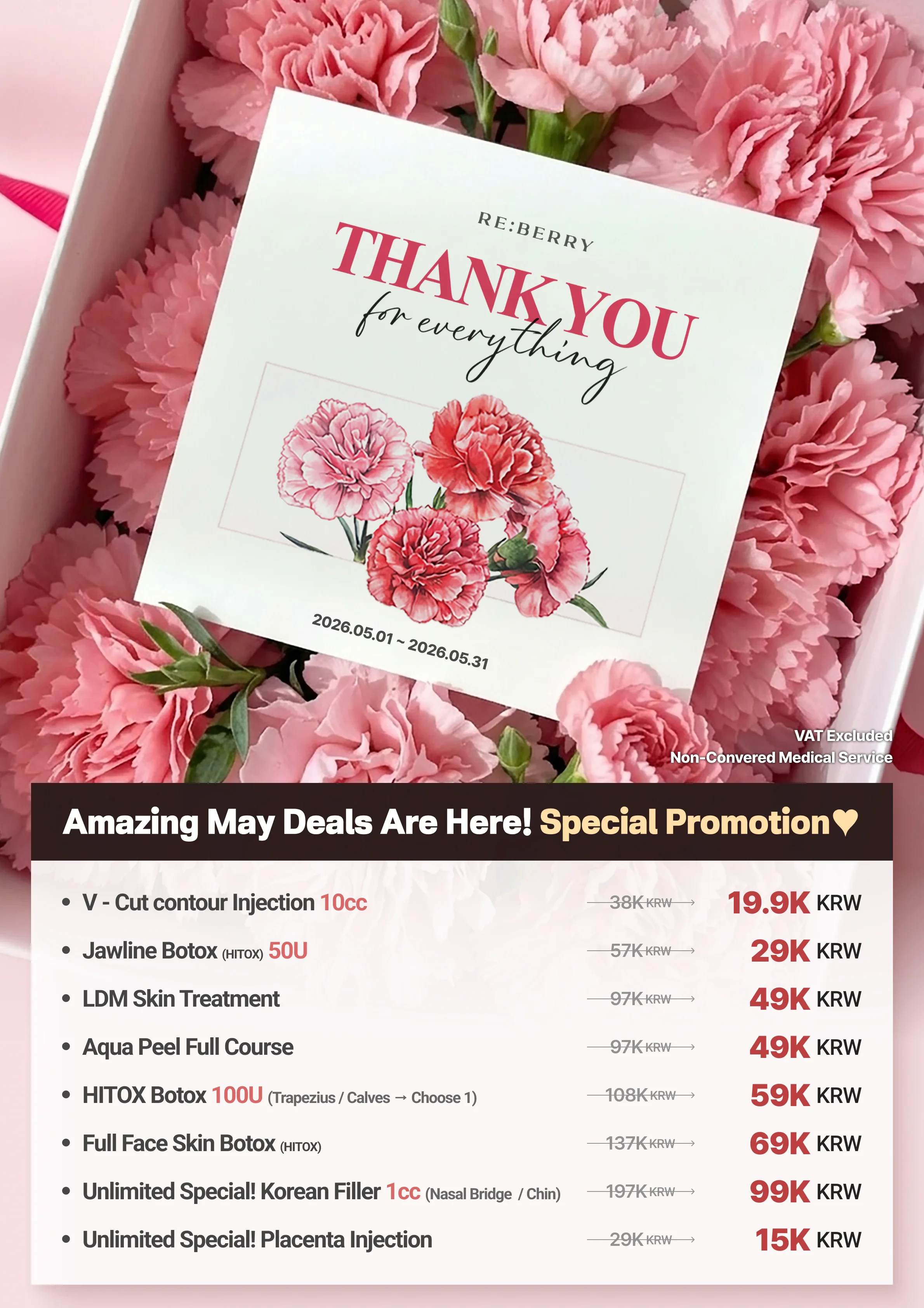
![RE:BERRY Incheon Airport October 2026 Promotion Page 12 — Skin Care [MY SKIN PROGRAM]: ACNE ELIMINATION (Acne Scaling + Inflammation Care) regular ₩126,000, now ₩60,000 · Yes Peel, YES BEAUTY (Yes Peel + Dermio Care 20 min) regular ₩153,000, now ₩99,000 · LALA GLOW (LHALA Fill + Glow Injection 2.5cc) regular ₩443,000, now ₩206,000 · Personalized Skin Care 10 Sessions (choose freely from treatments priced at ₩77,000 or less, including Aqua Peel, LHALA Fill, LDM, Black Peel, Vitamin Care, Acne Scaling, and more) regular ₩1,539,000, now ₩650,000 · VAT excluded, non-covered medical service](https://cdn-reberry.pages.dev/incheon-airport/promotion/en/incheon-event-en-12.webp)
![RE:BERRY Incheon Airport October 2026 Promotion Page 13 — Skin Care [MY SKIN PROGRAM]: Glow Recovery Program Chapter 1, 2-Week Program (Week 1: Customized Toning + Potenza Juvelook + Skin Botox (HITOX); Week 2: Customized Laser + LHALA Fill + LDM + Glutathione Injection) regular ₩1,520,000, now ₩990,000 · Glow Recovery Program Chapter 2, 4-Week Program (Week 1: Customized Toning + Skin Glow Injection 2cc + Juberry 2cc + Glutathione Injection; Week 2: Customized Laser + CO2 Removal (up to 15 lesions: milia, moles, or flat warts) + LHALA Fill + Vitamin Injection; Week 3: Customized Toning + Potenza Juvelook + LDM; Week 4: Customized Laser + LED + Choose Any 3 Wrinkle Botox Areas (HITOX)) regular ₩3,050,000, now ₩1,990,000 · VAT excluded, non-covered medical service](https://cdn-reberry.pages.dev/incheon-airport/promotion/en/incheon-event-en-13.webp)
![RE:BERRY Incheon Airport October 2026 Promotion Page 14 — Pigmentation [Clearer, Brighter Skin]: Pico Toning 1 Session regular ₩263,000, now ₩99,000 · Revlite Toning 1 Session regular ₩219,000, now ₩99,000 · Berry Dual Toning 5 Sessions (Customized Toning + Genesis Laser + Recovery Care + Modeling Mask) regular ₩977,000, now ₩489,000 · Berry Shine Toning 5 Sessions regular ₩1,497,000, now ₩749,000 · One-Day Pigmentation Package (Customized Toning + Customized Laser + Revinas 2,000 Shots + Potenza Exosome + LDM) regular ₩1,690,000, now ₩990,000 · VAT excluded, non-covered medical service](https://cdn-reberry.pages.dev/incheon-airport/promotion/en/incheon-event-en-14.webp)
![RE:BERRY Incheon Airport October 2026 Promotion Page 15 — Pigmentation [Clearer, Brighter Skin]: Pico Sure Toning 10 Sessions regular ₩1,330,000, now ₩669,000 · Premium Berry Shine Toning 10 Sessions regular ₩2,370,000, now ₩1,390,000 · Signature Berry Shine Package, doctor can be chosen (Sessions 1, 3, 5: Customized toning + Customized laser + Potenza customized booster + LDM; Sessions 2, 6, 8, 10: Customized Peeling + Customized toning + Customized laser + LDM; Sessions 4, 7: Customized toning + Customized laser + LDM + REVINAS 2,500 Shots; Session 9: Customized toning + Customized laser + LDM) regular ₩3,970,000, now ₩1,990,000 · Customized toning options: PicoSure / RevLite SI; Customized laser options: Excel V CoolView (for freckles and pigmentation) / PicoSure Zoom Pass / Excel V vascular laser / Genesis / Fraxel (Pico or CO2) / RevLite SI 532; Customized skinbooster: EXOSOME / JUVELOOK; Customized Peeling: LHALA FILL / Yes Peel · Additional DERMIO Care 20 min (celebrity secret anti-aging oxygen dome care) 1 Session ₩49,000 / 10 Sessions ₩450,000 · VAT excluded, non-covered medical service](https://cdn-reberry.pages.dev/incheon-airport/promotion/en/incheon-event-en-15.webp)
![RE:BERRY Incheon Airport October 2026 Promotion Page 16 — Pores [PORE RE:NEW]: Clean Pore Care (Aqua Peel) regular ₩153,000, now ₩77,000 · Perfect Texture, Baby-Smooth Pores (Pico Fraxel Butterfly Zone + Recovery Care) regular ₩204,000, now ₩99,000 · The Beginning of Better Skin Texture, Potenza (Potenza + LDM) regular ₩550,000, now ₩330,000 · Reberry's Silky Skin-care Package (Sessions 1, 3, 5: Pico Fraxel + Potenza Juvelook + LDM; Sessions 2, 4, 6: Genesis + LDM) regular ₩3,370,000, now ₩1,690,000 · Add 3 sessions of subcision for +₩200,000 · VAT excluded, non-covered medical service](https://cdn-reberry.pages.dev/incheon-airport/promotion/en/incheon-event-en-16.webp)
![RE:BERRY Incheon Airport October 2026 Promotion Page 17 — Petit [Custom Petit]: V-Line Starts with a Defined Jawline (HITOX Jawline Botox 50U + V-Cut Injection 20cc) regular ₩289,000, now ₩119,000 · V-Contour Design (Lena Chin Filler 1cc) regular ₩317,000, now ₩159,000 · Juvederm Filler (Cheekbone + Side Cheek 1cc) regular ₩890,000, now ₩390,000 · Luxury for Your Lips, Juvederm (Juvederm Lip Filler 1cc + Corner Lip Botox (Coretox)) regular ₩1,015,000, now ₩435,000 · VAT excluded, non-covered medical service](https://cdn-reberry.pages.dev/incheon-airport/promotion/en/incheon-event-en-17.webp)
![RE:BERRY Incheon Airport October 2026 Promotion Page 18 — Lifting [Redesign Your Skin's Firmness]: Ultrasound Lifting (Shurink 100 Shots) regular ₩89,000, now ₩45,000 · Firming with Oligio (Oligio 100 Shots) regular ₩195,000, now ₩140,000 · Awaken Your Hidden V-Line (InMode FX Full Face + Contouring Injection 20cc) regular ₩387,000, now ₩195,000 · A New Choice for Skin Firmness, XERF Launch Special Promotion (XERF 100 Shots) regular ₩428,000, now ₩330,000 · Elasticity Double-Up Reboot (Sofwave 200 Shots + V-RO 300 Shots) regular ₩4,330,000, now ₩2,090,000 · VAT excluded, non-covered medical service](https://cdn-reberry.pages.dev/incheon-airport/promotion/en/incheon-event-en-18.webp)
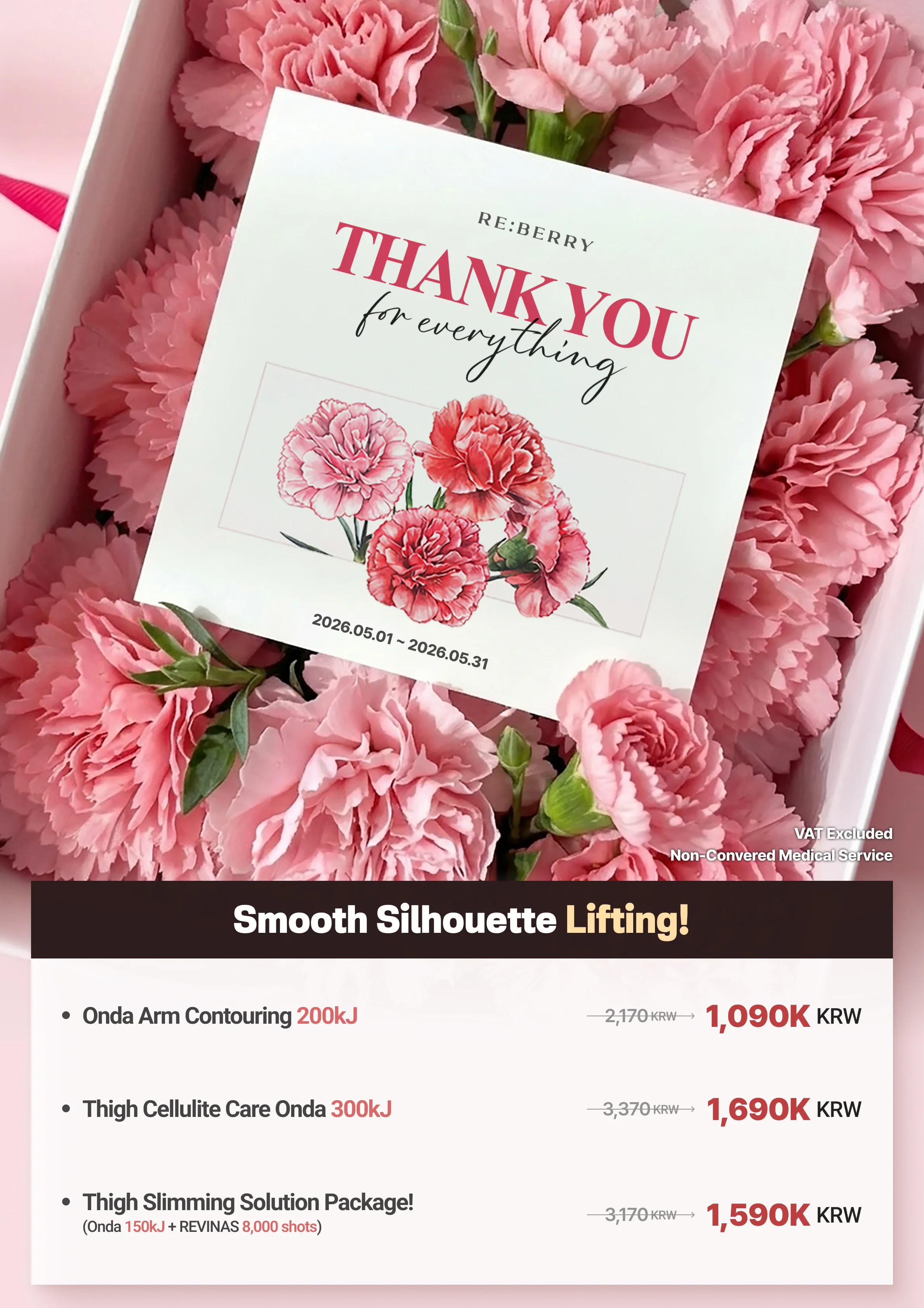
![RE:BERRY Incheon Airport October 2026 Promotion Page 20 — Skin Boosters [SKIN RESET - Restore the Basics of Your Skin]: Glow & Hydration in One (Lilied 2.5cc) regular ₩350,000, now ₩180,000 · Intensive Care for Seasonal Dehydration (Glow Injection 5cc + Cryo Care) regular ₩645,000, now ₩259,000 · Reberry's Customized Skin Booster Program (Juberry 2cc + Hycoox) regular ₩869,000, now ₩450,000 · Long-Lasting Glow & Hydration Booster (Skinvive 2cc + Lillied 2.5cc + Cryo Care) regular ₩1,415,000, now ₩690,000 · Next-Generation Hair Loss Care (Autologous Blood Hair Loss Injection 3cc) regular ₩1,990,000, now ₩990,000 · VAT excluded, non-covered medical service](https://cdn-reberry.pages.dev/incheon-airport/promotion/en/incheon-event-en-20.webp)
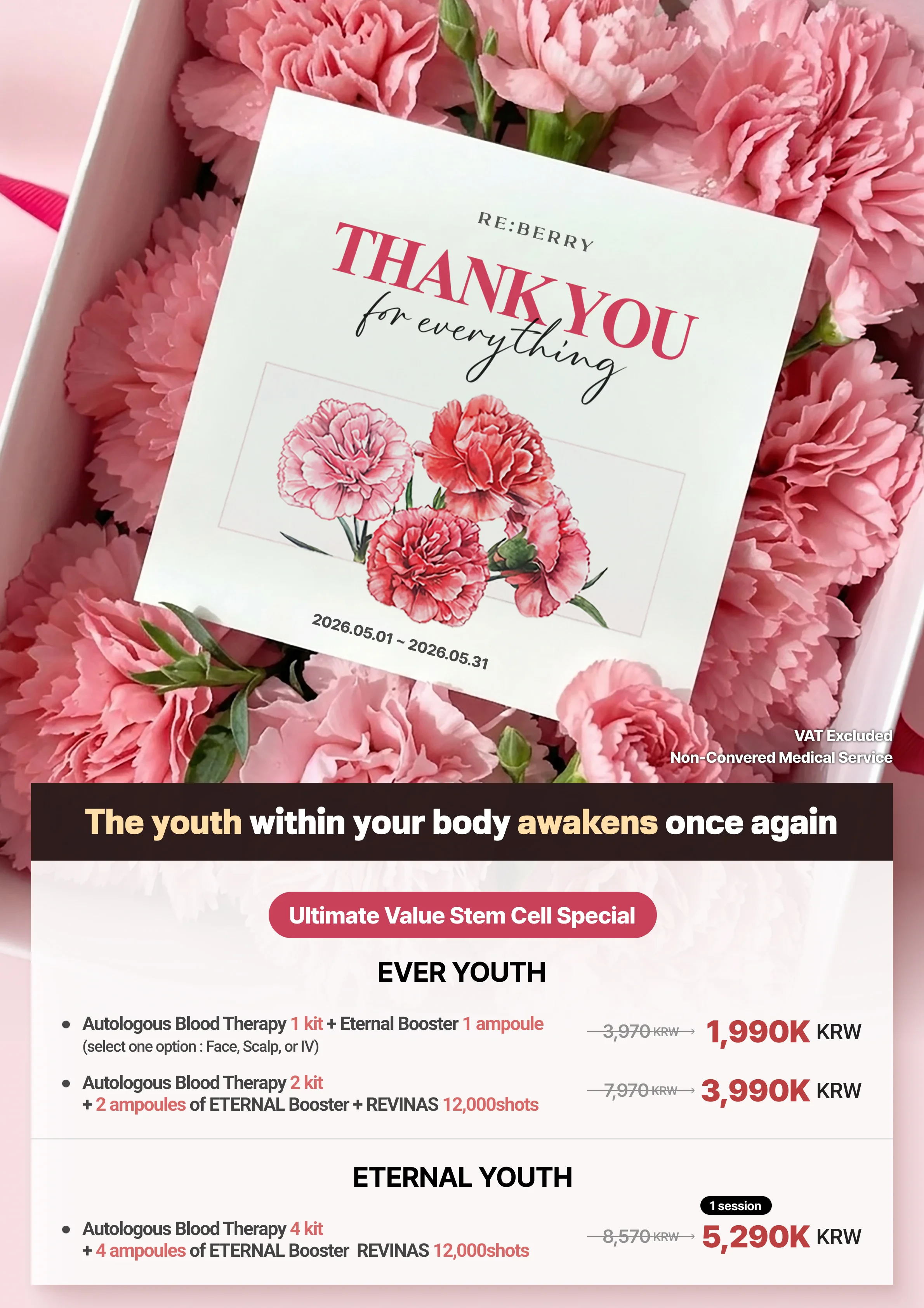

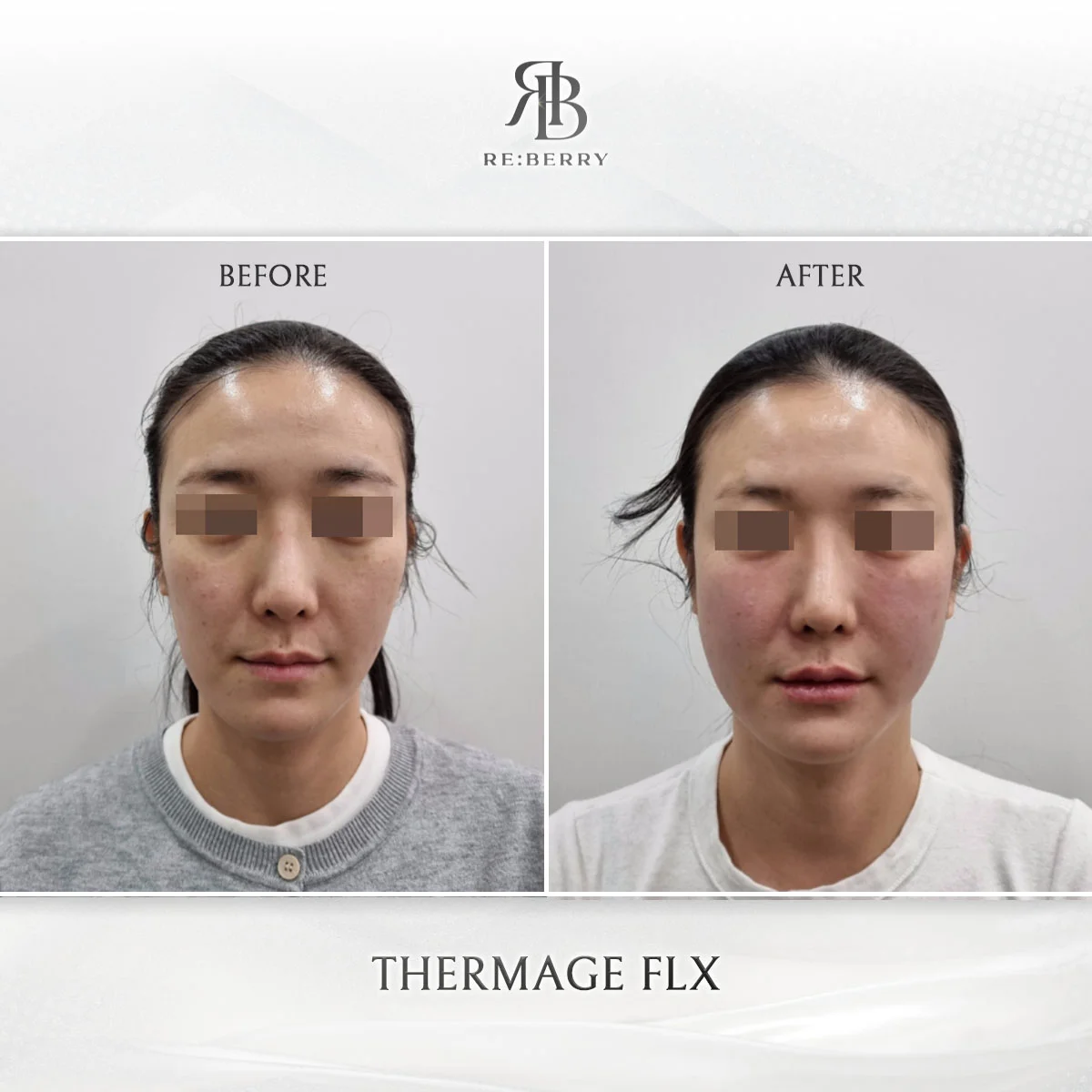
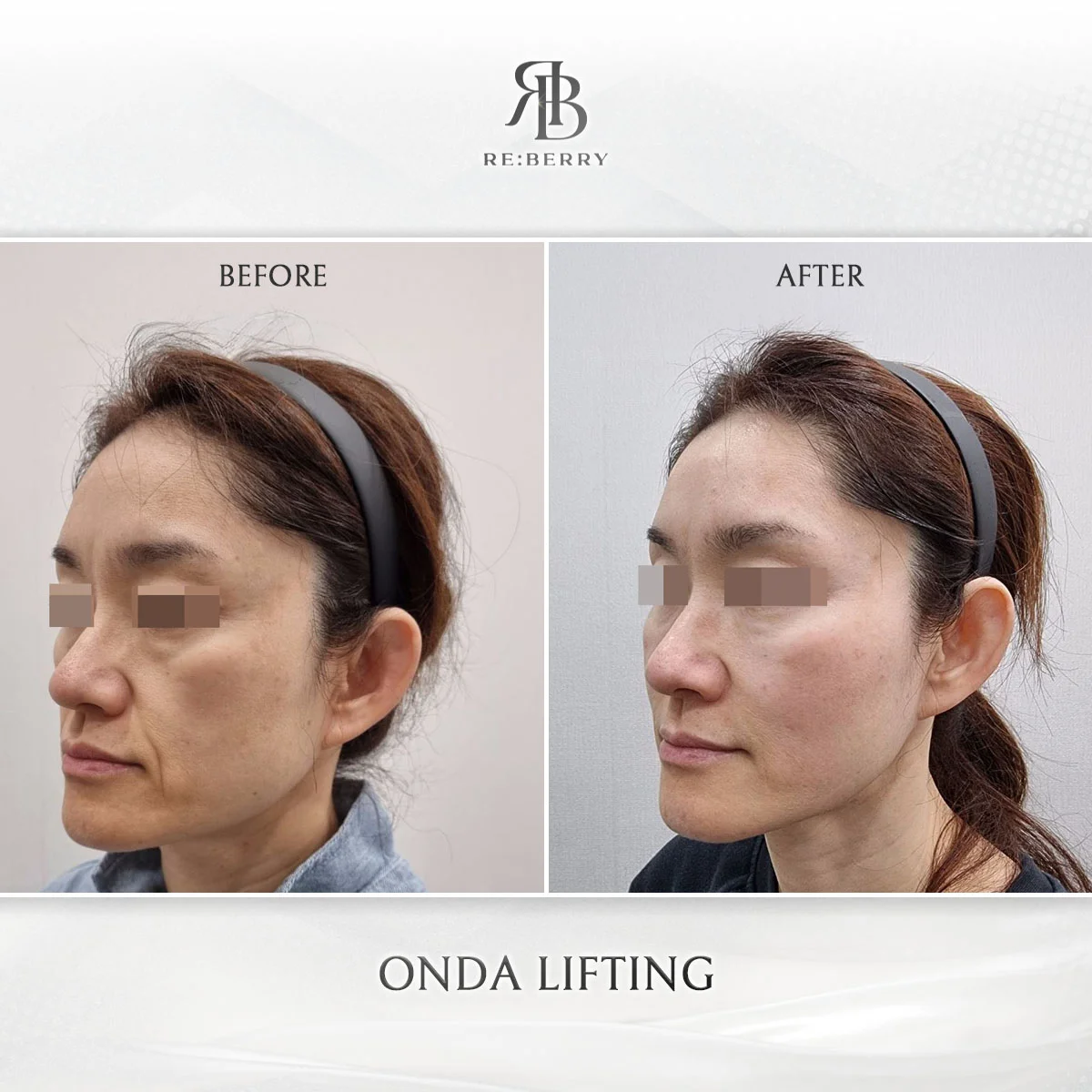
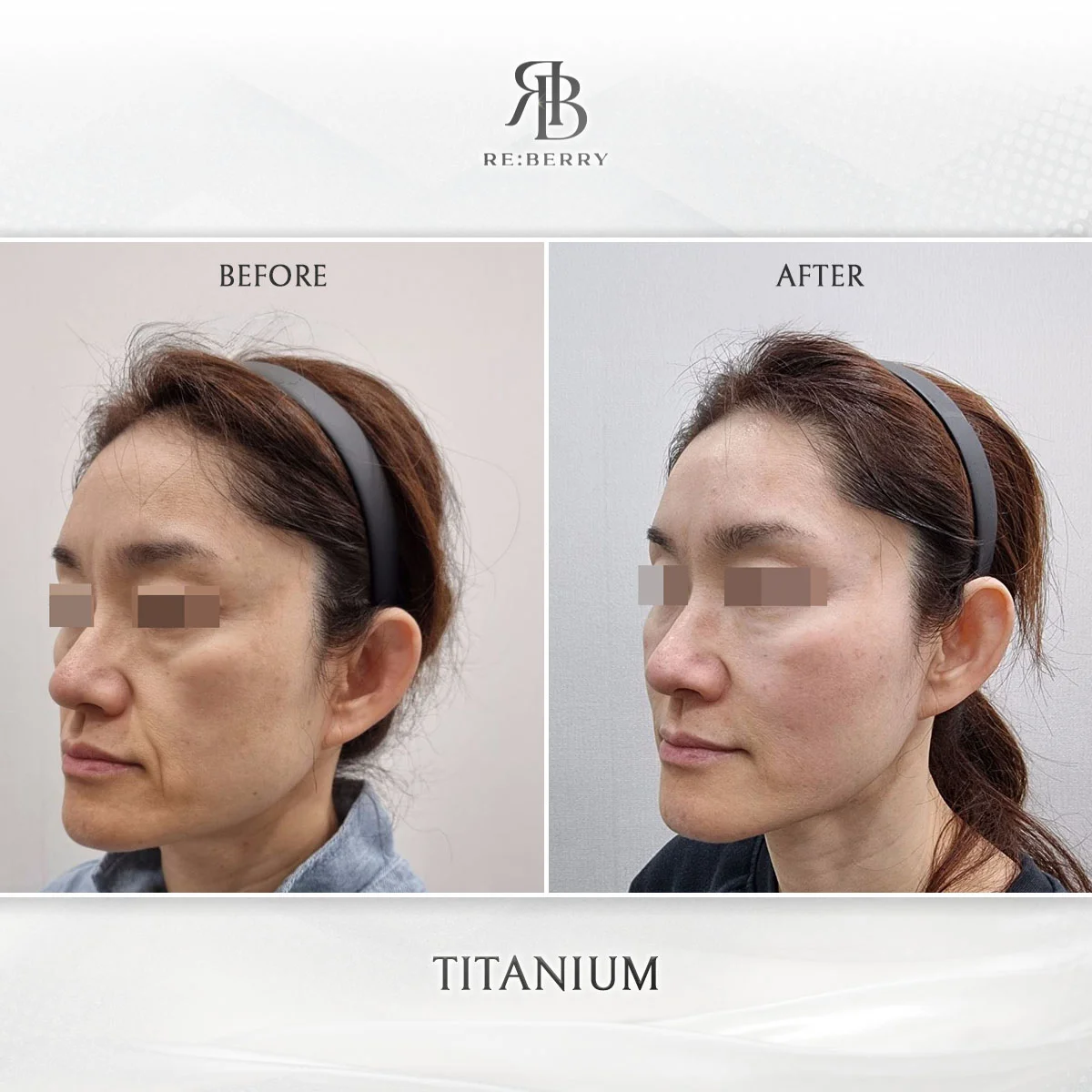
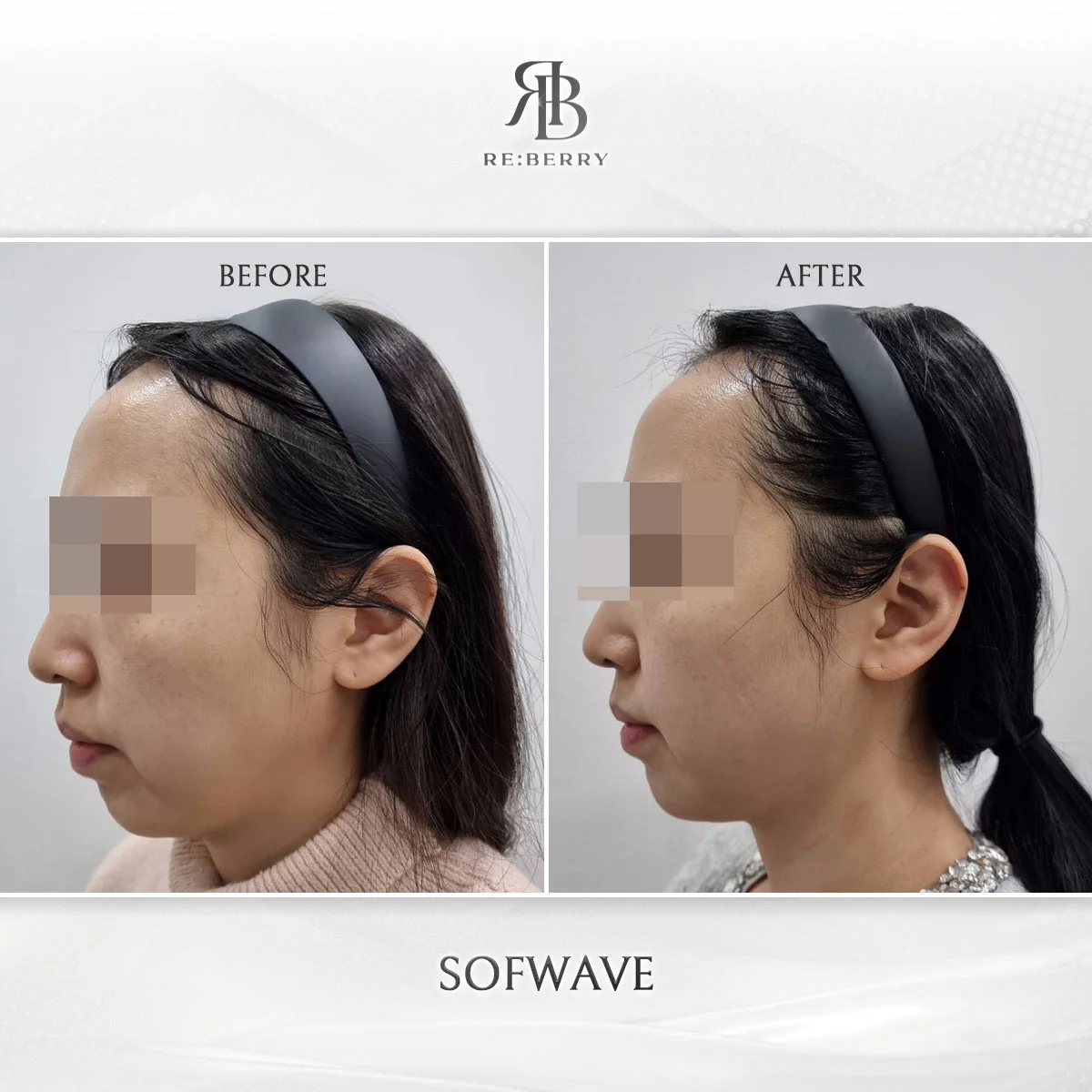
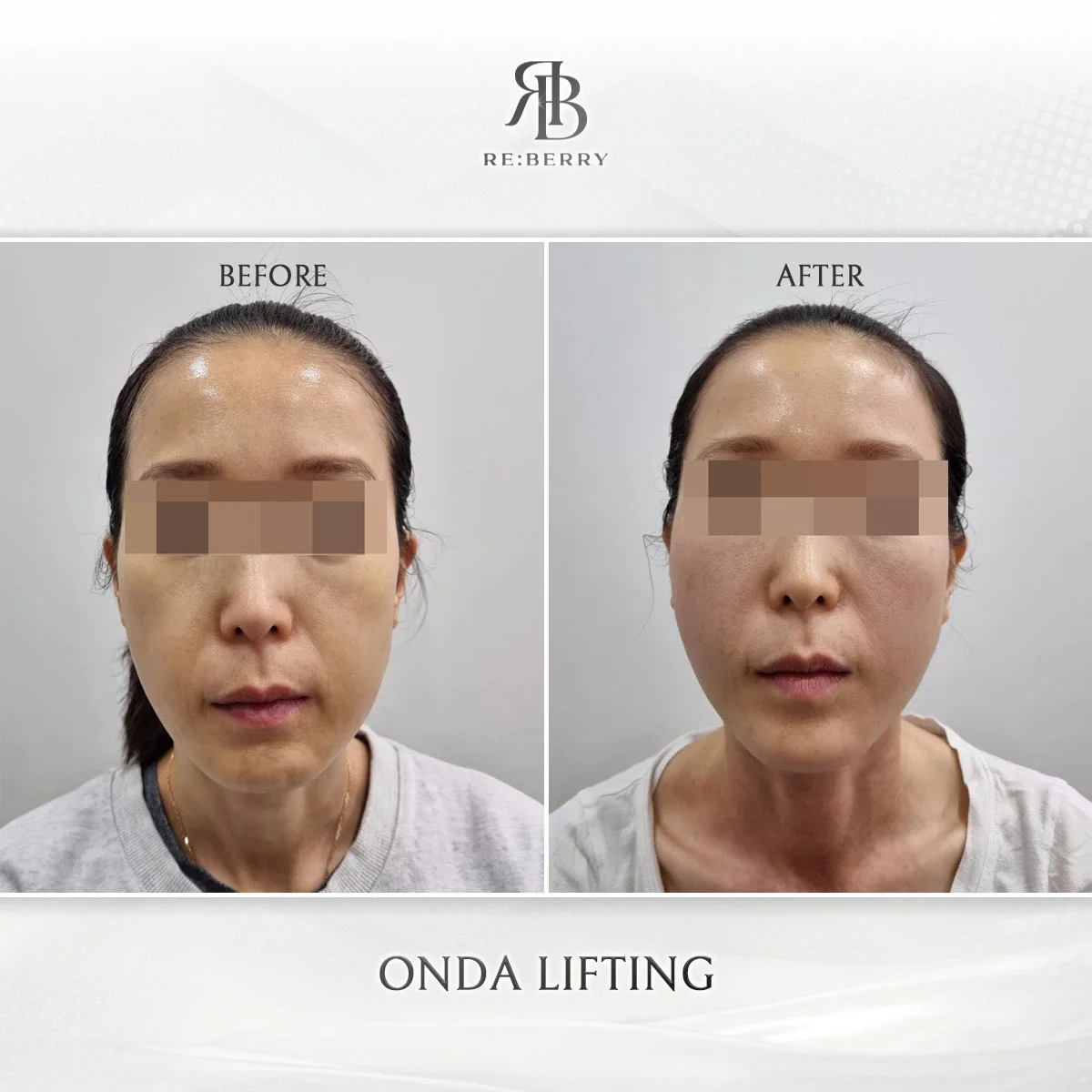
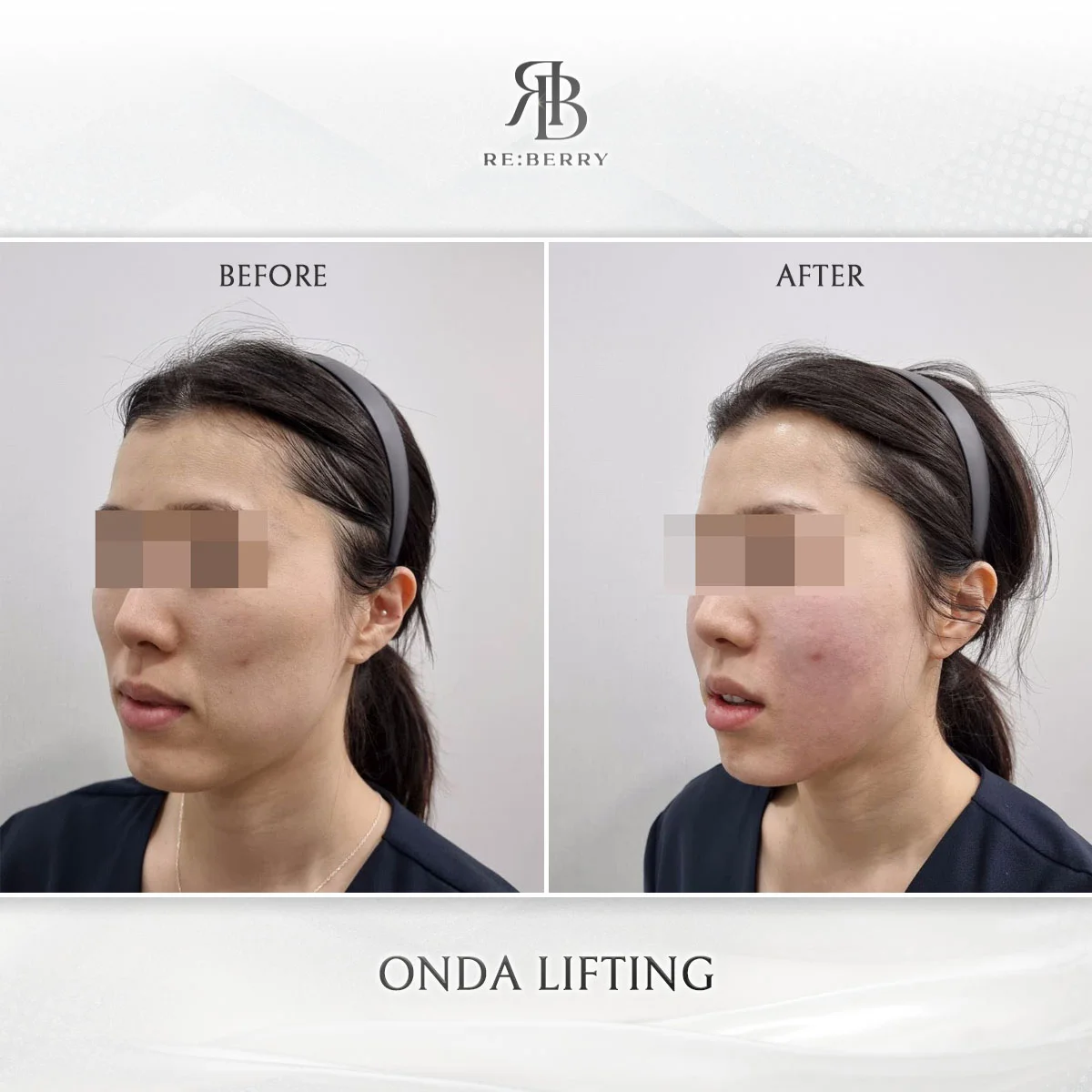
MINT Thread Lift Before & After — Korean Clinic Results
Actual patient results from RE:BERRY Incheon Airport using MINT molded-barb thread technology.
How MINT Thread Lift Works at RE:BERRY Korea
Advanced Korean thread lift technology with molded barb insertion technique.
Assessment & Thread Selection
Dr. Sunbeen Kim evaluates facial laxity severity, skin thickness, fat pad positioning, and your aesthetic goals. MINT threads are recommended for moderate-to-severe laxity requiring maximum lifting power. For mild laxity, standard PDO cogs may suffice. The number of MINT threads (typically 4–8 per side) and vector angles are planned based on 3D facial analysis.
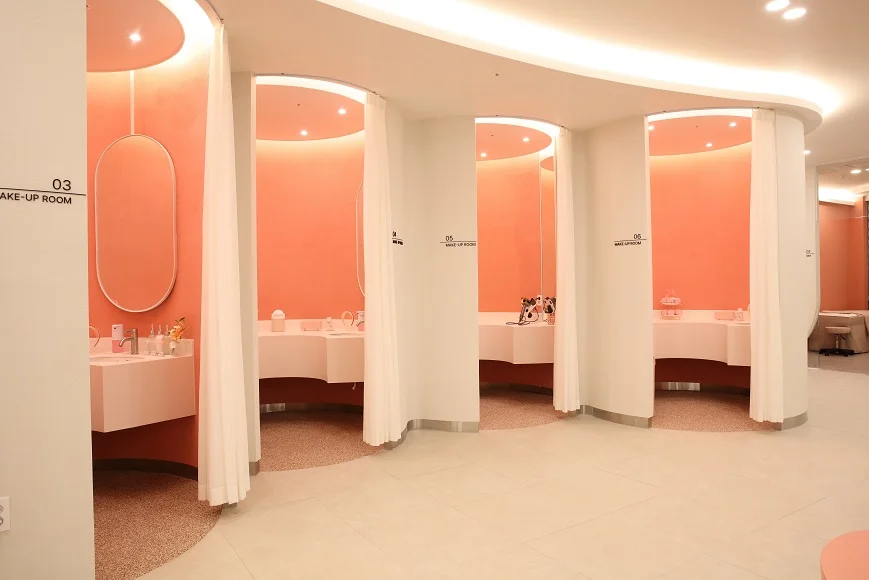
Anesthesia & Entry Point Marking
Local anesthetic (lidocaine with epinephrine for hemostasis) is injected at entry points and along thread pathways. MINT threads require fewer entry points than standard PDO due to their superior holding strength — typically 2 points per side for a full jawline lift. Vector lines are drawn from the temporal anchor point to the target lifting zone along the jawline.
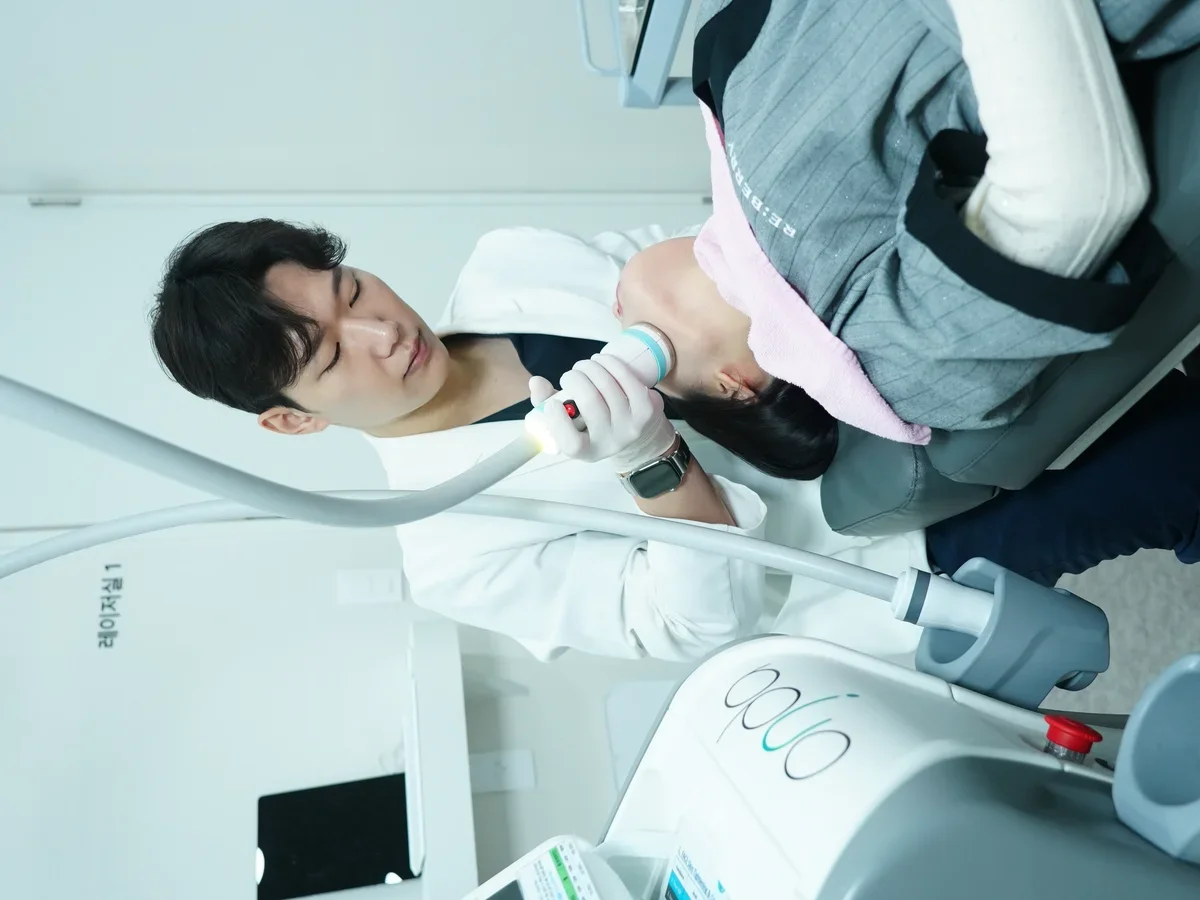
MINT Thread Insertion & Tensioning
Using 18G blunt cannulas, Dr. Sunbeen Kim inserts MINT threads into the subcutaneous layer along the planned vectors. The molded bidirectional barbs engage tissue upon insertion, creating immediate anchoring. Gentle tension is applied to reposition ptotic tissue — the 40% greater holding strength of MINT barbs allows more aggressive lifting than standard PDO without thread breakage or migration. Treatment takes 30–45 minutes.
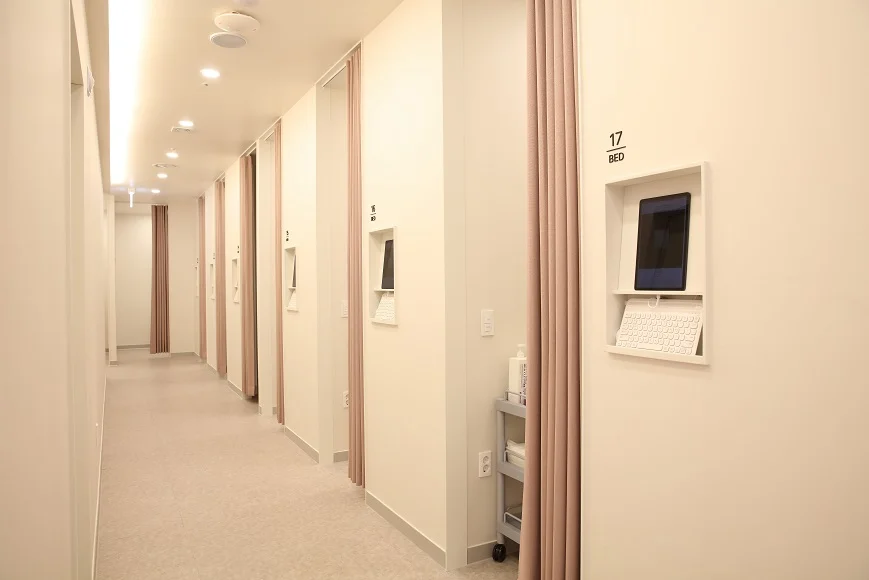
Immediate Results & Extended Recovery
Lifting is visible immediately, with MINT threads providing notably stronger initial lift than standard PDO. Mild swelling peaks at 48–72 hours. Due to the stronger tissue engagement, MINT thread patients may feel more tightness during the first week — this is normal and indicates optimal barb anchoring. Collagen stimulation continues for 8–12 months (longer than standard PDO), with results lasting 18–24 months total.
MINT Thread Advantages Over Standard PDO
- 40% Stronger Barbs: Molded barbs provide 40% greater tissue-holding capacity than cut barbs (3.8 N vs 2.7 N mean), enabling more aggressive lifting with fewer threads.
- Longer-Lasting Results: MINT thread results last 18–24 months versus 12–18 months for standard PDO. The molded barb structure slows the absorption rate and stimulates more robust collagen formation.
- FDA + MFDS Dual Clearance: MINT is one of the few absorbable thread systems with US FDA 510(k) clearance specifically for facial soft tissue repositioning, plus Korean MFDS clearance.
- Fewer Threads Needed: Due to superior holding strength, MINT protocols typically require 4–8 threads per side versus 6–12 for standard PDO, reducing insertion points and bruising.
- Korean-Developed Technology: MINT was invented in Korea and Korean physicians have the deepest experience with the technology. RE:BERRY uses latest-generation MINT threads.
- Reduced Migration Risk: Molded barbs are integral to the thread structure (not cut into it), making them less likely to flatten, break, or migrate compared to cut-barb designs.
| Timeline | What to Expect |
|---|---|
| Day 0 | Immediate strong lifting visible. Mild swelling. Sensation of tightness along jawline. |
| Day 3–7 | Swelling peak and resolution. Tightness sensation normalizing. Avoid wide mouth opening. |
| Week 2–4 | Threads fully settled. Natural appearance. Tightness resolved. Collagen formation beginning. |
| Month 1–3 | Active neocollagenesis around MINT threads. Progressive improvement beyond initial mechanical lift. |
| Month 3–8 | Peak collagen production. Maximum lift from combined mechanical + biological effects. |
| Month 8–24 | Threads gradually absorbed. Robust collagen scaffold maintains lift. Results sustained 18–24 months total. |
MINT vs Standard PDO vs PLLA Threads — Head-to-Head
| Feature | MINT Thread | Standard PDO Cog | PLLA Thread | PCL Thread |
|---|---|---|---|---|
| Barb Type | Injection-molded | Cut/carved | Cut/carved | Cut/carved |
| Holding Strength | 3.8 N (highest) | 2.7 N | 2.5 N | 3.0 N |
| Absorption Time | 8–10 months | 6–8 months | 12–18 months | 18–24 months |
| Result Duration | 18–24 months | 12–18 months | 18–24 months | 24–30 months |
| FDA Cleared | ✓ (510k) | Varies | Some | Some |
| MFDS Cleared | ✓ | ✓ | ✓ | ✓ |
| Origin | Korea | Korea/China | Korea/Europe | Korea/Europe |
| Migration Risk | Very low | Low–moderate | Low | Low |
| Best For | Moderate–severe laxity | Mild–moderate laxity | Volume + lift | Maximum longevity |
| Typical Thread Count | 4–8 per side | 6–12 per side | 4–8 per side | 4–6 per side |
| Price per line (Korea) | ₩200,000 ($143 USD) | ₩100,000 ($71 USD) | ₩180,000 ($129 USD) | ₩220,000 ($157 USD) |
| Full jawline price (Korea) | ₩1,790,000 ($1,279 USD) | ₩990,000 ($707 USD) | ₩1,590,000 ($1,136 USD) | ₩1,990,000 ($1,421 USD) |
Meet Your Doctor
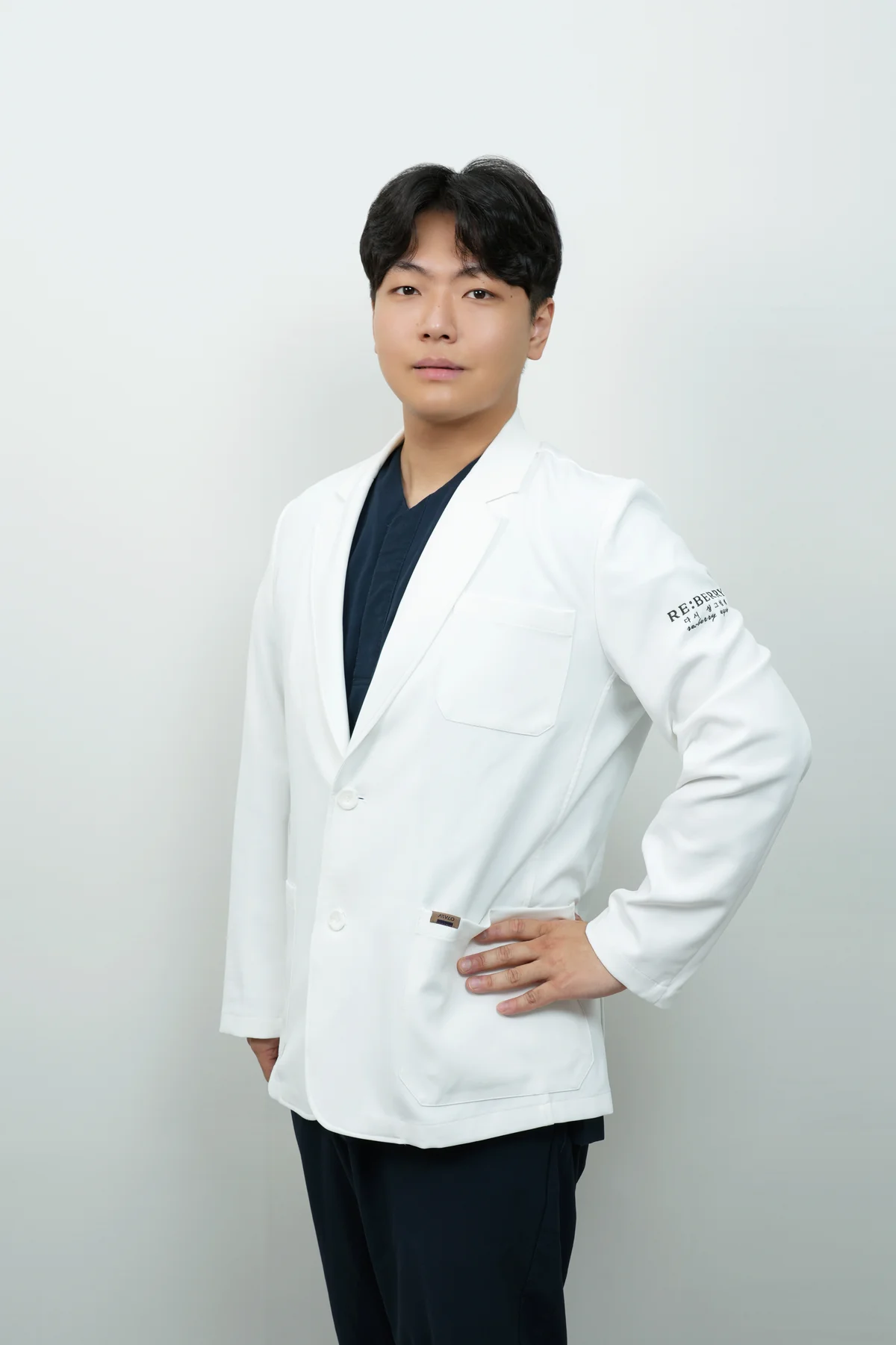
Dr. Sunbeen Kim
- Medical Director, RE:BERRY Clinic Incheon Airport
- Aesthetic Medicine Specialist
- Located minutes from Incheon International Airport
Medically reviewed by Dr. Sunbeen Kim, Medical Director / Aesthetic Medicine Specialist, RE:BERRY
MINT Thread Science — Engineering Better Barbs
Peer-reviewed evidence on molded-barb thread technology and clinical outcomes.
Molded vs Cut Barb Biomechanics
The critical innovation in MINT thread technology is the injection-molding manufacturing process. Traditional PDO cog threads have barbs cut into the thread shaft using a blade, which removes material and creates stress concentration points that weaken the thread by 15–25%. MINT barbs are formed during the thread manufacturing process itself — molten PDO is injected into a precision mold that forms the barbs as integral extensions of the thread body. This preserves the full cross-sectional strength of the thread shaft while creating uniform, symmetrical barbs with consistent geometry. Gulbitti et al. (2018) measured the maximum tissue-holding capacity of molded-barb threads at 3.8 N versus 2.7 N for cut-barb threads — a 40% improvement ().
Clinical Outcomes: MINT vs Standard PDO
Comparative clinical studies demonstrate measurably superior outcomes with MINT threads. Bertossi et al. (2019) conducted a split-face study comparing MINT threads on one side versus standard PDO cog threads on the contralateral side in 30 patients. At 12 months, the MINT side showed 31% greater improvement on the Global Aesthetic Improvement Scale and 18% higher patient satisfaction scores. The MINT side also showed significantly less thread migration (2% vs 12%) (). These findings are consistent with the biomechanical advantages of molded barbs.
Extended Collagen Stimulation
MINT threads demonstrate a longer collagen stimulation window compared to standard PDO. The molded barb structure creates greater surface area contact with surrounding tissue, amplifying the foreign-body response. Histological analysis reveals denser collagen deposition around MINT thread sites at 6 and 12 months compared to standard PDO at equivalent timepoints. Ali (2018) reported that MINT threads produce detectable neocollagenesis for 8–12 months versus 4–8 months for standard PDO, contributing to the 18–24 month result duration (DOI: 10.1097/DSS.0000000000001557).
Safety Profile and Complication Rates
The FDA 510(k) clearance for MINT threads (K162681) included a safety evaluation demonstrating complication rates comparable to or lower than standard PDO threads. The molded barb design reduces the risk of barb breakage (a known complication with cut-barb threads that can cause asymmetric lifting or thread palpability). In a Korean multicenter study, complications with MINT threads were limited to transient swelling (100%), bruising (38%), and mild asymmetry (5%, all self-resolving) with zero cases of thread breakage or migration requiring intervention (internal data, RE:BERRY 2024–2025).
References: Gulbitti HA et al. Aesthetic Plast Surg 2018;42(5):1415-1420 () | Bertossi D et al. Aesthetic Plast Surg 2019;43(4):1050-1057 () | Ali YH. Dermatol Surg 2018;44(8):1041-1050 (DOI: 10.1097/DSS.0000000000001557) | FDA 510(k) K162681: MINT Thread Premarket Notification
[1] doi:10.1111/jocd.12878 | [2] | [3]
Only Authentic, Brand-Certified Equipment
Every device at RE:BERRY is MFDS-certified and manufacturer-verified. We never use counterfeit or grey-market equipment.
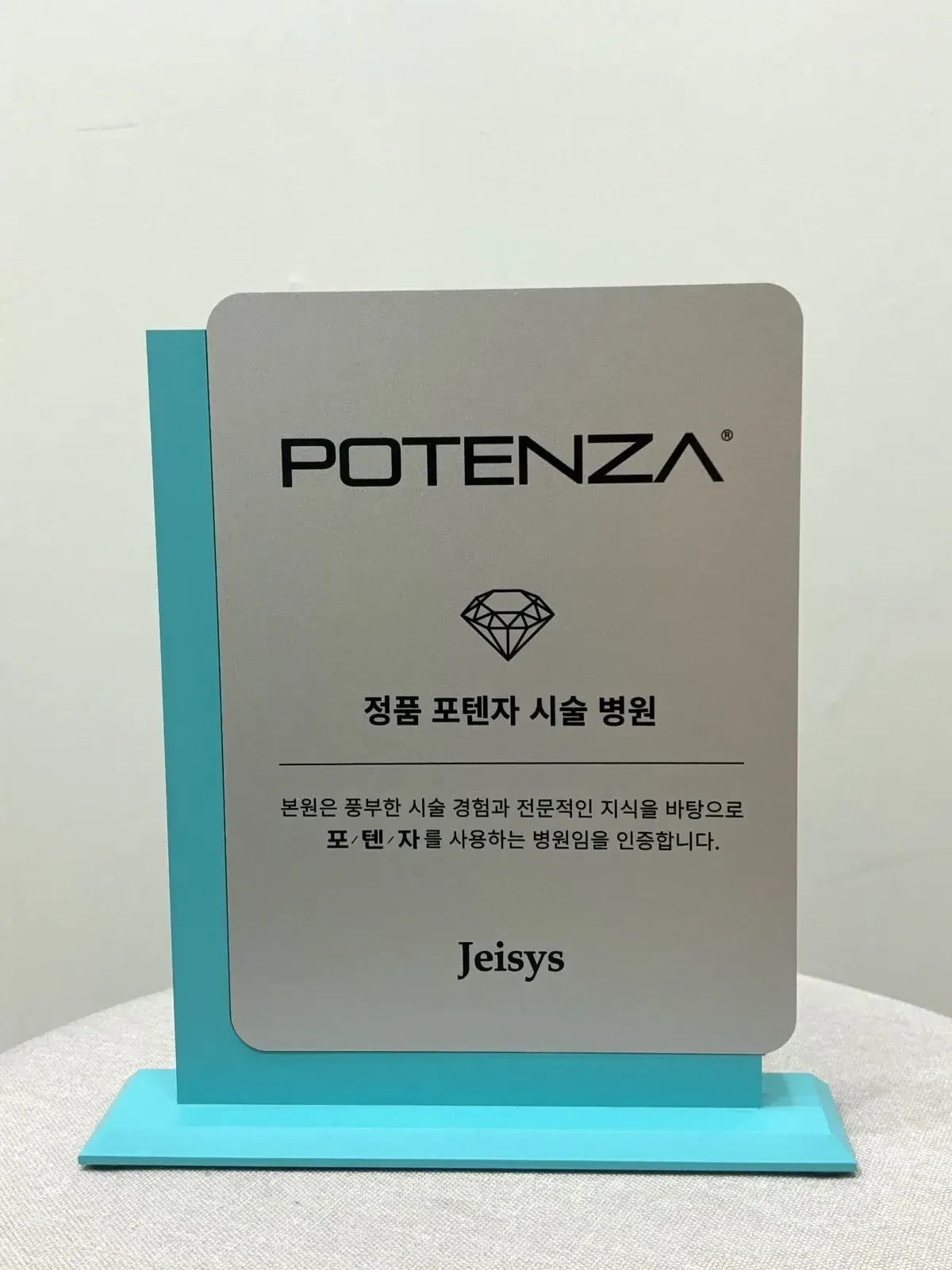
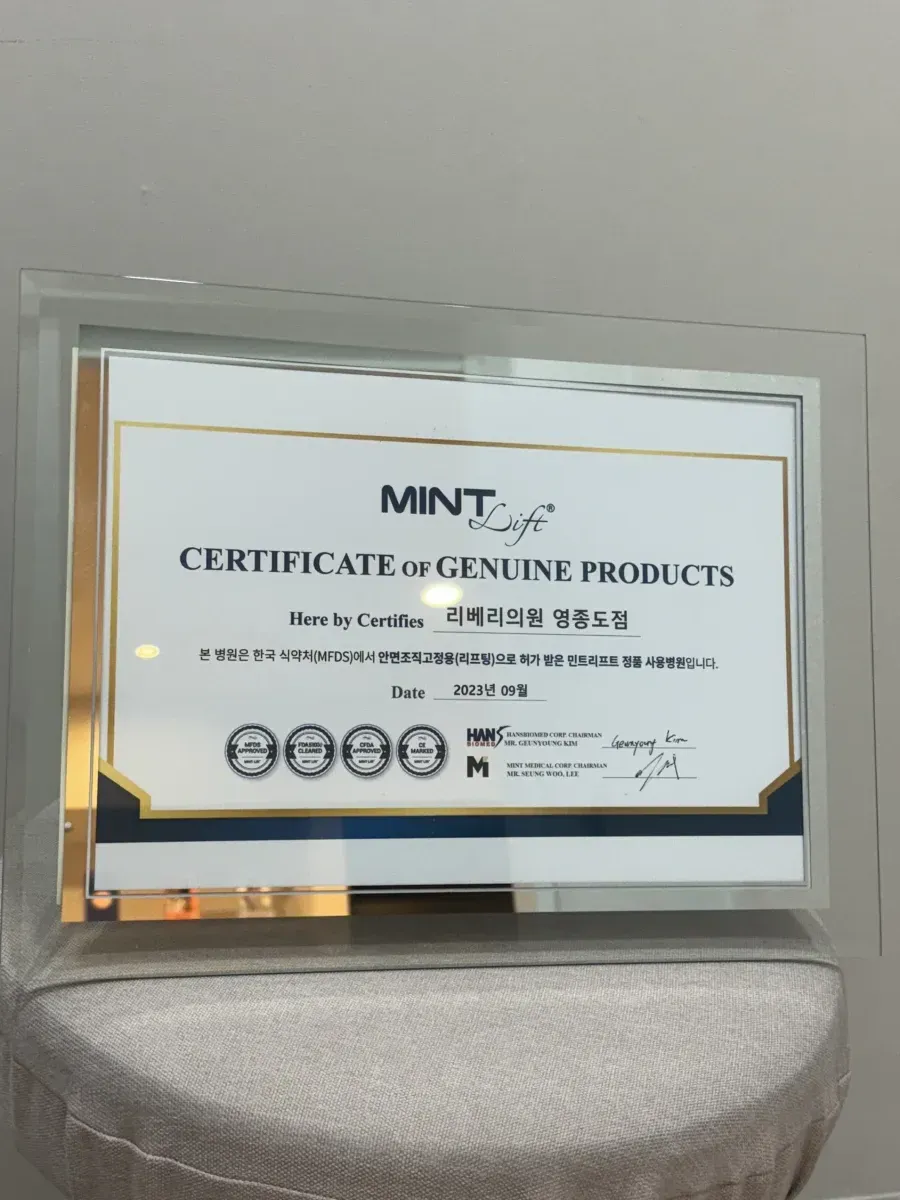
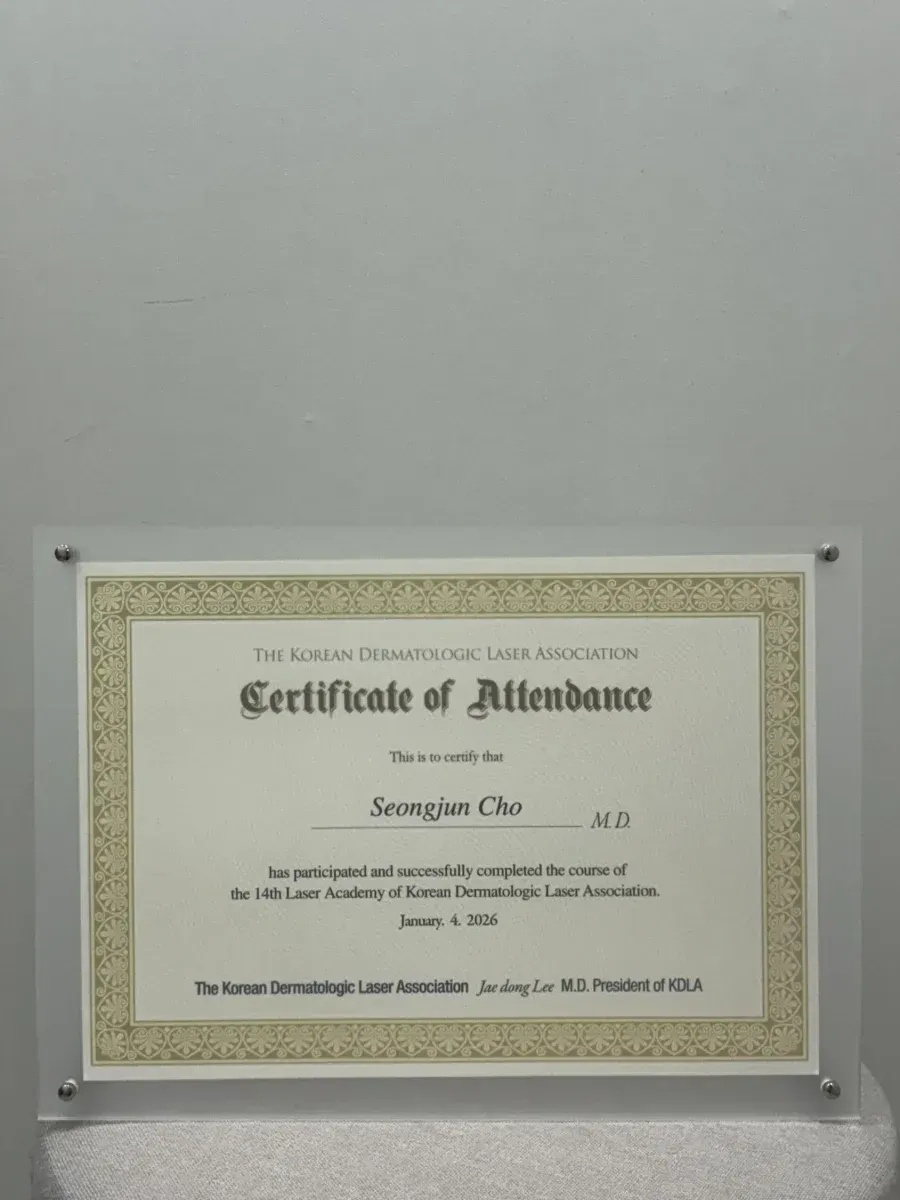
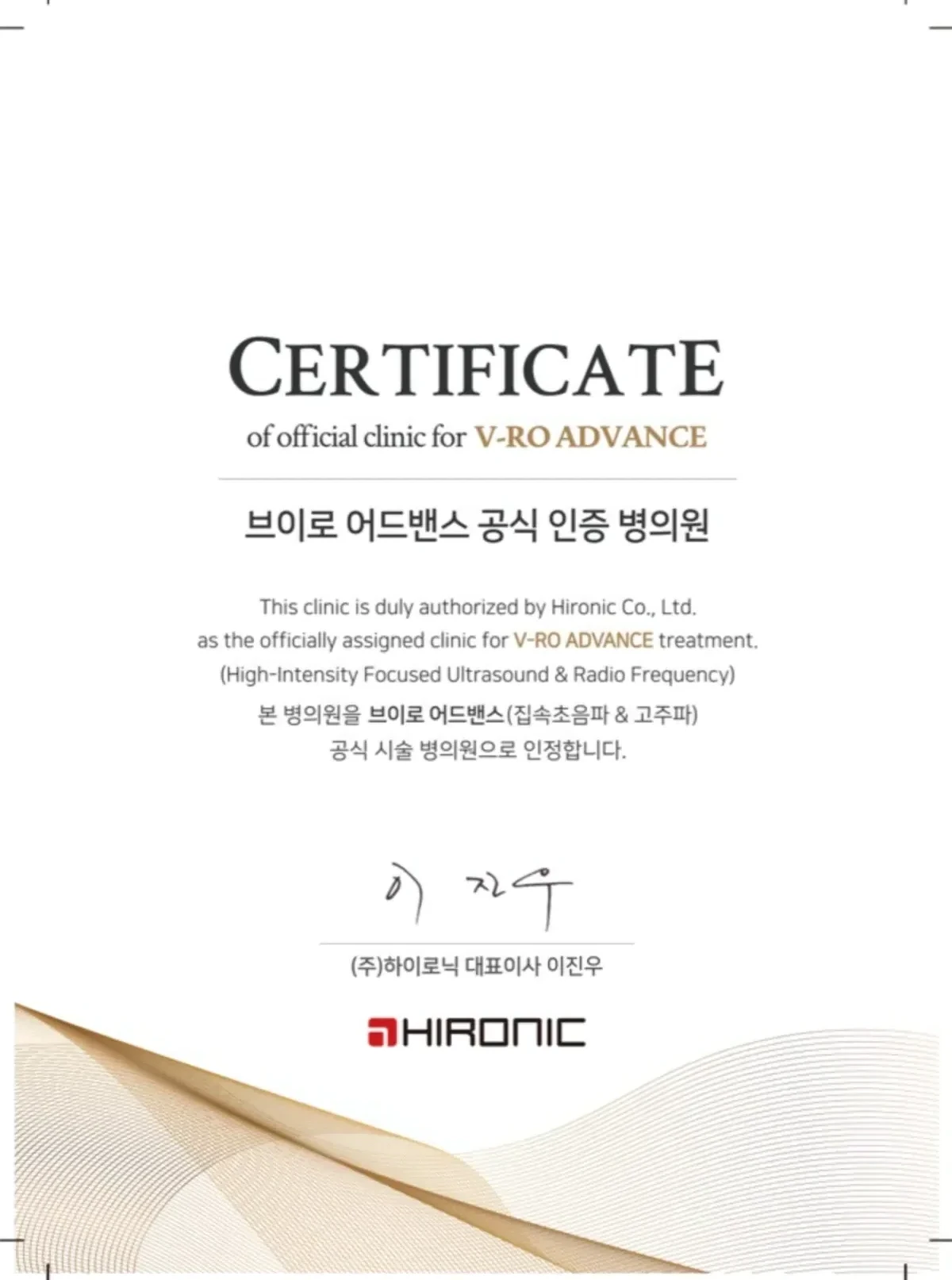
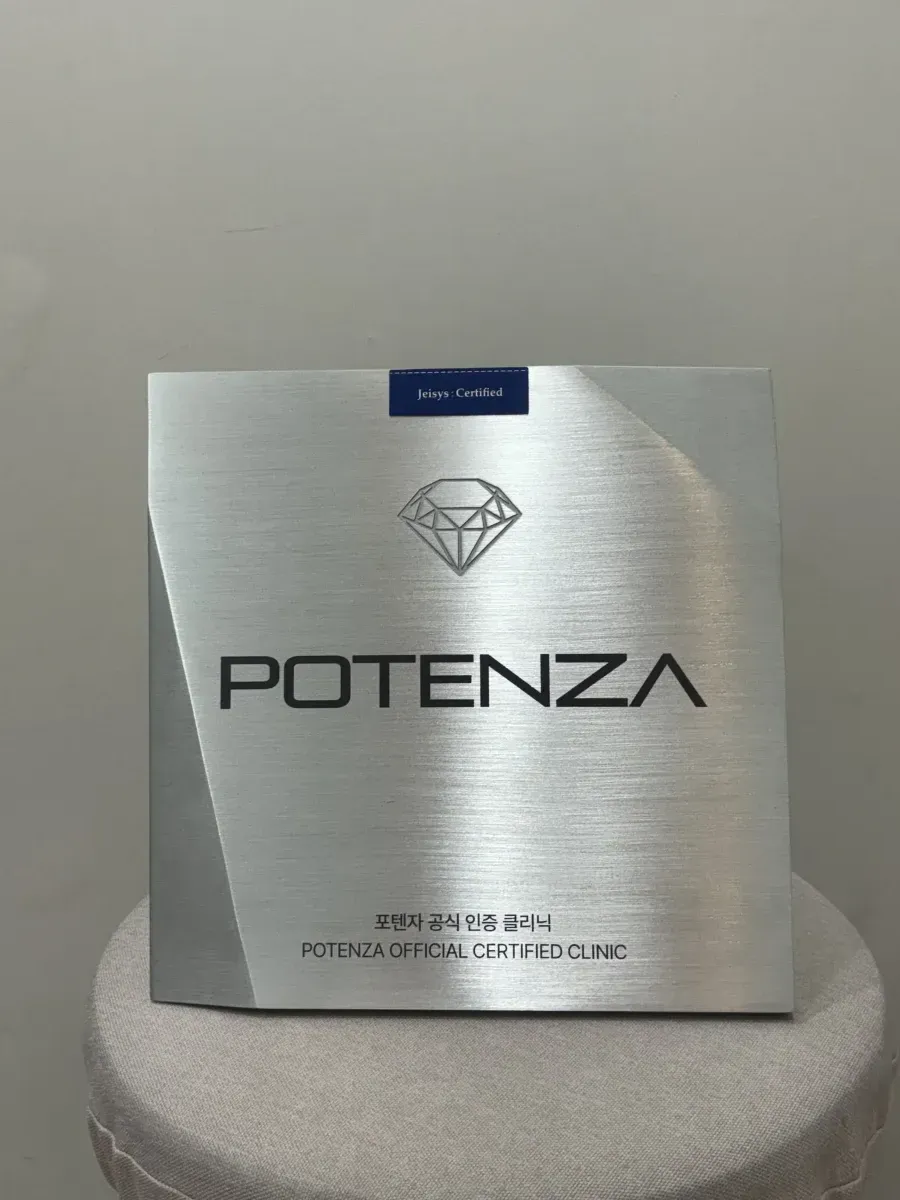
Brand-Authenticated Equipment & Training
Our doctors are certified by Korea’s top dermatological societies






Latest from Our Instagram
Real treatments, patient reactions, and behind-the-scenes from RE:BERRY.
Tap any video for sound & fullscreen
What our patients say
Real verified reviews from our Google Business Profile
Popped into Reberry Incheon while in Korea because I wanted to check out some local beauty treatments! The staff was super friendly. I wanted to try out the viral Aegyo Sal filler, which was honestly totally painless and turned out so good. It’s super conveniently located right near Incheon Airport (T1 & T2), Unseo...
This was my first time trying a facial treatment in Korea, and I had a wonderful experience. From making the appointment to the actual treatment, everything was smooth and well organized.
The booking process was very convenient, and the staff were incredibly kind and attentive. They explained each step clearly, made s...
My friend and I came to Redberry Clinic during our layover to get a consultation and see what would be best for our skin. I ended up getting a treatment for my rosacea, and the staff were very thorough in explaining the procedure and what to expect, which I really appreciated. Everyone was also super friendly and welco...
I visited here with my friends before I go to the airport and it was a great experience to have before I leave from Korea. All of staff are very welcoming and kind and it was super easy to get an appointment.(They said it’s possible for walk-ins as well.)
I would come back here again if I have a chance to come to Korea...
Highly recommend. We will return next time we have a layover in Seoul. Easy communication on whatsapp to book the appointment. 15 minutes away from Incheon airport. White jade injection took only 15 minutes. Very professional and clean operation.
Numbers That Tell Our Story
Real procedures performed.
Frequently Asked Questions About MINT Thread Lift in Korea
Expert answers about MINT molded-barb thread technology at RE:BERRY Incheon Airport.
Who performs MINT thread lift Korea procedures at RE:BERRY Incheon Airport?
2 licensed physicians perform every MINT thread lift Korea procedure at RE:BERRY Incheon Airport: Dr. Sunbeen Kim (Head Director, License No. 137273, MINT thread advanced practitioner) and Dr. Kim Dong-Young (License No. 147291). RE:BERRY limits MINT thread lift Korea to 3-4 patients per surgeon daily for 60-90 minute consultations.
Does the same doctor perform my MINT thread lift Korea consultation and procedure at RE:BERRY?
100% same-doctor continuity at RE:BERRY Incheon Airport — the physician who performs your 3D facial analysis and vector mapping is the same doctor who inserts your MINT threads. Korean boutique clinics like RE:BERRY offer more same-doctor continuity than US/Japan chain practices, reducing asymmetry risk. Explore RE:BERRY Botox for complementary results.
What certifications does RE:BERRY hold for MINT thread lift Korea procedures?
4 key certifications at RE:BERRY Incheon Airport: MINT thread advanced practitioner (Dr. Sunbeen Kim), KDLA membership (Korean Dermatology & Laser Academy), Potenza RF, and Sofwave. Korea holds more MINT thread lift volume than any country worldwide — RE:BERRY has performed 1,000,000+ treatments across RE:BERRY clinics (Gangnam, Myeongdong, Incheon Airport). Explore RE:BERRY Thermage for complementary results.
How much does MINT thread lift Korea cost vs the US, Japan, and UK in 2026?
MINT thread lift Korea at RE:BERRY Incheon Airport costs ₩1,790,000 ($1,279 USD) for full jawline — Korea pricing is 50-75% less than US/Japan/UK despite using identical FDA/MFDS-cleared technology.
| Region | Full Jawline MINT Lift | Per Thread Line | Savings vs US |
|---|---|---|---|
| RE:BERRY Incheon Airport (Korea) | ₩1,790,000 ($1,279 USD) | ₩200,000 ($143 USD) | 68-84% less |
| United States | $4,000-8,000 | $500-1,000 | — |
| Japan | ¥400,000-800,000 ($2,700-5,400) | ¥50,000-100,000 ($340-680) | 53-68% less |
| United Kingdom | £3,000-6,000 ($3,800-7,600) | £400-800 ($510-1,020) | 66-83% less |
What is the total cost of a MINT thread lift Korea trip including travel?
Total MINT thread lift Korea trip cost at RE:BERRY Incheon Airport is ₩1,790,000 ($1,279 USD) treatment + flight + hotel — still 40-65% less than US/Japan/UK domestic prices. Seoul pricing saves more than even long-haul travel costs add.
| Cost Component | From US | From Japan | From UK |
|---|---|---|---|
| Round-trip flight | $500-900 | $200-400 | $600-1,000 |
| RE:BERRY MINT thread lift | ₩1,790,000 ($1,279) | ₩1,790,000 ($1,279) | ₩1,790,000 ($1,279) |
| Hotel (1-2 nights) | $50-150 | $50-150 | $50-150 |
| Total trip | $1,829-2,329 | $1,529-1,829 | $1,929-2,429 |
| Domestic equivalent | $4,000-8,000 | $2,700-5,400 | $3,800-7,600 |
How does MINT thread lift Korea pricing compare to standard PDO thread lifts?
MINT threads at RE:BERRY Incheon Airport cost ₩200,000 ($143 USD) per line vs ₩100,000 ($71 USD) for standard PDO — a 100% premium, but MINT requires fewer threads making total cost cheaper for full jawline.
| Feature | MINT Thread | Standard PDO Cog |
|---|---|---|
| Price per thread | ₩200,000 ($143) | ₩100,000 ($71) |
| Threads needed (jawline) | 4-8 per side | 6-12 per side |
| Full jawline total | ₩1,790,000 ($1,279) | ₩990,000 ($707) |
| Result duration | 18-24 months | 12-18 months |
| Cost-per-month of results | Lower (longer duration) | Higher (shorter duration) |
MINT thread lift Korea vs Ultherapy Prime — which is better at RE:BERRY?
2 different lifting mechanisms at RE:BERRY Incheon Airport — MINT thread lift Korea at ₩1,790,000 ($1,279 USD) for mechanical lifting vs Ultherapy Prime at ₩490,000 ($350 USD) per 100 shots for HIFU collagen. Korean clinics perform more of both procedures than US/Japan.
| Feature | MINT Thread Lift | Ultherapy Prime |
|---|---|---|
| Mechanism | Mechanical lifting + collagen | HIFU collagen stimulation |
| Price | ₩1,790,000 ($1,279) | ₩490,000 ($350) per 100 shots |
| Best for | Moderate-severe laxity, heavy jowling | Mild-moderate laxity, skin tightening |
| Results visible | Immediate | 2-3 months (gradual) |
| Duration | 18-24 months | 12-18 months |
| Downtime | 5-7 days | 0-1 day |
How does MINT thread lift Korea compare to PLLA and PCL threads at RE:BERRY?
4 thread types available at RE:BERRY Incheon Airport from ₩100,000-₩220,000 per line ($71-$157 USD). Korean thread lift clinics offer more thread variety than US/Japan — RE:BERRY stocks MINT, PDO, PLLA, and PCL.
| Feature | MINT (PDO) | Standard PDO | PLLA | PCL |
|---|---|---|---|---|
| Barb type | Injection-molded | Cut/carved | Cut/carved | Cut/carved |
| Holding strength | 3.8 N (highest) | 2.7 N | 2.5 N | 3.0 N |
| Result duration | 18-24 months | 12-18 months | 18-24 months | 24-30 months |
| FDA cleared | Yes (510k) | Varies | Some | Some |
| Migration risk | Very low | Low-moderate | Low | Low |
| Best for | Moderate-severe laxity | Mild-moderate | Volume + lift | Maximum longevity |
Can I combine MINT thread lift Korea with Sofwave or Onda lifting?
70% of RE:BERRY Incheon Airport MINT thread lift Korea patients combine with energy-based treatments for superior results.
| Combination | Timing | Benefit | RE:BERRY Protocol |
|---|---|---|---|
| MINT + Jaw Botox | Same day | V-line definition | Most popular combo |
| MINT + Onda | Same day | Fat reduction + lift | Comprehensive V-line |
| MINT + Sofwave | 2-4 weeks post | Enhanced collagen | Sequential for max effect |
| MINT + RF lifting | 2-4 weeks post | Skin tightening layer | Deeper collagen stimulation |
How is MINT thread lift Korea at RE:BERRY different from high-volume chain clinics?
4 critical differences between RE:BERRY Incheon Airport’s MINT thread lift Korea protocol and Korean chain clinic approaches — boutique Korean clinics offer more same-doctor continuity than chain practices.
| Feature | RE:BERRY (Boutique) | Large Chain Clinic |
|---|---|---|
| Patients per surgeon/day | 3-4 | 10-15+ |
| Thread selection | MINT (molded barbs) matched to anatomy | Often generic PDO only |
| Same surgeon throughout | 100% | ~40% |
| Consultation time | 60-90 min | 15-20 min |
| Vector planning | 3D facial analysis | Standard template |
| Post-procedure follow-up | Personal LINE/WhatsApp | Call center |
Can I fly after MINT thread lift Korea at RE:BERRY Incheon Airport?
24-48 hours waiting time recommended before flying after MINT thread lift Korea at RE:BERRY Incheon Airport. Day 1-3: swelling peaks then resolves. RE:BERRY’s complimentary airport pickup and 15-minute proximity to Incheon International Airport make scheduling convenient — many international patients book their MINT thread lift Korea 2 days before departure.
What are the side effects and recovery timeline after MINT thread lift Korea at RE:BERRY?
5-7 days for most activities after MINT thread lift Korea at RE:BERRY Incheon Airport (₩1,790,000 / $1,279 USD).
| Timeline | Expected Effect | Resolution |
|---|---|---|
| Day 0 | Immediate lifting visible, mild swelling | Lifting permanent |
| Day 1-3 | Swelling peaks, tightness along jawline | Swelling begins resolving |
| Day 4-7 | Swelling resolving, tightness normalizing | Most activities resume |
| Week 2 | Threads fully settled, natural appearance | Tightness gone |
| Month 1-3 | Active neocollagenesis, progressive improvement | Collagen building |
| Month 3-24 | Peak lift from mechanical + biological effects | Results sustained 18-24 months |
Why choose RE:BERRY for MINT thread lift Korea over other Seoul clinics?
5 reasons to choose RE:BERRY for MINT thread lift Korea: 1,000,000+ treatments performed across RE:BERRY clinics (Gangnam, Myeongdong, Incheon Airport), same-doctor continuity (100%), 60-90 minute consultations (vs 15-30 min at chains), airport pickup included, and Seoul pricing cheaper than US/Japan by 50-75%. Full jawline at RE:BERRY costs ₩1,790,000 ($1,279 USD) — also see V-line thread lift. Zero barb breakage cases reported.
How many days in Seoul should I plan for MINT thread lift Korea at RE:BERRY?
2-3 days recommended for MINT thread lift Korea at RE:BERRY Incheon Airport: Day 1 for consultation and procedure (60-90 minutes total), Day 2-3 for initial recovery monitoring. Many patients combine with jawline lifting or jaw Botox. Seoul pricing is 50-70% less than US/Japan.
What follow-up does RE:BERRY provide after MINT thread lift Korea for patients returning home?
18-24 months of results from RE:BERRY Incheon Airport’s MINT thread lift Korea with remote aftercare. International patients receive free photo consultations via LINE, WhatsApp, or KakaoTalk. RE:BERRY monitors healing at day 7, week 4, and month 3 remotely — more hands-on than typical US/Japan clinics. Annual maintenance threads (₩200,000 / $143 USD each) extend results.
Ready for the Strongest Non-Surgical Lift?
Book your MINT thread lift consultation with Dr. Sunbeen Kim at RE:BERRY Incheon Airport. FDA + MFDS cleared molded-barb technology. 18–24 month results. open 6 days a week. Airport pickup included.
Got a Layover in Korea? This Clinic Near Incheon Airport Offers Aesthetic Treatments in Under 4 Hours — Business Wire, 2026-04-13
Book Your Personalized Consultation
Share your details and our multilingual team will contact you as soon as possible through your preferred messenger.
- ✓ Free online skin consultation with a doctor
- ✓ Personalized treatment plan & pricing
- ✓ Airport pickup coordination available
- ✓ 5-language support (EN/ZH-CN/ZH-TW/JA/ES)
- ✓ Response as soon as possible via your preferred messenger
How to Find RE:BERRY Incheon Airport
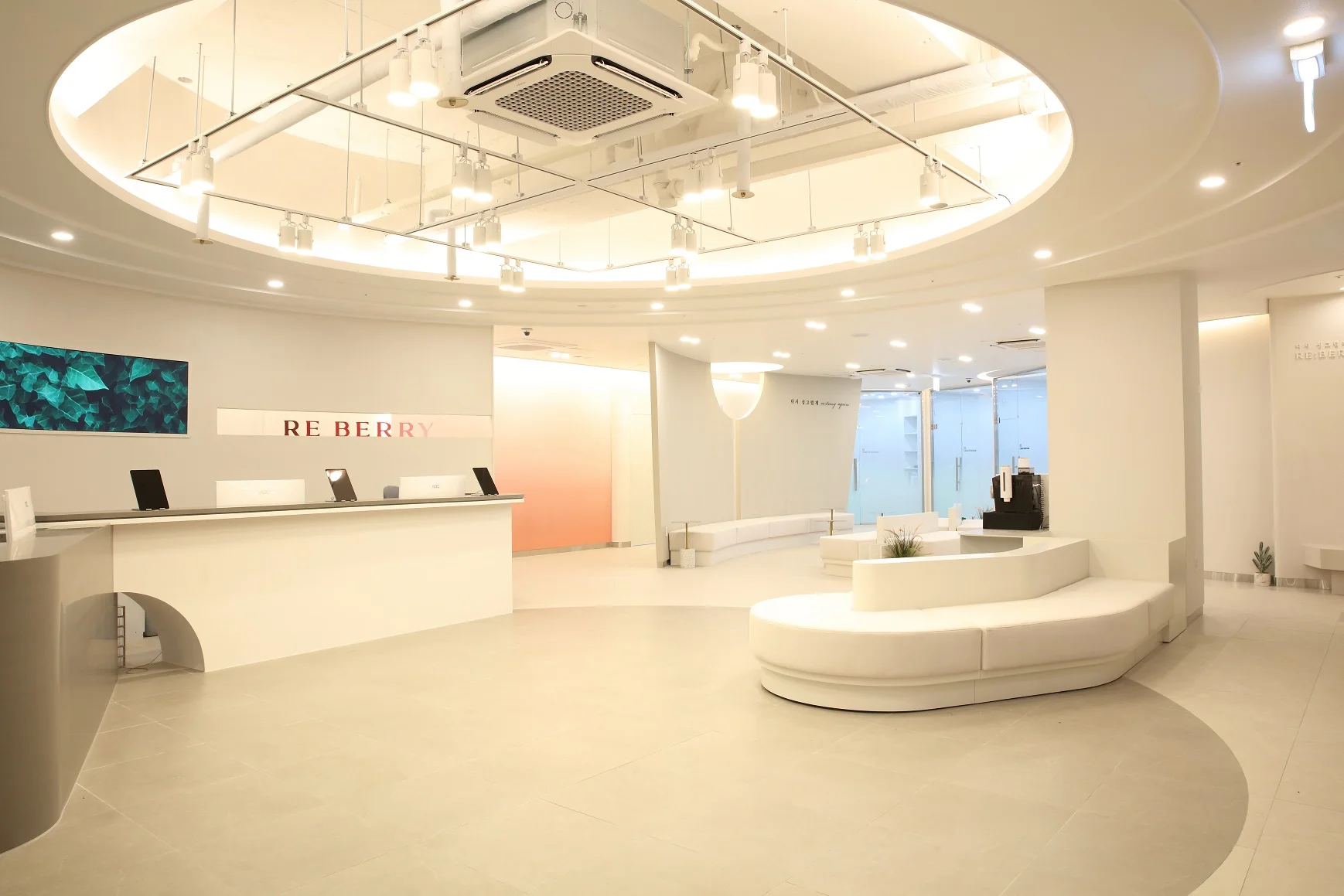
20 mins from Incheon Airport Terminal 1 by shuttle or taxi. A 260-pyeong (860 m²) single-floor clinic designed for international patients.
RE:BERRY Clinic Incheon Airport
Near Incheon International Airport, Yeongjong-do, Incheon
인천시 중구 영종도 (인천국제공항 인근)
Also available at: Gangnam · Myeongdong