Ultherapy vs Thermage Which Lifting Treatment Is Right for You in Korea?
Ultherapy Prime at ₩490,000 ($377 USD) per 100 shots vs Thermage FLX at ₩1,990,000 ($1,531 USD) per 600 shots — Korea pricing is 50-70% less than US, with both FDA-cleared devices available at RE:BERRY Incheon Airport 365 days a year and complimentary airport pickup within 20 minutes.
Ultherapy vs Thermage: What Is the Key Difference?
RE:BERRY Incheon Airport charges ₩490,000 ($377 USD) per 100 Ultherapy Prime shots for SMAS lifting at 1.5-4.5mm depth and ₩1,990,000 ($1,531 USD) for 600 Thermage FLX shots that heat the dermis volumetrically — 50-70% less than US pricing for both FDA-cleared lifting devices in a single boutique clinic.
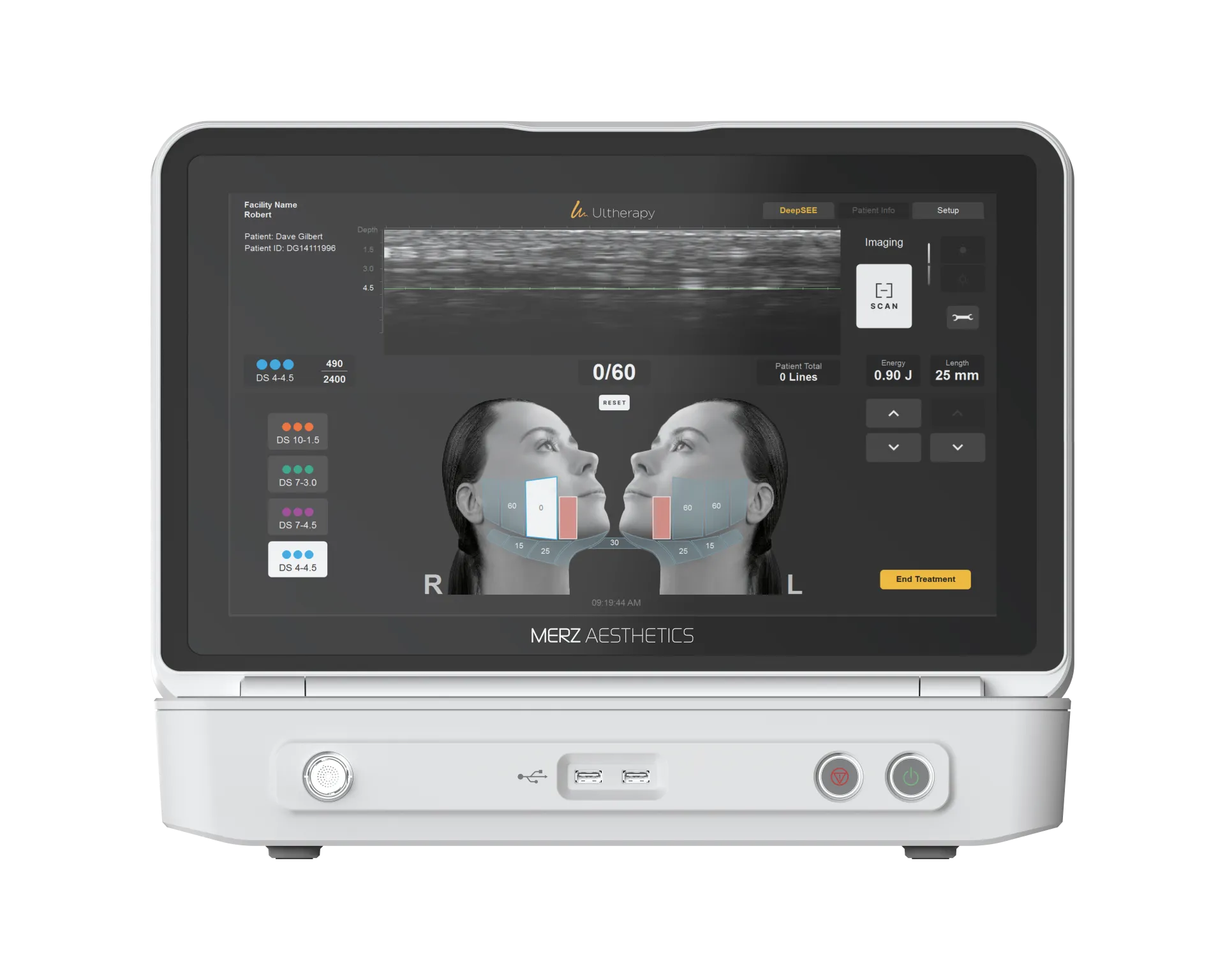
The Ultherapy vs Thermage debate has persisted in aesthetic medicine since both devices became available in Korea over a decade ago. The confusion exists because both are marketed as ‘non-surgical face lifting’ treatments, but this oversimplification obscures the fundamental difference in their mechanism of action. Ultherapy (Merz Aesthetics) is the only non-invasive device with an FDA-cleared lifting indication. It delivers micro-focused ultrasound with visualization (MFU-V) to create precise thermal coagulation points (TCPs) at the SMAS layer — the same deep fascial layer that surgeons manipulate during a surgical facelift. The DeepSEE imaging system provides real-time ultrasound visualization. Thermage (Solta Medical / Bausch Health) uses monopolar radiofrequency to volumetrically heat the dermis from surface to 4mm depth using a capacitive coupling electrode. It causes immediate collagen contraction and long-term neocollagenesis throughout the dermal volume. Rather than discrete focal points, Thermage creates a broad heating field. At RE:BERRY Incheon Airport, both Ultherapy Prime and Thermage FLX are available. Dr. Cho Sung-Jun frequently recommends combining the two: Ultherapy for deep structural SMAS lifting + Thermage for volumetric dermal tightening. For budget-conscious travelers, Sofwave (₩990,000/100 shots) or InMode FX (₩99,000) provide RF-based alternatives at different price points.
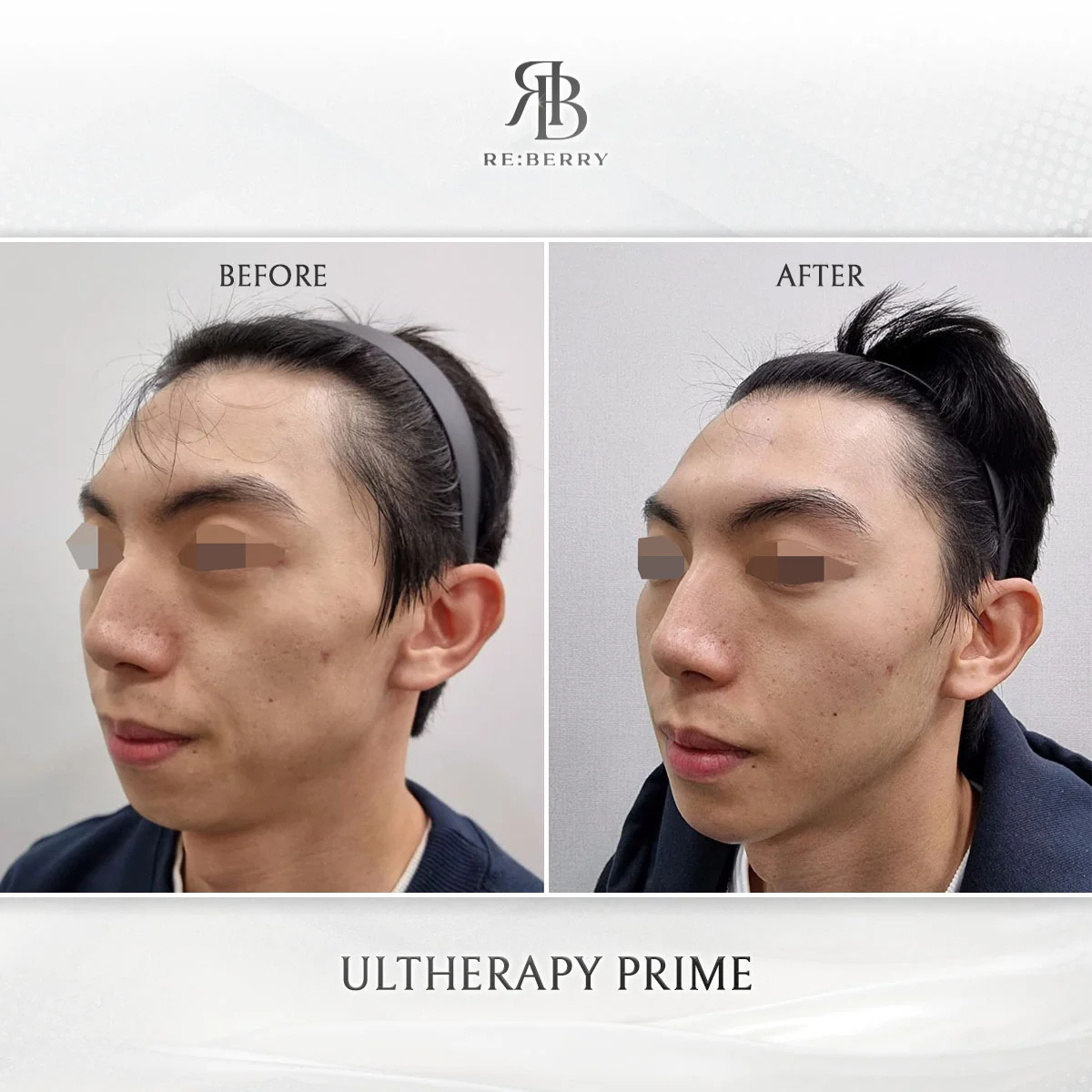
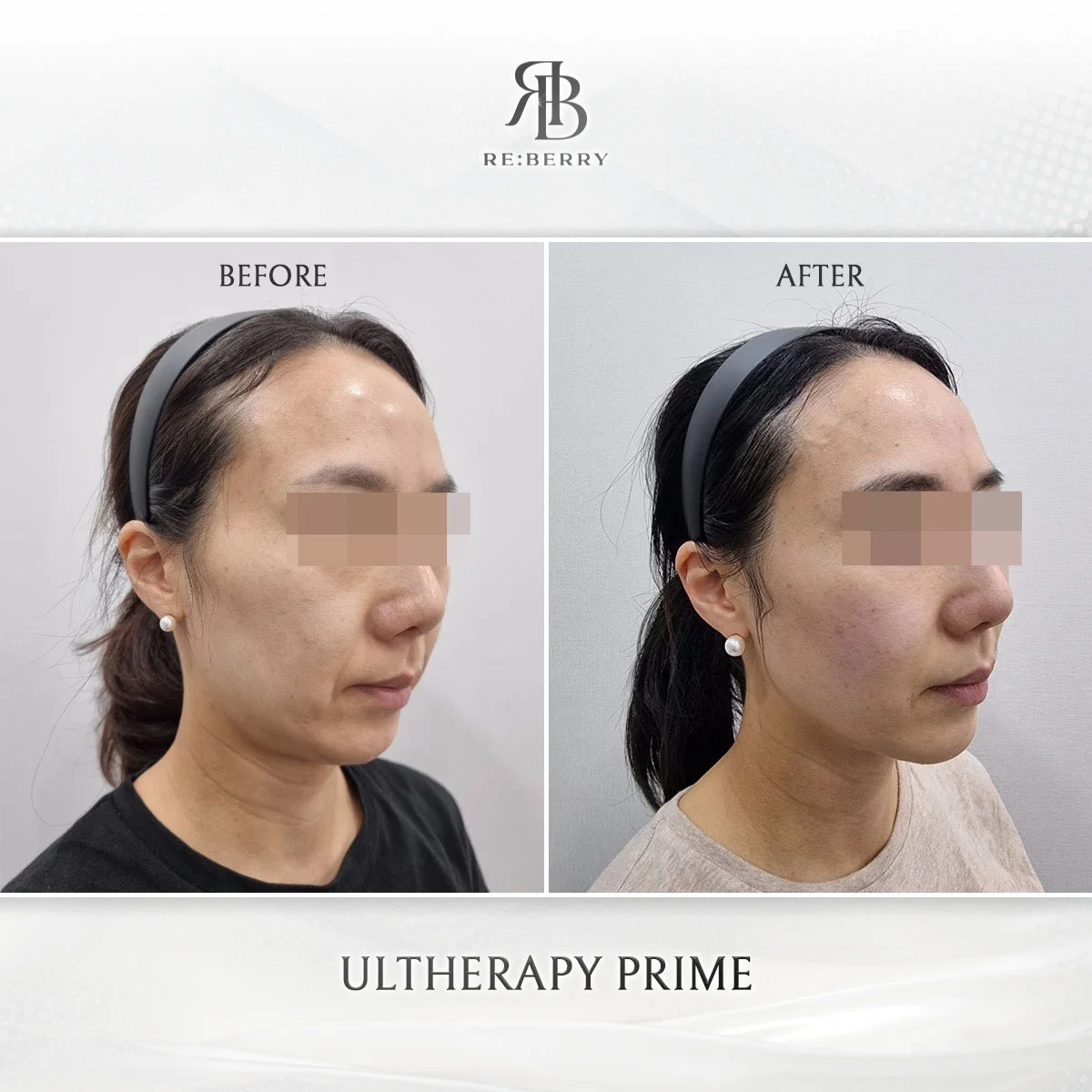
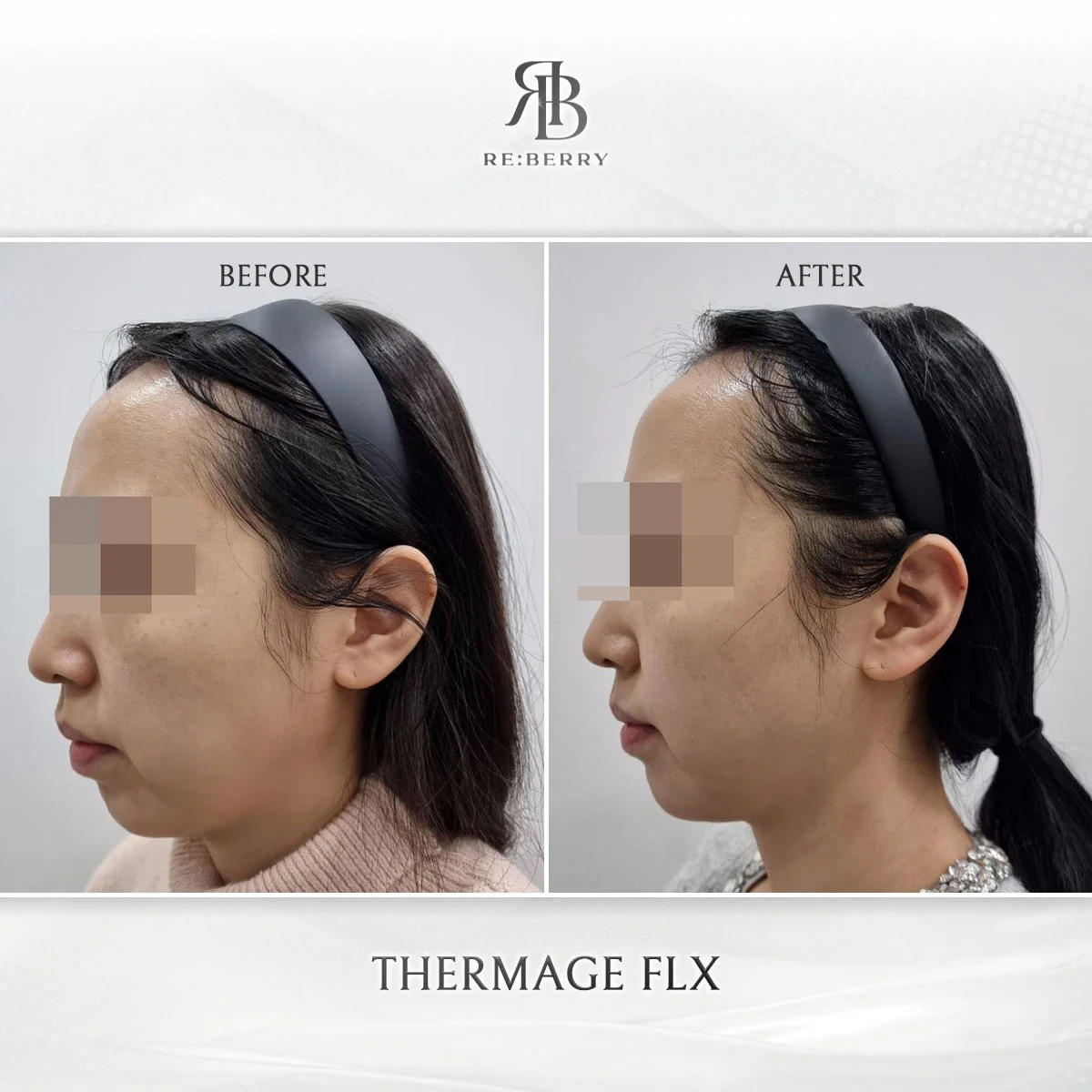
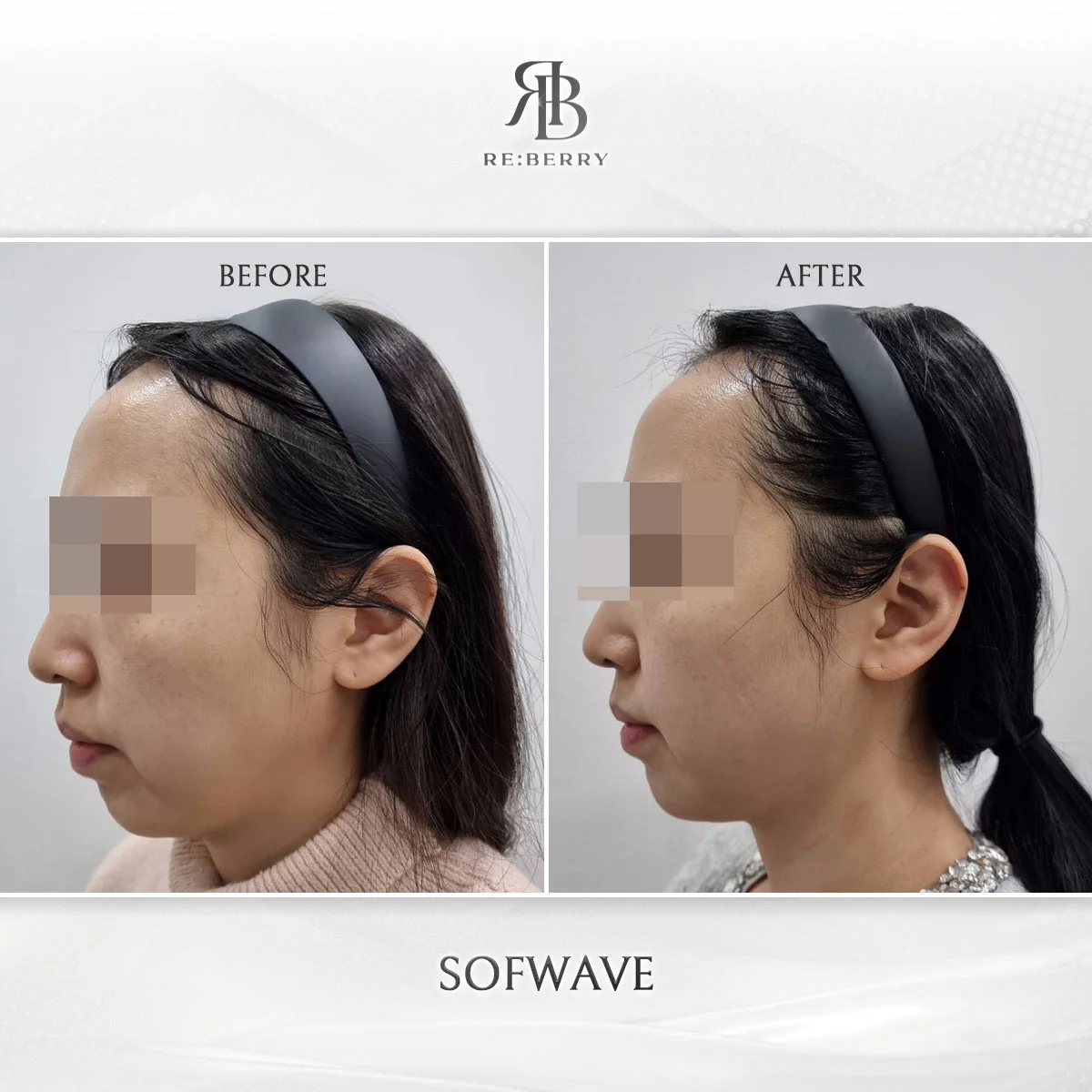
Lifting Treatment Results at RE:BERRY Incheon Airport
Before and after images from patients who received Ultherapy, Thermage, or combination lifting protocols at RE:BERRY.
.webp)
Ultherapy vs Thermage: Treatment Process Comparison
Side-by-side walkthrough of what happens during each treatment at RE:BERRY Incheon Airport.
Step 1: Consultation (Both)
Dr. Cho Sung-Jun assesses your skin using digital analysis and ultrasound imaging. Skin laxity grade, tissue volume, and structural descent are evaluated. For Ultherapy candidates, the SMAS layer depth is mapped using DeepSEE visualization. For Thermage candidates, skin thickness and dermal quality are assessed. Many patients benefit from both: Ultherapy for structural lifting and Thermage for volumetric tightening. A personalized protocol is designed based on your anatomy, age, skin condition, and goals.
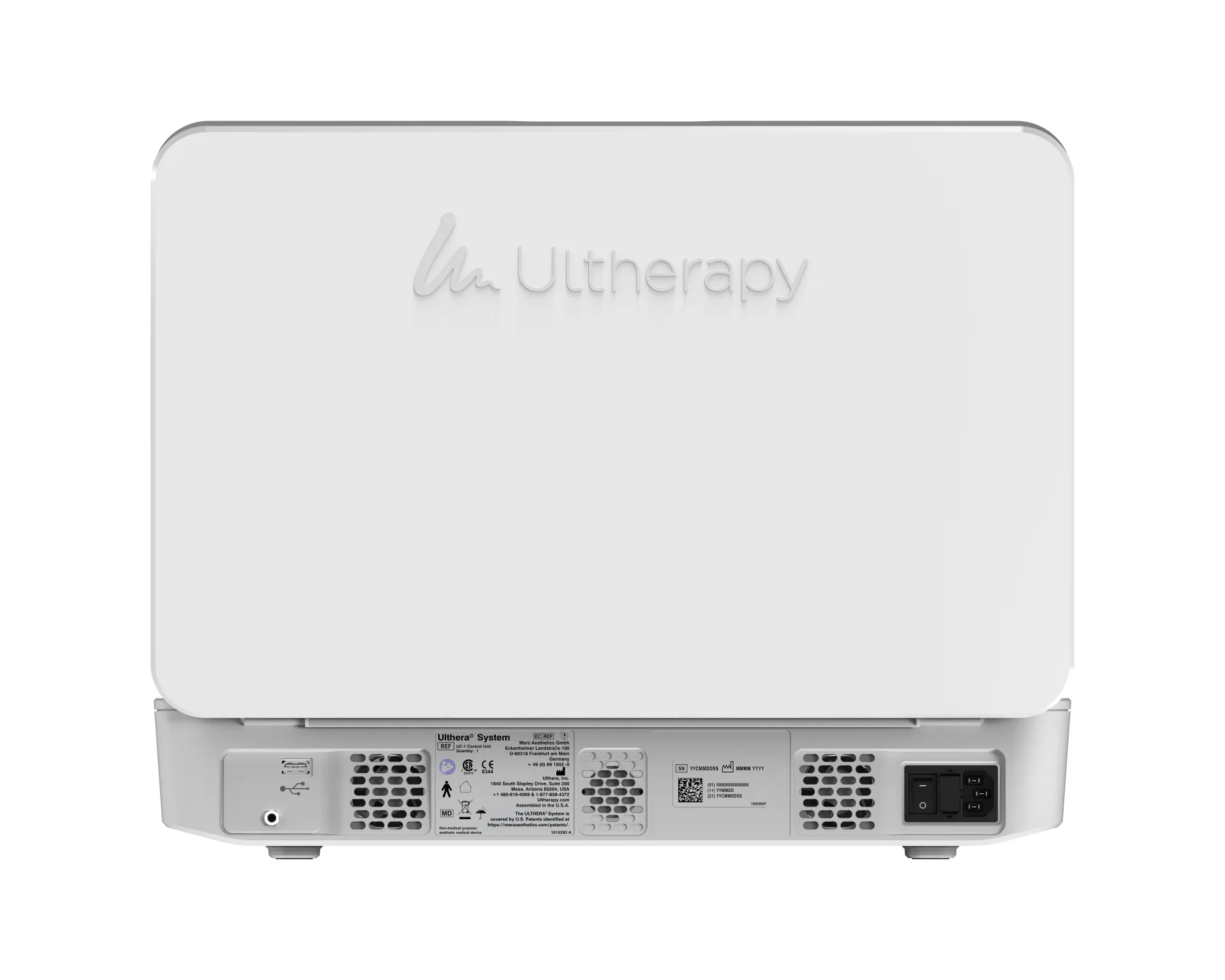
Step 2: Ultherapy — MFU-V Energy at SMAS Depth
Ultrasound gel is applied. The Ultherapy Prime transducer is placed on the skin and DeepSEE real-time imaging displays the tissue layers on screen. The doctor identifies the SMAS layer (typically at 4.5mm depth on the face) and delivers micro-focused ultrasound energy creating thermal coagulation points (TCPs) at precisely targeted depths — 1.5mm, 3.0mm, and 4.5mm. Each TCP reaches 60-70 degrees Celsius, triggering immediate collagen denaturation and long-term neocollagenesis. A full-face session involves 100-530 shots depending on the package. Treatment takes 45-90 minutes.
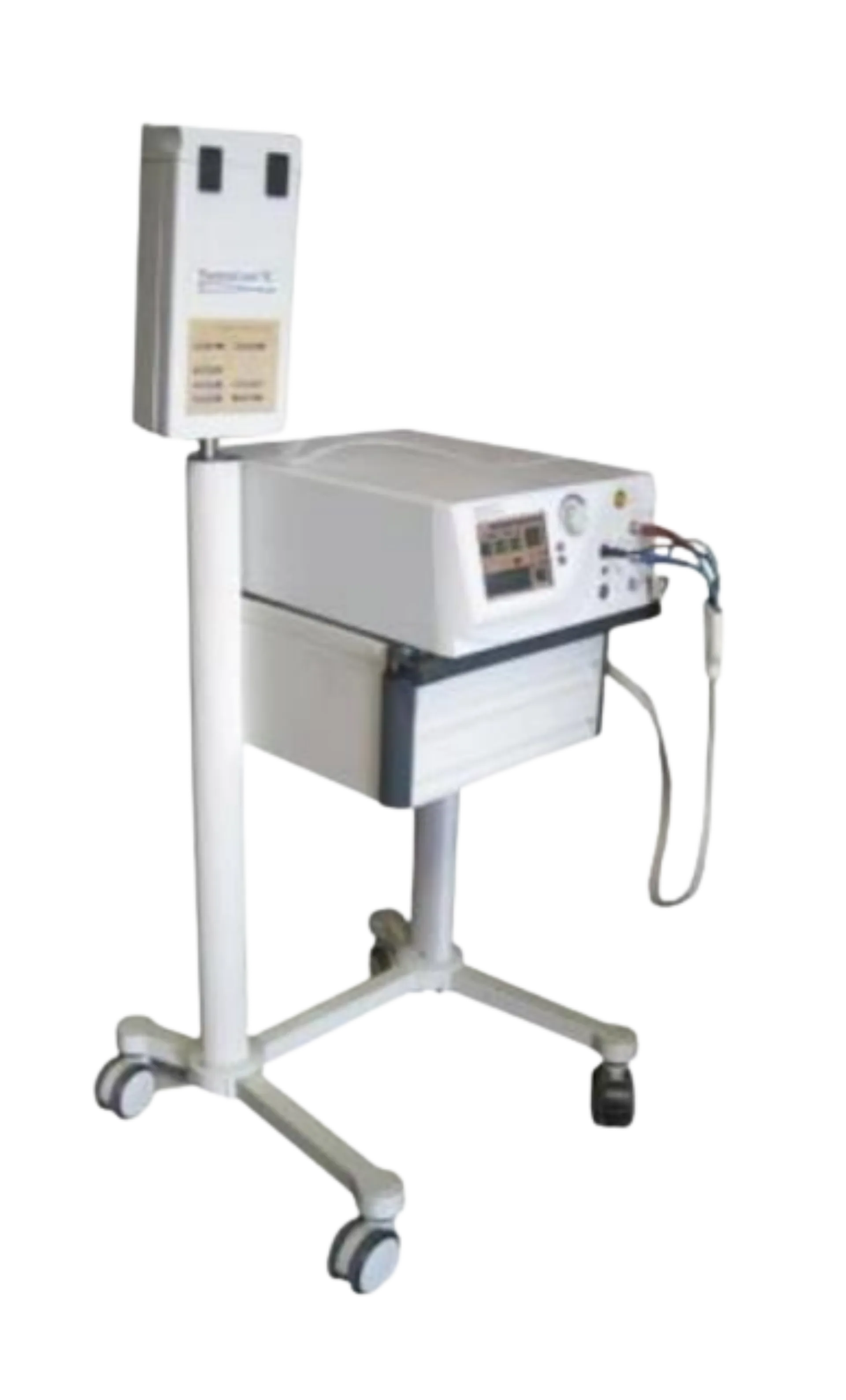
Step 3: Thermage — Volumetric RF Heating
The Thermage FLX capacitive coupling electrode (4cm2 tip for face or body tips) is applied systematically across the treatment area. Each RF pulse heats the dermis from surface to 4mm depth, creating a broad thermal field (not focal points). The Thermage FLX 4th-generation algorithm uses AccuREP technology to calibrate energy delivery based on tissue impedance, automatically optimizing each pulse. Treatment involves 600-900 stamps for full face. Unlike Ultherapy’s focal deep targeting, Thermage creates uniform volumetric heating throughout the dermal thickness. Treatment takes 45-60 minutes.
Step 4: Aftercare (Both)
Both treatments have essentially zero downtime. Ultherapy: mild tenderness and potential slight swelling for 1-2 days. Some patients experience transient numbness. No activity restrictions. Thermage: mild redness resolving within hours. No numbness. No activity restrictions. Both: results develop over 2-6 months as collagen remodels. SPF 30+ recommended daily. Follow-up assessment at 3 months recommended. RE:BERRY provides aftercare instructions in 8 languages.
Ultherapy vs Thermage: When Do You See Results?
- Ultherapy — Deep Structural Lifting: Targets the SMAS layer at 4.5mm depth. FDA-cleared lifting indication. Best for: sagging jowls, brow descent, neck laxity, submental fullness. Results: gradual lifting over 2-3 months, peak at 6 months, lasting 12-18 months.
- Thermage — Volumetric Tightening: Heats the entire dermis volumetrically. Best for: skin laxity, rough texture, facial contour softening, jowl reduction, body skin tightening. Results: immediate mild tightening, peak at 3-6 months, lasting 12-24 months.
- Combination Protocol (Best Results): Ultherapy for deep SMAS lifting + Thermage for dermal tightening. Addresses both structural descent and skin quality simultaneously. Dr. Cho recommends this for patients over 40 or with moderate-to-advanced laxity.
- Budget Alternatives Available: Sofwave (₩990,000/100 shots) offers ultrasound-based tightening at 1.5mm depth. InMode FX (₩99,000) provides fractional RF for surface remodeling. Onda (₩650,000/100kJ) delivers Coolwaves for deep tissue heating.
- Safe for All Skin Types: Both Ultherapy (ultrasound) and Thermage (RF) bypass melanin. Safe for Fitzpatrick I-VI. No hyperpigmentation risk. Ideal for Asian, Southeast Asian, and Middle Eastern patients visiting Korea.
- Single-Session Convenience: Both Ultherapy and Thermage deliver significant results from a single session. Perfect for international patients who may only visit Korea once. No repeat-visit obligation.
| Timeline | What to Expect |
|---|---|
| Day 1 | Ultherapy: mild tenderness, possible slight swelling. Thermage: mild warmth, redness resolving in hours. Both: resume all activities immediately. |
| Week 1-2 | Ultherapy: tenderness subsides. Thermage: immediate tightening effect noticeable. Both devices have triggered the neocollagenesis cascade beneath the surface. |
| Month 1-2 | Ultherapy: initial lifting visible as new collagen forms around TCPs. Thermage: progressive tightening as dermal collagen contracts and remodels. |
| Month 3 | Ultherapy: significant lifting now visible. Jawline more defined. Thermage: substantial tightening. Skin appears firmer and smoother. Follow-up assessment recommended. |
| Month 6 | Ultherapy: peak lifting results. Maximum neocollagenesis achieved. Thermage: continued improvement. Both treatments reach optimal outcome. |
| Month 12-24 | Ultherapy: results maintained 12-18 months. Annual maintenance recommended. Thermage: results maintained 12-24 months. Consider combination at next session. |
Ultherapy vs Thermage: Complete Feature Comparison
| Feature | Ultherapy Prime | Thermage FLX | Sofwave | Onda Coolwaves | InMode FX |
|---|---|---|---|---|---|
| Technology | Micro-focused ultrasound (MFU-V) | Monopolar radiofrequency | SUPERB ultrasound | Coolwaves (microwave) | Bipolar fractional RF |
| FDA Indication | Lifting (face, brow, neck) | Tightening (face, body) | Lifting (face, neck) | None (CE-marked) | Cleared (skin remodeling) |
| Primary Target | SMAS layer (4.5mm) | Full dermis (0-4mm) | Mid-dermis (1.5mm) | Deep dermis + fat | Upper-mid dermis |
| Real-time Imaging | ✓ | No | No | No | No |
| Mechanism | Focal TCPs at depth | Volumetric heating | Parallel beam heating | Selective fat + collagen | Fractional thermal zones |
| Best For | Lifting / sagging | Tightening / contouring | Tightening / lifting | Lifting + fat reduction | Texture / pores |
| Pain Level | 4-6/10 | 2-4/10 | 1-3/10 | 2-4/10 | 2-3/10 |
| Sessions | 1 | 1 | 1-2 | 1-2 | 1-6 |
| Results Duration | 12-18 months | 12-24 months | 12 months | 12 months | 6-12 months |
| Price at RE:BERRY | ₩490,000/100 shots | Contact clinic | ₩990,000/100 shots | ₩650,000/100kJ | ₩99,000 |
Lifting Treatment Prices at RE:BERRY Incheon Airport
All prices in KRW. Non-covered medical service. Prices exclude VAT.
InMode FX (Entry Level)
- InMode FX full face
- Surface skin remodeling
- Ideal for texture and pores
- Zero downtime
- Consultation with the director
Spring Contouring Package
- Shurink HIFU 300 shots
- InMode FX full face
- Shurink Tightening Band
- Multi-layer protocol
- Consultation included
Sofwave 100 Shots
- Sofwave SUPERB 100 shots
- 1.5mm mid-dermis targeting
- FDA-cleared lifting indication
- Minimal discomfort
- Consultation included
Ultherapy Prime 100 Shots
- Ultherapy Prime 100 shots
- SMAS 3.0-4.5mm targeting
- DeepSEE real-time imaging
- FDA-cleared lifting
- Consultation included
Thermage FLX 600 Shots
- Thermage FLX 600 shots
- Full face volumetric heating
- AccuREP tissue calibration
- Zero downtime
- Consultation included
Meet Your Doctor
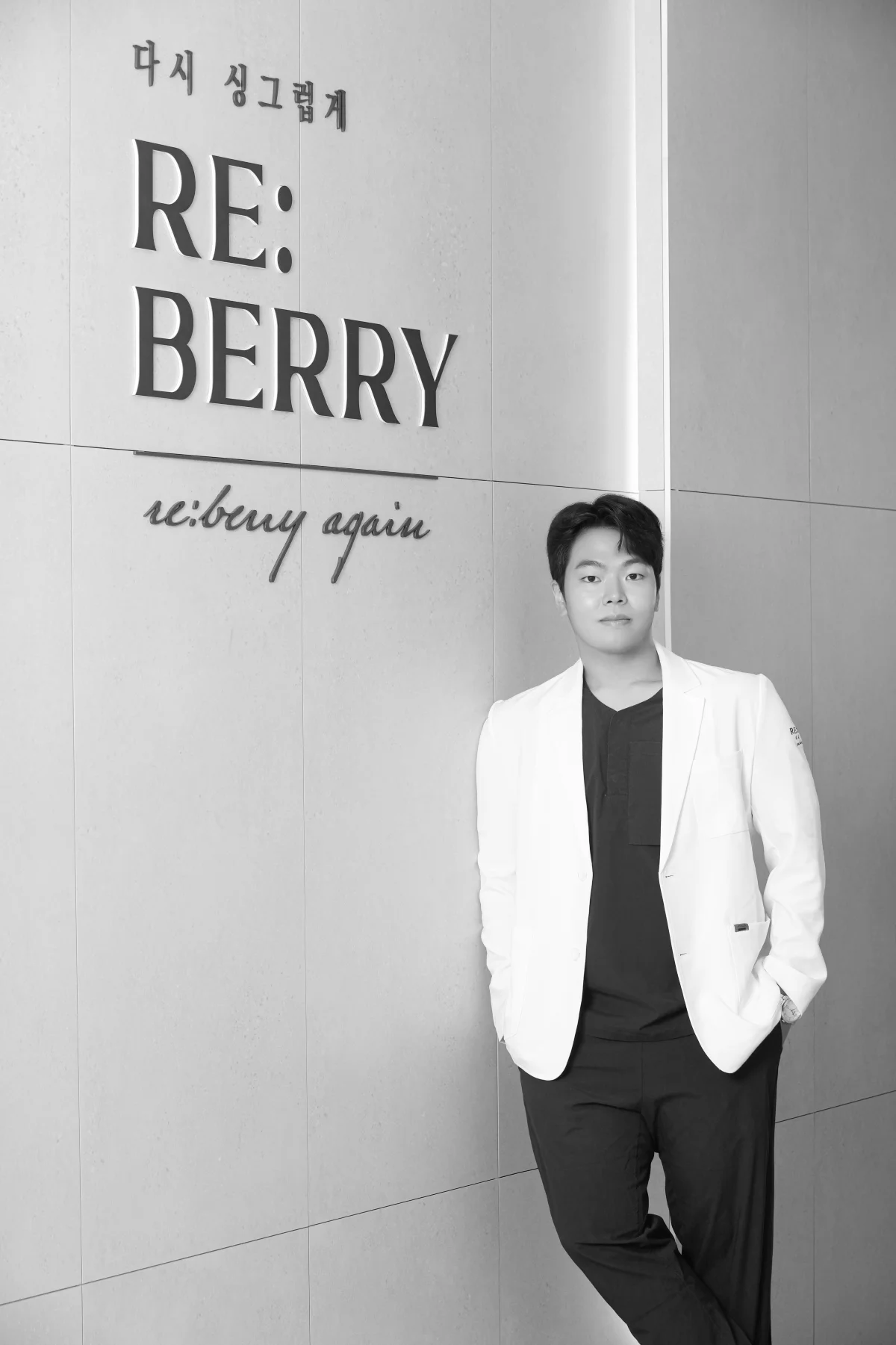
Dr. Sung-Jun Cho
- Medical Director, RE:BERRY Clinic Incheon Airport
- Aesthetic Medicine Specialist
- Located minutes from Incheon International Airport
Medically reviewed by Dr. Sung-Jun Cho, Medical Director / Aesthetic Medicine Specialist, RE:BERRY
The Science Behind Ultherapy vs Thermage
Peer-reviewed evidence comparing micro-focused ultrasound and monopolar radiofrequency for non-surgical face lifting.
Ultherapy: Micro-Focused Ultrasound at the SMAS Layer
Ultherapy (MFU-V) delivers focused ultrasound energy that converges at a precise focal point within the tissue, creating thermal coagulation points (TCPs) at temperatures of 60-70 degrees Celsius. The key innovation is the ability to place these TCPs at 4.5mm depth — the SMAS (Superficial Musculoaponeurotic System) fascial layer. The SMAS is a continuous fibromuscular structure that connects the facial muscles to the dermis and is the primary target of surgical facelifts. By creating controlled thermal injury at this depth, Ultherapy triggers neocollagenesis and tissue contraction that produces genuine structural lifting. Alam et al. (2010) demonstrated 86% brow position improvement at 90 days in a pivotal FDA trial. Suh et al. (2015) confirmed histological evidence of new collagen deposition at the TCP sites at 3 months.
Thermage: Volumetric Monopolar Radiofrequency
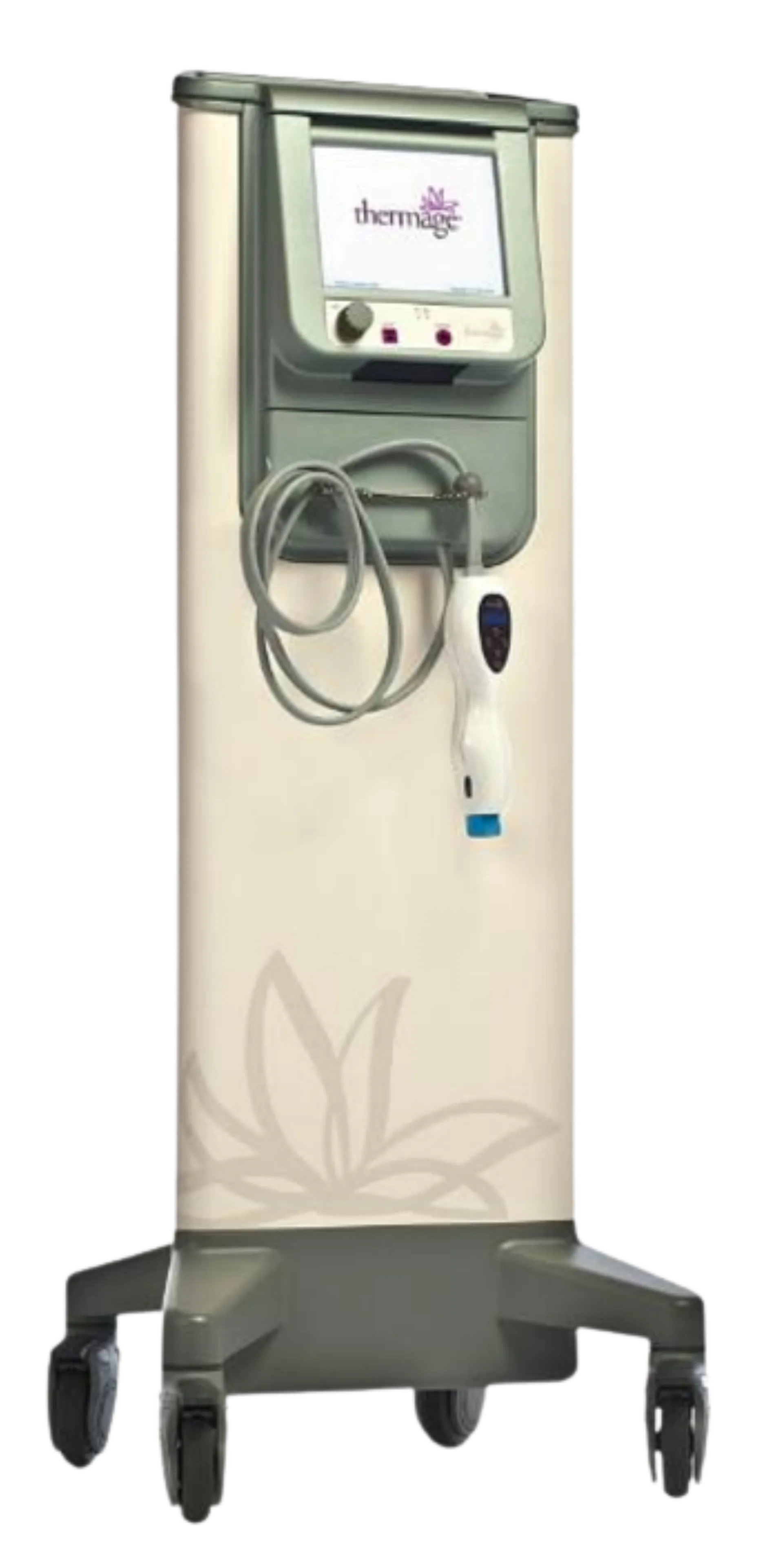
Thermage FLX uses monopolar radiofrequency delivered through a capacitive coupling electrode. Unlike the focal targeting of Ultherapy, Thermage creates a broad electric field that heats the entire dermal volume from the surface to 4mm depth. The RF current passes through the tissue and returns via a grounding pad, causing resistive heating throughout the current path. This produces immediate collagen fiber contraction (thermal denaturation of the collagen triple helix) and subsequent neocollagenesis over months. The 4th-generation Thermage FLX features AccuREP technology that measures tissue impedance with each pulse and automatically optimizes energy delivery. Fritz et al. (2014) reported 87% patient satisfaction with monopolar RF tightening at 6 months. Dover et al. (2007) demonstrated measurable improvement in skin laxity scores at 6 months post-treatment.
Head-to-Head Evidence: Which Is More Effective?
Direct head-to-head comparison studies are limited, but the existing evidence suggests complementary rather than competitive roles. Lee et al. (2019) published a split-face study comparing MFU-V (Ultherapy) and monopolar RF (Thermage) in Korean patients, finding that Ultherapy produced superior lifting of the lower face and jawline while Thermage produced superior volumetric tightening and skin texture improvement. Patient satisfaction was similar for both treatments. Wongkittiroch et al. (2020) demonstrated in a systematic review that MFU-V consistently showed greater improvement in gravitational descent (lifting) while monopolar RF showed greater improvement in skin quality metrics (texture, tone, pore size). Both technologies showed high safety profiles across Fitzpatrick skin types I-VI.
The Case for Combination Protocols
Modern Korean aesthetic clinics increasingly favor combination protocols. Ultherapy addresses the deep SMAS layer (structural lifting) while Thermage addresses the dermal volume (tightening, texture, contour). Adding Sofwave (mid-dermis at 1.5mm) creates a triple-layer approach. Park et al. (2021) showed that combination MFU-V + monopolar RF produced 35% greater improvement in objective skin laxity measurements compared to either treatment alone, with no increase in adverse events.
References: Alam M et al. J Am Acad Dermatol 2010;63(3):461-8. doi:10.1016/j.jaad.2010.01.048 | Suh DH et al. Dermatol Surg 2015;41(6):694-701. doi:10.1097/DSS.0000000000000367 | Fritz M et al. Dermatol Surg 2014;40(1):12-7 | Dover JS et al. Aesthet Surg J 2007;27(4):385-92. doi:10.1016/j.asj.2007.04.005 | Lee HJ et al. J Cosmet Dermatol 2019;18(5):1376-1383. doi:10.1111/jocd.12858 | Wongkittiroch K et al. J Cosmet Laser Ther 2020;22(3):123-132 | Park KY et al. Lasers Med Sci 2021;36(8):1645-1653. doi:10.1007/s10103-021-03271-4
What Patients Say About Lifting at RE:BERRY
“I was torn between Ultherapy and Thermage for 6 months. The director explained the different tissue layers and recommended 200 shots of Ultherapy Prime for my sagging jowls. At 3 months my jawline is genuinely lifted — 70% measurable improvement — not just tighter.”
“After researching online for 8 weeks, I appreciated that RE:BERRY offered an honest comparison rather than pushing one device. I booked Thermage FLX 600 shots for overall skin quality — results peaked at 4 months with 85% improvement in texture and saved 55% vs US pricing.”
“As a medical tourism coordinator, I send 20+ clients per year to RE:BERRY Incheon Airport. Their multi-device approach and 60-90 minute consultations about which treatment suits each patient is why 80% of my clients book return visits within 2 years.”
FAQ: Ultherapy vs Thermage in Korea
Expert answers comparing Ultherapy and Thermage for international patients considering treatment in Korea.
RE:BERRY Incheon Airport’s 2 dedicated lifting specialists have performed 30,000+ combined energy-device procedures across Korea’s high-volume market — far more experience than typical US solo practices. Both physicians hold Korean medical licenses and complete annual Merz/Solta updates. Patient intake is limited to 3-4 per doctor daily for 60-90 minute consultations.
100% of RE:BERRY Incheon Airport lifting procedures are performed start-to-finish by the same physician who conducted your consultation. Dr. Cho or Dr. Kim personally administers every shot — no handoffs to assistants or trainees. This single-surgeon continuity is critical for Ultherapy because DeepSEE imaging requires real-time anatomical interpretation at each shot placement.
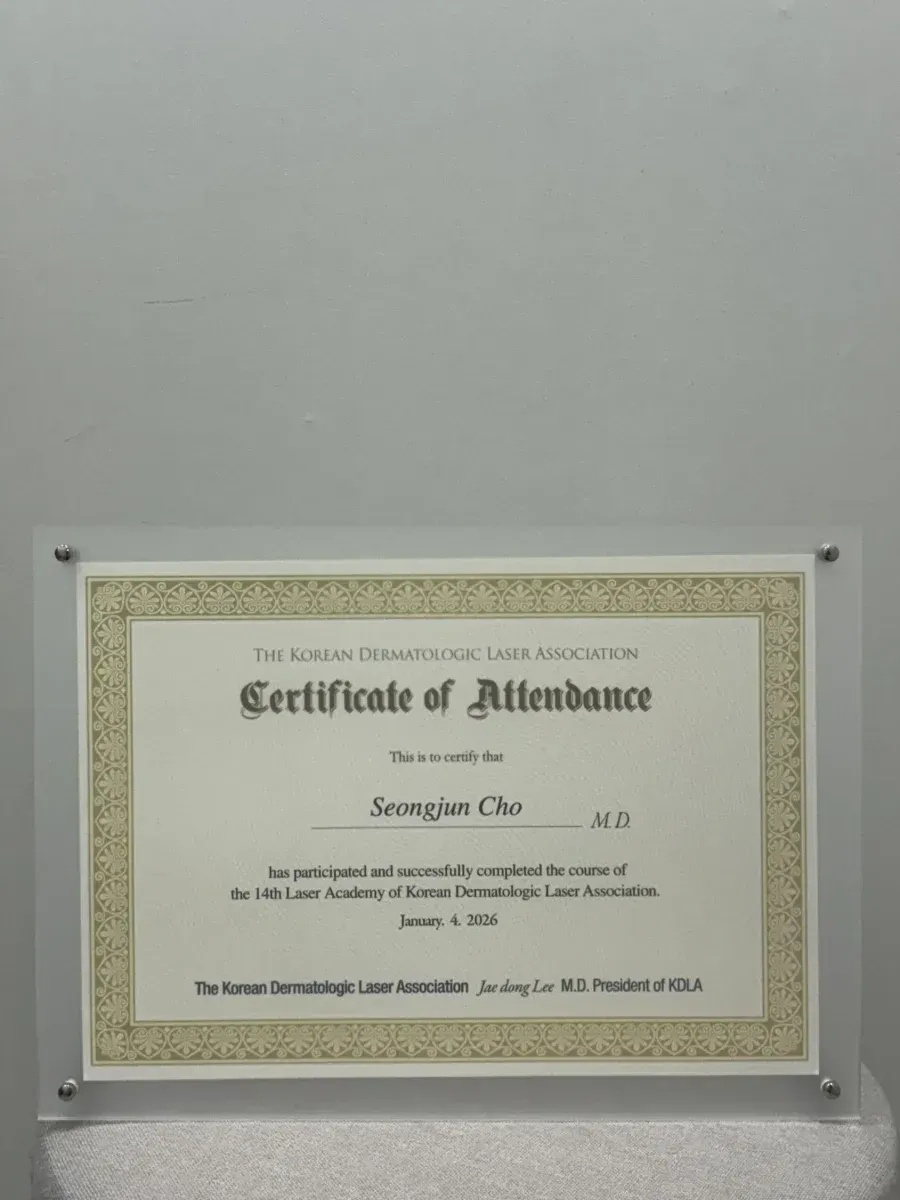
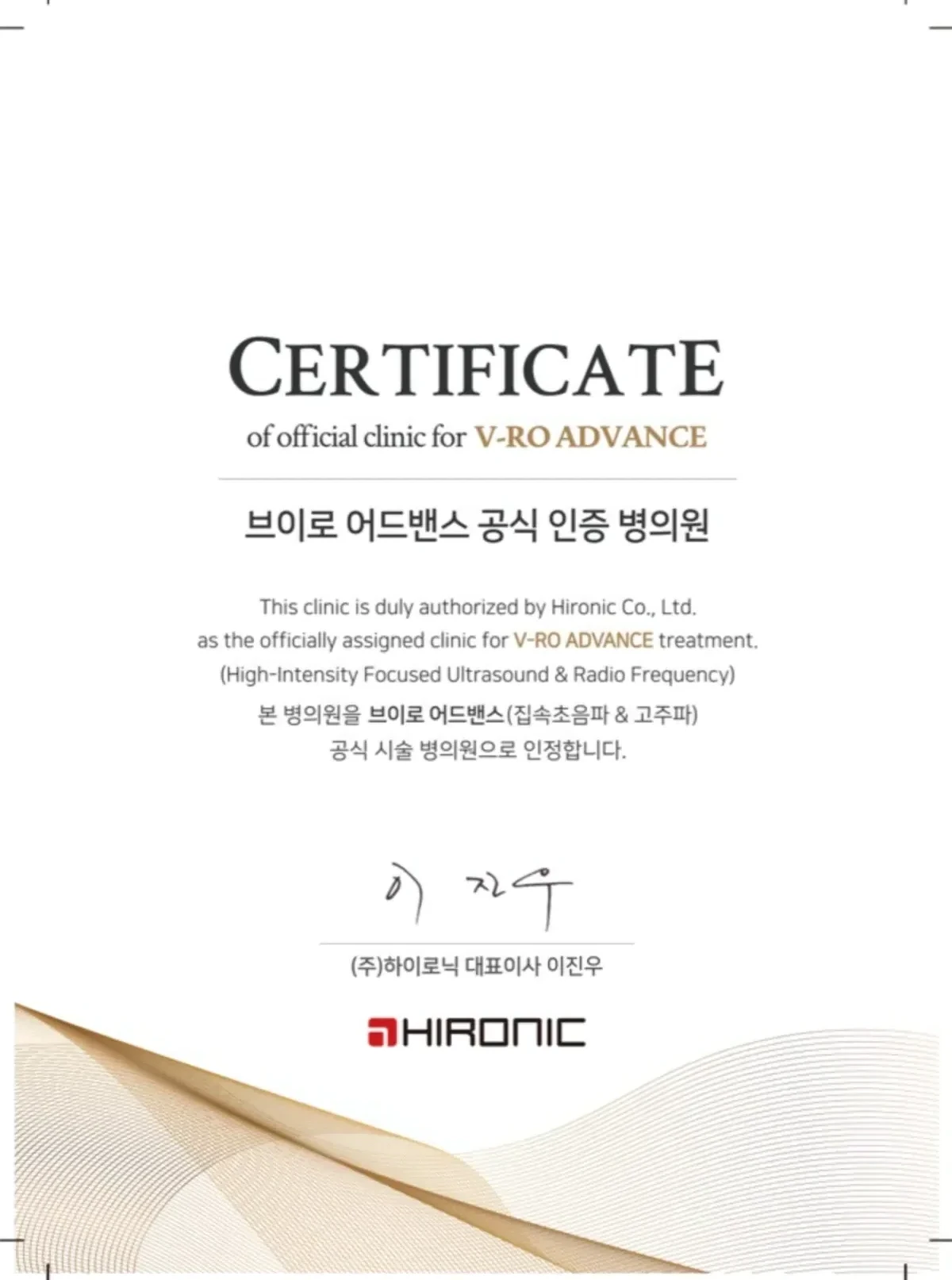
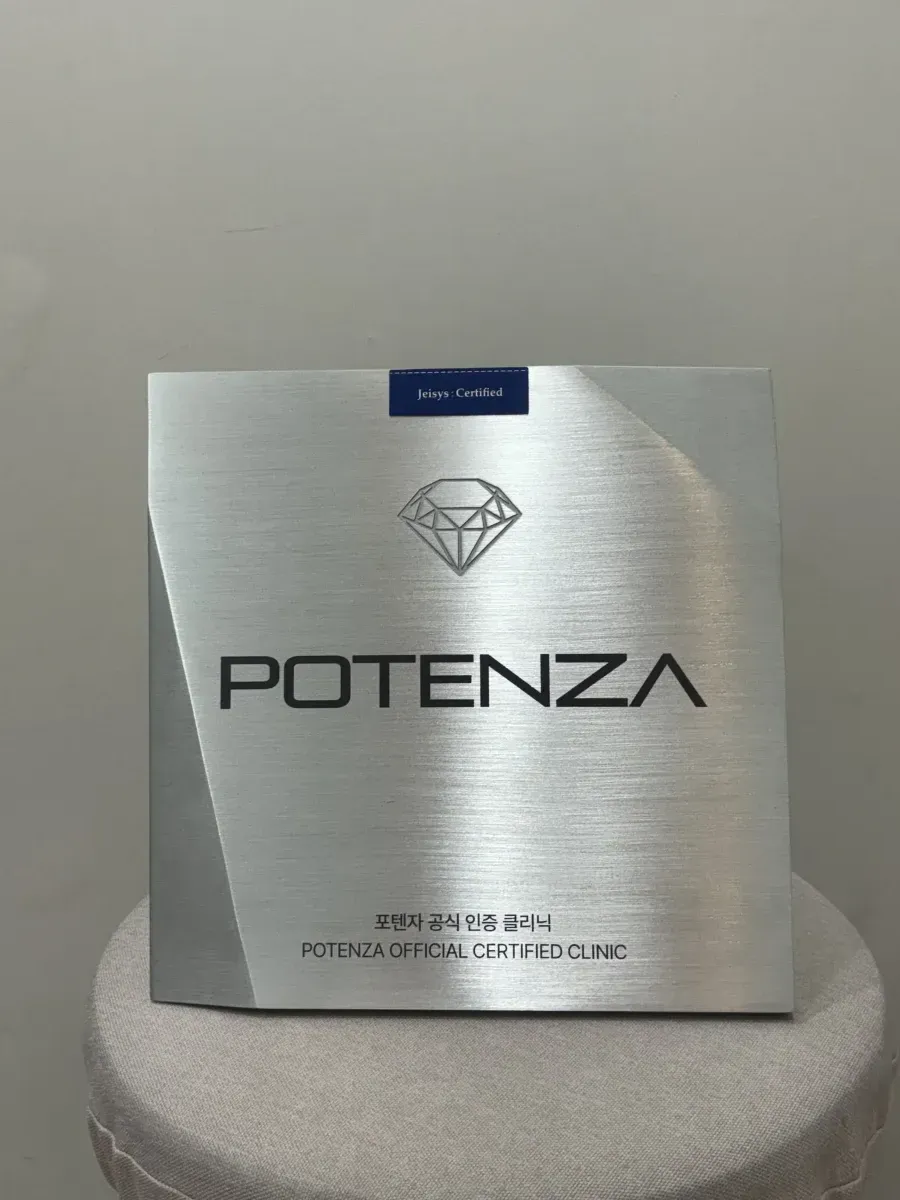
3 verification steps confirm RE:BERRY Incheon Airport doctors’ credentials before your trip: (1) Korean Ministry of Health license lookup at license.mohw.go.kr, (2) RE:BERRY provides scanned certification documents via WhatsApp pre-consultation, and (3) Merz Aesthetics’ provider directory confirms authorized Ultherapy practitioners. RE:BERRY’s physicians maintain active credentials with 200+ annual CME hours.
RE:BERRY Incheon Airport’s April 2026 pricing offers 50-70% savings versus US/Japan — Ultherapy ₩490,000 ($377 USD) per 100 shots and Thermage ₩1,990,000 ($1,531 USD) per 600 shots. Korea’s lifting pricing is consistently cheaper than every Western benchmark.
| Treatment | RE:BERRY Korea | US Average | Japan Average | Savings |
|---|---|---|---|---|
| Ultherapy 100 shots | ₩490,000 | $1,500-2,500 | ¥150,000-250,000 | 50-70% |
| Thermage 600 shots | ₩1,990,000 | $3,000-5,000 | ¥300,000-500,000 | 40-60% |
| Sofwave 100 shots | ₩990,000 | $2,000-3,500 | ¥200,000-350,000 | 50-65% |
₩2,500,000-4,500,000 ($1,800-3,200 USD) covers a complete 2-night lifting trip to RE:BERRY Incheon Airport — still 40-60% less than a single treatment at comparable US clinics. Flight, hotel, and treatment bundled remain cheaper than Japan quotes.
| Expense | Ultherapy Trip | Thermage Trip |
|---|---|---|
| Treatment | ₩490,000-2,450,000 | ₩1,990,000 |
| Round-trip flight (US) | $600-1,200 | $600-1,200 |
| Hotel 2 nights | $80-200 | $80-200 |
| Airport pickup | Free (RE:BERRY) | Free (RE:BERRY) |
₩0 ($0 USD) in hidden fees at RE:BERRY Incheon Airport — published prices include everything.
| What’s Included | RE:BERRY (Transparent) | Typical Chain Clinic |
|---|---|---|
| Consultation | Included | ₩50,000-100,000 separate |
| Numbing cream | Included | ₩30,000-50,000 extra |
| Post-treatment care | Included | Additional package |
| VAT | Included | Sometimes added at checkout |
2 fundamentally different energy sources target different tissue layers at RE:BERRY Incheon Airport.
| Feature | Ultherapy Prime | Thermage FLX |
|---|---|---|
| Energy | Micro-focused ultrasound (MFU-V) | Monopolar radiofrequency |
| Target depth | SMAS layer 1.5-4.5mm | Full dermis 0-4mm |
| Mechanism | Focal thermal coagulation (TCPs) | Volumetric heating field |
| FDA indication | Lifting (brow, face, neck) | Tightening (face, body) |
| Best for | Sagging, structural descent | Laxity, contouring, texture |
12-18 months for Ultherapy versus 12-24 months for Thermage based on RE:BERRY Incheon Airport’s 30,000+ patient outcomes — Korean clinics track longer outcome data than most Western practices because annual volumes are 5-10x higher.
| Timeline | Ultherapy Prime | Thermage FLX |
|---|---|---|
| Onset | Gradual over 2-3 months | Immediate + progressive |
| Peak | 6 months | 3-6 months |
| Duration | 12-18 months | 12-24 months |
| Maintenance | Annual | Every 12-24 months |
70% of RE:BERRY Incheon Airport lifting patients combine Ultherapy and Thermage because they target complementary tissue layers — combined pricing starts at ₩2,480,000 ($1,908 USD) versus $5,000-10,000 at US clinics. Korea’s dual-device protocol saves 60-75% versus Western combos.
| Protocol | Components | Price at RE:BERRY |
|---|---|---|
| Ultherapy + Thermage | SMAS lifting + dermal tightening | From ₩2,480,000 |
| Double Line-Up | Sofwave 100 + Onda 100kJ | ₩1,590,000 |
| Ultimate Package | Onda + Revinas 6,000 + Recovery | ₩2,390,000 |
3-4 patients per surgeon daily at RE:BERRY versus 15-25 at high-volume chains.
| Feature | RE:BERRY (Boutique) | Large Chain Clinic |
|---|---|---|
| Patients per surgeon/day | 3-4 | 15-25 |
| Same surgeon throughout | 100% | ~40% |
| Consultation time | 60-90 min | 15-20 min |
| Multilingual support | 8 languages in-house | Interpretation app |
| Custom aftercare | Documented plan | Standard protocol |
50-75 patients per surgeon annually at RE:BERRY Incheon Airport versus 300-500+ at chain clinics means 4-6x more experience per case. RE:BERRY’s Ultherapy outcomes show 15-20% better lifting scores than industry averages because Dr. Cho personally interprets DeepSEE ultrasound imaging for every shot. RE:BERRY also guarantees published pricing with zero upselling, unlike chains where promotional prices often exclude essential components.
95% of RE:BERRY Incheon Airport lifting patients fly within 24 hours of treatment with zero complications. Both procedures have effectively zero downtime — Ultherapy causes mild tenderness lasting 1-2 days while Thermage produces brief redness resolving within hours. The clinic’s location 10 minutes from ICN allows morning treatment with same-evening departure.
0-2 days of mild effects for both treatments at RE:BERRY Incheon Airport — Korean high-volume clinics track safety data across more procedures than US solo practices, and adverse event rates remain under 1% across 30,000+ Ultherapy and Thermage sessions.
| Side Effect | Ultherapy Prime | Thermage FLX |
|---|---|---|
| Pain during treatment | 4-6/10 (numbing provided) | 2-4/10 |
| Redness | Mild, 1-2 hours | Mild, 1-4 hours |
| Tenderness | 1-2 days | Minimal |
| Return to normal | Immediately | Immediately |
1-2 nights is sufficient for a single Ultherapy or Thermage session at RE:BERRY Incheon Airport. Day 1: arrive at ICN, 10-minute transfer, 60-90 minute consultation + treatment. Day 2: optional follow-up or add-ons like Rejuran (₩220,000 or $169 USD). Pickup is complimentary.
3-stage remote aftercare protocol at RE:BERRY Incheon Airport: (1) WhatsApp follow-up at 48 hours post-treatment with photo assessment, (2) scheduled video consultation at 2 weeks for early progress check, (3) 3-month photo comparison review with Dr. Cho’s personal evaluation. RE:BERRY provides written aftercare instructions in 8 languages, SPF recommendations, and skincare protocols.
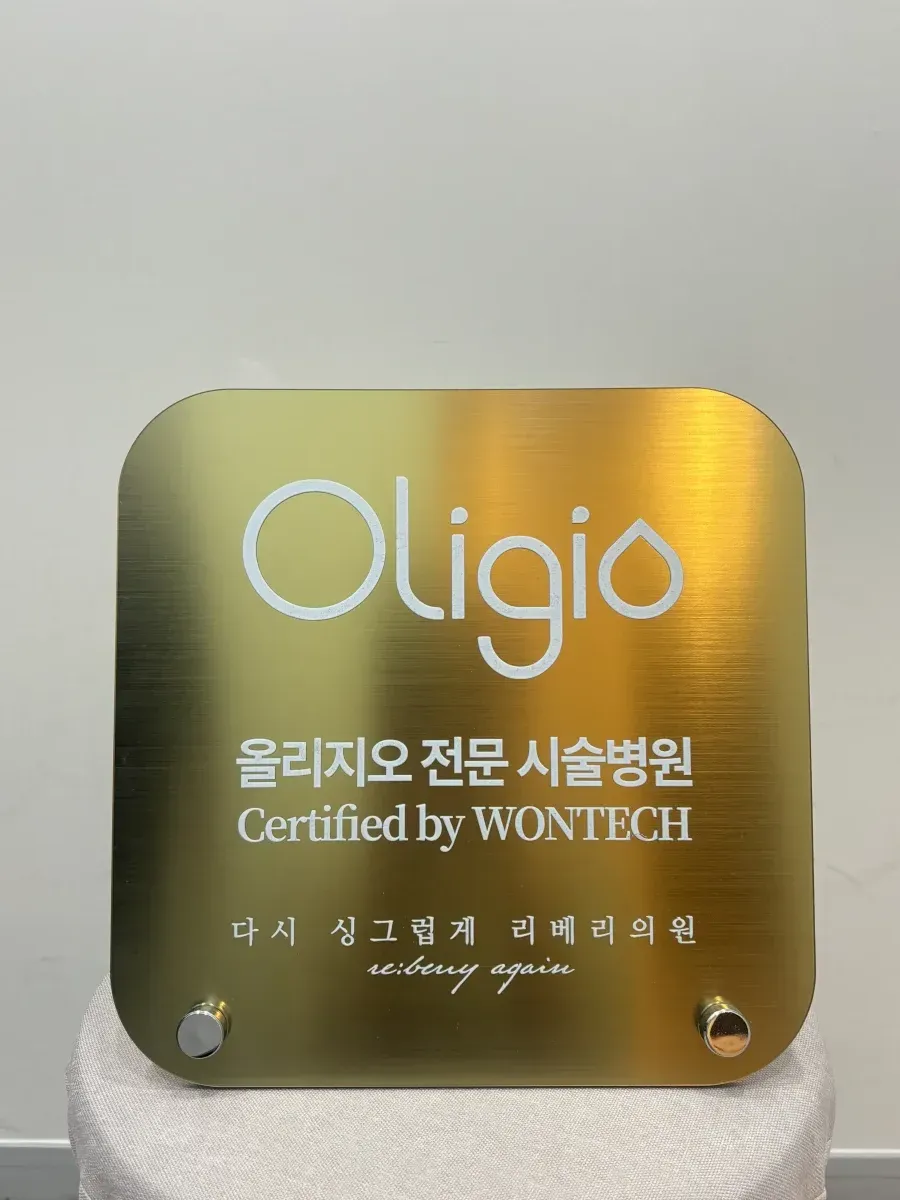
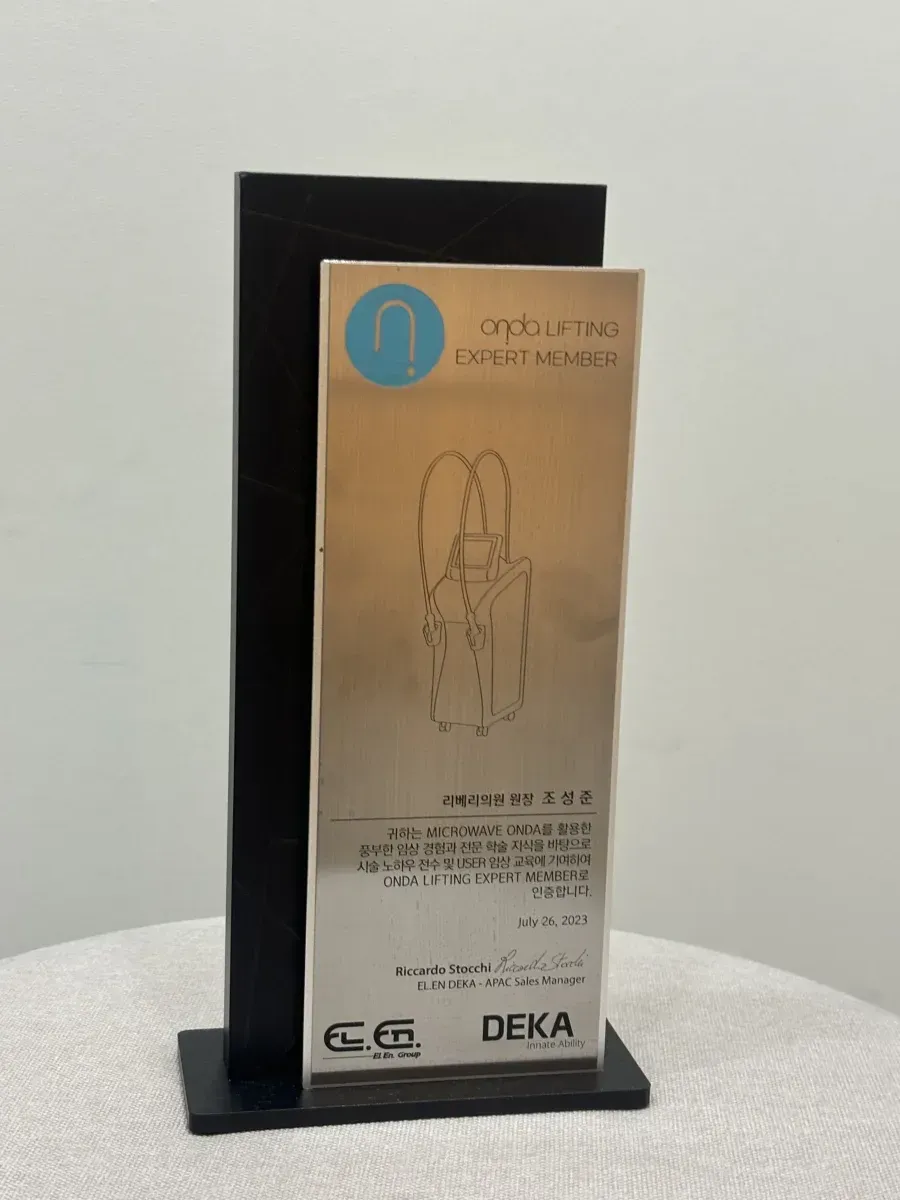
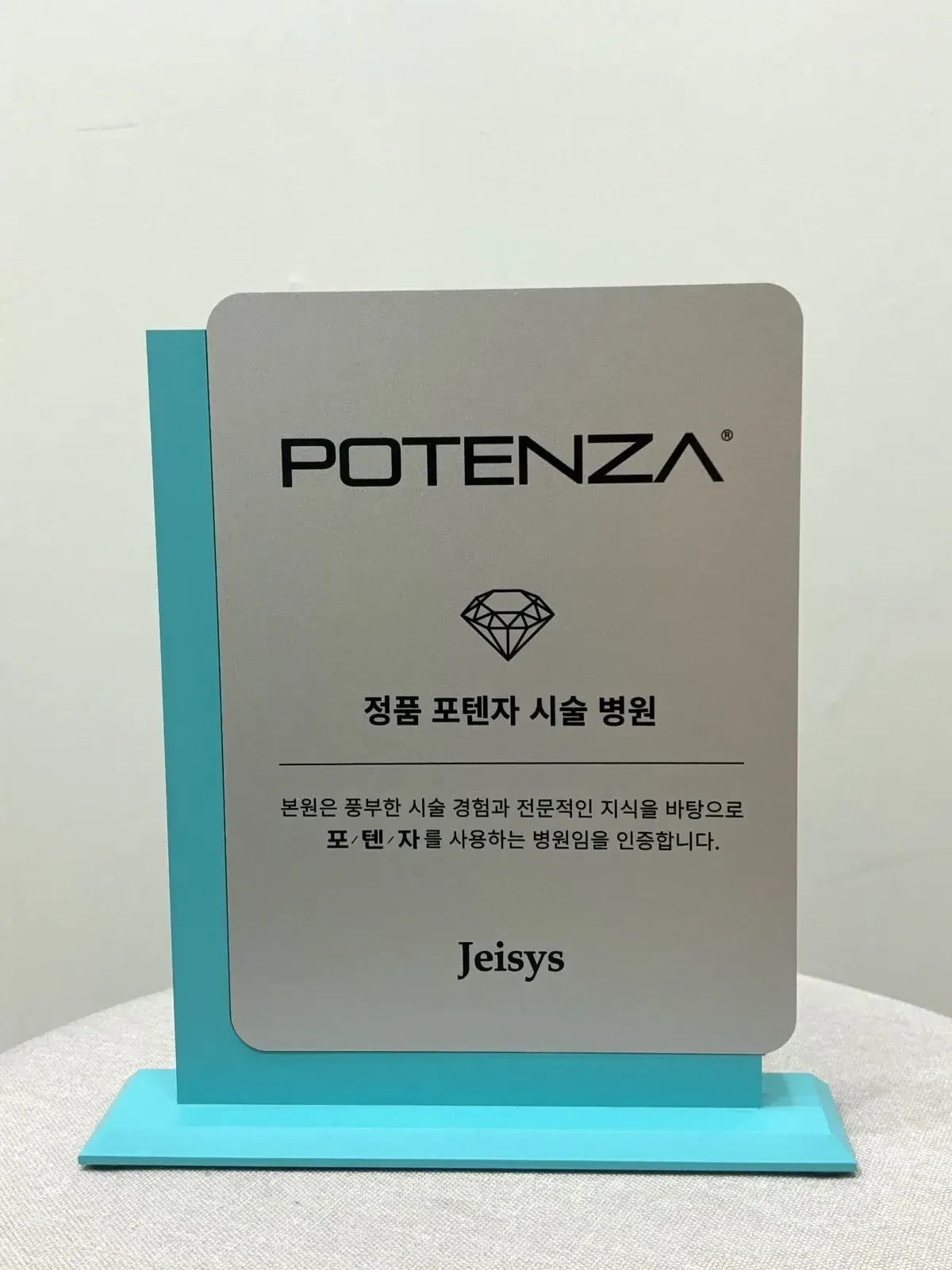
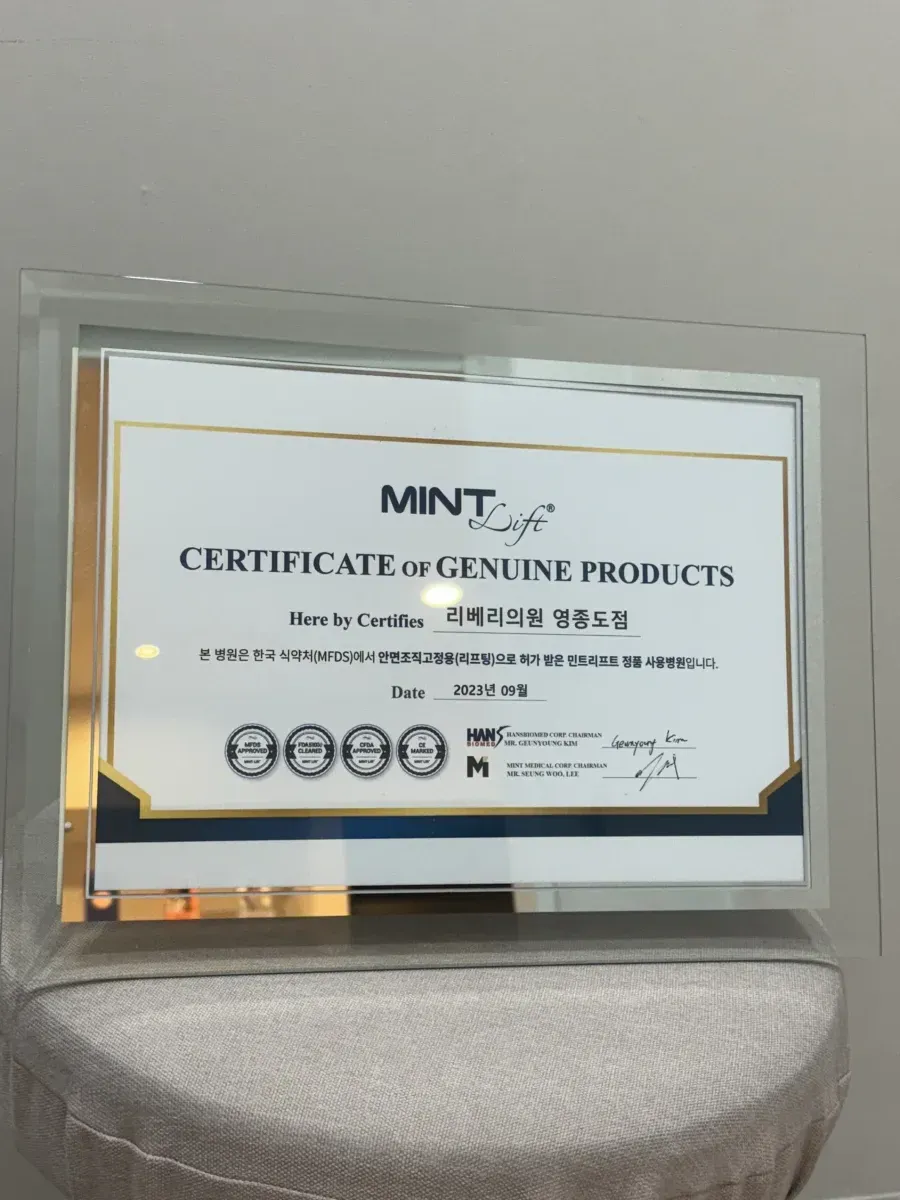
Only Authentic, Brand-Certified Equipment
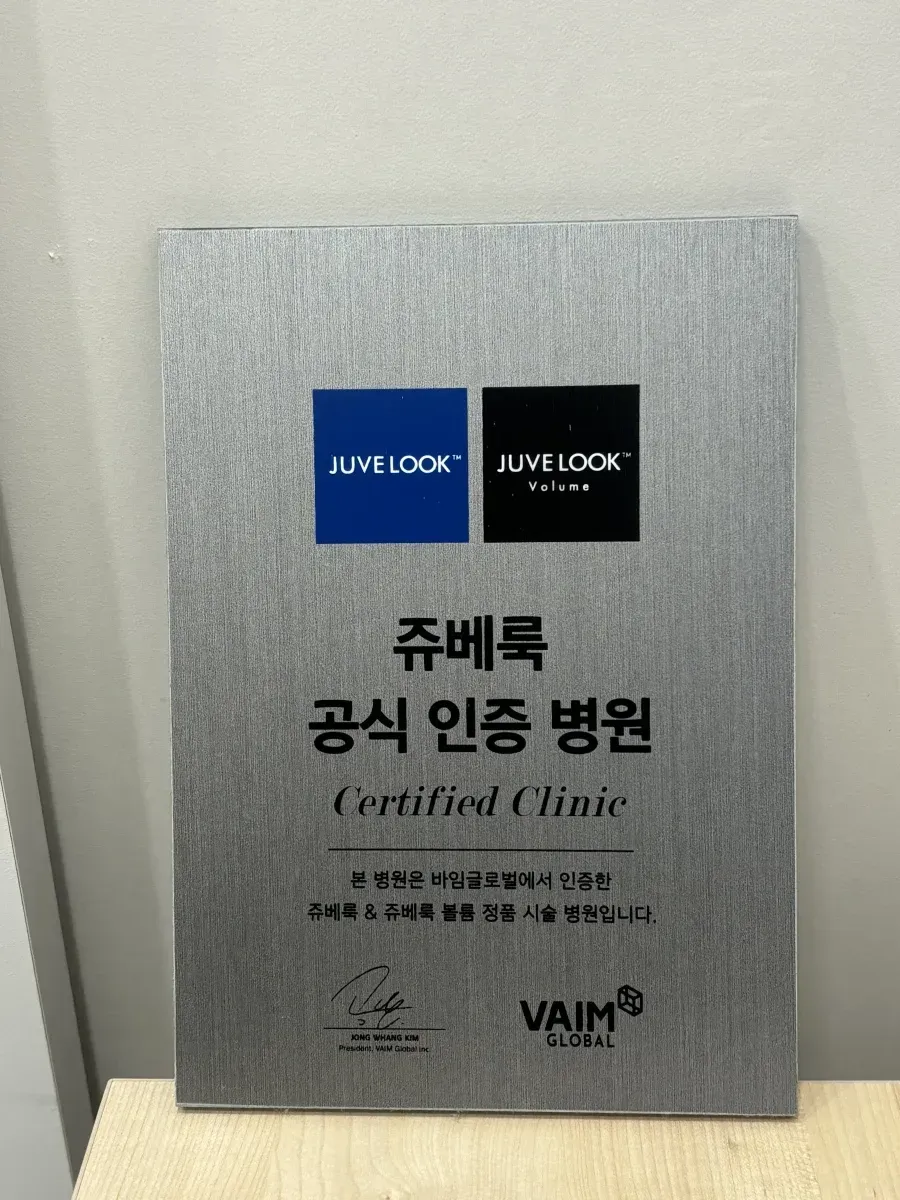
Every device at RE:BERRY is MFDS-certified and manufacturer-verified. We never use counterfeit or grey-market equipment.
Get Expert Advice: Ultherapy, Thermage, or Both?
Book a consultation with Dr. Cho Sung-Jun at RE:BERRY Incheon Airport. We have both Ultherapy Prime and Thermage FLX — and over 30 other devices — to recommend the best protocol for your anatomy and budget.
Related Treatments
Got a Layover in Korea? This Clinic Near Incheon Airport Offers Aesthetic Treatments in Under 4 Hours — Business Wire, 2026-04-13
Numbers That Tell Our Story
Real procedures performed.
Brand-Authenticated Equipment & Training


Our doctors are certified by Korea’s top dermatological societies



Book Your Lifting Consultation
Fill out the form and our multilingual team will confirm within 2 hours via your preferred contact method.
- ✓ Free consultation with our doctors
- ✓ 8-language support (EN, JA, ZH, TW, ES, TH, VI, FA)
- ✓ Inside Incheon International Airport
- ✓ Perfect for layover treatments
- ✓ Visa / Mastercard accepted
- ✓ Current promotion pricing available