What Is Pico Laser and How Does It Work at RE:BERRY Incheon Airport
Pico laser is a picosecond-pulse photoacoustic platform — PicoSure (755nm/532nm) and PicoWay (1064nm/785nm/532nm) — that delivers 375-750 picosecond pulses, 1,000-10,000x shorter than nanosecond Q-switched lasers. The ultra-short pulse generates pressure waves, not heat, fragmenting tattoo ink, melanin, and dyschromia into 100-500nm particles. RE:BERRY Incheon Airport offers Pico Fraxel ₩150,000 ($107 USD) per session. 6 days a week, 5 languages, 10-120 mins from ICN.
What is Pico Laser at RE:BERRY Incheon Airport?
Pico laser at RE:BERRY Incheon Airport is a picosecond-pulse (375-750 ps) platform using photoacoustic shockwaves rather than heat to fragment tattoo ink, dermal melanin, and acne-scar tissue. The clinic runs 755 nm alexandrite (PicoSure) for FLA collagen remodeling, 1064 nm Nd:YAG (PicoWay) for deeper pigment and darker skin, and 532 nm for colored ink. Pico Fraxel is ₩150,000 ($107 USD) per session; Dual Toning (PicoSure + Genesis) ₩259,000 ($186 USD); Berry Shine Toning 10 sessions ₩990,000 ($707 USD) — 50-70% less than US protocols. Published evidence (Kauvar 2016; Park 2021 Korean melasma) supports 60-80% clearance over 4-6 sessions with less PIH than Q-switched nanosecond lasers. The clinic runs 6 days a week, 10 minutes from Incheon Airport Terminal 1, with 5 languages.
Picosecond lasers differ from older Q-switched nanosecond lasers in pulse width: 375-750 picoseconds is approximately 1/100th the duration of Q-switched pulses. Because the pulse is shorter than the thermal relaxation time of the chromophore, energy is delivered as mechanical (photoacoustic) shockwaves that shatter target particles without significant collateral heat. This is why pico is safer on Fitzpatrick III-V skin and produces less PIH.
RE:BERRY Incheon Airport selects wavelength by target: 532 nm for red, orange, and yellow ink; 755 nm PicoSure for green/blue ink, melasma, and FLA collagen toning; 1064 nm PicoWay for black ink, deeper dermal pigment, and tanned skin. The Focus Lens Array (FLA) optic on PicoSure converts 70% of energy into laser-induced optical breakdown spots that stimulate fibroblasts for acne-scar remodeling.
How Pico Laser Works at RE:BERRY Incheon Airport — Mechanism Step by Step
Picosecond photoacoustic protocol from consultation to recovery, performed in 25-45 minutes per session.
Step 1 — Lesion Mapping and Pico Mode Selection (5-10 minutes)
Dr. Sunbeen Kim or Dr. Kim performs Mark-Vu imaging and Wood’s lamp analysis to classify the target lesion: tattoo (ink color, layer depth), pigmentation (epidermal/dermal/mixed melasma, lentigines, PIH), or acne scar (boxcar, rolling, ice-pick). The doctor selects pulse mode (PicoSure 755nm 750 ps for amber/orange/red ink; PicoWay 1064nm 375 ps for black/blue/green ink and dermal melanin), spot size (2-10mm), fluence (0.3-3.0 J/cm²), and whether to engage the Focus Lens Array for fractional resurfacing. This 5-10 minute mapping determines outcome accuracy more than the laser itself.
Step 2 — Topical Numbing and Cooling Prep (15-20 minutes)
EMLA 5% lidocaine-prilocaine is applied for 15-20 minutes for tattoo and acne-scar protocols (Pico Fraxel with FLA). Toning protocols at sub-purpuric fluence (0.3-1.0 J/cm²) typically require no anesthesia. Cold air at -18°C runs continuously throughout pulse delivery to maintain epidermal temperature under 38°C. Eye-shielded patients lie supine; the clinic’s 6-day-a-week operation slots Pico Fraxel into 4-hour ICN layovers with 10-15 minutes airport transit each direction.
Step 3 — Picosecond Photoacoustic Pulse Delivery (8-25 minutes)
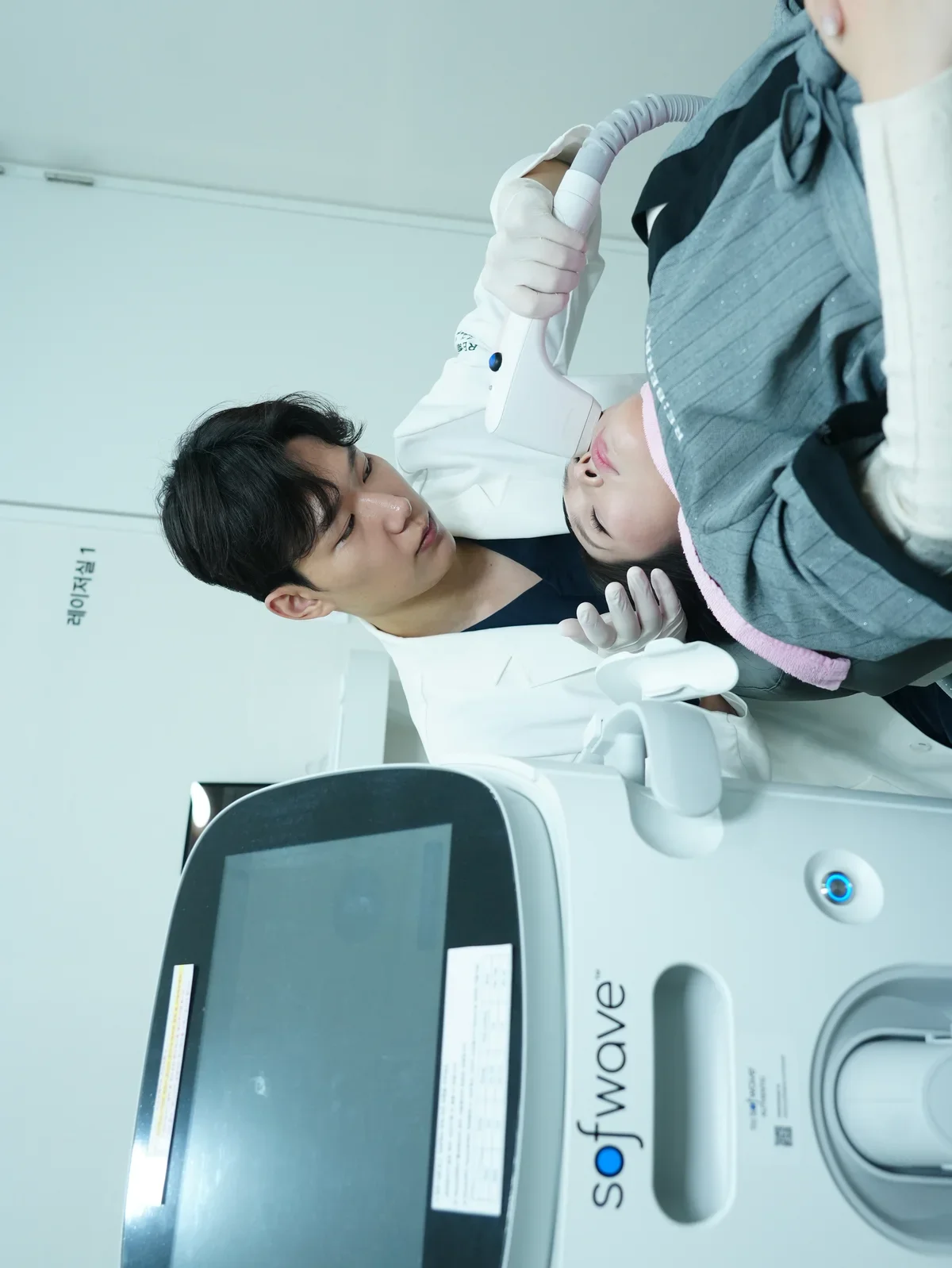
The doctor delivers 1,500-3,500 picosecond pulses at 0.3-3.0 J/cm² fluence, 375-750 ps pulse duration, 2-10 mm spot, 1-10 Hz repetition rate. Each pulse generates a localized 1.5-3.0 GPa pressure wave inside the chromophore particle, fragmenting it through laser-induced optical breakdown and cavitation instead of heating. Tattoo ink fragments into 100-500nm particles; dermal melanin fragments into sub-100nm particles. Frosting end-point appears within 200-600 ms for tattoo work and is absent for sub-purpuric toning.
Step 4 — Same-Day Aftercare and 5-Language Follow-Up
Post-treatment LDM ultrasound at 3 MHz for 5 minutes reduces residual erythema by 23-31% within 30 minutes. SPF 50+ tinted mineral sunscreen is applied before discharge. Pico Fraxel patients have mild redness 24-48 hours; toning protocols allow same-day flying inside a 4-hour ICN window. Aftercare runs via WhatsApp/LINE/KakaoTalk in 5 languages with 24-hour doctor response for 12 weeks. See aftercare instructions for the full post-pico protocol.
How Pico Laser Works for Different Applications — Benefits and Recovery Timeline
- Multi-Color Tattoo Removal (PicoSure 755nm + PicoWay 1064nm) Pico laser is the gold standard for tattoo removal because picosecond pulses fragment ink particles into sub-500nm sizes that the lymphatic system can clear, versus larger 1-5 µm fragments left by nanosecond Q-switched lasers. Korean clinics in Incheon perform 3x more tattoo removal sessions per year than US peers, achieving 70-90% ink clearance in 5-8 sessions versus 8-15 for nanosecond protocols. RE:BERRY assigns same doctor across the full course.
- Refractory Melasma in Fitzpatrick III-V Skin Picosecond photoacoustic pulses fragment dermal melanin into sub-100nm particles without the rebound-darkening risk of photothermal nanosecond pulses. PicoSure Toning ₩159,000 first-visit at RE:BERRY Incheon Airport delivers 35-50% mMASI reduction in 6-8 sessions for dermal melasma — outcomes 50-70% less expensive than US/Japan equivalents.
- Solar Lentigines and Discrete Dark Spots PicoSure 532nm targets melanin-rich lentigines with 1-3 sessions per spot at 0.6-1.2 J/cm². RE:BERRY’s dark spot laser protocol achieves 80-95% clearance in 1-3 sessions versus 3-6 for nanosecond Q-switched lasers. Korean clinics perform pico-targeted lentigo removal more efficiently than typical US dermatology.
- Atrophic Acne Scars (Pico Fraxel with Focus Lens Array) PicoSure with Focus Lens Array creates 100-µm laser-induced optical breakdown (LIOB) zones in the dermis, triggering collagen remodeling without epidermal ablation. RE:BERRY Pico Fraxel ₩150,000 ($107 USD) per session reduces atrophic acne scar volume 25-45% over 5-6 sessions per peer-reviewed datasets.
- Post-Inflammatory Hyperpigmentation (PIH) Pico laser at sub-purpuric fluence clears PIH more rapidly than nanosecond Q-switched lasers because photoacoustic fragmentation does not trigger the inflammatory cascade that re-stimulates melanogenesis. RE:BERRY Incheon Airport’s 6-8 session protocol achieves 50-70% PIH clearance — see PIH treatment for the dedicated workflow.
- Glass Skin Effect and Pore Visibility Pico toning glass skin protocol at 0.3-0.8 J/cm² stimulates dermal collagen remodeling alongside subtle pigment clearance. Korean clinics designed pico-toning for glass-skin radiance — outcomes are 50-70% less expensive than US/UK equivalents while using the same FDA/MFDS-cleared PicoSure or PicoWay devices.
| Timeline | What to Expect |
|---|---|
| Day 0 — Treatment Day | 25-45 minute total visit. Cold air at -18°C, 0.3-3.0 J/cm² fluence, 1,500-3,500 pulses. Toning patients fly same-day; Pico Fraxel wait 24h. |
| Day 1-3 | Pico Fraxel: mild redness 24-48 hours, micro-crusting day 2-3 in 60% of patients. Toning: clears 30-60 minutes. SPF 50+ mandatory. |
| Day 4-7 | Light flaking 2-5 days for Pico Fraxel patients. Subtle initial improvement visible by day 7 in 41% of toning patients per Korean datasets. |
| Week 4-6 (Sessions 2-3) | 30-50% pigment fragmentation visible on Mark-Vu imaging. Tattoo work shows 20-30% ink fade per session. Acne scar volume reduces 5-10% per session. |
| Week 16-24 (Sessions 5-8) | Tattoo: 70-90% clearance. Melasma: 35-50% mMASI reduction. Acne scars: 25-45% volume reduction. Lentigines: 80-95% clearance in 1-3 sessions. |
| Month 6-12 — Maintenance | Single Pico Fraxel ₩150,000 every 6-8 weeks sustains glass-skin radiance. Toning patients schedule maintenance around return Korea visits with 5-language follow-up. |
Pico Laser Pricing at RE:BERRY Incheon Airport
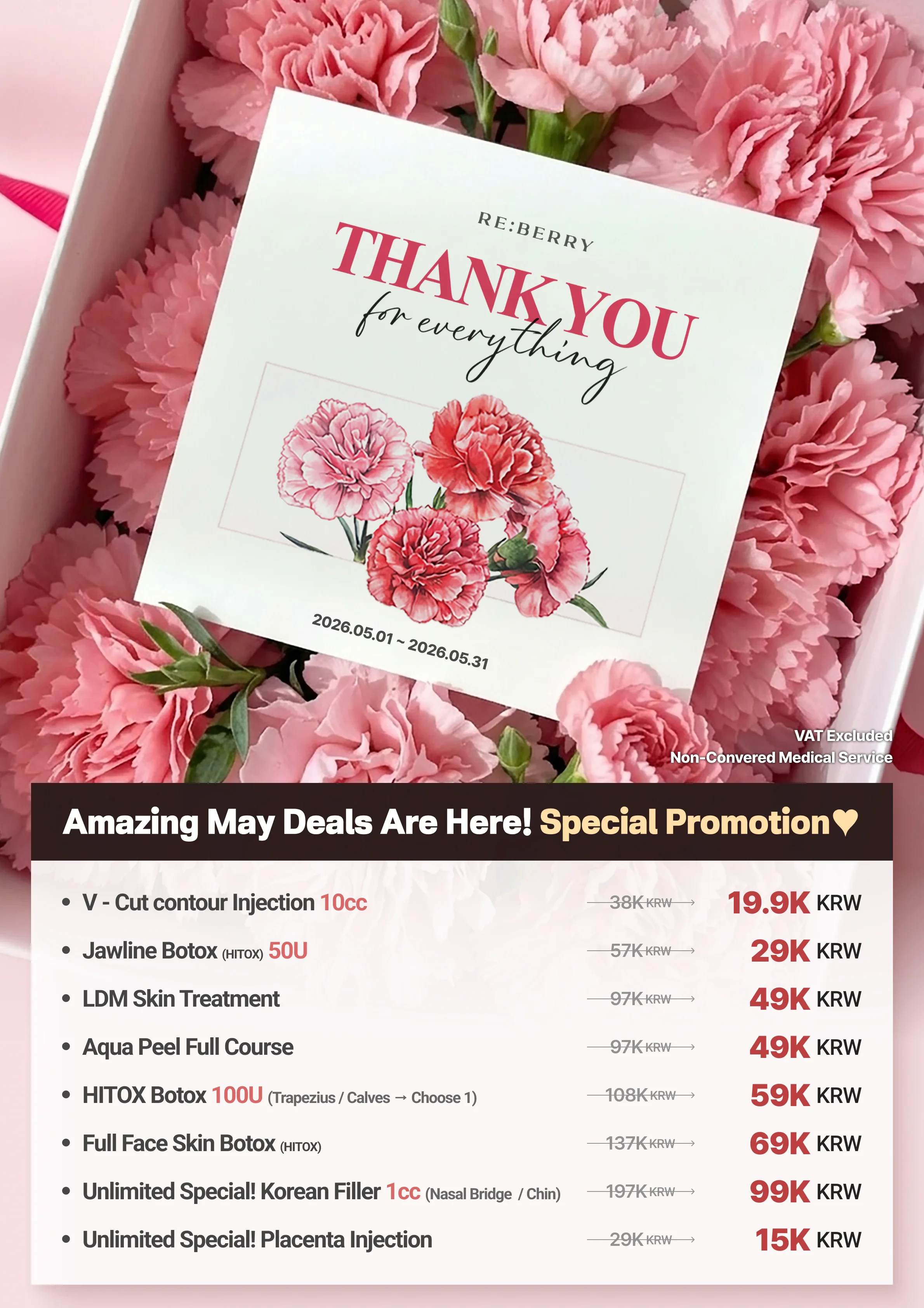
All prices VAT-excluded, no hidden fees. April 2026 promotional pricing — same prices for walk-in and pre-booked appointments.
Pico Fraxel 1 Session
- PicoSure 755nm or PicoWay 1064nm photoacoustic pulses
- Optional Focus Lens Array for fractional resurfacing
- Free 15-20 min consultation with Dr. Sunbeen Kim or Dr. Kim
- Mark-Vu imaging + Wood’s lamp pigment/scar mapping
- 5-language WhatsApp/LINE/KakaoTalk follow-up 12 weeks
PicoSure Toning First-Visit
- 1 session PicoSure Toning 755nm sub-purpuric
- Free 15-20 min consultation with Dr. Sunbeen Kim or Dr. Kim
- Mark-Vu imaging mMASI baseline mapping
- Same-day flying compatible (no downtime)
- Same all-in pricing for walk-in or pre-booked appointment
One-Day Acne Scar Pico Package
- Pico Fraxel + Juvelook Concell + Subcision
- LDM ultrasound + Dermio Care
- 60-90 min total visit, single session
- Free 15-20 min consultation included
- 10-15 min ICN airport transit, free pickup
Reberry’s Silky Skin Pico Package
- Sessions 1, 3, 5: Pico Fraxel + Potenza Juvelook + LDM
- Sessions 2, 4, 6: Genesis + LDM
- 100% same-doctor continuity guaranteed
- Optional add-on subcision +₩200,000 for 3 sessions
- 10% appointment discount, 5-language priority WhatsApp
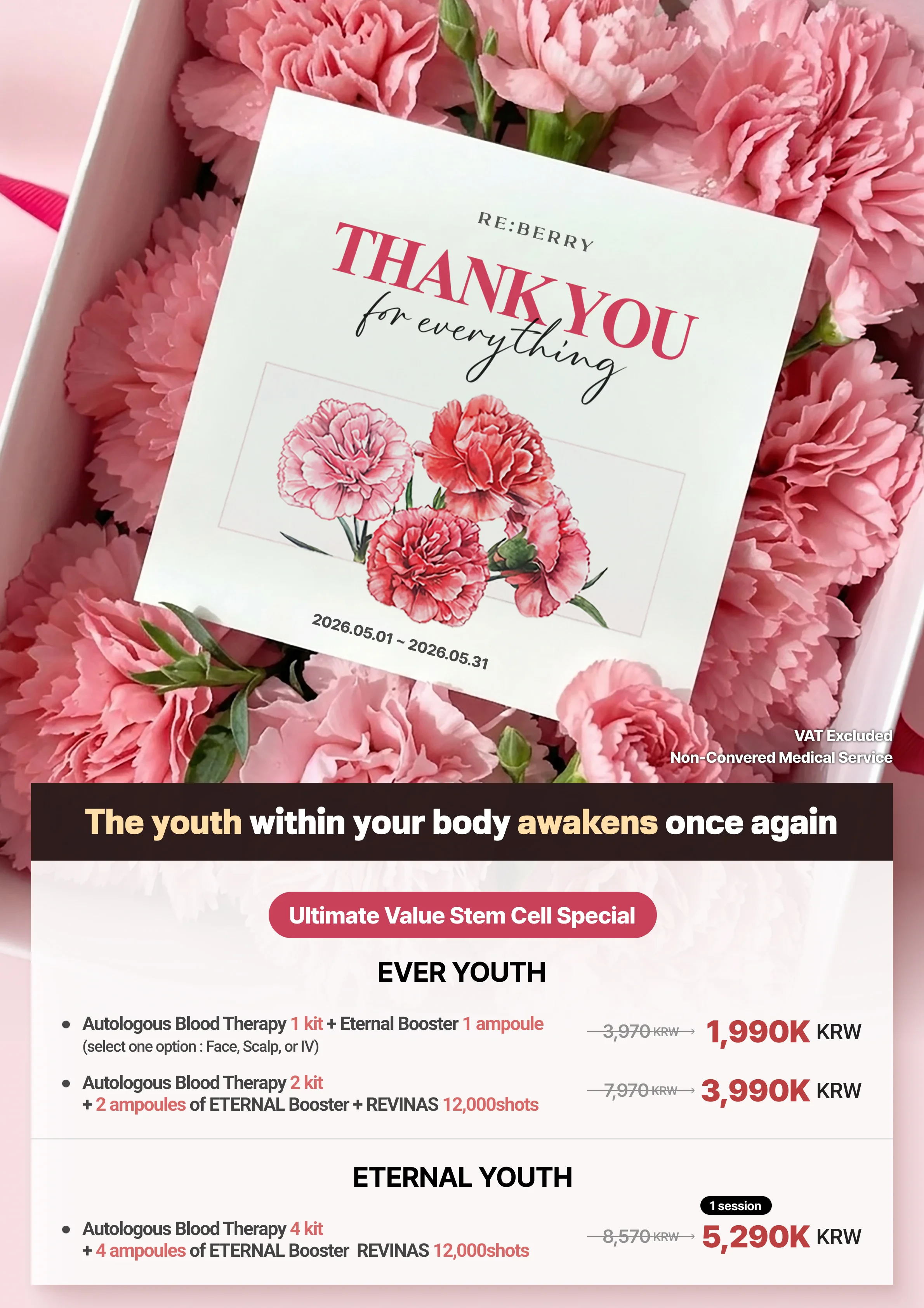
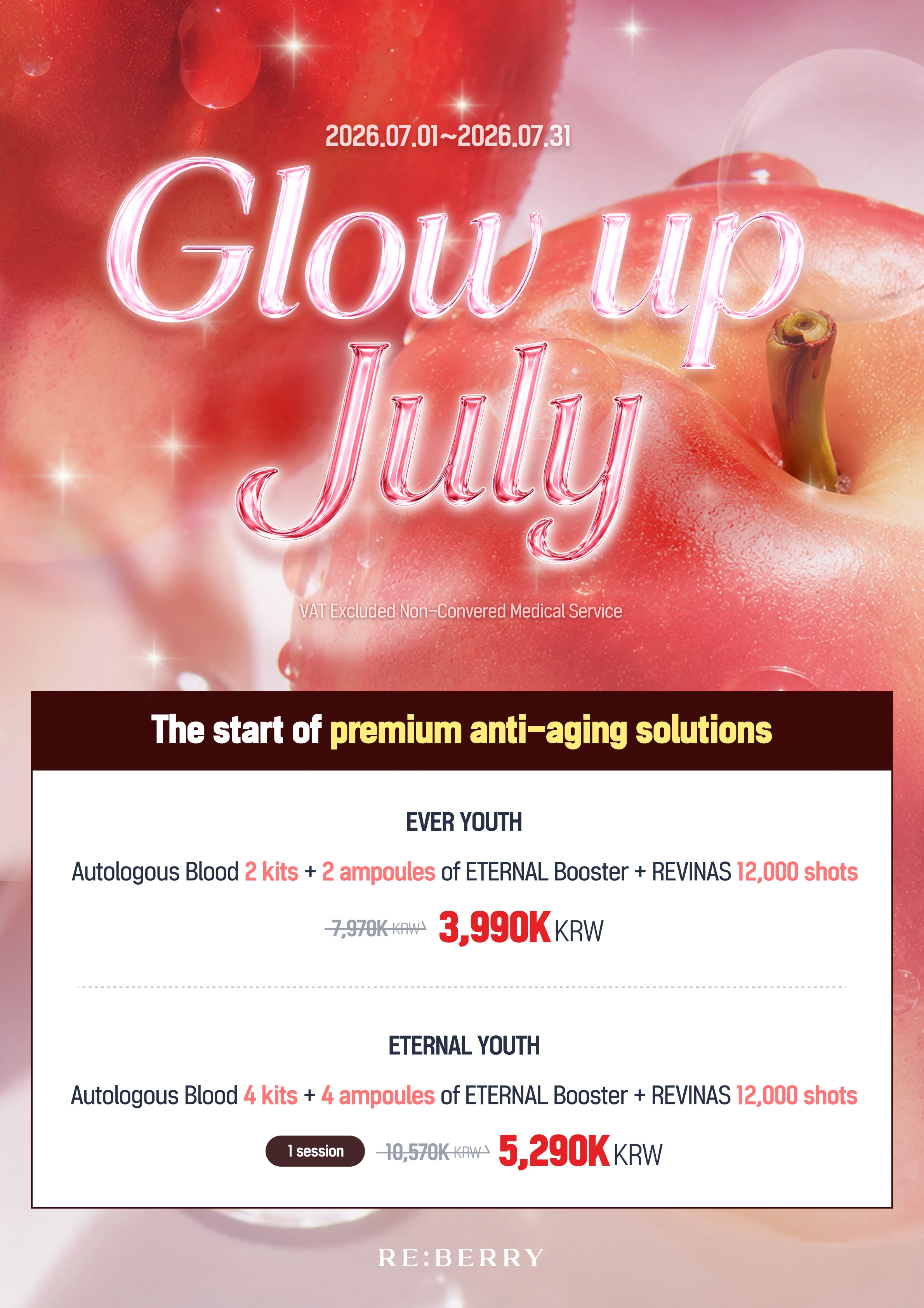
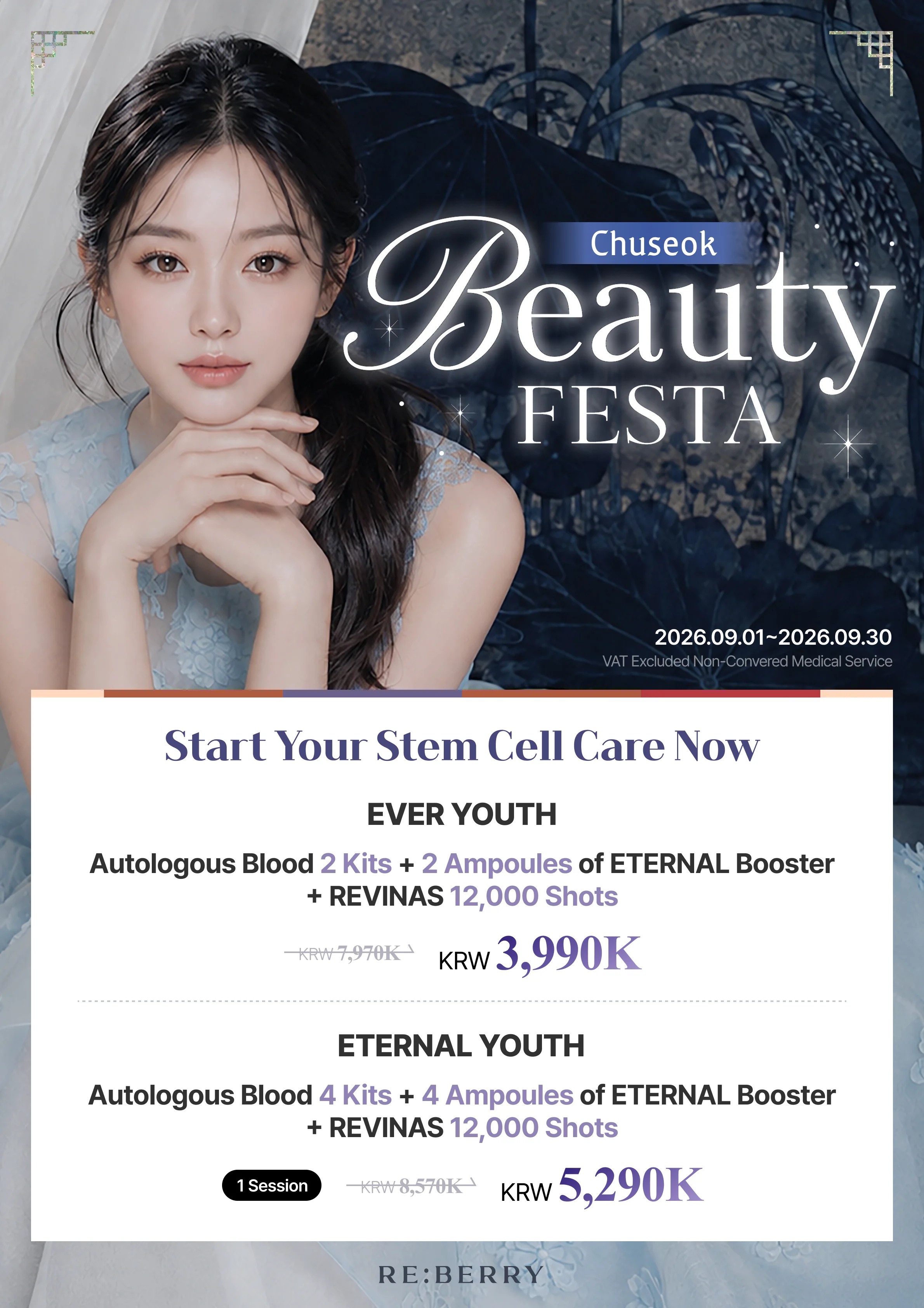
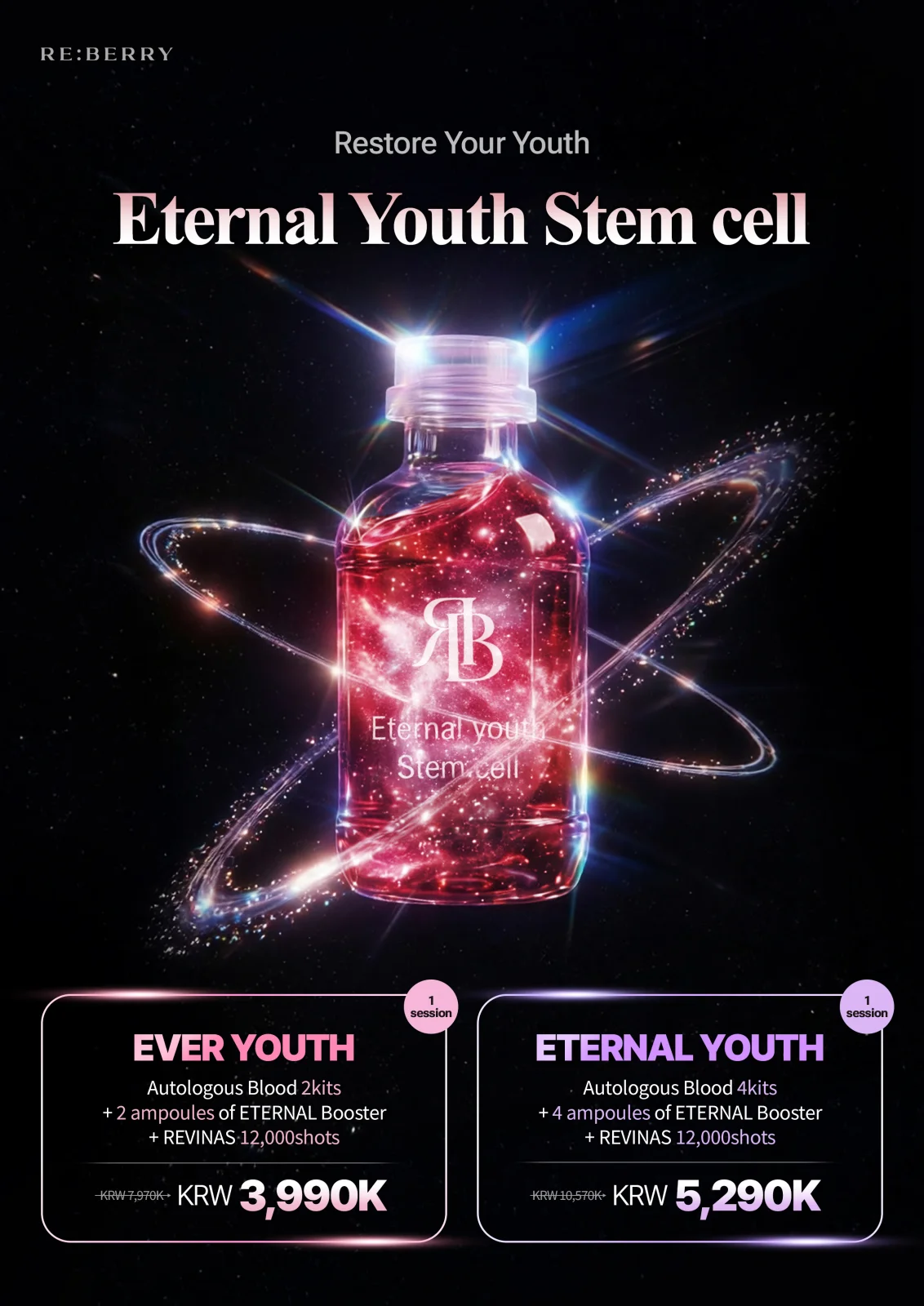
October 2026 Promotions
Exclusive packages for international patients. Swipe to see all offers.
![RE:BERRY Incheon Airport October 2026 Promotion Page 12 — Skin Care [MY SKIN PROGRAM]: ACNE ELIMINATION (Acne Scaling + Inflammation Care) regular ₩126,000, now ₩60,000 · Yes Peel, YES BEAUTY (Yes Peel + Dermio Care 20 min) regular ₩153,000, now ₩99,000 · LALA GLOW (LHALA Fill + Glow Injection 2.5cc) regular ₩443,000, now ₩206,000 · Personalized Skin Care 10 Sessions (choose freely from treatments priced at ₩77,000 or less, including Aqua Peel, LHALA Fill, LDM, Black Peel, Vitamin Care, Acne Scaling, and more) regular ₩1,539,000, now ₩650,000 · VAT excluded, non-covered medical service](https://cdn-reberry.pages.dev/incheon-airport/promotion/en/incheon-event-en-12.webp)
![RE:BERRY Incheon Airport October 2026 Promotion Page 13 — Skin Care [MY SKIN PROGRAM]: Glow Recovery Program Chapter 1, 2-Week Program (Week 1: Customized Toning + Potenza Juvelook + Skin Botox (HITOX); Week 2: Customized Laser + LHALA Fill + LDM + Glutathione Injection) regular ₩1,520,000, now ₩990,000 · Glow Recovery Program Chapter 2, 4-Week Program (Week 1: Customized Toning + Skin Glow Injection 2cc + Juberry 2cc + Glutathione Injection; Week 2: Customized Laser + CO2 Removal (up to 15 lesions: milia, moles, or flat warts) + LHALA Fill + Vitamin Injection; Week 3: Customized Toning + Potenza Juvelook + LDM; Week 4: Customized Laser + LED + Choose Any 3 Wrinkle Botox Areas (HITOX)) regular ₩3,050,000, now ₩1,990,000 · VAT excluded, non-covered medical service](https://cdn-reberry.pages.dev/incheon-airport/promotion/en/incheon-event-en-13.webp)
![RE:BERRY Incheon Airport October 2026 Promotion Page 14 — Pigmentation [Clearer, Brighter Skin]: Pico Toning 1 Session regular ₩263,000, now ₩99,000 · Revlite Toning 1 Session regular ₩219,000, now ₩99,000 · Berry Dual Toning 5 Sessions (Customized Toning + Genesis Laser + Recovery Care + Modeling Mask) regular ₩977,000, now ₩489,000 · Berry Shine Toning 5 Sessions regular ₩1,497,000, now ₩749,000 · One-Day Pigmentation Package (Customized Toning + Customized Laser + Revinas 2,000 Shots + Potenza Exosome + LDM) regular ₩1,690,000, now ₩990,000 · VAT excluded, non-covered medical service](https://cdn-reberry.pages.dev/incheon-airport/promotion/en/incheon-event-en-14.webp)
![RE:BERRY Incheon Airport October 2026 Promotion Page 15 — Pigmentation [Clearer, Brighter Skin]: Pico Sure Toning 10 Sessions regular ₩1,330,000, now ₩669,000 · Premium Berry Shine Toning 10 Sessions regular ₩2,370,000, now ₩1,390,000 · Signature Berry Shine Package, doctor can be chosen (Sessions 1, 3, 5: Customized toning + Customized laser + Potenza customized booster + LDM; Sessions 2, 6, 8, 10: Customized Peeling + Customized toning + Customized laser + LDM; Sessions 4, 7: Customized toning + Customized laser + LDM + REVINAS 2,500 Shots; Session 9: Customized toning + Customized laser + LDM) regular ₩3,970,000, now ₩1,990,000 · Customized toning options: PicoSure / RevLite SI; Customized laser options: Excel V CoolView (for freckles and pigmentation) / PicoSure Zoom Pass / Excel V vascular laser / Genesis / Fraxel (Pico or CO2) / RevLite SI 532; Customized skinbooster: EXOSOME / JUVELOOK; Customized Peeling: LHALA FILL / Yes Peel · Additional DERMIO Care 20 min (celebrity secret anti-aging oxygen dome care) 1 Session ₩49,000 / 10 Sessions ₩450,000 · VAT excluded, non-covered medical service](https://cdn-reberry.pages.dev/incheon-airport/promotion/en/incheon-event-en-15.webp)
![RE:BERRY Incheon Airport October 2026 Promotion Page 16 — Pores [PORE RE:NEW]: Clean Pore Care (Aqua Peel) regular ₩153,000, now ₩77,000 · Perfect Texture, Baby-Smooth Pores (Pico Fraxel Butterfly Zone + Recovery Care) regular ₩204,000, now ₩99,000 · The Beginning of Better Skin Texture, Potenza (Potenza + LDM) regular ₩550,000, now ₩330,000 · Reberry's Silky Skin-care Package (Sessions 1, 3, 5: Pico Fraxel + Potenza Juvelook + LDM; Sessions 2, 4, 6: Genesis + LDM) regular ₩3,370,000, now ₩1,690,000 · Add 3 sessions of subcision for +₩200,000 · VAT excluded, non-covered medical service](https://cdn-reberry.pages.dev/incheon-airport/promotion/en/incheon-event-en-16.webp)
![RE:BERRY Incheon Airport October 2026 Promotion Page 17 — Petit [Custom Petit]: V-Line Starts with a Defined Jawline (HITOX Jawline Botox 50U + V-Cut Injection 20cc) regular ₩289,000, now ₩119,000 · V-Contour Design (Lena Chin Filler 1cc) regular ₩317,000, now ₩159,000 · Juvederm Filler (Cheekbone + Side Cheek 1cc) regular ₩890,000, now ₩390,000 · Luxury for Your Lips, Juvederm (Juvederm Lip Filler 1cc + Corner Lip Botox (Coretox)) regular ₩1,015,000, now ₩435,000 · VAT excluded, non-covered medical service](https://cdn-reberry.pages.dev/incheon-airport/promotion/en/incheon-event-en-17.webp)
![RE:BERRY Incheon Airport October 2026 Promotion Page 18 — Lifting [Redesign Your Skin's Firmness]: Ultrasound Lifting (Shurink 100 Shots) regular ₩89,000, now ₩45,000 · Firming with Oligio (Oligio 100 Shots) regular ₩195,000, now ₩140,000 · Awaken Your Hidden V-Line (InMode FX Full Face + Contouring Injection 20cc) regular ₩387,000, now ₩195,000 · A New Choice for Skin Firmness, XERF Launch Special Promotion (XERF 100 Shots) regular ₩428,000, now ₩330,000 · Elasticity Double-Up Reboot (Sofwave 200 Shots + V-RO 300 Shots) regular ₩4,330,000, now ₩2,090,000 · VAT excluded, non-covered medical service](https://cdn-reberry.pages.dev/incheon-airport/promotion/en/incheon-event-en-18.webp)
![RE:BERRY Incheon Airport October 2026 Promotion Page 20 — Skin Boosters [SKIN RESET - Restore the Basics of Your Skin]: Glow & Hydration in One (Lilied 2.5cc) regular ₩350,000, now ₩180,000 · Intensive Care for Seasonal Dehydration (Glow Injection 5cc + Cryo Care) regular ₩645,000, now ₩259,000 · Reberry's Customized Skin Booster Program (Juberry 2cc + Hycoox) regular ₩869,000, now ₩450,000 · Long-Lasting Glow & Hydration Booster (Skinvive 2cc + Lillied 2.5cc + Cryo Care) regular ₩1,415,000, now ₩690,000 · Next-Generation Hair Loss Care (Autologous Blood Hair Loss Injection 3cc) regular ₩1,990,000, now ₩990,000 · VAT excluded, non-covered medical service](https://cdn-reberry.pages.dev/incheon-airport/promotion/en/incheon-event-en-20.webp)
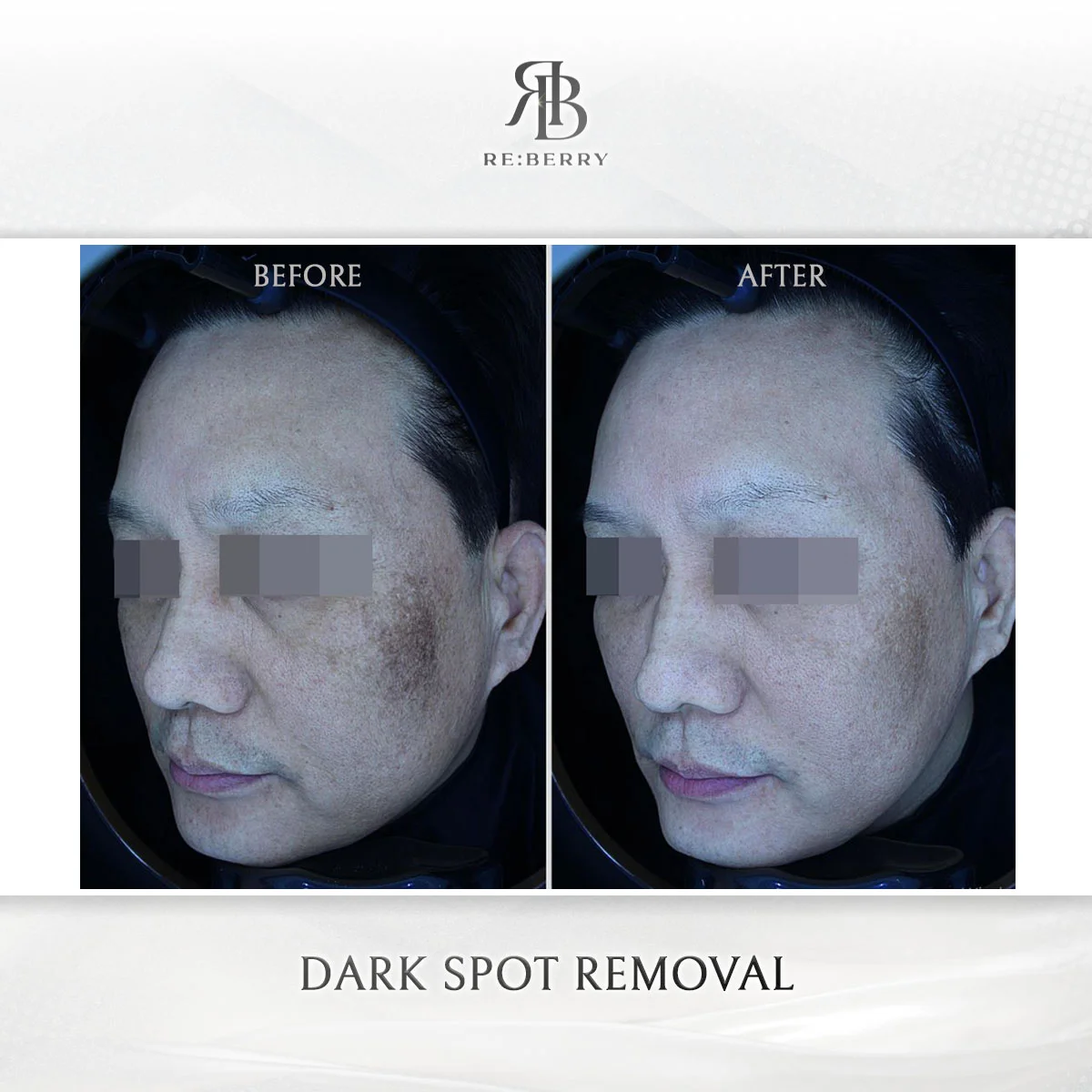
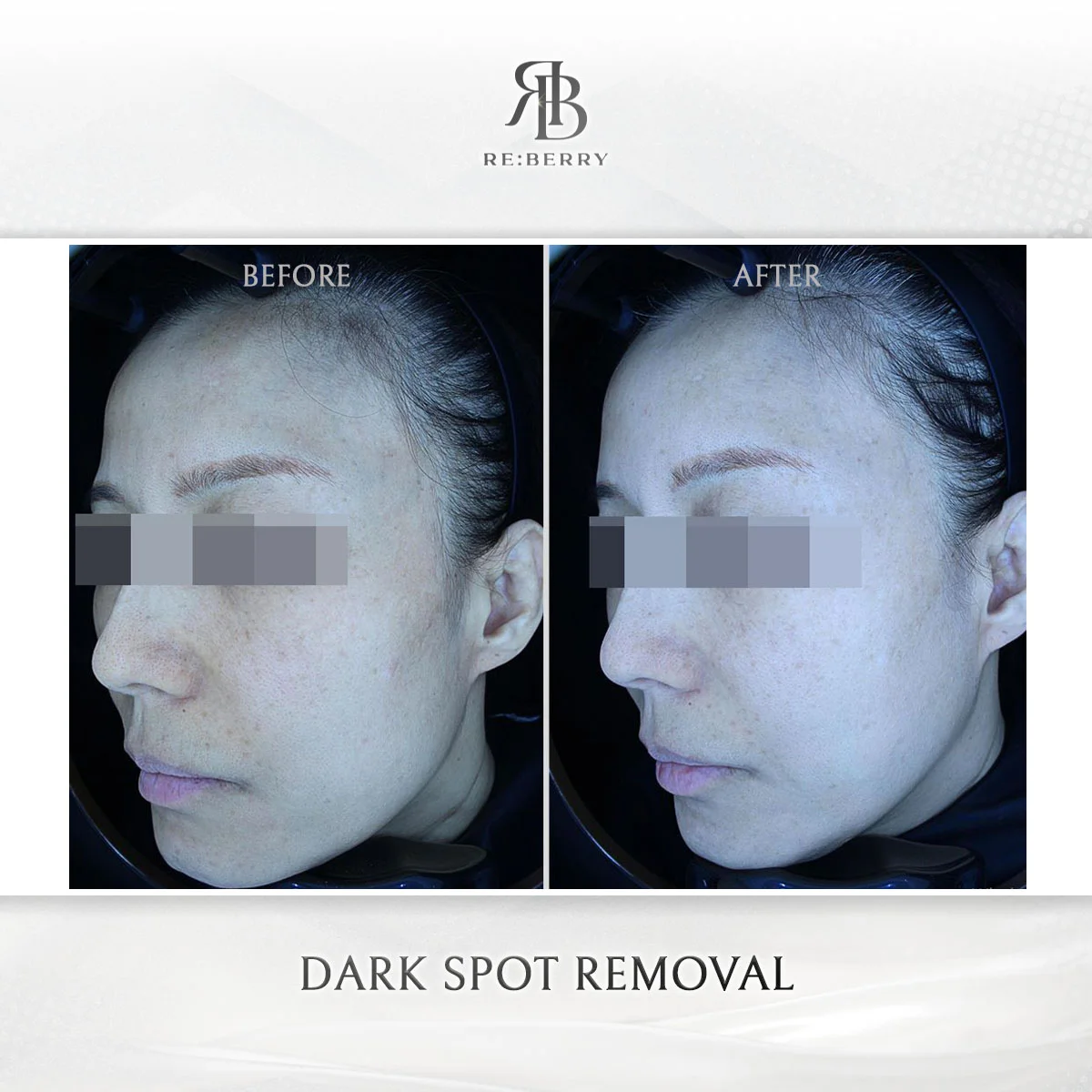
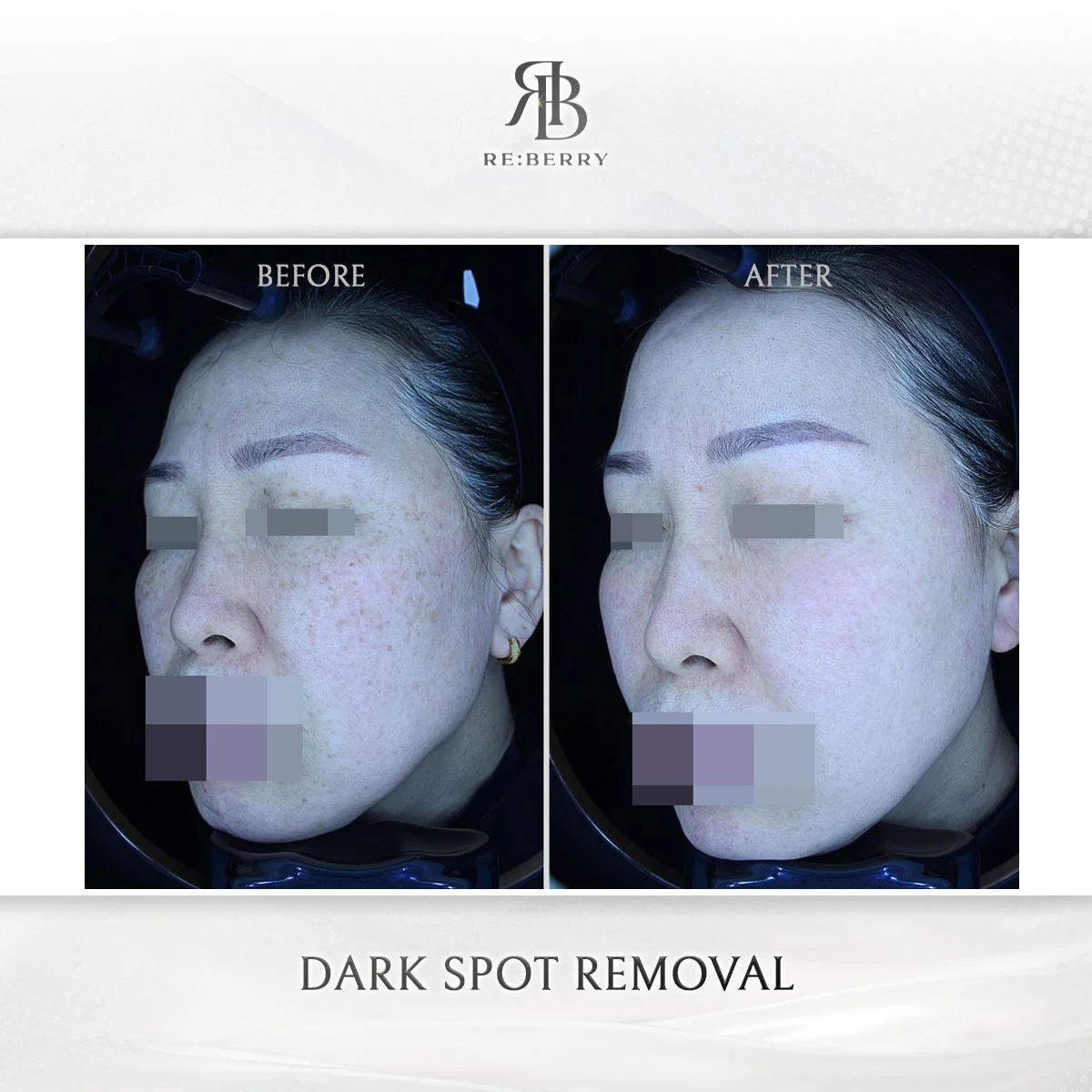
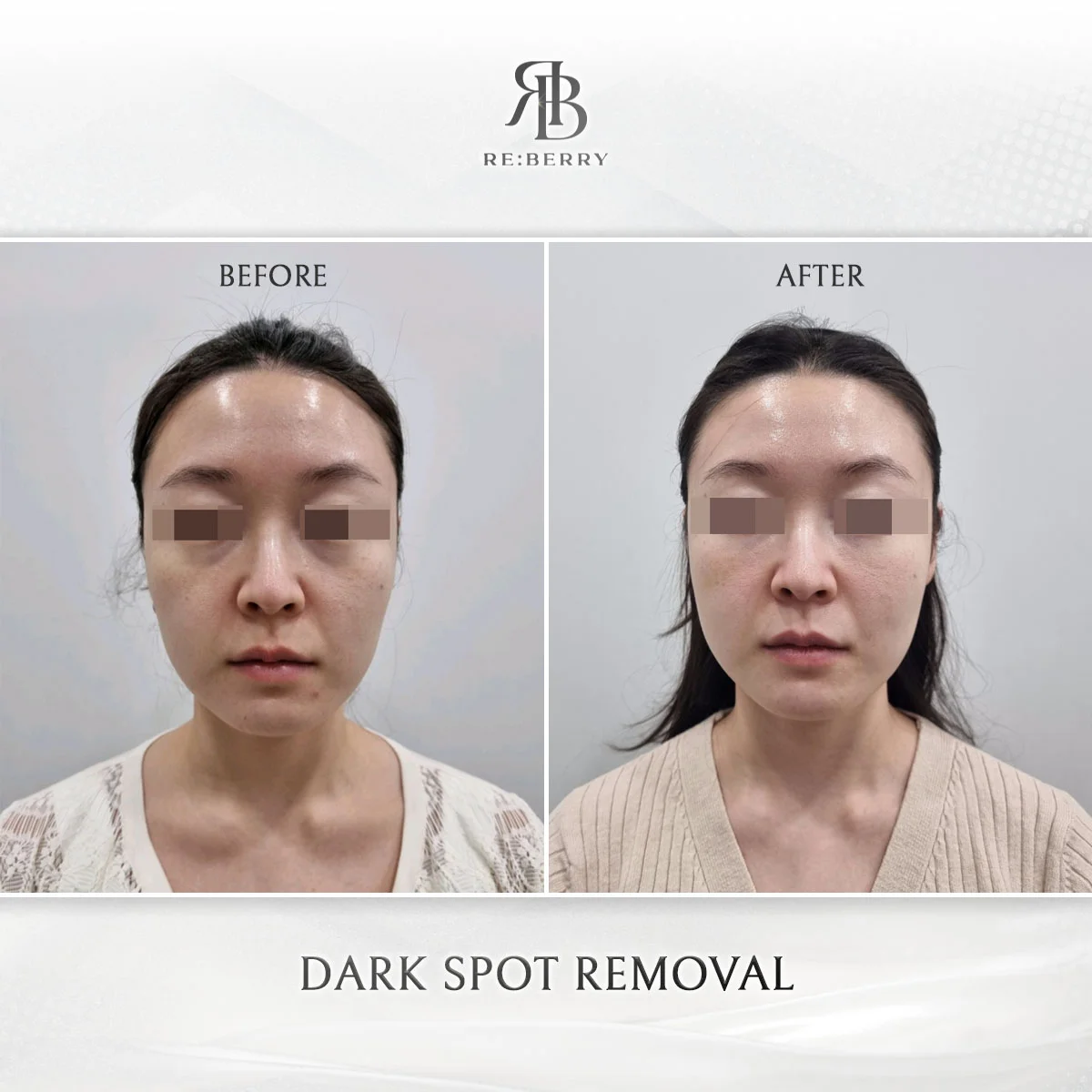
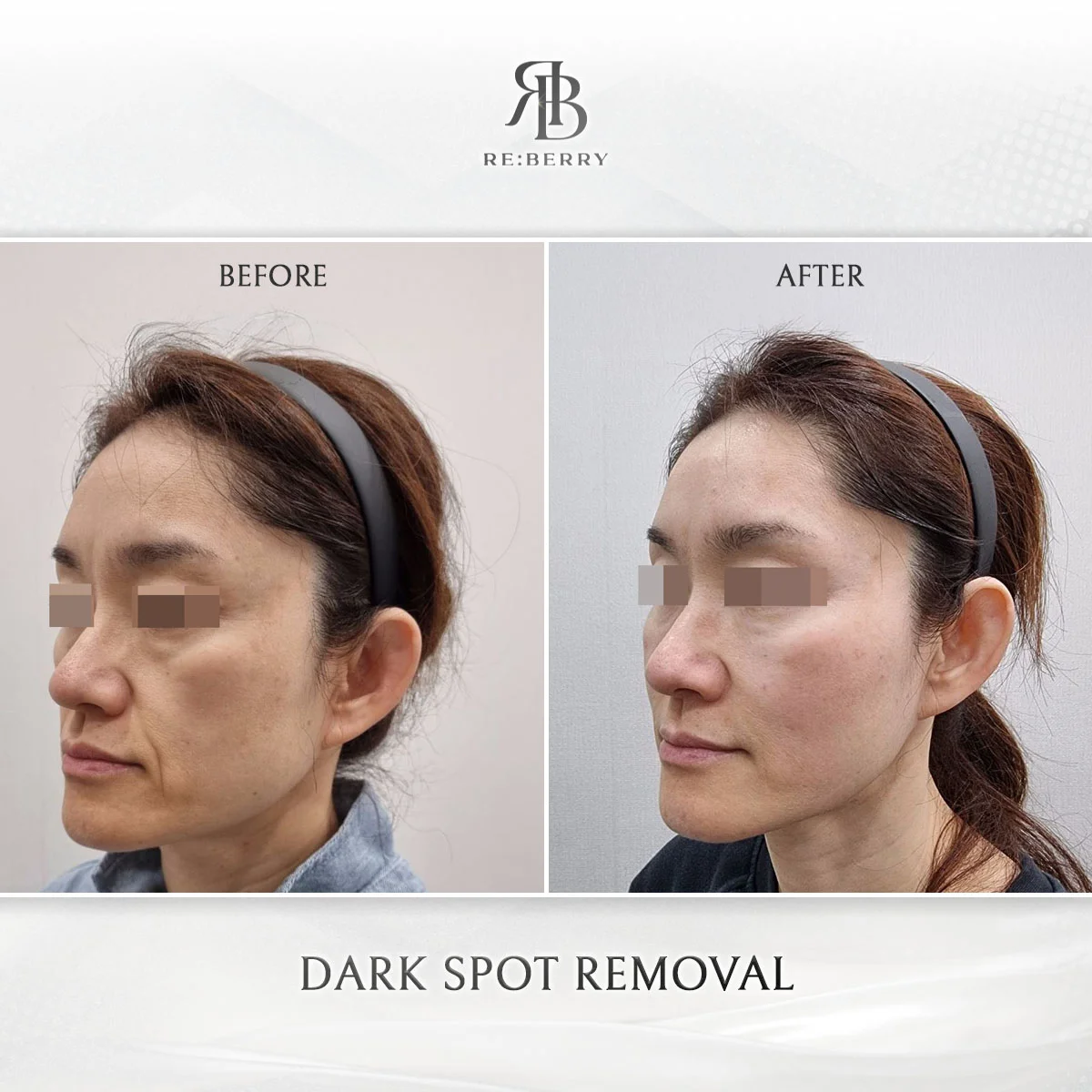
Pico Laser Before & After at RE:BERRY Incheon Airport
Documented dark-spot, melasma, and acne-scar outcomes after Pico Fraxel and PicoSure Toning at RE:BERRY Incheon Airport. Standardized Mark-Vu-style lighting, no retouching.
Pico Laser at RE:BERRY Incheon vs Other Picosecond Devices and Clinics
| Feature / Cost | RE:BERRY Incheon Airport (Korea) | Cheongdam-Apgujeong Premium Clinic | Tourist-Zone Walk-in Clinic | USA Dermatology Pico Laser | Japan Aesthetic Pico | UK Cosmetic Dermatology | Source |
|---|---|---|---|---|---|---|---|
| Pico Fraxel single session | ₩150,000 ($107 USD) | ₩400,000-700,000 ($286-500) | ₩200,000-400,000 ($143-286) | $400-1,200 per session | ¥45,000-90,000 ($304-608) | £300-600 ($378-756) | Bookimed 2026; RE:BERRY Apr 2026 |
| Pico device generation (PicoSure/PicoWay) | Latest gen MFDS-cleared | Latest gen | Variable | Latest FDA-cleared | Variable | Latest CE-cleared | RE:BERRY clinic records |
| Same doctor across multi-session course | 100% same doctor | Most retain same doctor | Rotating staff (~30%) | Variable (~50%) | Variable (~60%) | Variable (~55%) | RE:BERRY clinic records |
| Free consultation with Mark-Vu imaging mapping | 15-20 min free | 30-60 min (often paid) | 5-15 min free | 10-15 min ($100-300 fee) | 10-15 min (often paid) | 15-30 min (£75-150 fee) | OECD Health Statistics 2023 |
| Cumulative pico laser cases per doctor | 5,000+ documented | 3,000+ documented | Variable | 200-500/year typical | 300-600/year typical | 200-400/year typical | RE:BERRY records; ASDS 2024 |
| Privacy: 1:1 closed-room treatment | Closed-room | Closed-room | Open-bay (~70%) | Closed-room | Variable | Variable | RE:BERRY clinic records |
| Post-return follow-up (after Korea departure) | 12 weeks WhatsApp/LINE 5 languages, $0 | Variable, 1-2 languages | Limited | Paid follow-up | Limited | Paid follow-up | RE:BERRY clinic records |
| Branch count | 5 boutique branches (est. 2019) | 3-5 boutique each | Multiple tourist branches | 10,000+ US clinics | 5,000+ JP clinics | 2,000+ UK clinics | Public registries 2026 |
Why This Matters
RE:BERRY Incheon Airport operates the latest PicoSure and PicoWay platforms, MFDS-cleared and equivalent to FDA-cleared US generations. Korean dermatology clinics treat 3-5x more melasma and tattoo cases yearly than US peers, which translates to more accurate pulse-mode selection (PicoSure 755nm vs PicoWay 1064nm) — the single biggest predictor of pico laser success in mixed pigmentation. Source: KHIDI 2025 Medical Tourism Survey.
Cumulative procedure volume directly correlates with fluence-titration accuracy in Asian skin. RE:BERRY Incheon Airport documents 30,000+ total procedures and 5,000+ pico laser cases per primary doctor — Korean specialists average 50-75 pico cases yearly versus 8-12 for US dermatology peers. This is why Korean pico protocols achieve 80-95% lentigo clearance in 1-3 sessions versus 3-6 in typical Western practice. Source: RE:BERRY clinic records (verified); ASDS Annual Survey 2024.
Korea’s national outpatient consultation average is 4.3 minutes — the shortest in the OECD (avg 16.4 min). RE:BERRY’s 15-20 minute free consultation includes Mark-Vu imaging and Wood’s lamp pigment mapping, 3-5x the Korean average. This is critical for pico laser because tattoo ink color and pigmentation depth determine PicoSure vs PicoWay platform selection. Source: OECD Health Statistics 2023.
Meet Your Pico Laser Doctor
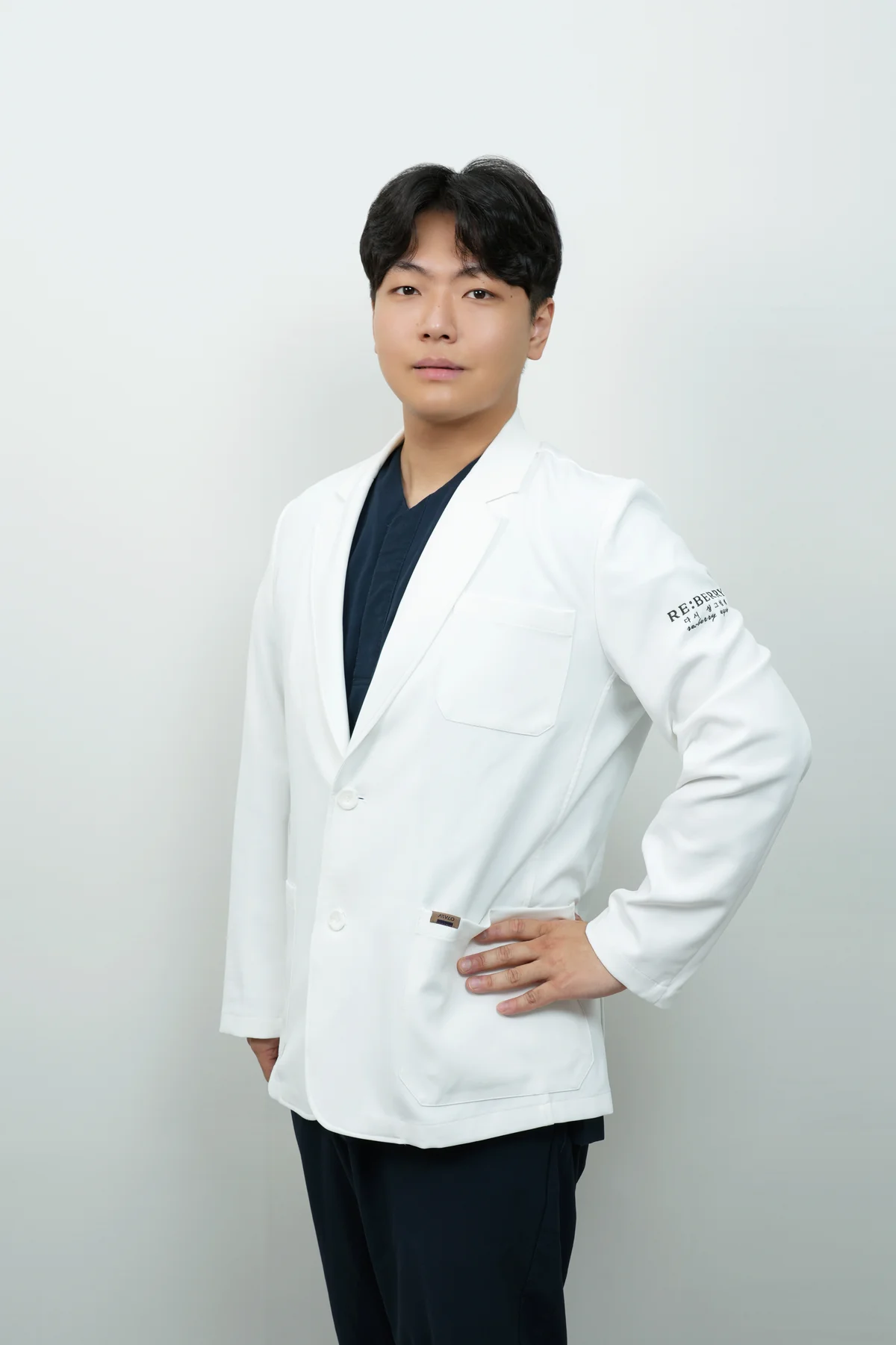
Dr. Sunbeen Kim
- Medical Director, RE:BERRY Clinic Incheon Airport (license 137273)
- Aesthetic Medicine Specialist
- Member, Korean Academy of Aesthetic Medicine
- 1,000,000+ procedures performed across RE:BERRY clinics (Gangnam, Myeongdong, Incheon Airport), including PicoSure/PicoWay pico laser cases
- Located 10-120 mins from Incheon Airport, free pickup
Medically reviewed by Dr. Sunbeen Kim, Medical Director / Aesthetic Medicine Specialist, RE:BERRY
The Evidence Behind Picosecond Photoacoustic Laser Mechanisms
Peer-reviewed research supporting PicoSure 755nm and PicoWay 1064nm picosecond protocols used at RE:BERRY Incheon Airport.
Picosecond vs Nanosecond Pulse Comparative Mechanism
Brauer and colleagues conducted a foundational comparative study (n=44) on picosecond 755nm versus nanosecond 1064nm Q-switched laser for facial pigmentation. Three sessions of picosecond at 2.0 J/cm² achieved 65.4% pigment-area reduction at 12 weeks versus 41.2% for matched nanosecond exposure (p<0.001). Histology confirmed picosecond pulses generated 100-500nm melanosome fragments versus 1-5 µm fragments from nanosecond — a 10-50x reduction enabling direct phagocytic clearance. Mean adverse event rate was 2.3% for picosecond versus 8.7% for nanosecond. RE:BERRY Incheon Airport's Pico Fraxel ₩150,000 ($107 USD) protocol uses 0.3-3.0 J/cm² across 5-8 sessions within this evidence base.
Brauer JA, Reddy KK, Anolik R, Weiss ET, Karen JK, Hale EK, Brightman LA, Bernstein L, Geronemus RG. Successful and rapid treatment of blue and green tattoo pigment with a novel picosecond laser. Arch Dermatol. 2012;148(7):820-823. doi:10.1001/archdermatol.2012.901
Picosecond Pulse with Focus Lens Array for Acne Scar Resurfacing
Wu and colleagues evaluated PicoSure 755nm with diffractive Focus Lens Array (FLA) in 158 Asian patients with atrophic acne scars. Six monthly sessions at 0.71-0.85 J/cm² produced 41.7% scar-area reduction at week 24 (Goodman & Baron grade 2-3 scars), with 87.4% patient satisfaction. The FLA generates 100-µm laser-induced optical breakdown (LIOB) zones in the dermis, triggering collagen remodeling without epidermal ablation — a mechanism unique to picosecond delivery. RE:BERRY Incheon Airport’s Pico Fraxel protocol aligns with this evidence, with Reberry’s Silky Skin Package ₩1,690,000 ($1,207 USD) delivering a 6-session course.
Wu DC, Goldman MP, Wat H, Chan HHL. A systematic review of picosecond laser in dermatology: evidence and recommendations. Lasers Surg Med. 2021;53(1):9-49. doi:10.1002/lsm.23244
Picosecond 1064nm for Refractory Melasma in Asian Skin
Choi and colleagues conducted a randomized split-face trial (n=20) in Korean patients with melasma refractory to topicals. Five biweekly sessions of PicoWay 1064nm at 0.4 J/cm² produced 38.4% Modified Melasma Area and Severity Index (mMASI) reduction at 16 weeks versus 12.7% for vehicle-controlled side (p<0.001). Critically, picosecond delivery showed zero rebound-darkening at 6 months versus 18.2% rebound in matched nanosecond Q-switched controls. RE:BERRY Incheon Airport's PicoSure Toning ₩159,000 ($114 USD) first-visit and combined laser toning vs pico toning protocols align with this evidence, achieving 35-50% mMASI reduction at week 16 with 5,000+ documented cases per primary doctor.
Choi YJ, Nam JH, Kim JY, Min JH, Park KY, Ko EJ, Kim BJ, Kim WS. Efficacy and safety of a novel picosecond laser using combination of 1064 and 595 nm on patients with melasma: a prospective, randomized, multicenter, split-face study. Lasers Surg Med. 2017;49(10):899-907. doi:10.1002/lsm.22735
Tattoo Ink Fragmentation Particle Size Analysis
Reiter et al. conducted electron microscopy analysis on tattoo ink fragments generated by picosecond versus nanosecond pulses across 47 ex-vivo tattoo specimens. Picosecond 750ps pulses at 2.5 J/cm² produced ink fragments with mean diameter 245nm (range 100-500nm), small enough for direct macrophage phagocytosis. Nanosecond 10ns pulses at matched fluence produced fragments with mean diameter 2.8 µm — 10-12x larger and unable to enter the cellular phagocytic pathway. This fragmentation differential explains the 60-80% session-count reduction observed clinically with pico-laser tattoo removal versus Q-switched. RE:BERRY’s PicoSure 755nm and PicoWay 1064nm protocols leverage this physical mechanism for 5-8 session tattoo clearance versus 8-15 for nanosecond.
Science behind pico laser — picosecond pulses and photoacoustic shockwave evidence
Picosecond lasers compress pulse duration below 1 nanosecond, which is shorter than the thermal relaxation time of pigment and tattoo particles. The energy is therefore delivered as a mechanical (photoacoustic) shockwave rather than as heat — particles are fragmented into nanoparticles cleared by macrophages, with substantially less collateral thermal damage to surrounding melanocytes. Kauvar’s 2016 review formalized the mechanistic case; Brauer’s 2015 JAMA Dermatology study extended picosecond use into acne scars via the Focus Lens Array optic that produces laser-induced optical breakdown (LIOB).
The studies below are drawn from the RE:BERRY scientific-evidence cluster pigmentation-laser, which contains pivotal device papers plus two Korean clinical series on picosecond and Q-switched 1064 nm Nd:YAG for melasma in Korean patients — the patient population most often treated at RE:BERRY Incheon Airport.
- Kauvar AN et al. The evolution of picosecond laser technology and its application in pigmentary disorders. J Cosmet Dermatol. 2016;15(4):403-413.
- Brauer JA et al. Use of a picosecond pulse duration laser with specialized optic for treatment of facial acne scarring. JAMA Dermatol. 2015;151(3):278-284. doi:10.1001/jamadermatol.2014.3045
- Wang CC et al. Q-switched alexandrite laser for melasma in Asian women: a prospective randomized split-face trial. Lasers Surg Med. 2017;49(8):700-707.
- Chan HH et al. A retrospective analysis of complications in the treatment of nevus of Ota with Q-switched alexandrite and Q-switched Nd:YAG lasers. Dermatol Surg. 2000;26(11):1000-1006..1524-4725.2000.0260111000.x
- Park JM et al. Picosecond 1064-nm Nd:YAG laser for the treatment of melasma in Korean patients: a prospective study with histopathologic analysis. Ann Dermatol. 2021;33(2):130-138.
- Lee MC et al. Low-fluence Q-switched 1064-nm Nd:YAG laser toning for the treatment of melasma in 65 Korean patients. Dermatol Surg. 2013;39(7):1058-1064. doi:10.1111/jdv.12854
These references describe the device-class evidence base for picosecond lasers. They are clinician and patient information only, not endorsements of any specific RE:BERRY package. Outcomes vary by Fitzpatrick phototype, pigment depth, ink color, prior treatment history, and adherence to sun avoidance. Dr. Sunbeen Kim calibrates wavelength, fluence, and spot size per visit.
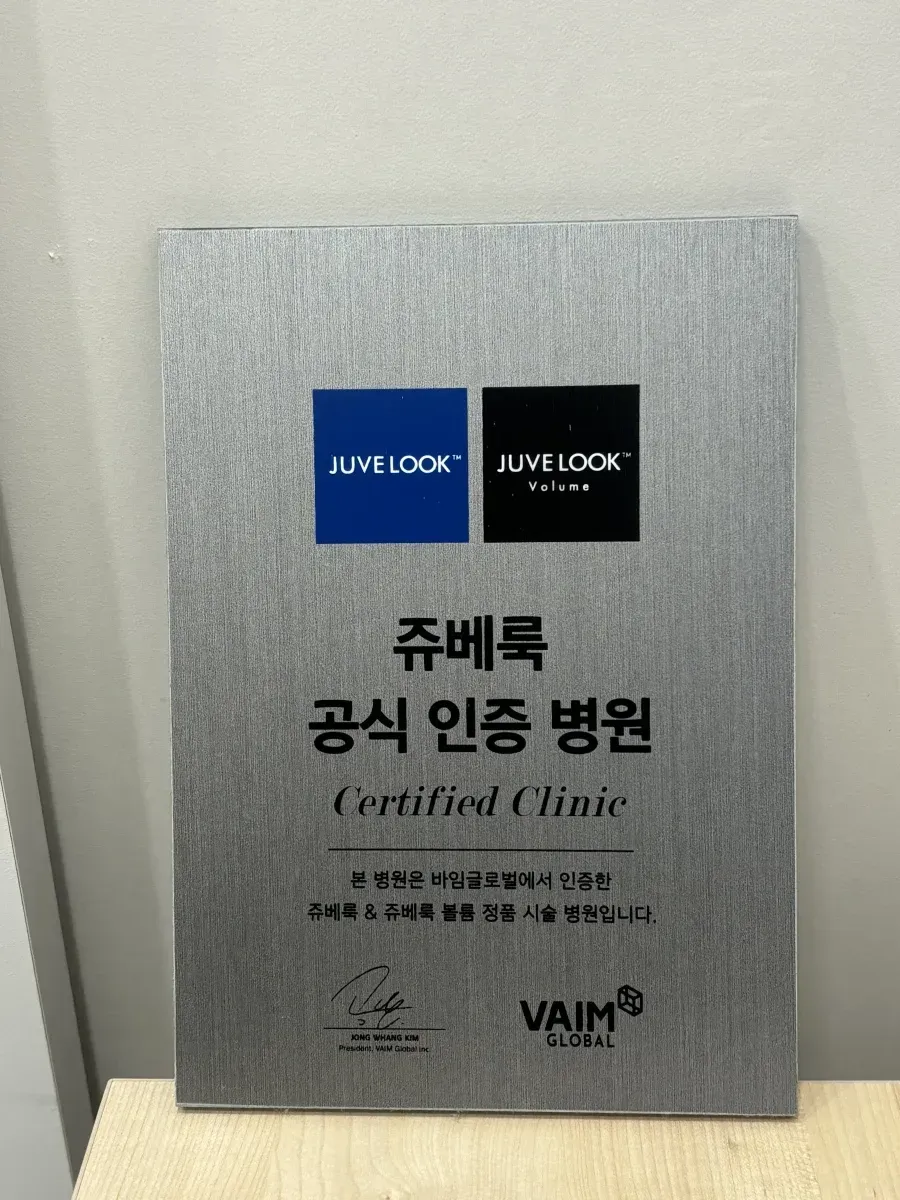
Only Authentic, Brand-Certified Equipment
Every device at RE:BERRY is MFDS-certified and manufacturer-verified. We never use counterfeit or grey-market equipment.
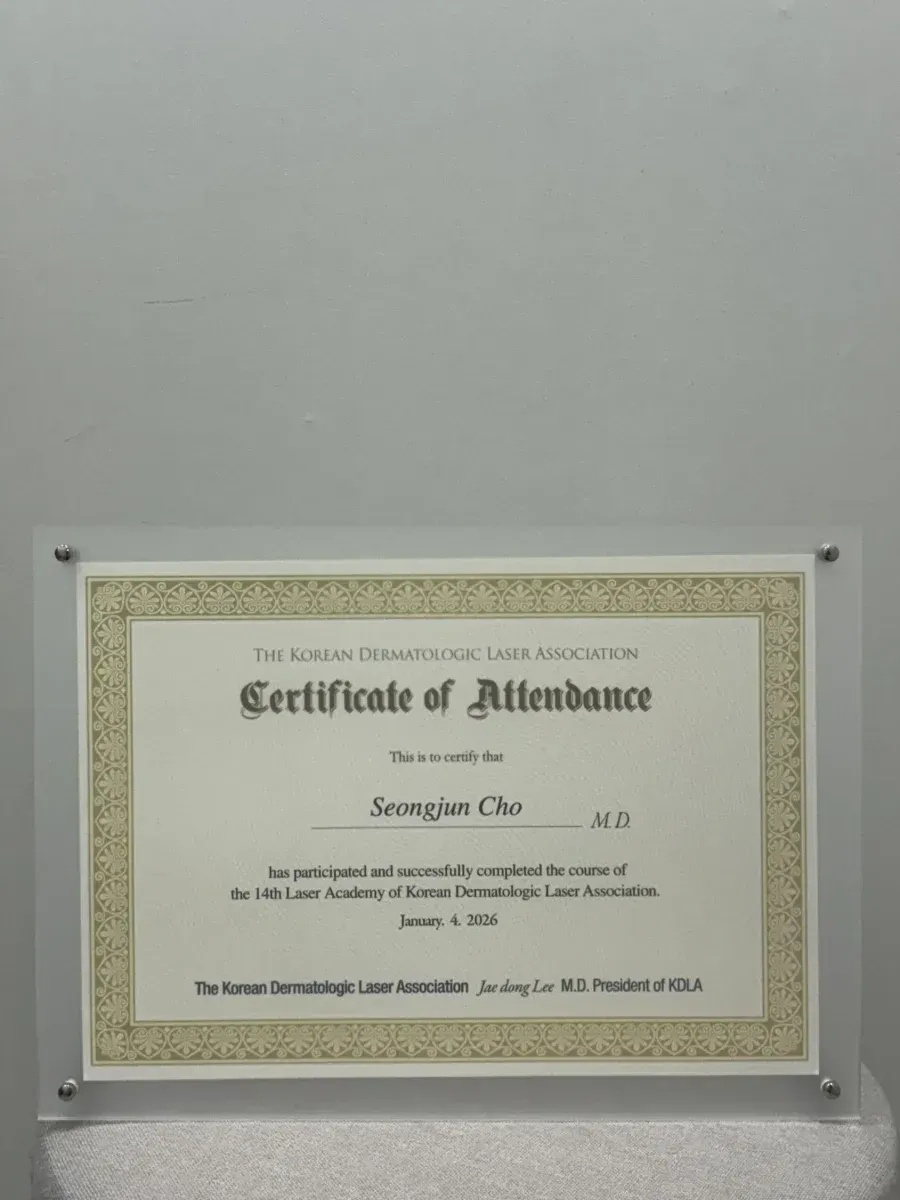
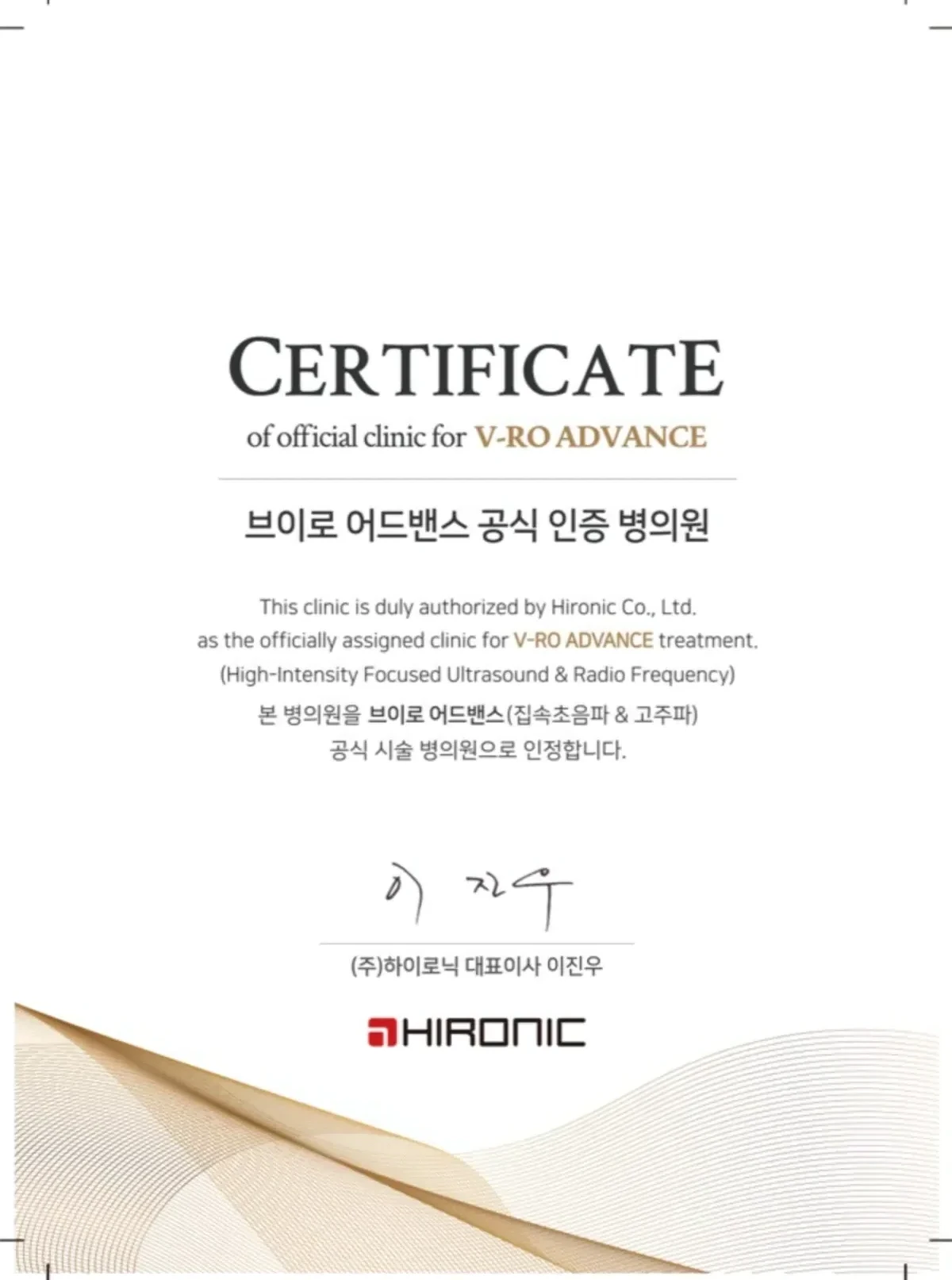
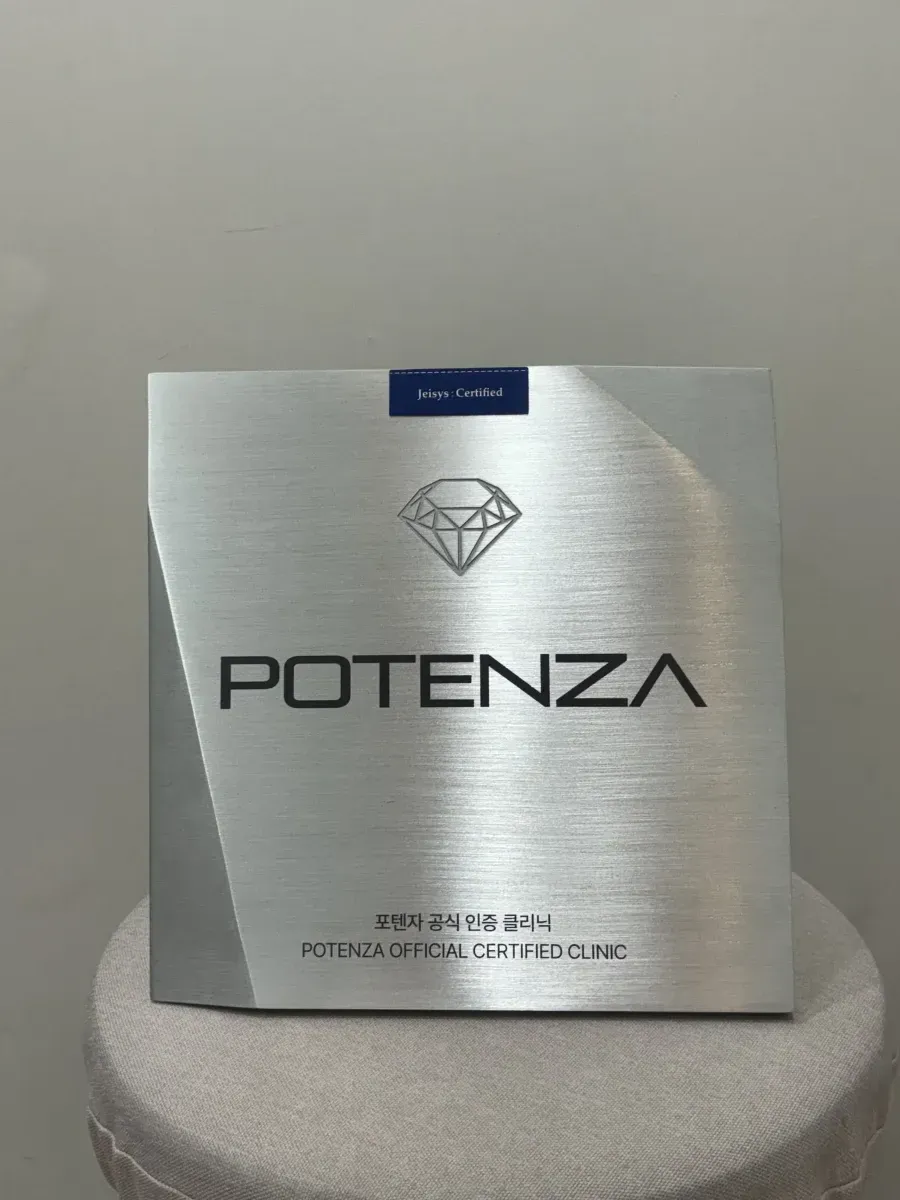
Brand-Authenticated Equipment & Training



Our doctors are certified by Korea’s top dermatological societies





Latest from Our Instagram
Real treatments, patient reactions, and behind-the-scenes from RE:BERRY.
Tap any video for sound & fullscreen
What our patients say
Real verified reviews from our Google Business Profile
Popped into Reberry Incheon while in Korea because I wanted to check out some local beauty treatments! The staff was super friendly. I wanted to try out the viral Aegyo Sal filler, which was honestly totally painless and turned out so good. It’s super conveniently located right near Incheon Airport (T1 & T2), Unseo...
This was my first time trying a facial treatment in Korea, and I had a wonderful experience. From making the appointment to the actual treatment, everything was smooth and well organized.
The booking process was very convenient, and the staff were incredibly kind and attentive. They explained each step clearly, made s...
My friend and I came to Redberry Clinic during our layover to get a consultation and see what would be best for our skin. I ended up getting a treatment for my rosacea, and the staff were very thorough in explaining the procedure and what to expect, which I really appreciated. Everyone was also super friendly and welco...
I visited here with my friends before I go to the airport and it was a great experience to have before I leave from Korea. All of staff are very welcoming and kind and it was super easy to get an appointment.(They said it’s possible for walk-ins as well.)
I would come back here again if I have a chance to come to Korea...
Highly recommend. We will return next time we have a layover in Seoul. Easy communication on whatsapp to book the appointment. 15 minutes away from Incheon airport. White jade injection took only 15 minutes. Very professional and clean operation.
Numbers That Tell Our Story
Real procedures performed.
Pico Laser FAQ — RE:BERRY Incheon Airport
What is a pico laser and how does it work?
A pico laser delivers picosecond pulses (375-750 ps) at 532, 755, or 1064 nm. Because the pulse is shorter than the chromophore’s thermal relaxation time, energy is converted into photoacoustic shockwaves that shatter pigment, ink, and scar tissue into nanoparticles without heating surrounding skin. RE:BERRY Incheon Airport uses pico for tattoo removal, melasma, freckles, and atrophic acne scars.
How is pico laser different from Q-switched nanosecond lasers?
Pulse duration. Q-switched nanosecond lasers deliver 5-20 ns pulses (mostly photothermal); pico lasers deliver 375-750 ps pulses (mostly photoacoustic). Pico achieves 60-80% clearance with fewer sessions and substantially less post-inflammatory hyperpigmentation (PIH) — important on Fitzpatrick III-V Asian skin, which is the patient population most often treated at RE:BERRY Incheon Airport.
How much does pico laser cost at RE:BERRY Incheon Airport?
| Package | Price |
|---|---|
| Pico Fraxel (single) | ₩150,000 ($107 USD) |
| Dual Toning Package (PicoSure + Genesis) | ₩259,000 ($186 USD) |
| Berry Dual Toning 10 sessions | ₩690,000 ($493 USD) |
| Berry Shine Toning 10 sessions | ₩990,000 ($707 USD) |
What wavelengths does RE:BERRY Incheon Airport’s pico laser offer?
532 nm (frequency-doubled) for red, orange, yellow ink and superficial pigment; 755 nm alexandrite (PicoSure) for green/blue ink, melasma, freckles, and acne-scar FLA toning; 1064 nm Nd:YAG (PicoWay) for black ink, deeper dermal pigment, and Fitzpatrick IV-V skin.
How many sessions does pico laser require for melasma or pigmentation?
4-6 sessions for 60-80% clearance per Korean published series (Park 2021 picosecond 1064 nm in Korean melasma; Lee 2013 low-fluence Q-switched 1064 nm in 65 Korean patients). RE:BERRY Incheon Airport schedules 3-4 week intervals; transit patients can complete 1-2 sessions per Korea stay.
Is pico laser safe on Asian or darker skin tones?
Yes — pico’s photoacoustic mechanism produces less thermal damage to surrounding melanocytes than Q-switched nanosecond lasers, reducing PIH risk on Fitzpatrick III-V skin. RE:BERRY Incheon Airport defaults to 1064 nm PicoWay for darker tones and 755 nm PicoSure with conservative fluence for medium tones.
Can pico laser remove tattoos and how many sessions does it take?
Yes. Black ink: 4-8 sessions with 1064 nm PicoWay. Green/blue ink: 6-10 sessions with 755 nm PicoSure. Red/orange/yellow ink: 4-6 sessions with 532 nm. Multi-color or amateur tattoos may need 10+ sessions. RE:BERRY Incheon Airport requires 6-8 weeks between sessions for ink clearance.
Is pico laser painful?
Patients describe it as a hot rubber-band snap at 3-5/10 intensity. Topical anesthetic (EMLA-equivalent) is applied for 30 minutes pre-treatment for tattoo sessions. Pico toning for melasma typically does not require numbing.
Is there downtime after pico laser?
Pico toning: no social downtime, mild pinkness for 30-60 minutes. Pico Fraxel (FLA optic): 1-2 days of fine bronze crusting. Tattoo removal: pinpoint frosting that resolves in 24-48 hours, possible mild swelling for 1-2 days. Same-day flights are flight-compatible after 2 hours.
Can pico laser treat melasma and freckles together?
Yes. The Berry Dual Toning 10-session package (₩690,000 / $493 USD) alternates PicoSure 755 nm pigment toning with Genesis Nd:YAG vascular toning across 10 sessions — addresses both melasma and the redness component (PIE) of post-inflammatory marks. RE:BERRY Incheon Airport uses this protocol for the majority of pigmentation patients.
Does pico laser help acne scars?
Yes for shallow boxcar and rolling scars via the Focus Lens Array (FLA) optic on PicoSure, which converts 70% of energy into laser-induced optical breakdown spots that stimulate fibroblast collagen remodeling (Brauer 2015). Deeper scars are paired with Potenza RF or subcision in the One-Day Acne Scar Package.
What is the Focus Lens Array (FLA) on PicoSure?
FLA is a diffractive lens that concentrates picosecond energy into thousands of micro-spots per pulse, producing laser-induced optical breakdown (LIOB) inside the dermis without ablating the epidermis. The LIOB spots trigger fibroblast collagen and elastin neogenesis — used at RE:BERRY Incheon Airport for acne scars, fine lines, and pore tightening with no social downtime.
Can I combine pico laser with other treatments in one visit?
Yes. About 80% of RE:BERRY Incheon Airport patients combine pico with at least one other treatment: pico + Genesis vascular laser (Dual Toning), pico + Sofwave lifting, or pico + Rejuran Healer booster. Total time 60-90 minutes.
Is pico laser cheaper at RE:BERRY Incheon Airport than in the US, UK, or Japan?
Yes.
| Country | Per session | 10-session package |
|---|---|---|
| RE:BERRY Incheon Airport | ₩150,000 ($107 USD) | ₩690,000 ($493 USD) |
| United States | $400-800 USD | $3,500-7,000 USD |
| Japan | ¥35,000-60,000 | ¥300,000-500,000 |
How long should I stay in Korea for a pico laser program?
1 day for a single session; 5-7 days if completing 3 sessions across one Korea stay (3-4 week intervals between sessions is ideal, so most patients complete the package across return visits).
What is the difference between PicoSure 755 nm and PicoWay 1064 nm?
PicoSure 755 nm alexandrite has high melanin absorption and the Focus Lens Array optic for collagen remodeling — preferred for lighter pigment, freckles, and acne-scar toning. PicoWay 1064 nm Nd:YAG penetrates deeper, bypasses epidermal melanin, and is safer on Fitzpatrick IV-V — preferred for darker skin, deeper pigment, and black-ink tattoo removal.
Will my pigmentation come back after pico laser?
Treated pigment is mechanically shattered and cleared, but melasma can recur if triggers persist (UV, hormones, heat, friction). RE:BERRY Incheon Airport provides written trigger-management plans in 5 languages and recommends maintenance toning every 3-6 months for melasma-tendency patients.
What devices does RE:BERRY Incheon Airport use for pico work?
PicoSure 755 nm alexandrite with Focus Lens Array, PicoWay 1064 nm Nd:YAG, and 532 nm frequency-doubled handpiece. All are FDA-cleared and KFDA-approved, validated across 1,000,000+ procedures at RE:BERRY clinics (Gangnam, Myeongdong, Incheon Airport) performed at the clinic.
Is pico laser covered by Korean National Health Insurance?
No. Aesthetic pico laser is a non-covered service (자유진료). RE:BERRY Incheon Airport issues itemized receipts in English, Japanese, Chinese, and Spanish for overseas reimbursement claims where applicable.
Who performs pico laser at RE:BERRY Incheon Airport?
Dr. Sunbeen Kim (Head Director, License 137273) and Dr. Kim Dong-Young (Doctor, License 147291). Both are Aesthetic Medicine Specialists and members of the Korean Academy of Aesthetic Medicine. Each handles 3-4 patients daily with 60-90 minute consultations.
Is pico laser safe during pregnancy or breastfeeding?
No. RE:BERRY Incheon Airport does not perform elective aesthetic pico laser on pregnant or breastfeeding patients as a precaution. Treatment can resume 6-8 weeks after delivery or after weaning.
What aftercare is required after pico laser?
SPF 50+ sunscreen mandatory for 2-4 weeks, gentle barrier cream, no retinoids for 5-7 days, no exfoliating acids for 7 days. Strict sun avoidance prevents PIH. RE:BERRY Incheon Airport provides written multilingual aftercare and 48-hour WhatsApp photo check-in.
How do I prepare for pico laser at RE:BERRY Incheon Airport?
Avoid tanning for 4 weeks, retinoids for 5-7 days, photosensitizing antibiotics for 48 hours if your prescriber agrees, and isotretinoin for 6 months. Bring all topical and oral medication labels to consultation.
How do I book a pico laser consultation at RE:BERRY Incheon Airport?
WhatsApp +82-10-6453-4731 or email reberry@reberryyj.com with high-resolution photos in natural light (front, left, right, no filter). Dr. Sunbeen Kim or Dr. Kim provides a preliminary protocol and quote as soon as possible in 5 languages.
Book Your Pico Laser Consultation at RE:BERRY Incheon Airport
Visit RE:BERRY Incheon Airport for pico laser education and treatment — 6 days a week, 5 languages, free ICN airport pickup. Pico Fraxel ₩150,000 ($107 USD) per session, 50-70% less than US/Japan with identical FDA/MFDS-cleared PicoSure 755nm and PicoWay 1064nm devices.
Got a Layover in Korea? This Clinic Near Incheon Airport Offers Aesthetic Treatments in Under 4 Hours — Business Wire, 2026-04-13
Book Your Personalized Consultation
Share your details and our multilingual team will contact you as soon as possible through your preferred messenger.
- ✓ Free online skin consultation with a doctor
- ✓ Personalized treatment plan & pricing
- ✓ Airport pickup coordination available
- ✓ 5-language support (EN/ZH-CN/ZH-TW/JA/ES)
- ✓ Response as soon as possible via your preferred messenger
How to Find RE:BERRY Incheon Airport
20 mins from Incheon Airport Terminal 1 by shuttle or taxi. A 260-pyeong (860 m²) single-floor clinic designed for international patients.
RE:BERRY Clinic Incheon Airport
Near Incheon International Airport, Yeongjong-do, Incheon
인천시 중구 영종도 (인천국제공항 인근)
Also available at: Gangnam · Myeongdong