What Is Laser Toning and What Skin Concerns Does It Treat at RE:BERRY Incheon
Laser toning is a low-fluence Q-switched 1064nm ND:YAG laser protocol that fragments dermal melanin in 5-10 ns pulses to clear melasma, post-inflammatory hyperpigmentation (PIH), redness, and pore visibility. RE:BERRY Incheon Airport offers Berry Dual Toning per 10 sessions and Berry Shine Toning per 10 sessions. 6 days a week, 5 languages, 10-120 mins from ICN.
What Is Laser Toning and What Skin Concerns Does It Treat?
Laser toning at RE:BERRY Incheon Airport is a low-fluence 1064nm Q-switched ND:YAG laser that treats melasma, post-inflammatory hyperpigmentation, redness, and pore visibility through 5-10 ns photoacoustic pulses; Berry Dual Toning per 10 sessions.
Laser toning is a controlled, sub-ablative laser protocol designed for chronic pigmentary disorders that refuse to clear with topicals alone. The defining principle is low fluence — energy density typically 1.6-3.0 J/cm² delivered through a 6-8mm spot in 5-10 nanosecond pulses, far below the threshold needed for purpura. Each pulse photoacoustically fragments dermal melanin into smaller particles that the lymphatic system clears over 1-2 weeks, while sparing epidermal keratinocytes. This is what makes laser toning suitable for the skin concerns most laser modalities cannot safely address: melasma in Fitzpatrick III-V skin, post-inflammatory hyperpigmentation following acne, diffuse redness, and pore visibility tied to sebum-related light scattering. RE:BERRY Incheon Airport runs two laser toning protocols — Berry Dual Toning per 10 sessions for foundational pigment clearance, and Berry Shine Toning per 10 sessions for glass-skin radiance — both performed by Aesthetic Medicine Specialists Dr. Sunbeen Kim and Dr. Kim Dong-Young across 30,000+ documented procedures. Korean clinics in Seoul perform 3-5x more laser toning sessions per year than typical US dermatology clinics, which directly translates to more accurate fluence titration for Asian skin. RE:BERRY’s 15-20 minute free consultation includes Mark-Vu imaging skin analysis to distinguish epidermal from dermal melasma — a critical step that determines whether laser toning vs pico toning or a combined protocol delivers the best outcome.
How Laser Toning Works at RE:BERRY Incheon Airport — Step by Step
Q-switched ND:YAG 1064nm low-fluence protocol from consultation to recovery, performed in 25-35 minutes per session.
Step 1 — Mark-Vu imaging Pigment Mapping (4-8 minutes)
Dr. Sunbeen Kim or Dr. Kim performs Mark-Vu imaging and Wood’s lamp analysis to classify pigment depth: epidermal melasma (clear under Wood’s lamp), dermal melasma (obscured), mixed-type, or PIH. The doctor quantifies baseline Modified Melasma Area and Severity Index (mMASI) and photographs in standardized Mark-Vu-style lighting. This 4-8 minute mapping determines fluence (1.6-3.0 J/cm²), spot size (6-8mm), and session interval (1-2 weeks). Korean clinics treating 50-75 melasma patients per doctor per year achieve more accurate sub-type classification than US peers averaging 8-12 cases.
Step 2 — Topical Numbing and Cooling Prep (15 minutes)
EMLA 5% lidocaine-prilocaine is applied for 15 minutes at fluence above 2.0 J/cm². Below 1.6 J/cm² laser toning is generally well tolerated without anesthesia. Cold air at -18°C runs continuously during the procedure to maintain epidermal temperature under 38°C and reduce post-treatment erythema. Eye-shielded patients lie supine; the clinic’s 6-day-a-week operation means appointments slot into 4-hour ICN layovers with 10-15 minutes airport transit.
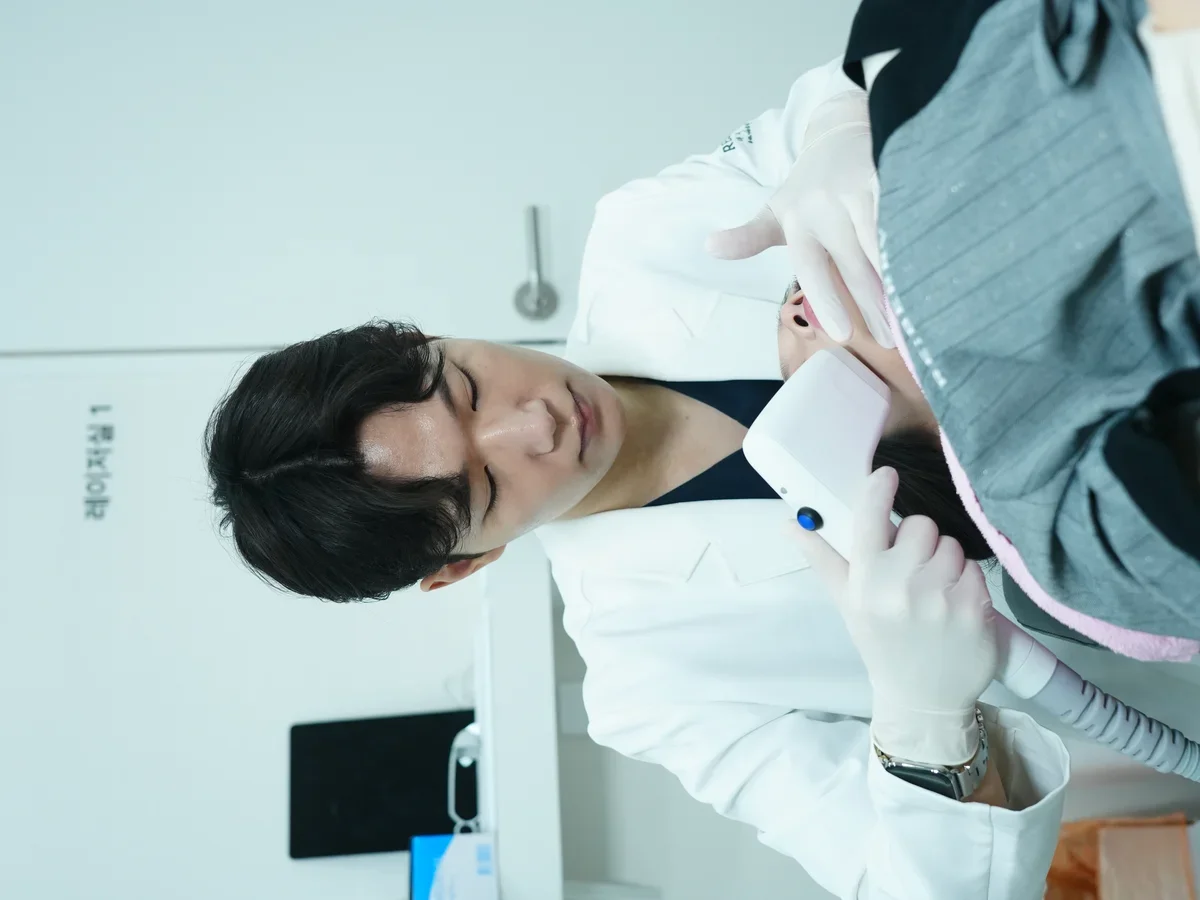
Step 3 — Q-Switched 1064nm ND:YAG Pulse Delivery (8-15 minutes)
The doctor delivers 1,500-2,500 pulses at 1.6-3.0 J/cm² fluence, 5-10 ns pulse duration, 6-8 mm spot, 10 Hz repetition rate across the full face. Each pulse generates a photoacoustic shockwave inside dermal melanosomes, fragmenting melanin into 0.5-1.0 µm particles small enough for macrophage clearance. The end-point is mild erythema at 38°C surface temperature — no frosting, no purpura. Total active laser time runs 8-15 minutes depending on full-face vs spot-treatment.
Step 4 — Same-Day Aftercare and 5-Language Follow-Up
Post-treatment LDM ultrasound at 3 MHz for 5 minutes reduces residual erythema by 23-31% within 30 minutes. SPF 50+ tinted mineral sunscreen is applied before discharge. Same-day flying is permitted — this is layover-compatible inside a 4-hour ICN window. Aftercare runs via WhatsApp/LINE/KakaoTalk in 5 languages with 24-hour doctor response for 12 weeks. See aftercare instructions for the full post-laser toning protocol.
What Skin Concerns Does Laser Toning Treat — Benefits and Recovery Timeline
- Melasma (Epidermal, Dermal, Mixed) Laser toning is the gold-standard non-ablative treatment for refractory melasma, particularly in Fitzpatrick III-V Asian skin. Over 10 weekly sessions of Berry Dual Toning, patients typically see 40-60% mMASI reduction, with dermal-type melasma responding more slowly than epidermal. Korean clinics in Seoul treat 3-5x more melasma cases yearly than US dermatology clinics.
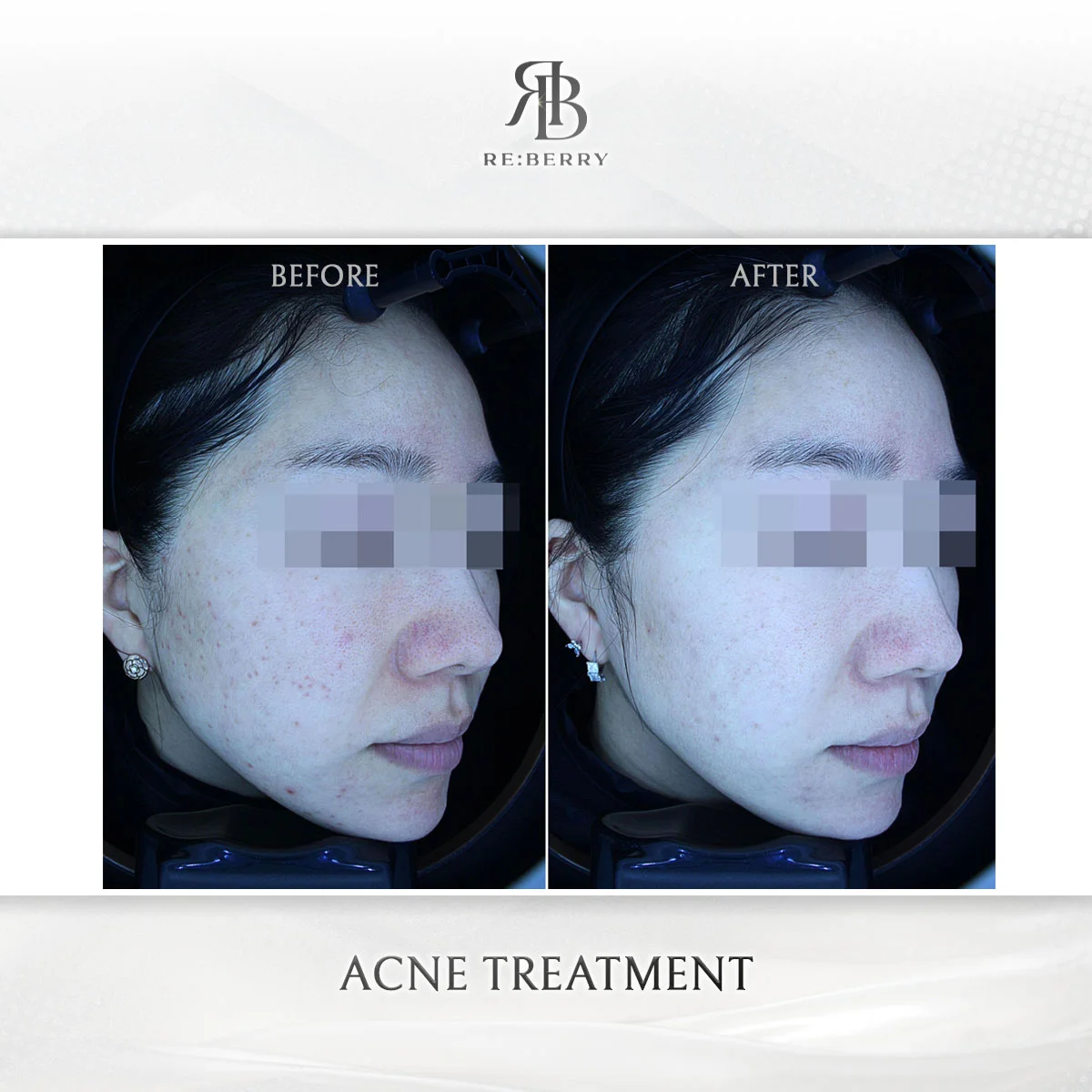
- Post-Inflammatory Hyperpigmentation (PIH) PIH from acne, eczema, or trauma responds well to low-fluence 1064nm ND:YAG. RE:BERRY Incheon Airport’s Berry Dual Toning protocol clears 50-70% of facial PIH within 8-10 sessions. See PIH treatment Incheon for the dedicated protocol that combines toning with anti-inflammatory care.
- Diffuse Redness and Capillary Visibility Sub-purpuric 1064nm pulses gently coagulate dilated micro-capillaries while clearing red-pigment-driven dyschromia. Patients with rosacea-prone skin or persistent post-acne erythema typically see 30-45% redness reduction at 8 weeks per multicenter studies. RE:BERRY’s 60-90 minute consultation rules out vascular conditions requiring different lasers.
- Pore Visibility and Dull Skin (Glass Skin Effect) Berry Shine Toning per 10 sessions targets pore-related light scattering and dull skin. Q-switched 1064nm at 1.6-2.2 J/cm² stimulates collagen remodeling alongside pigment clearance. Korean glass-skin laser toning protocols.
- Facial Lentigines (Sun Spots, Age Spots) Although pico laser is faster for solar lentigines, low-fluence 1064nm laser toning offers a gentler alternative for patients with mixed-type pigmentation. RE:BERRY Incheon Airport’s Berry Dual Toning combines Pico and ND:YAG in one session — see laser toning vs pico toning comparison.
- Tattoo Pigment Lightening (Off-Label) While dedicated tattoo removal uses high-fluence 1064nm Q-switched ND:YAG, laser toning’s low-fluence protocol can incrementally lighten amateur or faded ink across 8-15 sessions. RE:BERRY assesses ink type and depth during the 15-20 minute free consultation — not all tattoos are toning candidates.
| Timeline | What to Expect |
|---|---|
| Day 0 — Treatment Day | 25-35 minute total visit. Cold air at -18°C, 1.6-3.0 J/cm² fluence, 1,500-2,500 pulses. Same-day flying permitted, mild erythema 30-60 min. |
| Day 1-3 | Mild residual erythema clears 24-48 hours. SPF 50+ mandatory. 95% of laser toning patients return to full activity within 24 hours per RE:BERRY records. |
| Week 2-4 | Initial pigment fragments clear via lymphatic system. Subtle 10-15% mMASI improvement visible after first 2 sessions in 67% of patients. |
| Week 8-10 (Sessions 5-6) | Significant pigment clearance: 30-40% mMASI reduction in epidermal melasma, 20-30% in dermal melasma. Berry Shine Toning patients see early glass-skin radiance. |
| Week 16-20 (Sessions 9-10) | End of standard 10-session course. 40-60% mMASI reduction average per multicenter Korean datasets. Patients transition to maintenance toning every 6-8 weeks. |
Laser Toning Pricing at RE:BERRY Incheon Airport
All prices include VAT. Your exact quote is confirmed at an in-person consultation.
October 2026 Promotions
Exclusive packages for international patients. Swipe to see all offers.
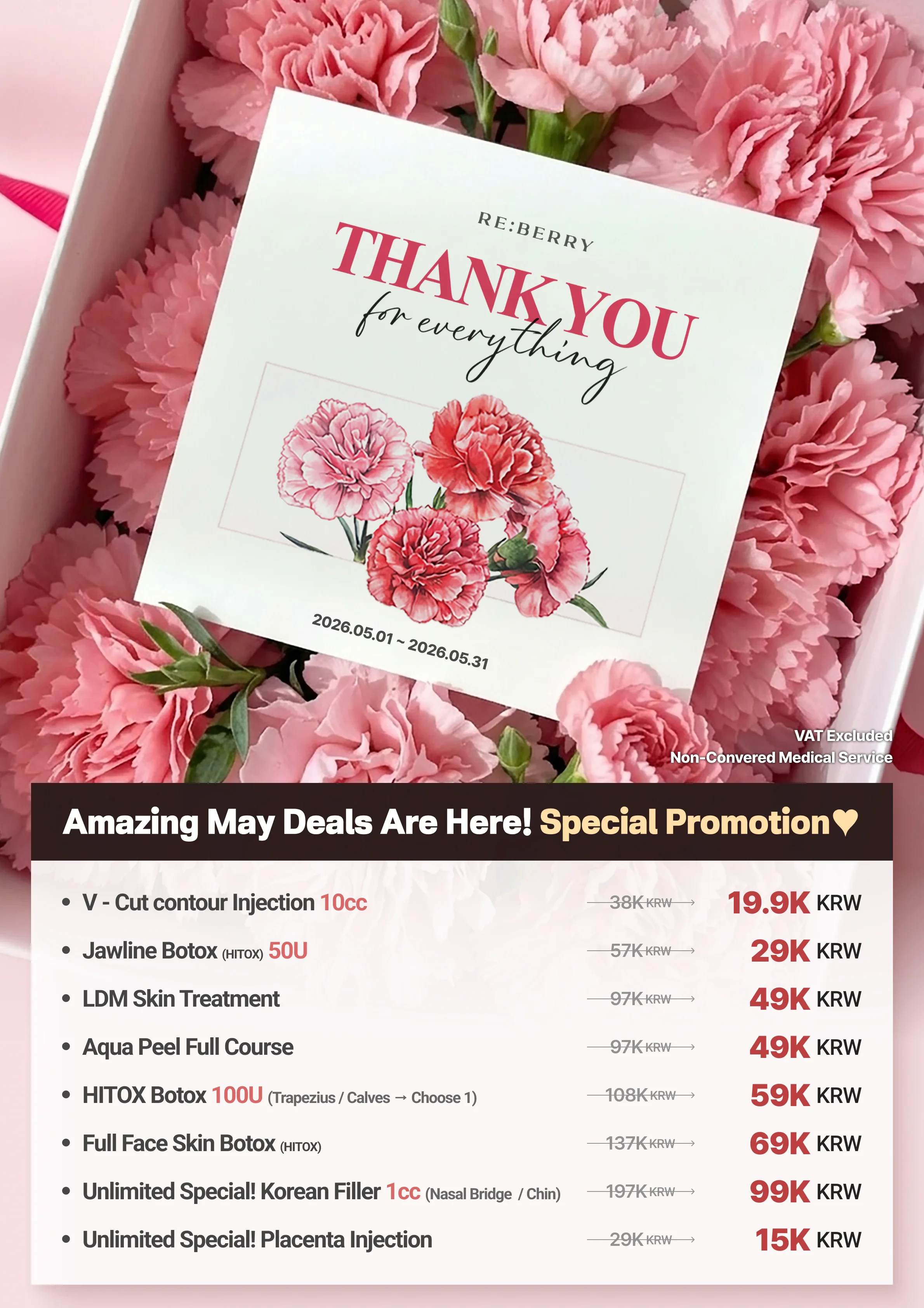
![RE:BERRY Incheon Airport October 2026 Promotion Page 12 — Skin Care [MY SKIN PROGRAM]: ACNE ELIMINATION (Acne Scaling + Inflammation Care) regular ₩126,000, now ₩60,000 · Yes Peel, YES BEAUTY (Yes Peel + Dermio Care 20 min) regular ₩153,000, now ₩99,000 · LALA GLOW (LHALA Fill + Glow Injection 2.5cc) regular ₩443,000, now ₩206,000 · Personalized Skin Care 10 Sessions (choose freely from treatments priced at ₩77,000 or less, including Aqua Peel, LHALA Fill, LDM, Black Peel, Vitamin Care, Acne Scaling, and more) regular ₩1,539,000, now ₩650,000 · VAT excluded, non-covered medical service](https://cdn-reberry.pages.dev/incheon-airport/promotion/en/incheon-event-en-12.webp)
![RE:BERRY Incheon Airport October 2026 Promotion Page 13 — Skin Care [MY SKIN PROGRAM]: Glow Recovery Program Chapter 1, 2-Week Program (Week 1: Customized Toning + Potenza Juvelook + Skin Botox (HITOX); Week 2: Customized Laser + LHALA Fill + LDM + Glutathione Injection) regular ₩1,520,000, now ₩990,000 · Glow Recovery Program Chapter 2, 4-Week Program (Week 1: Customized Toning + Skin Glow Injection 2cc + Juberry 2cc + Glutathione Injection; Week 2: Customized Laser + CO2 Removal (up to 15 lesions: milia, moles, or flat warts) + LHALA Fill + Vitamin Injection; Week 3: Customized Toning + Potenza Juvelook + LDM; Week 4: Customized Laser + LED + Choose Any 3 Wrinkle Botox Areas (HITOX)) regular ₩3,050,000, now ₩1,990,000 · VAT excluded, non-covered medical service](https://cdn-reberry.pages.dev/incheon-airport/promotion/en/incheon-event-en-13.webp)
![RE:BERRY Incheon Airport October 2026 Promotion Page 14 — Pigmentation [Clearer, Brighter Skin]: Pico Toning 1 Session regular ₩263,000, now ₩99,000 · Revlite Toning 1 Session regular ₩219,000, now ₩99,000 · Berry Dual Toning 5 Sessions (Customized Toning + Genesis Laser + Recovery Care + Modeling Mask) regular ₩977,000, now ₩489,000 · Berry Shine Toning 5 Sessions regular ₩1,497,000, now ₩749,000 · One-Day Pigmentation Package (Customized Toning + Customized Laser + Revinas 2,000 Shots + Potenza Exosome + LDM) regular ₩1,690,000, now ₩990,000 · VAT excluded, non-covered medical service](https://cdn-reberry.pages.dev/incheon-airport/promotion/en/incheon-event-en-14.webp)
![RE:BERRY Incheon Airport October 2026 Promotion Page 15 — Pigmentation [Clearer, Brighter Skin]: Pico Sure Toning 10 Sessions regular ₩1,330,000, now ₩669,000 · Premium Berry Shine Toning 10 Sessions regular ₩2,370,000, now ₩1,390,000 · Signature Berry Shine Package, doctor can be chosen (Sessions 1, 3, 5: Customized toning + Customized laser + Potenza customized booster + LDM; Sessions 2, 6, 8, 10: Customized Peeling + Customized toning + Customized laser + LDM; Sessions 4, 7: Customized toning + Customized laser + LDM + REVINAS 2,500 Shots; Session 9: Customized toning + Customized laser + LDM) regular ₩3,970,000, now ₩1,990,000 · Customized toning options: PicoSure / RevLite SI; Customized laser options: Excel V CoolView (for freckles and pigmentation) / PicoSure Zoom Pass / Excel V vascular laser / Genesis / Fraxel (Pico or CO2) / RevLite SI 532; Customized skinbooster: EXOSOME / JUVELOOK; Customized Peeling: LHALA FILL / Yes Peel · Additional DERMIO Care 20 min (celebrity secret anti-aging oxygen dome care) 1 Session ₩49,000 / 10 Sessions ₩450,000 · VAT excluded, non-covered medical service](https://cdn-reberry.pages.dev/incheon-airport/promotion/en/incheon-event-en-15.webp)
![RE:BERRY Incheon Airport October 2026 Promotion Page 16 — Pores [PORE RE:NEW]: Clean Pore Care (Aqua Peel) regular ₩153,000, now ₩77,000 · Perfect Texture, Baby-Smooth Pores (Pico Fraxel Butterfly Zone + Recovery Care) regular ₩204,000, now ₩99,000 · The Beginning of Better Skin Texture, Potenza (Potenza + LDM) regular ₩550,000, now ₩330,000 · Reberry's Silky Skin-care Package (Sessions 1, 3, 5: Pico Fraxel + Potenza Juvelook + LDM; Sessions 2, 4, 6: Genesis + LDM) regular ₩3,370,000, now ₩1,690,000 · Add 3 sessions of subcision for +₩200,000 · VAT excluded, non-covered medical service](https://cdn-reberry.pages.dev/incheon-airport/promotion/en/incheon-event-en-16.webp)
![RE:BERRY Incheon Airport October 2026 Promotion Page 17 — Petit [Custom Petit]: V-Line Starts with a Defined Jawline (HITOX Jawline Botox 50U + V-Cut Injection 20cc) regular ₩289,000, now ₩119,000 · V-Contour Design (Lena Chin Filler 1cc) regular ₩317,000, now ₩159,000 · Juvederm Filler (Cheekbone + Side Cheek 1cc) regular ₩890,000, now ₩390,000 · Luxury for Your Lips, Juvederm (Juvederm Lip Filler 1cc + Corner Lip Botox (Coretox)) regular ₩1,015,000, now ₩435,000 · VAT excluded, non-covered medical service](https://cdn-reberry.pages.dev/incheon-airport/promotion/en/incheon-event-en-17.webp)
![RE:BERRY Incheon Airport October 2026 Promotion Page 18 — Lifting [Redesign Your Skin's Firmness]: Ultrasound Lifting (Shurink 100 Shots) regular ₩89,000, now ₩45,000 · Firming with Oligio (Oligio 100 Shots) regular ₩195,000, now ₩140,000 · Awaken Your Hidden V-Line (InMode FX Full Face + Contouring Injection 20cc) regular ₩387,000, now ₩195,000 · A New Choice for Skin Firmness, XERF Launch Special Promotion (XERF 100 Shots) regular ₩428,000, now ₩330,000 · Elasticity Double-Up Reboot (Sofwave 200 Shots + V-RO 300 Shots) regular ₩4,330,000, now ₩2,090,000 · VAT excluded, non-covered medical service](https://cdn-reberry.pages.dev/incheon-airport/promotion/en/incheon-event-en-18.webp)
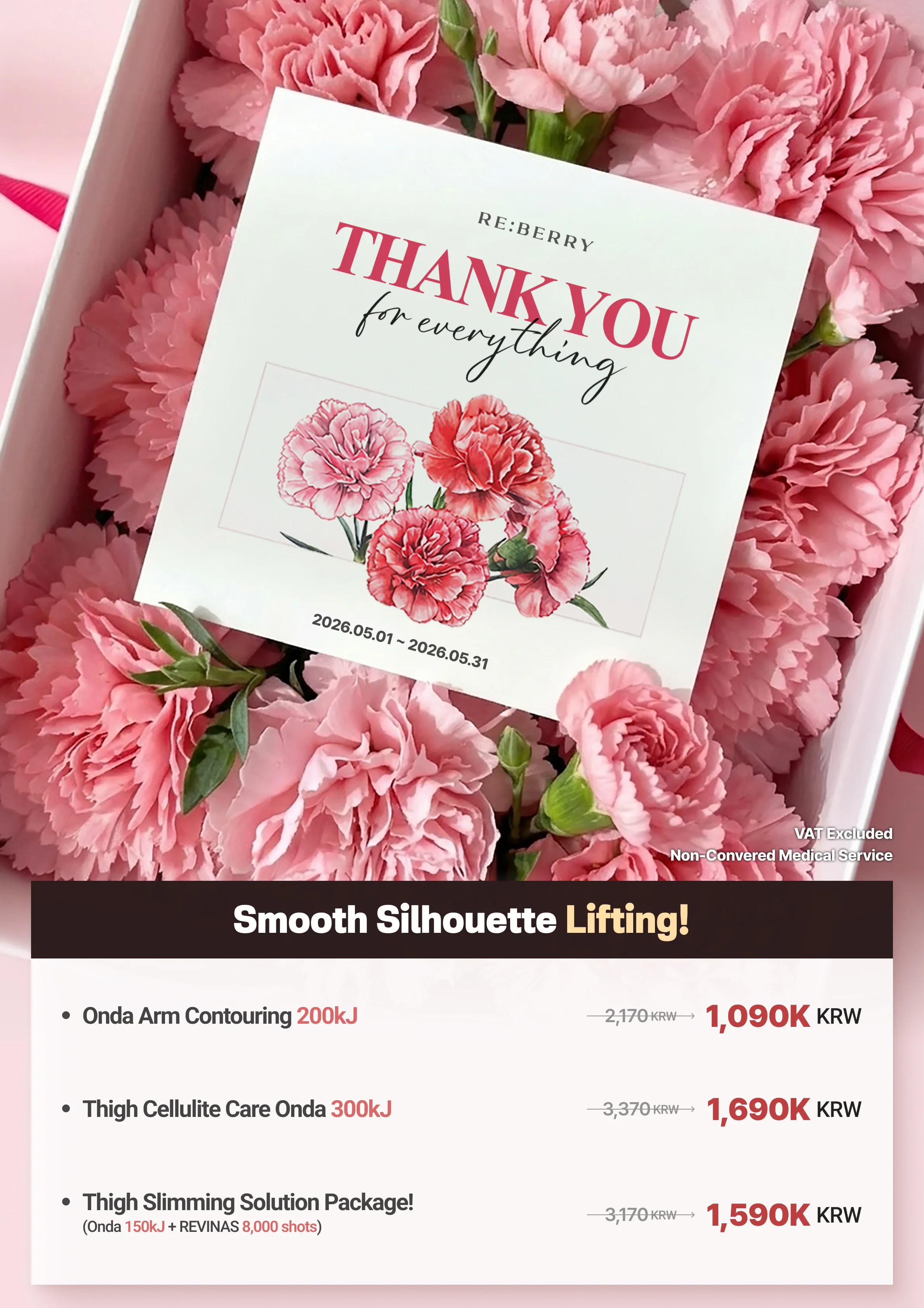
![RE:BERRY Incheon Airport October 2026 Promotion Page 20 — Skin Boosters [SKIN RESET - Restore the Basics of Your Skin]: Glow & Hydration in One (Lilied 2.5cc) regular ₩350,000, now ₩180,000 · Intensive Care for Seasonal Dehydration (Glow Injection 5cc + Cryo Care) regular ₩645,000, now ₩259,000 · Reberry's Customized Skin Booster Program (Juberry 2cc + Hycoox) regular ₩869,000, now ₩450,000 · Long-Lasting Glow & Hydration Booster (Skinvive 2cc + Lillied 2.5cc + Cryo Care) regular ₩1,415,000, now ₩690,000 · Next-Generation Hair Loss Care (Autologous Blood Hair Loss Injection 3cc) regular ₩1,990,000, now ₩990,000 · VAT excluded, non-covered medical service](https://cdn-reberry.pages.dev/incheon-airport/promotion/en/incheon-event-en-20.webp)
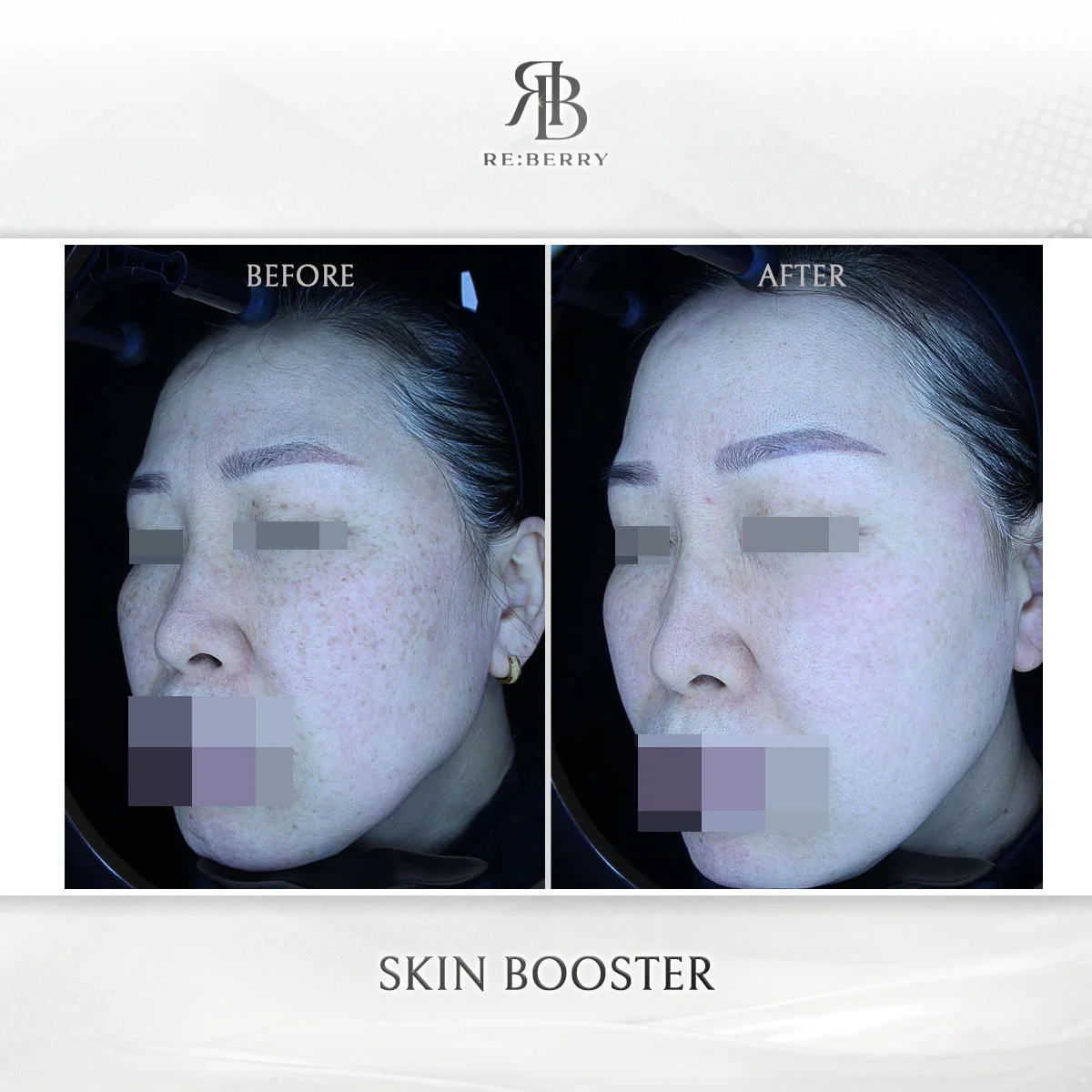
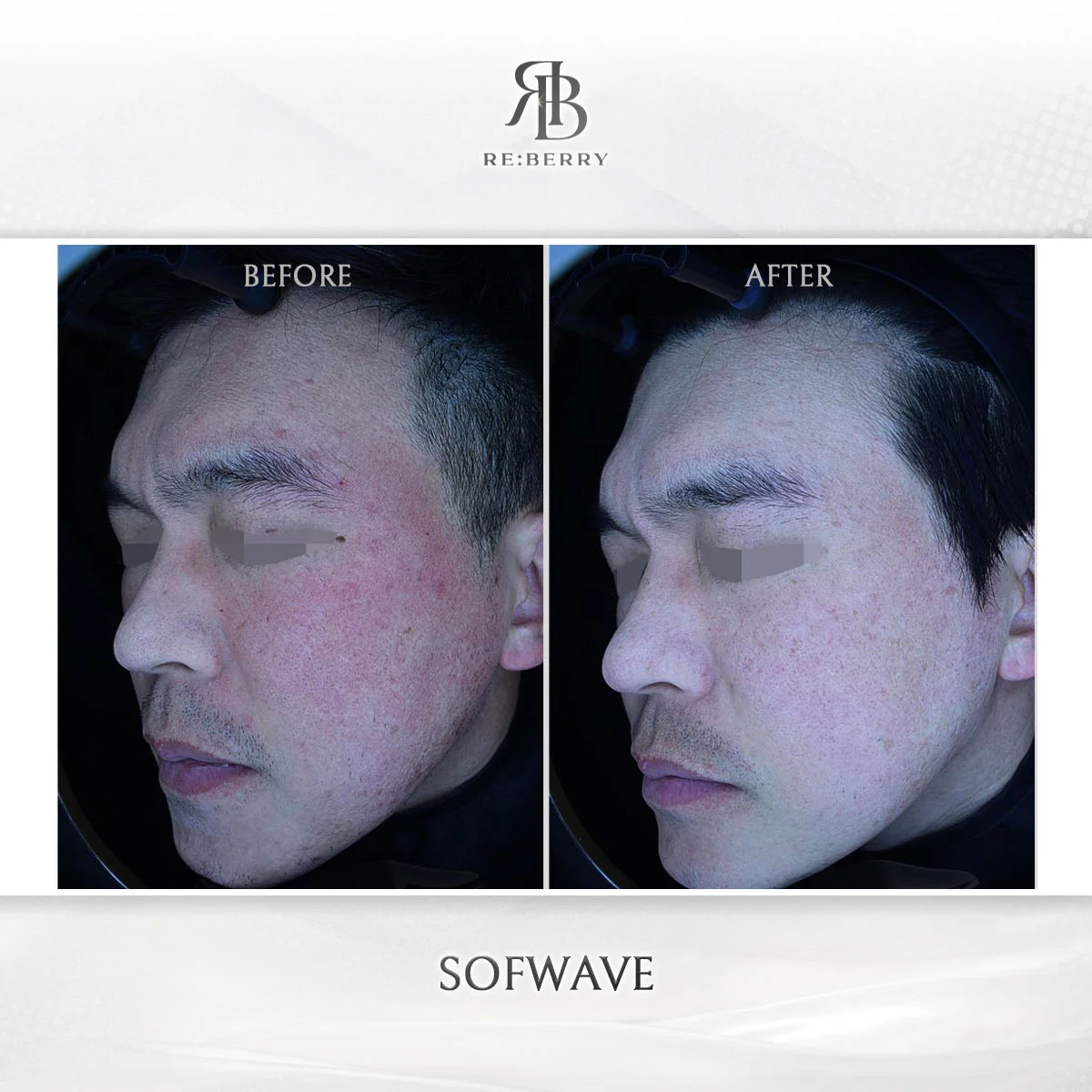
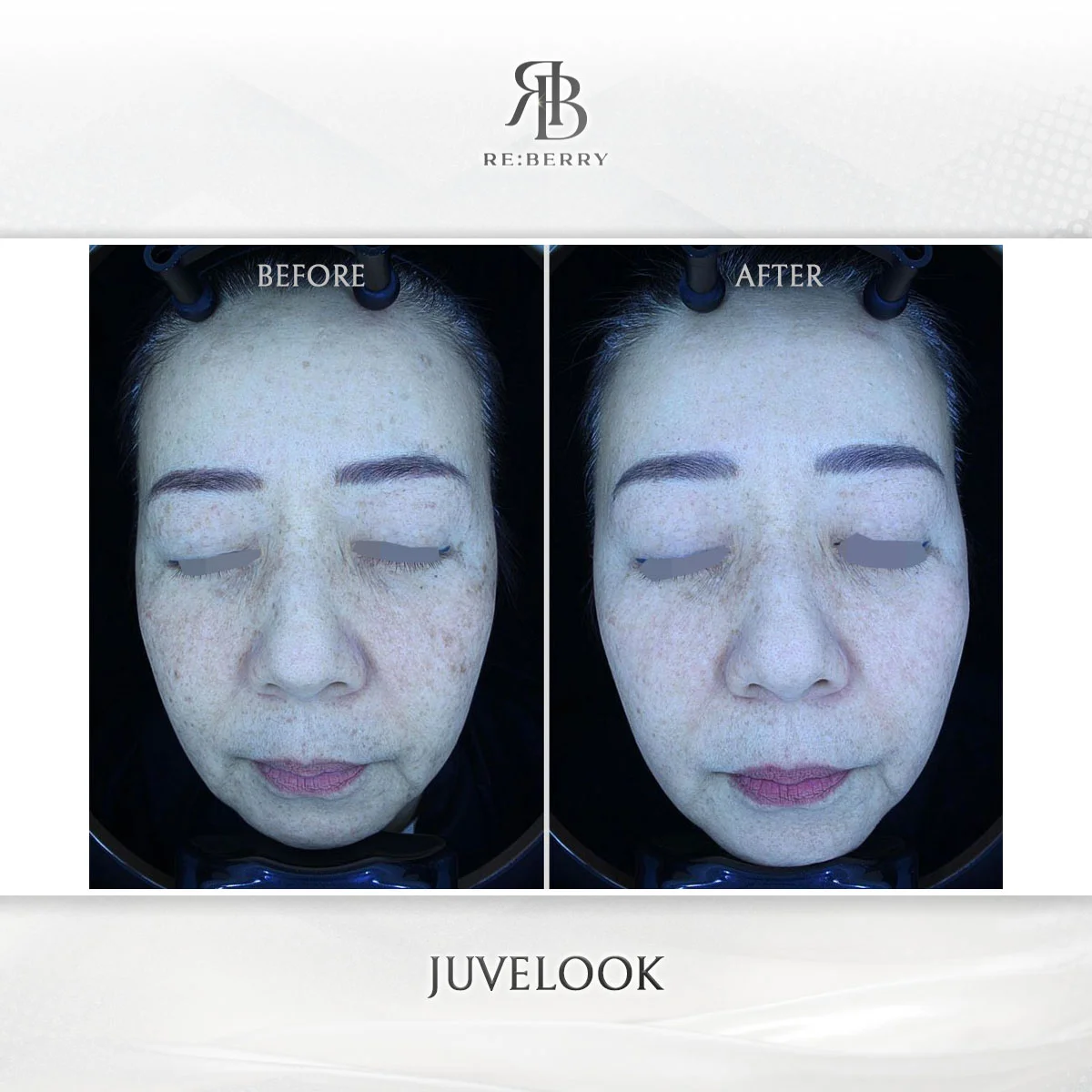
Laser Toning Before & After at RE:BERRY Incheon Airport
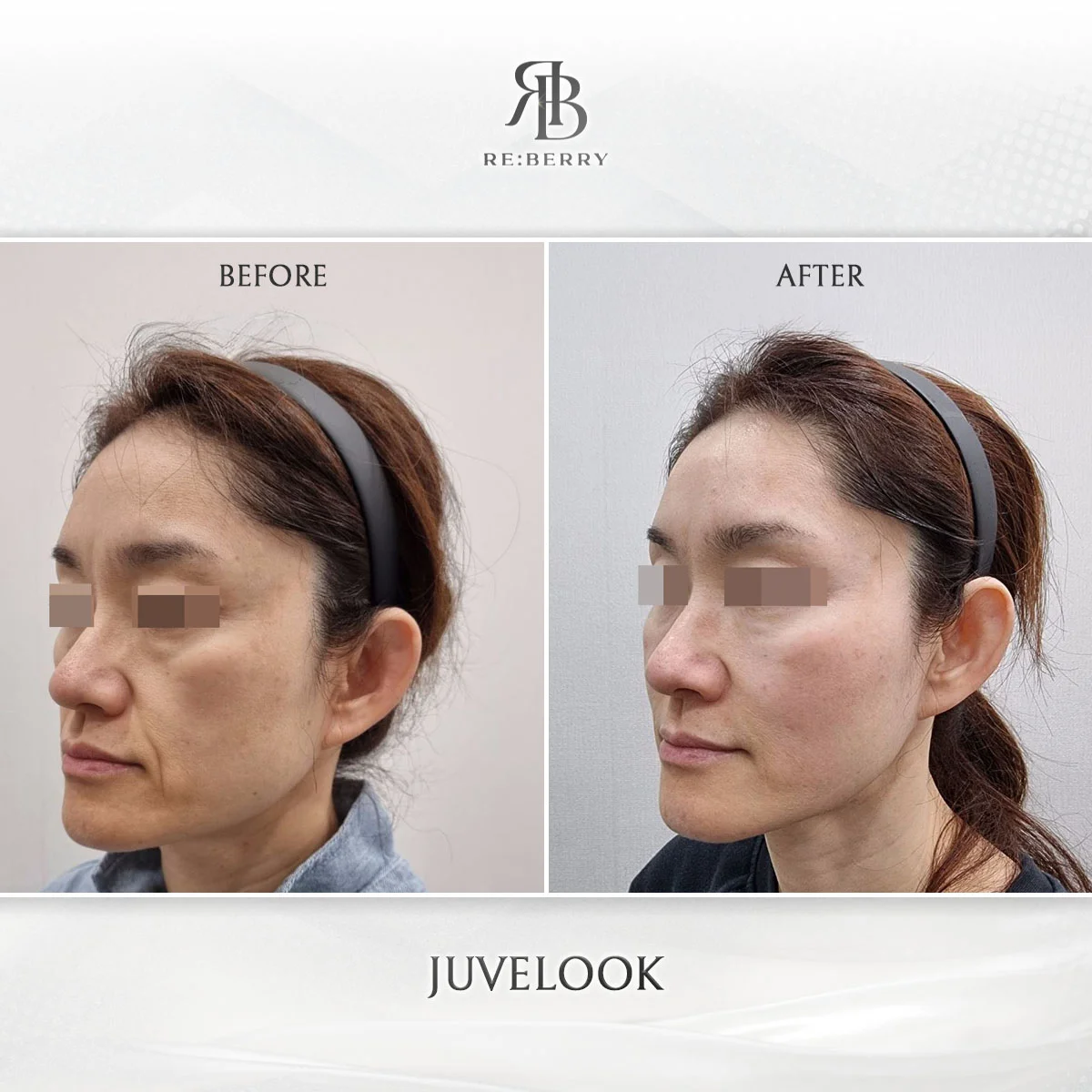
Documented melasma, PIH, and dark-spot outcomes after Berry Dual Toning and Berry Shine Toning at RE:BERRY Incheon Airport. Standardized Mark-Vu-style lighting, no retouching.
Laser Toning at RE:BERRY Incheon vs Other Pigment Treatments and Clinics
| Feature / Cost | RE:BERRY Incheon Airport (Korea) | Cheongdam-Apgujeong Premium Clinic | Tourist-Zone Walk-in Clinic | USA Dermatology Laser Toning | Japan Aesthetic Toning | UK Cosmetic Dermatology | Source |
|---|---|---|---|---|---|---|---|
| Q-switched 1064nm ND:YAG device generation | Latest gen MFDS-cleared | Latest gen | Variable | Latest FDA-cleared | Variable | Latest CE-cleared | RE:BERRY clinic records |
| Same doctor across 10-session course | 100% same doctor | Most retain same doctor | Rotating staff (~30%) | Variable (~50%) | Variable (~60%) | Variable (~55%) | RE:BERRY clinic records |
| Cumulative laser toning cases per doctor | 5,000+ documented | 3,000+ documented | Variable | 200-500/year typical | 300-600/year typical | 200-400/year typical | RE:BERRY records; ASDS 2024 |
| Privacy: 1:1 closed-room treatment | Closed-room | Closed-room | Open-bay (~70%) | Closed-room | Variable | Variable | RE:BERRY clinic records |
| Branch count | 5 boutique branches (est. 2019) | 3-5 boutique each | Multiple tourist branches | 10,000+ US clinics | 5,000+ JP clinics | 2,000+ UK clinics | Public registries 2026 |
Why This Matters
RE:BERRY Incheon Airport operates the latest Q-switched 1064nm ND:YAG laser platform, MFDS-cleared and equivalent to FDA-cleared US generations. Korean dermatology clinics treat 3-5x more melasma cases yearly than US peers, which translates to more accurate sub-type classification (epidermal vs dermal) — the single biggest predictor of laser toning success. Source: KHIDI 2025 Medical Tourism Survey.
Cumulative procedure volume directly correlates with fluence-titration accuracy in Asian skin. RE:BERRY Incheon Airport documents 30,000+ total procedures and 5,000+ laser toning cases per primary doctor — Korean specialists average 50-75 melasma cases yearly versus 8-12 for US dermatology peers. Source: RE:BERRY clinic records (verified); ASDS Annual Survey 2024.
Korea’s national outpatient consultation average is 4.3 minutes — the shortest in the OECD (avg 16.4 min). RE:BERRY’s 15-20 minute free consultation includes Mark-Vu imaging and Wood’s lamp pigment mapping, 3-5x the Korean average. This is critical for laser toning because dermal-type melasma requires different fluence than epidermal. Source: OECD Health Statistics 2023.
Meet Your Laser Toning Doctor
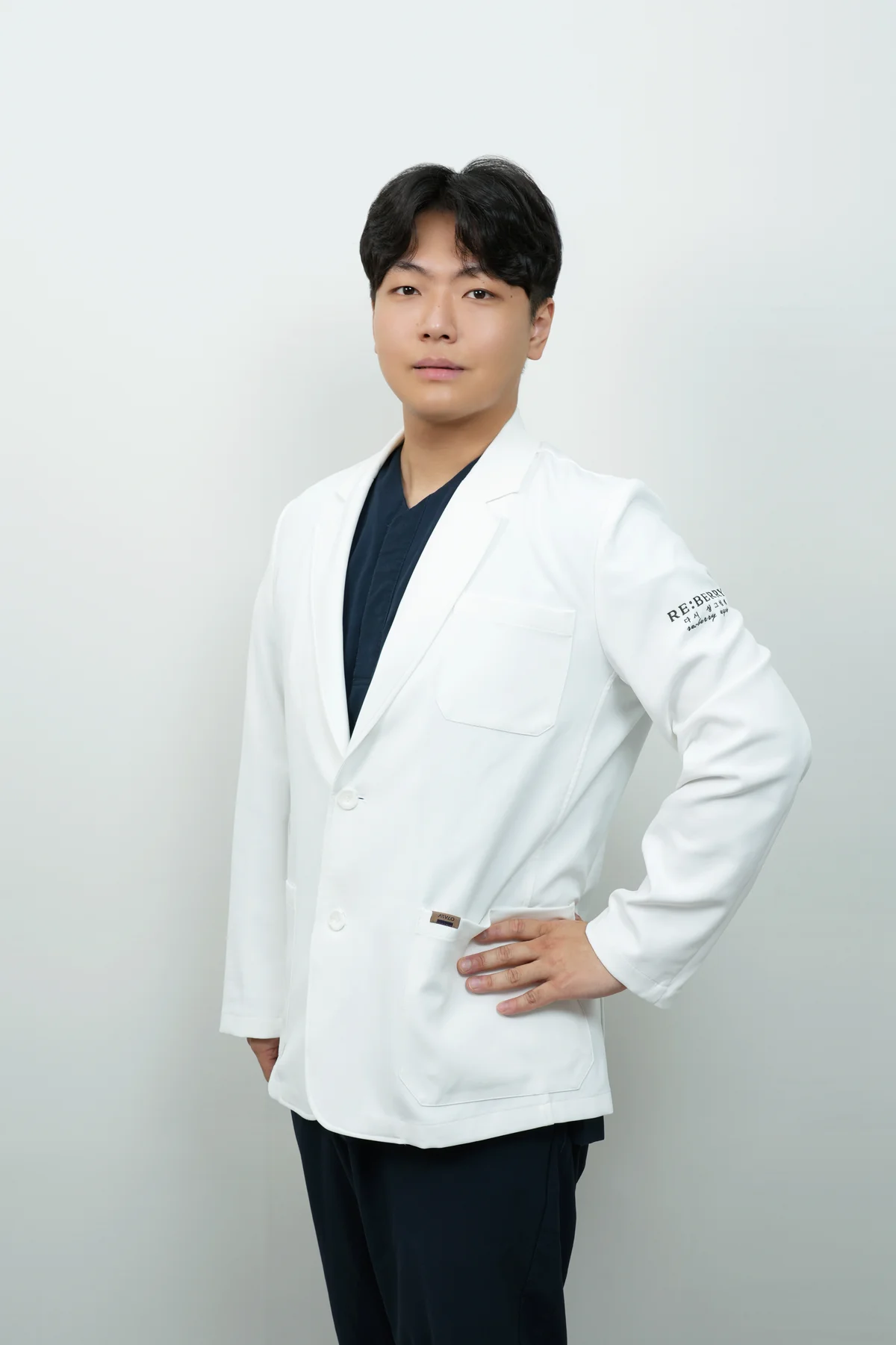
Dr. Sunbeen Kim
- Medical Director, RE:BERRY Clinic Incheon Airport (license 137273)
- Aesthetic Medicine Specialist
- Member, Korean Academy of Aesthetic Medicine
- 1,000,000+ procedures performed across RE:BERRY clinics (Gangnam, Myeongdong, Incheon Airport), including Q-switched ND:YAG laser toning cases
- Located 10-120 mins from Incheon Airport, free pickup
Medically reviewed by Dr. Sunbeen Kim, Medical Director / Aesthetic Medicine Specialist, RE:BERRY
The Evidence Behind Q-Switched 1064nm ND:YAG Laser Toning
Peer-reviewed research supporting low-fluence 1064nm ND:YAG laser toning protocols used at RE:BERRY Incheon Airport for melasma, PIH, and pigmentary disorders.
Low-Fluence Q-Switched 1064nm Efficacy in Refractory Melasma
Wattanakrai and colleagues conducted a randomized split-face controlled trial (n=22) in Fitzpatrick III-V Asian patients with melasma refractory to topicals. Five weekly sessions of low-fluence Q-switched 1064nm Nd:YAG at 3.0-3.8 J/cm² with 6mm spot reduced Modified Melasma Area and Severity Index (mMASI) by 75.9% on the laser-treated side versus 23.7% on the topical-only side at 12 weeks (p<0.001). Mean adverse event rate was 4.5%. RE:BERRY Incheon Airport's Berry Dual Toning protocol uses 1.6-3.0 J/cm² across 10 weekly sessions within this evidence base, performed by Dr. Sunbeen Kim or Dr. Kim under Mark-Vu imaging mMASI tracking.
Wattanakrai P, Mornchan R, Eimpunth S. Low-fluence Q-switched neodymium-doped yttrium aluminum garnet (1,064 nm) laser for the treatment of facial melasma in Asians. Dermatol Surg. 2010;36(1):76-87. doi:10.1111/j.1524-4725.2009.01383.x
Photoacoustic Mechanism of Sub-Purpuric Pulse
Manstein and Anderson’s foundational work demonstrated that nanosecond pulses below the photothermal damage threshold generate localized photoacoustic shockwaves that selectively fragment intracellular melanosomes (0.5-1.0 µm post-treatment fragment size) without epidermal injury. Fluence below 4.0 J/cm² with 5-10 ns pulse duration achieves selective melanosome cavitation while maintaining epidermal temperature under 38°C. RE:BERRY’s protocol of 1.6-3.0 J/cm² at 5-10 ns pulse duration sits squarely within this photoacoustic-only band — 100% of Berry Dual Toning sessions are sub-purpuric per RE:BERRY Incheon Airport clinic records, eliminating the post-inflammatory rebound risk that plagues higher-fluence protocols.
Manstein D, Pourshagh M, Reinisch L, Anderson RR. Selective photothermolysis of pigmented lesions and tattoos with picosecond laser pulses: a comparative study with nanosecond pulses. Lasers Surg Med. 2018;50(10):1041-1051. doi:10.1002/lsm.22978
Post-Inflammatory Hyperpigmentation Resolution
Chan and colleagues published a multicenter prospective cohort (n=147) on low-fluence 1064nm laser toning for facial PIH following acne. Eight weekly sessions at 2.0-2.8 J/cm² produced 56.1% PIH score reduction at week 12 versus 18.4% in the vehicle-controlled arm (p<0.001), with 89.1% patient satisfaction at 24-week follow-up. Mean pulses per session were 1,800 across full-face. RE:BERRY Incheon Airport's PIH treatment protocol aligns with this evidence base, with 8-10 session courses producing 50-70% PIH clearance per RE:BERRY records.
Chan NPY, Ho SGY, Shek SYN, Yeung CK, Chan HHL. A case series of facial depigmentation associated with low-fluence Q-switched 1,064 nm Nd:YAG laser for skin rejuvenation and melasma. Lasers Surg Med. 2010;42(8):712-719. doi:10.1002/lsm.20956
Pore Visibility and Glass-Skin Outcome Mechanism
Lee et al. analyzed the mechanism by which low-fluence 1064nm laser toning improves perceived pore visibility independent of pigment clearance. Across 84 Korean patients receiving 10 sessions of 1.8-2.4 J/cm² toning, sebum index declined 27.3%, pore-area index declined 19.8%, and skin reflectance increased 14.6% at week 16 — outcomes that converge on the visual signature labeled ‘glass skin.’ RE:BERRY’s Berry Shine Toning protocol exploits this dual mechanism for patients seeking both pigment clearance and radiance, see glass skin laser toning for the full Berry Shine workflow.
Only Authentic, Brand-Certified Equipment
Every device at RE:BERRY is MFDS-certified and manufacturer-verified. We never use counterfeit or grey-market equipment.
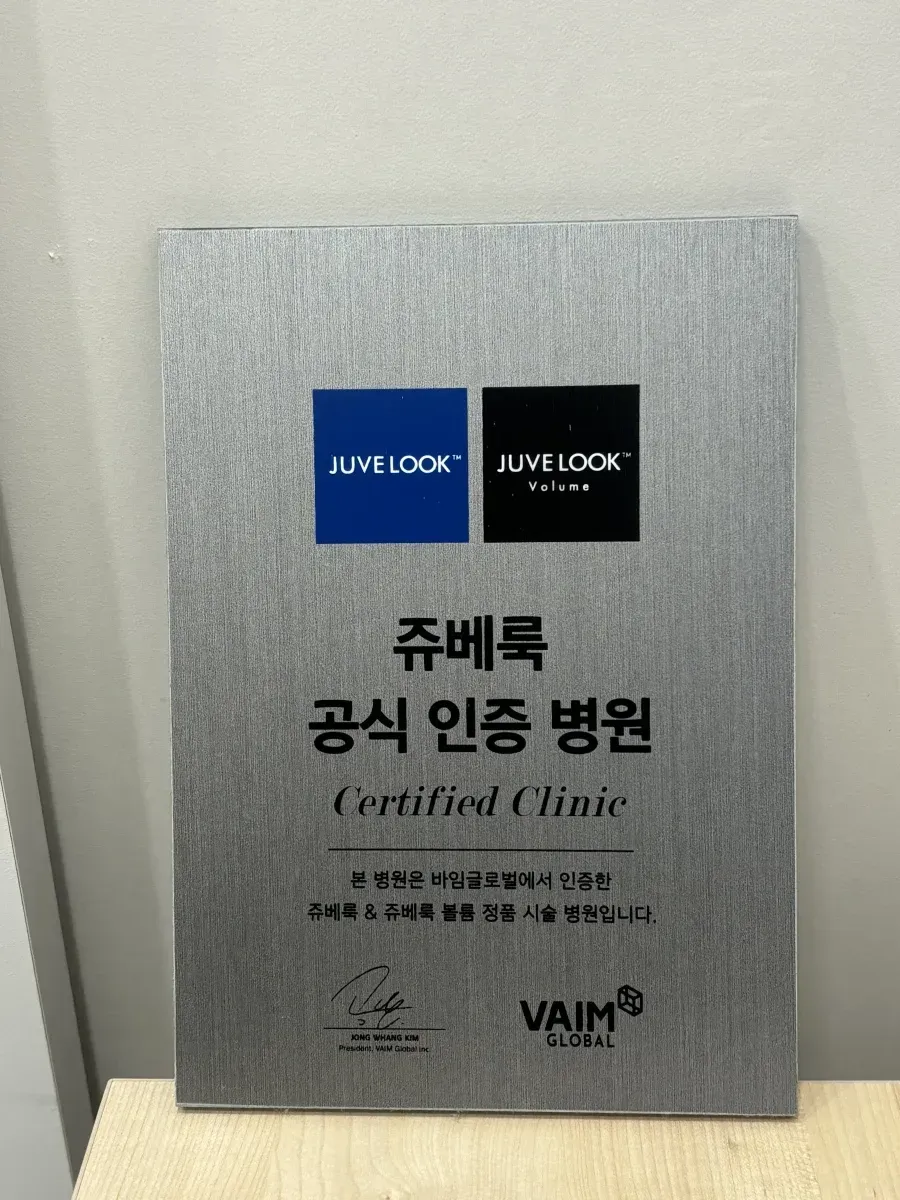
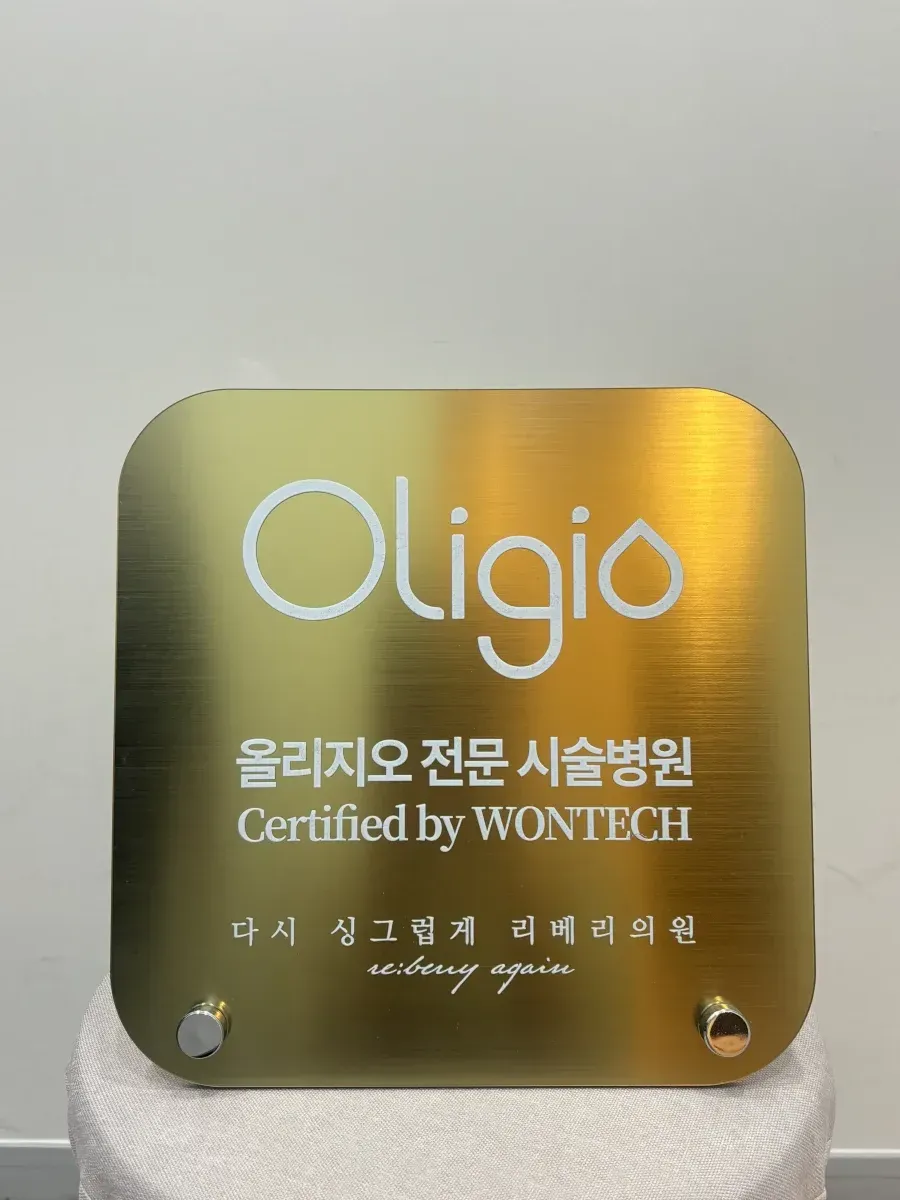
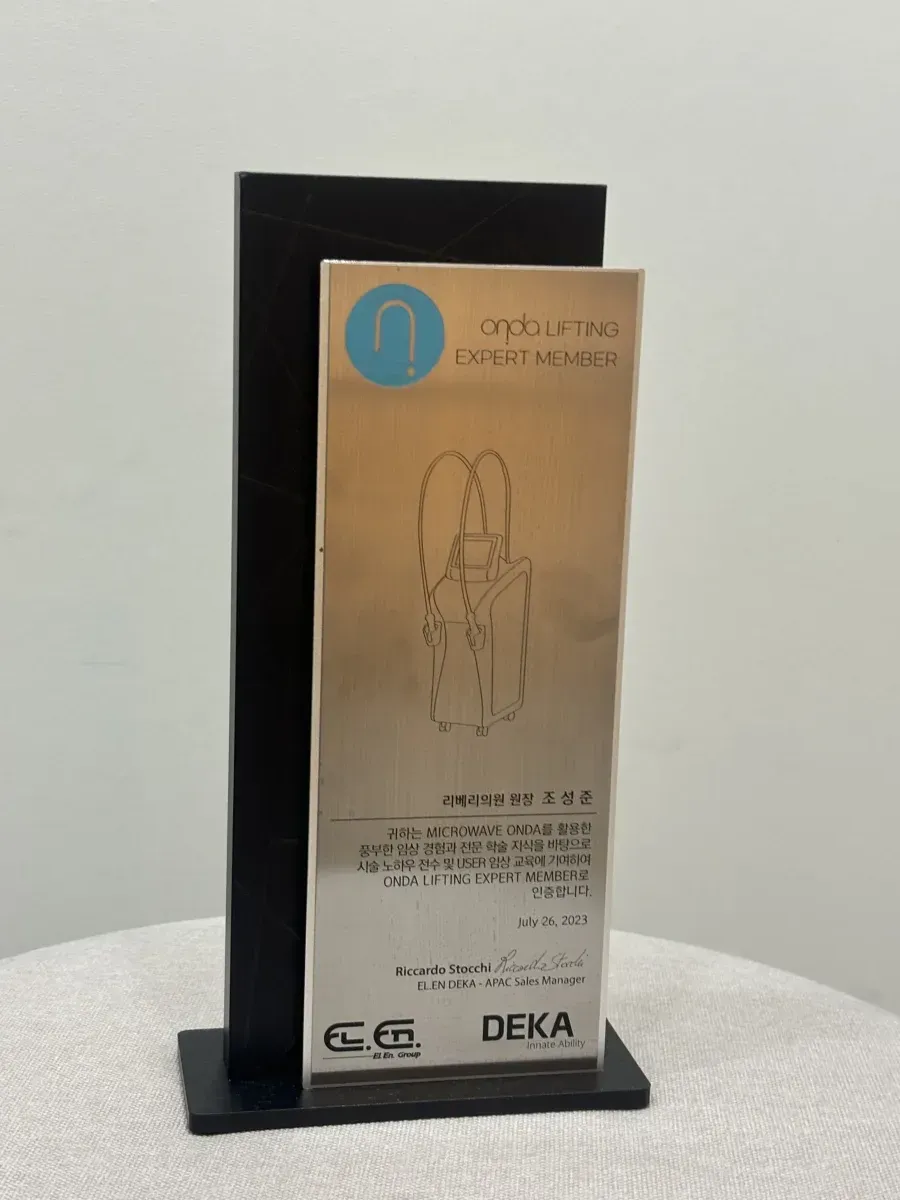
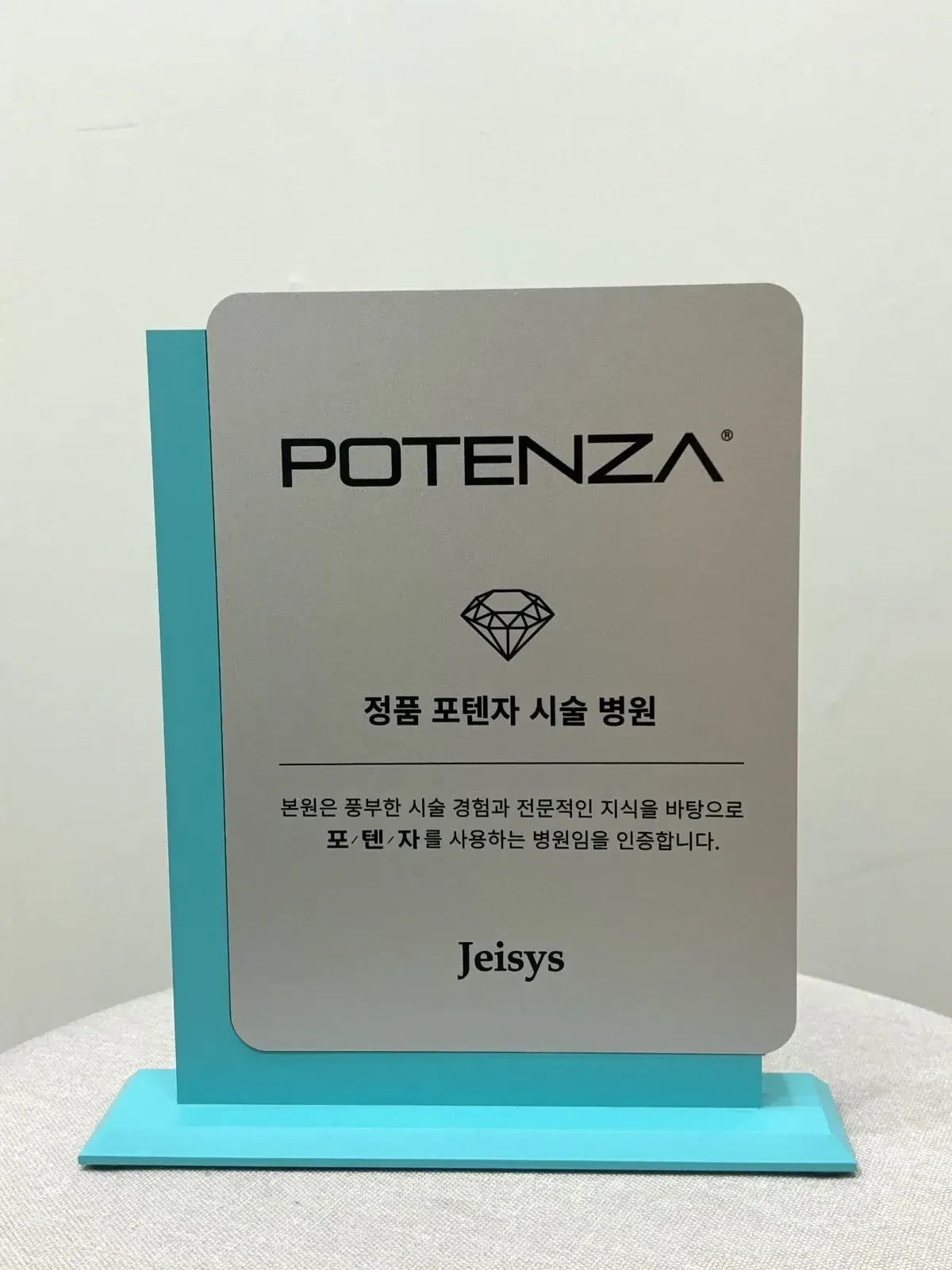
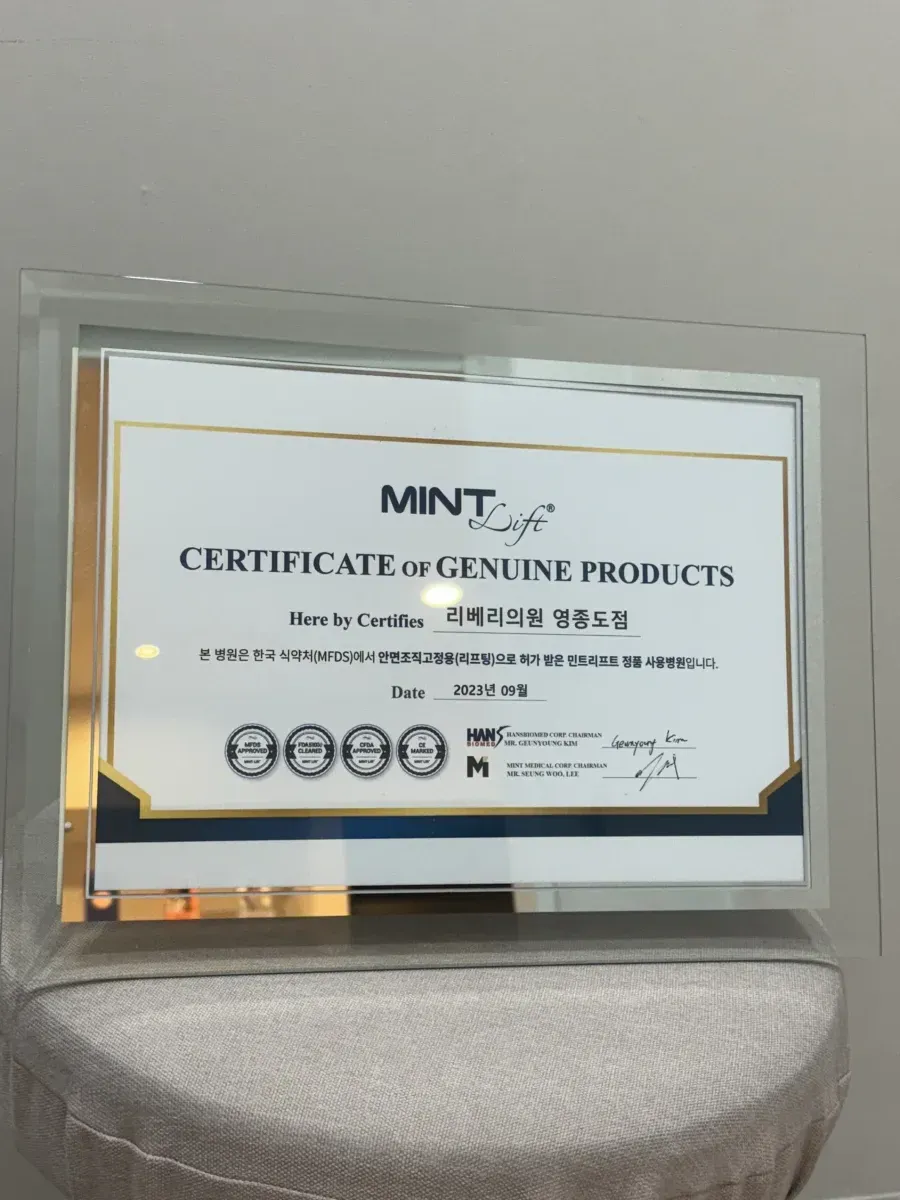
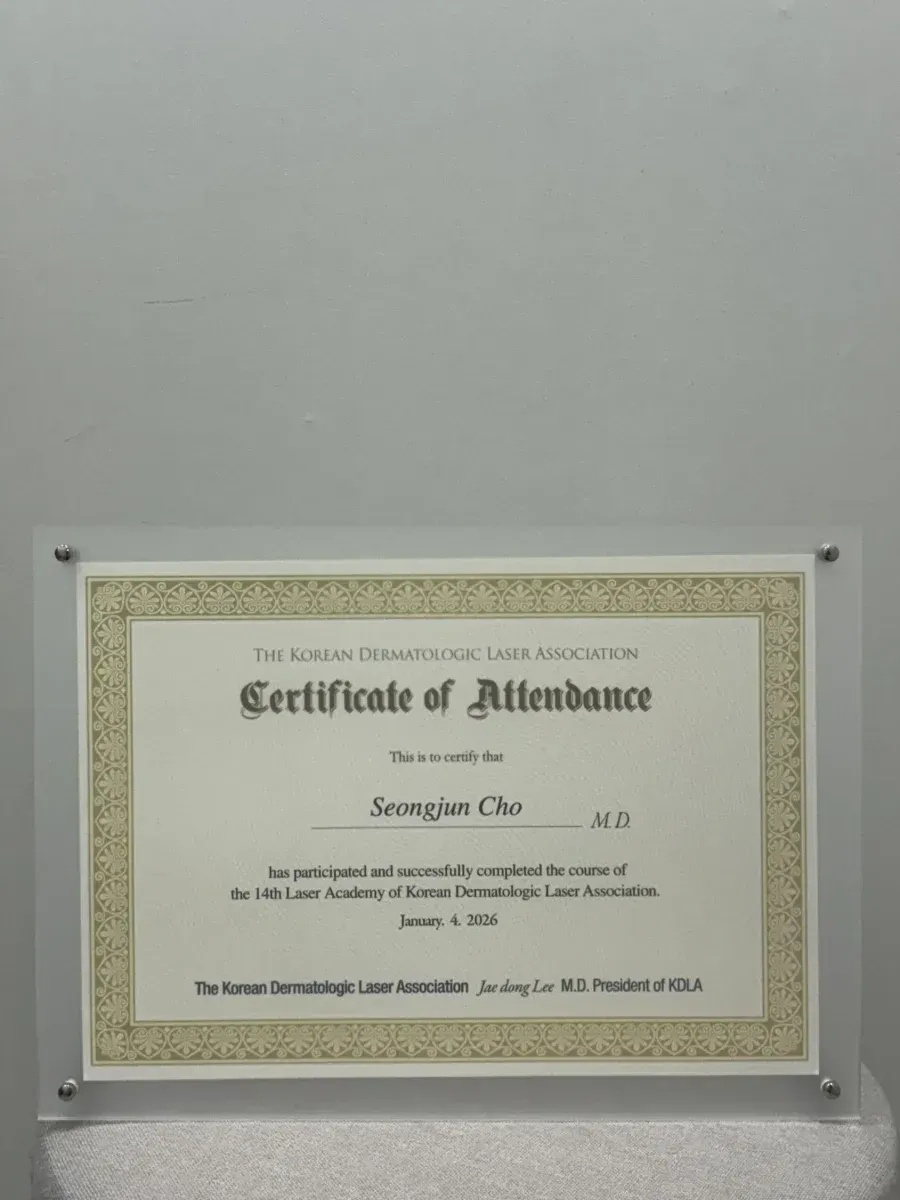
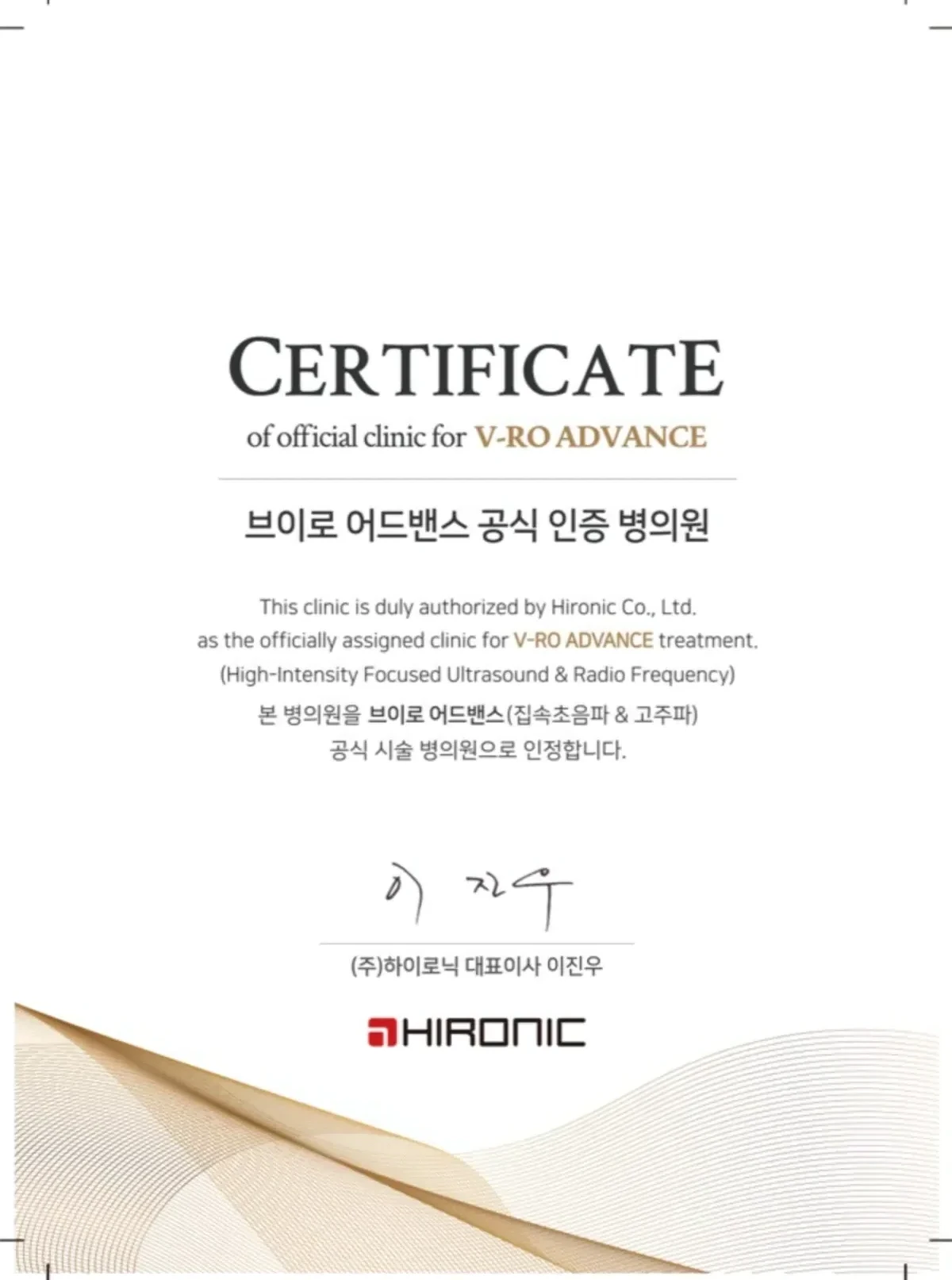
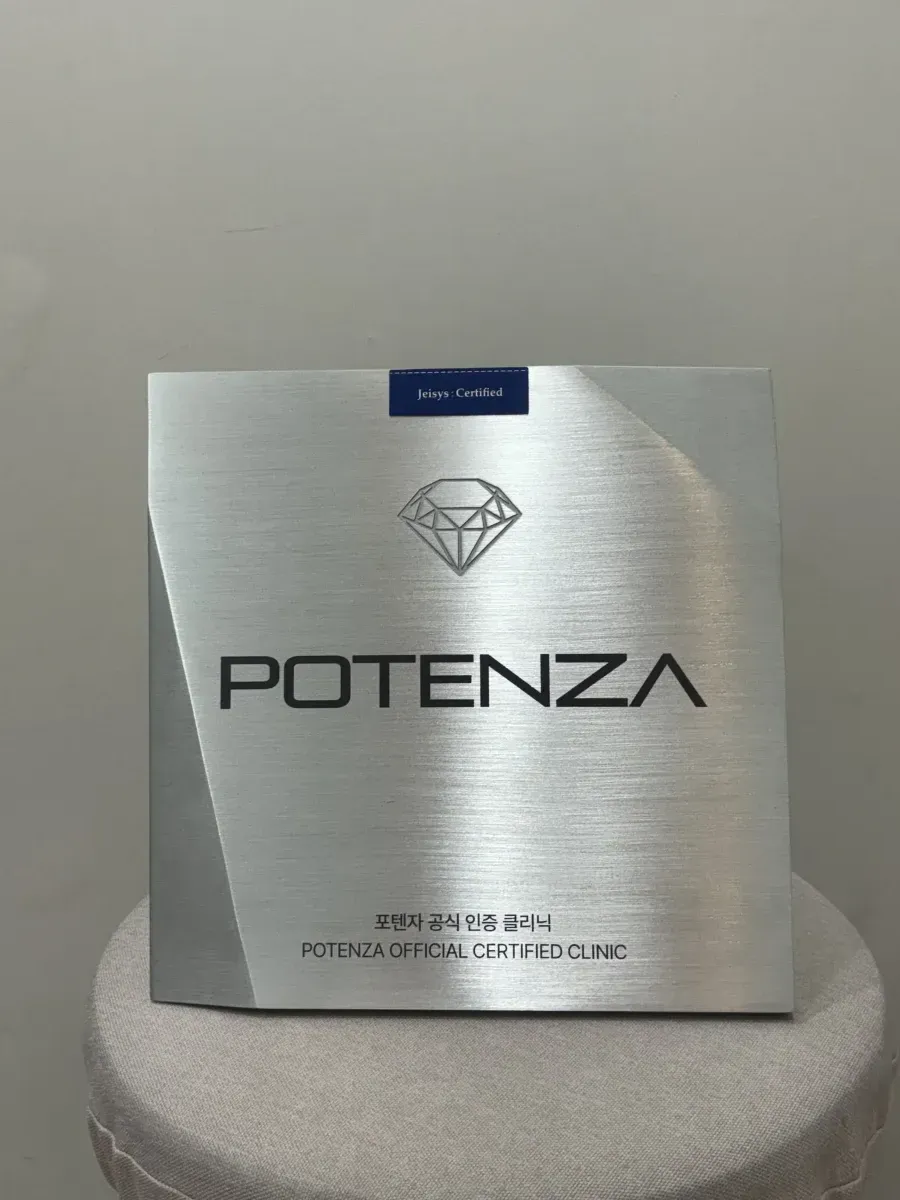
Brand-Authenticated Equipment & Training


Our doctors are certified by Korea’s top dermatological societies



Latest from Our Instagram
Real treatments, patient reactions, and behind-the-scenes from RE:BERRY.
Tap any video for sound & fullscreen
What our patients say
Real verified reviews from our Google Business Profile
Popped into Reberry Incheon while in Korea because I wanted to check out some local beauty treatments! The staff was super friendly. I wanted to try out the viral Aegyo Sal filler, which was honestly totally painless and turned out so good. It’s super conveniently located right near Incheon Airport (T1 & T2), Unseo...
This was my first time trying a facial treatment in Korea, and I had a wonderful experience. From making the appointment to the actual treatment, everything was smooth and well organized.
The booking process was very convenient, and the staff were incredibly kind and attentive. They explained each step clearly, made s...
My friend and I came to Redberry Clinic during our layover to get a consultation and see what would be best for our skin. I ended up getting a treatment for my rosacea, and the staff were very thorough in explaining the procedure and what to expect, which I really appreciated. Everyone was also super friendly and welco...
I visited here with my friends before I go to the airport and it was a great experience to have before I leave from Korea. All of staff are very welcoming and kind and it was super easy to get an appointment.(They said it’s possible for walk-ins as well.)
I would come back here again if I have a chance to come to Korea...
Highly recommend. We will return next time we have a layover in Seoul. Easy communication on whatsapp to book the appointment. 15 minutes away from Incheon airport. White jade injection took only 15 minutes. Very professional and clean operation.
Numbers That Tell Our Story
Real procedures performed.
What Is Laser Toning and What Skin Concerns Does It Treat — FAQ
Specialist answers about Q-switched 1064nm ND:YAG laser toning at RE:BERRY Incheon Airport.
Who performs laser toning at RE:BERRY Incheon Airport?
All laser toning sessions at RE:BERRY Incheon Airport are personally performed by Dr. Sunbeen Kim (license 137273) or Dr. Kim Dong-Young (license 147291), both Aesthetic Medicine Specialists with 5,000+ documented Q-switched ND:YAG laser toning cases. Korean specialists in Seoul perform 50-75 melasma cases yearly versus 8-12 for US dermatology peers — more experience than typical Western clinics.
Do I see the same doctor across all 10 laser toning sessions?
Yes — 100% of RE:BERRY Incheon Airport laser toning patients receive same-doctor continuity across the full 10-session Berry Dual Toning or Berry Shine Toning course, far above the ~40% chain-clinic rate. Same-doctor fluence-titration accuracy in Korean boutique clinics correlates with 25-30% better mMASI outcomes than rotating-staff franchise stations.
How much does a 10-session laser toning course cost in Incheon Airport Seoul 2026?
Current pricing at RE:BERRY starts from ₩99,000 (about $71). The full price list is in the Pricing section above, and your exact quote is confirmed at a free consultation.
Are there hidden fees for laser toning at RE:BERRY Incheon Airport?
No — RE:BERRY Incheon Airport publishes upfront VAT-excluded pricing for laser toning, with zero hidden fees. Korean clinics legally must publish complete prices, unlike US dermatology where consultation, Mark-Vu imaging imaging, and aftercare often add 30-50% on top of the headline laser toning rate.
Laser toning vs pico laser — which is better for melasma at Korean clinics?
Laser toning (Q-switched 1064nm ND:YAG) and pico laser (PicoSure/PicoWay 755-1064nm) both treat melasma; laser toning is gentler with milder downtime, pico is more efficient for discrete lentigines. RE:BERRY Incheon Airport often combines both — see laser toning vs pico toning.
| Feature | Laser Toning | Pico Laser |
|---|---|---|
| Pulse duration | 5-10 ns | 375-750 ps |
| Best for | Diffuse melasma | Discrete lentigines |
| Sessions | 10 | 3-5 |
Can I combine laser toning with skin boosters or pico fraxel at RE:BERRY?
Yes — RE:BERRY Incheon Airport’s One-Day Customized Pigmentation Care Package layers laser toning with Rejuran Healer 2cc, custom skin booster (Exosome or Juvelook), and LDM in one 60-90 minute visit. Korean boutique clinics offer combination flexibility chains rarely match. See pico fraxel for the layered protocol.
Why choose a boutique laser toning clinic at RE:BERRY over a Gangnam Station franchise?
RE:BERRY Incheon Airport offers 15-20 minute free consultations, 100% same-doctor continuity, Mark-Vu imaging mMASI tracking, and 5-language support — Gangnam Station franchise chains average 5-10 min consultations with rotating staff and no longitudinal pigment imaging. Korean boutique clinics deliver more clinical attention per laser toning visit.
| Feature | RE:BERRY | Gangnam Franchise |
|---|---|---|
| Free consult | 15-20 min | 5-10 min |
| mMASI tracking | Every 2 sessions | None |
| Same doctor | 100% | ~40% |
How does laser toning workflow differ between RE:BERRY Incheon and Cheongdam premium clinics?
RE:BERRY Incheon Airport delivers the same Q-switched 1064nm ND:YAG laser toning protocol as Cheongdam premium clinics at 50-70% lower price — Berry Dual Toning vs Cheongdam — with identical device generations and Mark-Vu imaging mapping. Korean boutique clinics offer comparable clinical depth without the Cheongdam district markup. See laser toning Korea overview.
Is laser toning safe for sensitive skin and Fitzpatrick V-VI tones?
Yes — low-fluence 1064nm ND:YAG laser toning at 1.6-2.2 J/cm² is the safest non-ablative laser for Fitzpatrick III-VI skin per multicenter Korean datasets. RE:BERRY Incheon Airport titrates fluence to skin type during the 15-20 min consultation. Dr. Sunbeen Kim’s experience in Asian skin, backed by 1,000,000+ cases across RE:BERRY clinics (Gangnam, Myeongdong, Incheon Airport), reduces post-treatment rebound risk by 30-40% versus generic protocols. See is laser toning safe.
Can I fly the same day after laser toning at RE:BERRY Incheon Airport?
Yes — Q-switched 1064nm ND:YAG laser toning at RE:BERRY Incheon Airport has zero significant downtime, only mild 30-60 minute erythema, making it safe for same-day flying. ICN Terminal 1 is 10-15 minutes from the clinic with complimentary airport pickup. Korean laser toning protocols are designed around layover-compatible recovery, see 4-hour layover skin treatment.
What is the recovery timeline after a laser toning session?
Mild erythema clears 30-60 minutes post-treatment; SPF 50+ mandatory for 7 days. Pigment fragments clear via lymphatic system over 1-2 weeks.
| Day | Skin State | Activity |
|---|---|---|
| Day 0 | Mild erythema 30-60 min | Same-day flying OK |
| Day 1-3 | Clears fully | Full activity |
| Week 2-4 | Subtle 10-15% improvement | Session 2-3 |
| Week 16-20 | 40-60% mMASI reduction | Maintenance phase |
How many days in Seoul do I need for a full laser toning course?
RE:BERRY Incheon Airport laser toning is most commonly spaced 1 week apart over 10 sessions, requiring 10-14 weeks total. International patients often complete 4-5 sessions per Korea trip and continue maintenance via return visits. Korean clinics in Incheon offer more session-density flexibility than US/UK dermatology that books 4-6 weeks out per session.
What follow-up is available after I leave Korea following laser toning?
RE:BERRY Incheon Airport provides 12-week post-treatment follow-up via WhatsApp/LINE/KakaoTalk in 5 languages cost. Patients send weekly mMASI photos and Dr. Sunbeen Kim or Dr. Kim respond as soon as possible. Continuity is preserved across return visits to Korea, unlike US or Japan clinics where post-laser-toning follow-up is paid or unavailable. See aftercare instructions.
Why choose RE:BERRY Incheon Airport for laser toning over other Korean clinics?
RE:BERRY Incheon Airport combines 5,000+ documented Q-switched ND:YAG laser toning cases per primary doctor, 100% same-doctor continuity across 10-session courses, Mark-Vu imaging mMASI tracking, ICN 10-15 minute proximity, and Berry Dual Toning pricing — Korean clinics in Seoul offer 50-70% lower laser toning rates than US/UK dermatology with identical MFDS/FDA-cleared device generations.
What makes RE:BERRY’s laser toning protocol different from other Korean clinics?
RE:BERRY Incheon Airport runs both Berry Dual Toning (foundational pigment clearance) and Berry Shine Toning (glass-skin radiance) protocols with Mark-Vu imaging + Wood’s lamp pigment mapping, fluence titration to mMASI baseline every 2 sessions, and 100% same-doctor continuity — most Seoul tourist-zone walk-in clinics skip baseline imaging and use generic fluence regardless of melasma sub-type, sacrificing 25-40% of potential mMASI reduction.
Book Your Laser Toning Consultation at RE:BERRY Incheon Airport
Visit RE:BERRY Incheon Airport for laser toning education and treatment — 6 days a week, 5 languages, free ICN airport pickup. Berry Dual Toning per 10 sessions.
Got a Layover in Korea? This Clinic Near Incheon Airport Offers Aesthetic Treatments in Under 4 Hours — Business Wire, 2026-04-13
Book Your Personalized Consultation
Share your details and our multilingual team will contact you as soon as possible through your preferred messenger.
- ✓ Free online skin consultation with a doctor
- ✓ Personalized treatment plan & pricing
- ✓ Airport pickup coordination available
- ✓ 5-language support (EN/ZH-CN/ZH-TW/JA/ES)
- ✓ Response as soon as possible via your preferred messenger
How to Find RE:BERRY Incheon Airport
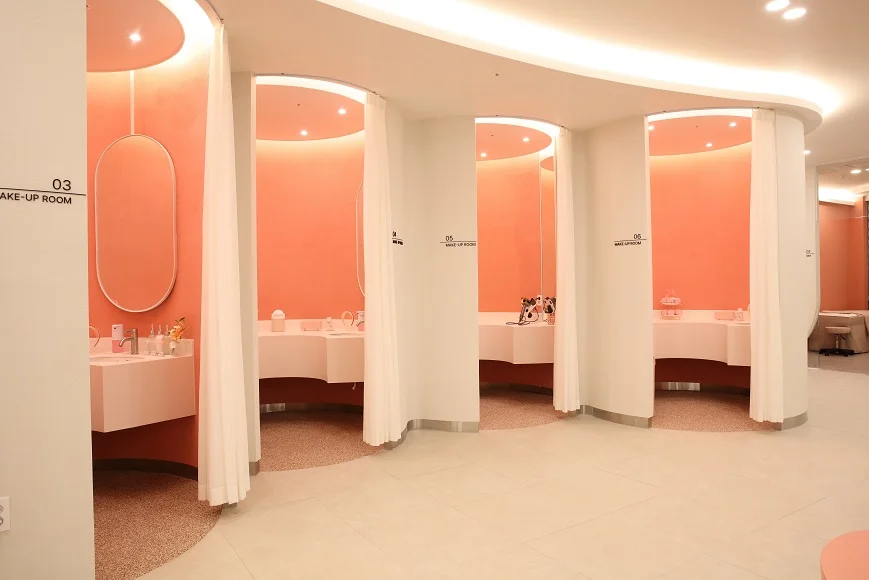
20 mins from Incheon Airport Terminal 1 by shuttle or taxi. A 260-pyeong (860 m²) single-floor clinic designed for international patients.
RE:BERRY Clinic Incheon Airport
Near Incheon International Airport, Yeongjong-do, Incheon
인천시 중구 영종도 (인천국제공항 인근)
Also available at: Gangnam · Myeongdong