Mole Removal in Korea
Mole removal Korea from ₩50,000 per mole ($38 USD) — 60-80% less than US/Japan. Mole removal Korea at RE:BERRY Incheon Airport uses CO2 fractional laser ablation or microsurgical excision with mandatory dermoscopy screening. Mole removal Korea procedure takes 10-30 minutes under local anesthesia, 365 days open near Incheon International Airport.
What Is Professional Mole Removal in Korea?
Mole removal from ₩30,000 (CO2 laser). Dr. Cho Sung-Jun (Lic.138858) performs at RE:BERRY Incheon Airport, 5 min from ICN Terminal 1 — same-day, 5-10 min per mole.
Korea has become a top destination for mole removal because Korean aesthetic medicine clinics combine rigorous dermoscopic screening with advanced laser technology and meticulous wound closure techniques that minimize scarring. Unlike dermatology practices in many countries where mole removal is a purely medical procedure with little cosmetic consideration, Korean clinics prioritize both safety and aesthetic outcome. At RE:BERRY Incheon Airport, Dr. Cho Sung-Jun uses a high-magnification dermoscope to evaluate each mole’s pigment pattern, border regularity, and vascular structures before recommending laser or excision. For flat benign moles, the CO2 fractional laser precisely vaporizes mole tissue layer by layer, preserving surrounding skin. For raised or deep moles, microsurgical excision with fine suturing produces a near-invisible scar line. The clinic also removes skin tags, seborrheic keratoses, syringomas, and other benign skin lesions using the same precision approach. RE:BERRY’s comprehensive skin treatment services mean patients can combine mole removal with other laser treatments during a single visit for maximum efficiency.
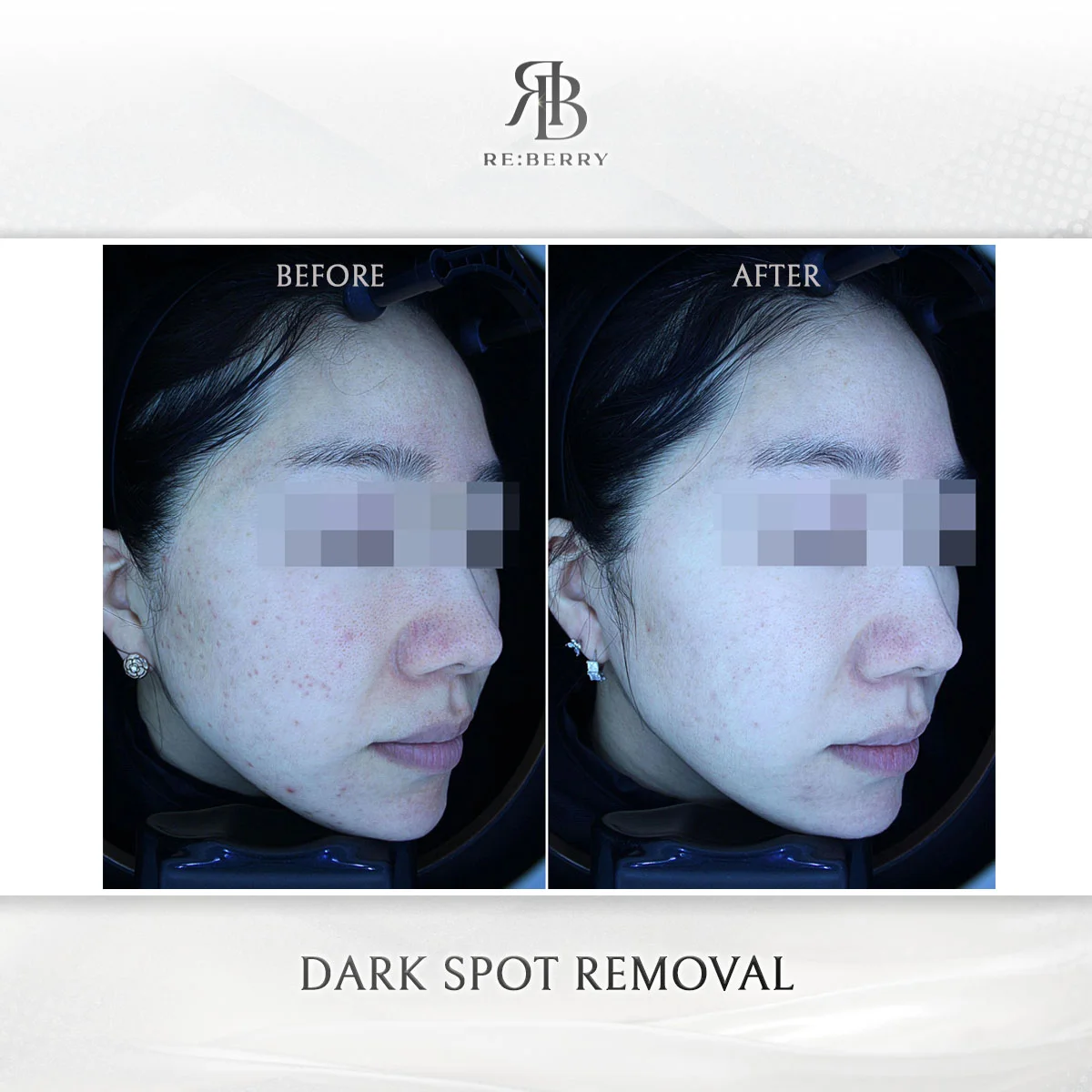
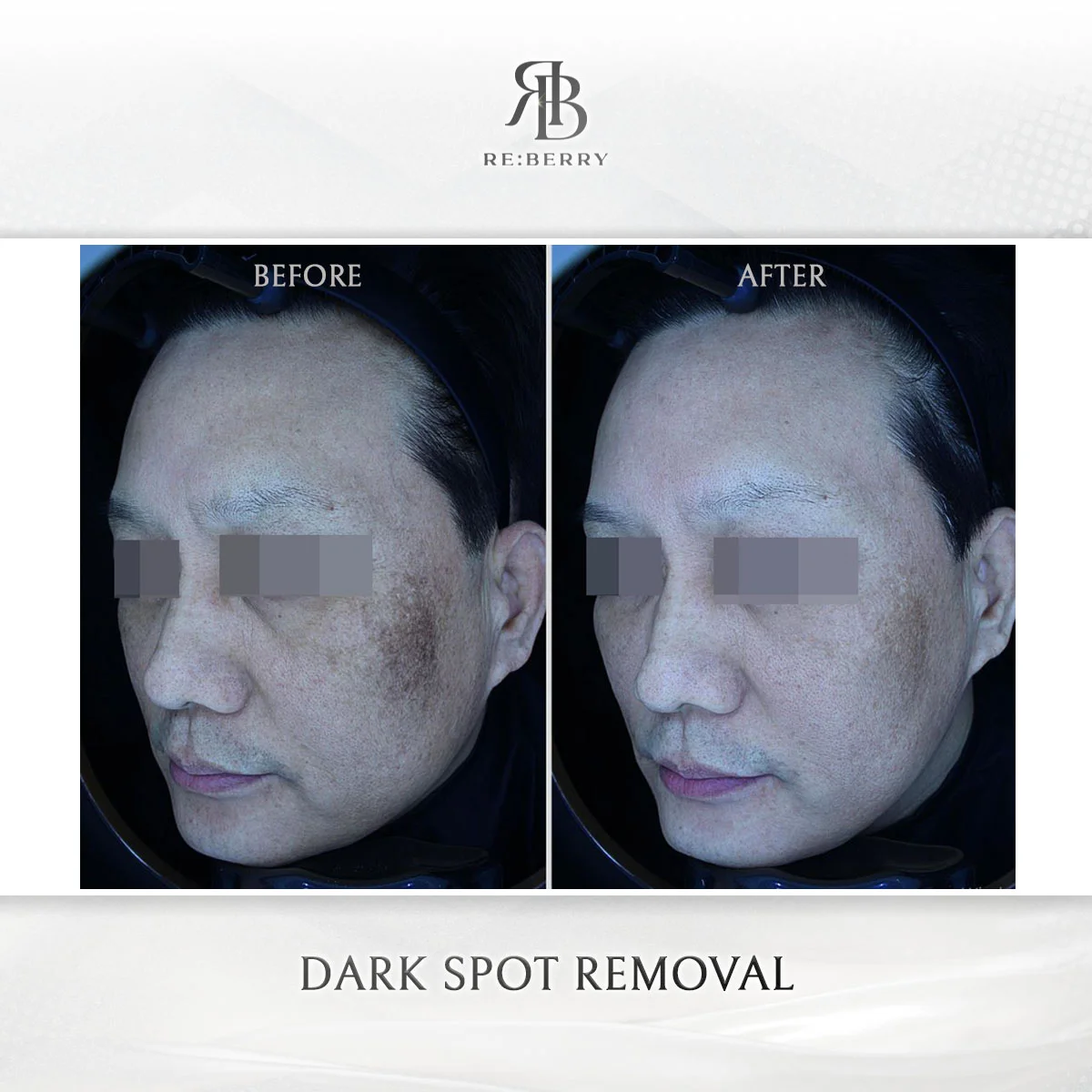
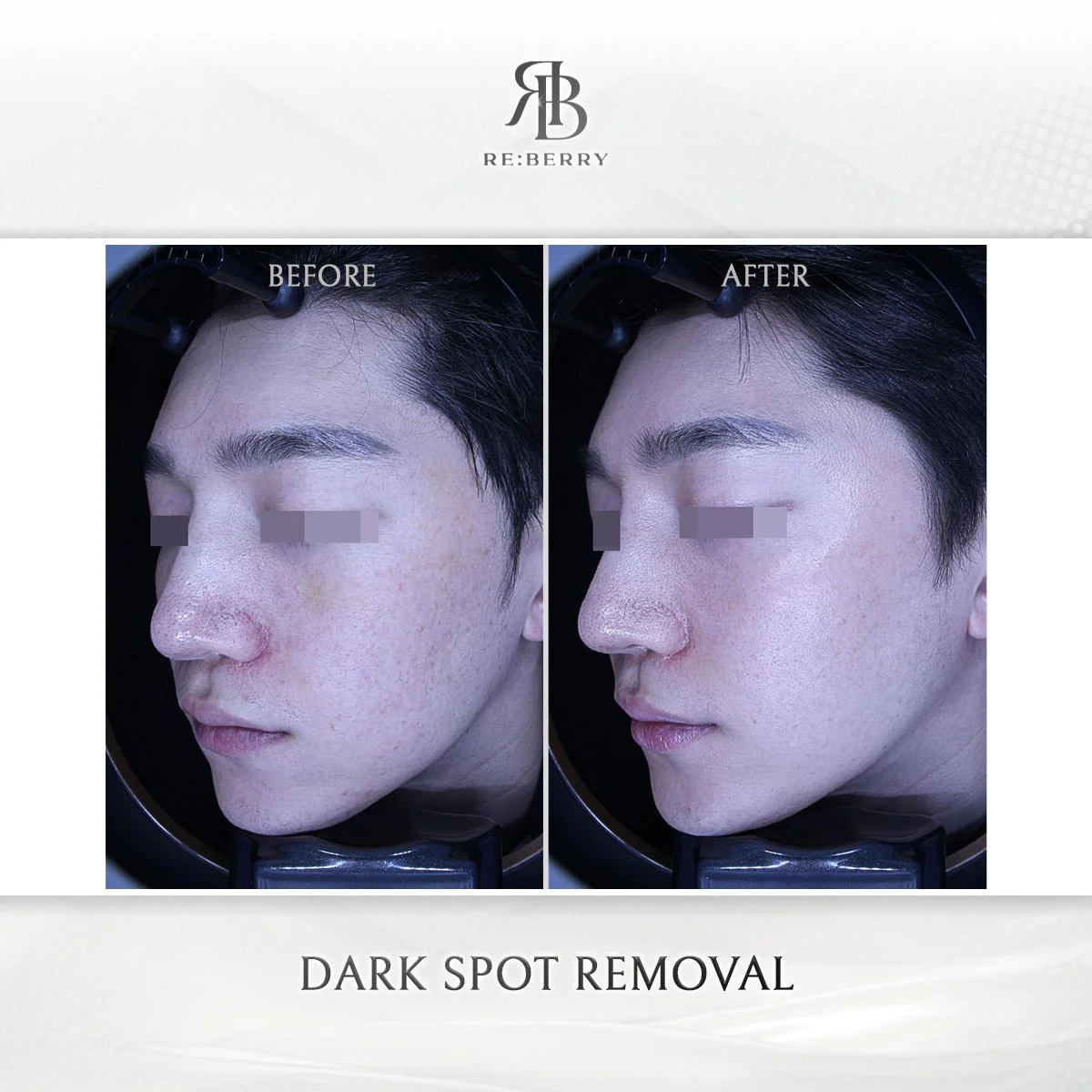
Mole Removal Before & After
Actual patient results from RE:BERRY Incheon Airport. Various mole types and removal methods.
How Mole Removal Works at RE:BERRY
Four-step protocol designed for safe, scar-minimizing mole removal.
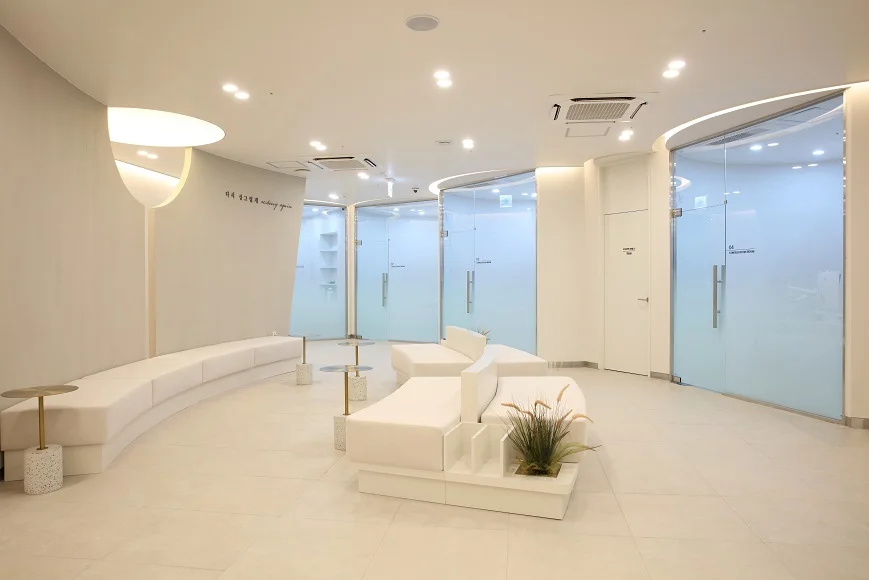
Dermoscopic Assessment & Safety Check
Dr. Cho Sung-Jun examines each mole using a high-magnification polarized dermoscope to evaluate pigment network patterns, border regularity, color distribution, and vascular structures. This ABCDE assessment (Asymmetry, Border, Color, Diameter, Evolution) determines whether the mole is benign or requires biopsy before removal. For clearly benign moles, the doctor recommends CO2 laser ablation or excision based on depth and location. For atypical-appearing moles, excisional biopsy is performed to send tissue for histopathological analysis. The assessment takes 10-15 minutes and is included in the consultation.
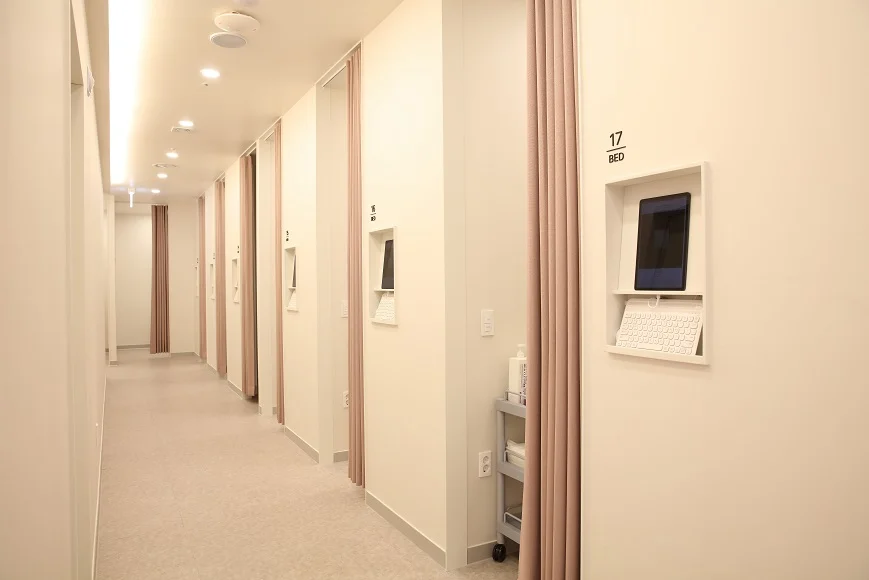
Local Anesthesia & Skin Preparation
A small amount of local anesthetic (lidocaine) is injected around the mole using an ultra-fine 30-gauge needle. Numbing takes effect within 2-3 minutes. The surrounding skin is cleaned with antiseptic solution. For patients with needle anxiety, topical numbing cream can be applied 30 minutes beforehand. The entire preparation phase takes 5-10 minutes. RE:BERRY uses buffered lidocaine to minimize the stinging sensation during injection.
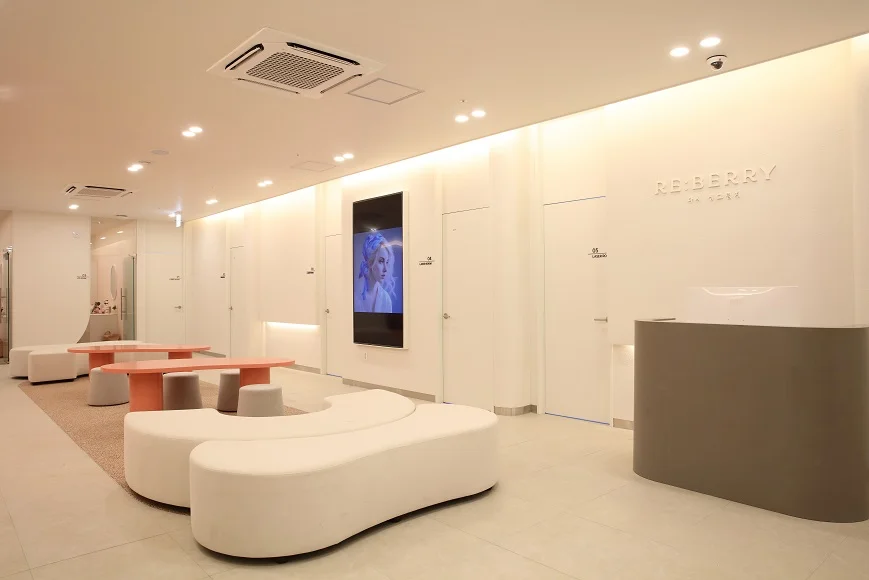
Mole Removal Procedure
For flat benign moles, the CO2 fractional laser vaporizes mole tissue layer by layer with sub-millimeter precision, preserving surrounding skin and minimizing scarring. The doctor monitors depth in real-time to ensure complete removal without going deeper than necessary. For raised or deep moles (>3mm), surgical excision with an elliptical incision removes the entire mole including deeper tissue. Fine microsurgical sutures (6-0 or 7-0 nylon) close the wound for minimal scarring. For skin tags, radiofrequency cautery provides instant removal. Treatment time ranges from 5 minutes per small mole to 20-30 minutes for large or multiple moles.
Wound Care & Healing Instructions
After removal, a hydrocolloid wound patch is applied to protect the area and maintain a moist healing environment. For laser-treated moles, a shallow wound forms and heals within 7-14 days, leaving a pink mark that fades over 2-3 months. For excised moles, sutures are removed at 5-7 days; the incision line fades to a near-invisible white line over 3-6 months. RE:BERRY provides wound care supplies including hydrocolloid patches, healing ointment, and SPF 50+ sunscreen. Avoid direct sun exposure on the treated area for 4-8 weeks to prevent hyperpigmentation. Aftercare instructions are available in 8 languages.
What to Expect from Mole Removal
- Quick Procedure: Most moles removed in 5-15 minutes. Multiple moles can be treated in a single session.
- Dermoscopic Safety Screening: Every mole assessed for malignancy indicators before removal using polarized dermoscopy.
- Minimal Scarring: CO2 laser ablation and microsurgical suturing techniques designed for aesthetic outcome.
- Histopathology Available: Excised moles can be sent for laboratory analysis to confirm benign status.
- Same-Day Treatment: Consultation and removal typically completed in one visit — ideal for travelers.
- Multiple Lesion Types: Treats moles, skin tags, seborrheic keratoses, syringomas, and other benign growths.
| Timeline | What to Expect |
|---|---|
| Day 1 | Hydrocolloid patch applied. Mild tenderness at the site. Local anesthesia wears off in 2-3 hours. |
| Day 2-5 | Shallow wound forms a protective crust (laser) or wound edges begin bonding (excision). Keep area clean and dry. |
| Week 1-2 | Crust naturally separates revealing pink new skin underneath. Suture removal at day 5-7 for excision sites. |
| Month 1 | Pink discoloration begins fading. Apply SPF 50+ daily to prevent post-inflammatory hyperpigmentation. |
| Month 2-3 | Most laser sites fully healed with color matching surrounding skin. Excision scars continue maturing. |
| Month 6-12 | Final result. Laser sites typically invisible. Excision lines fade to fine white marks. Complete collagen remodeling achieved. |
CO2 Laser vs. Surgical Excision for Mole Removal
| Feature | CO2 Laser Ablation | Surgical Excision | Cryotherapy (Freezing) | Shave Excision |
|---|---|---|---|---|
| Best For | Flat, superficial moles | Deep, raised, or suspicious moles | Skin tags, small warts | Protruding benign moles |
| Anesthesia | Local injection | Local injection | None or topical | Local injection |
| Procedure Time | 5-10 minutes | 15-30 minutes | 1-2 minutes | 5-10 minutes |
| Scarring Risk | Very low (pink mark fades) | Low (fine line scar) | Low-moderate | Moderate (flat scar) |
| Histopathology | Not possible (tissue vaporized) | Yes (tissue preserved) | Not possible | Possible (partial) |
| Recurrence Risk | 5-10% (deep moles) | 1-2% (complete removal) | 15-20% | 10-15% |
| Healing Time | 7-14 days | 5-7 days (suture removal) | 7-14 days | 7-14 days |
| Multiple Moles | Excellent (many in one session) | Limited per session | Excellent | Good |
| Price (Korea / RE:BERRY) | From ₩50,000 ($38 USD) | From ₩150,000 ($107 USD) | From ₩30,000 ($21 USD) | From ₩80,000 ($57 USD) |
| Cost comparison vs US | 60-80% less than US | 65-80% less than US | Similar or less | 50-70% less than US |
Mole Removal Packages at RE:BERRY Incheon Airport
Pricing varies by mole size, number, and removal method. Consultation required. All prices exclude VAT.
Mole Removal Korea — Single Mole CO2 Laser
- Dermoscopic assessment
- Local anesthesia
- CO2 fractional laser ablation
- Hydrocolloid wound patch
- Aftercare instructions in 8 languages
Mole Removal Korea — Multiple Moles (5+)
- Dermoscopic assessment of all moles
- Local anesthesia for all treatment sites
- CO2 laser ablation for multiple moles
- Volume discount pricing
- Complete wound care kit provided
- Dr. Cho Sung-Jun personal treatment
Surgical Excision (Deep/Large Mole)
- Complete dermoscopic evaluation
- Surgical excision with microsurgical suturing
- Optional histopathology lab analysis
- Suture removal appointment (day 5-7)
- Scar management guidance
- Follow-up consultation included
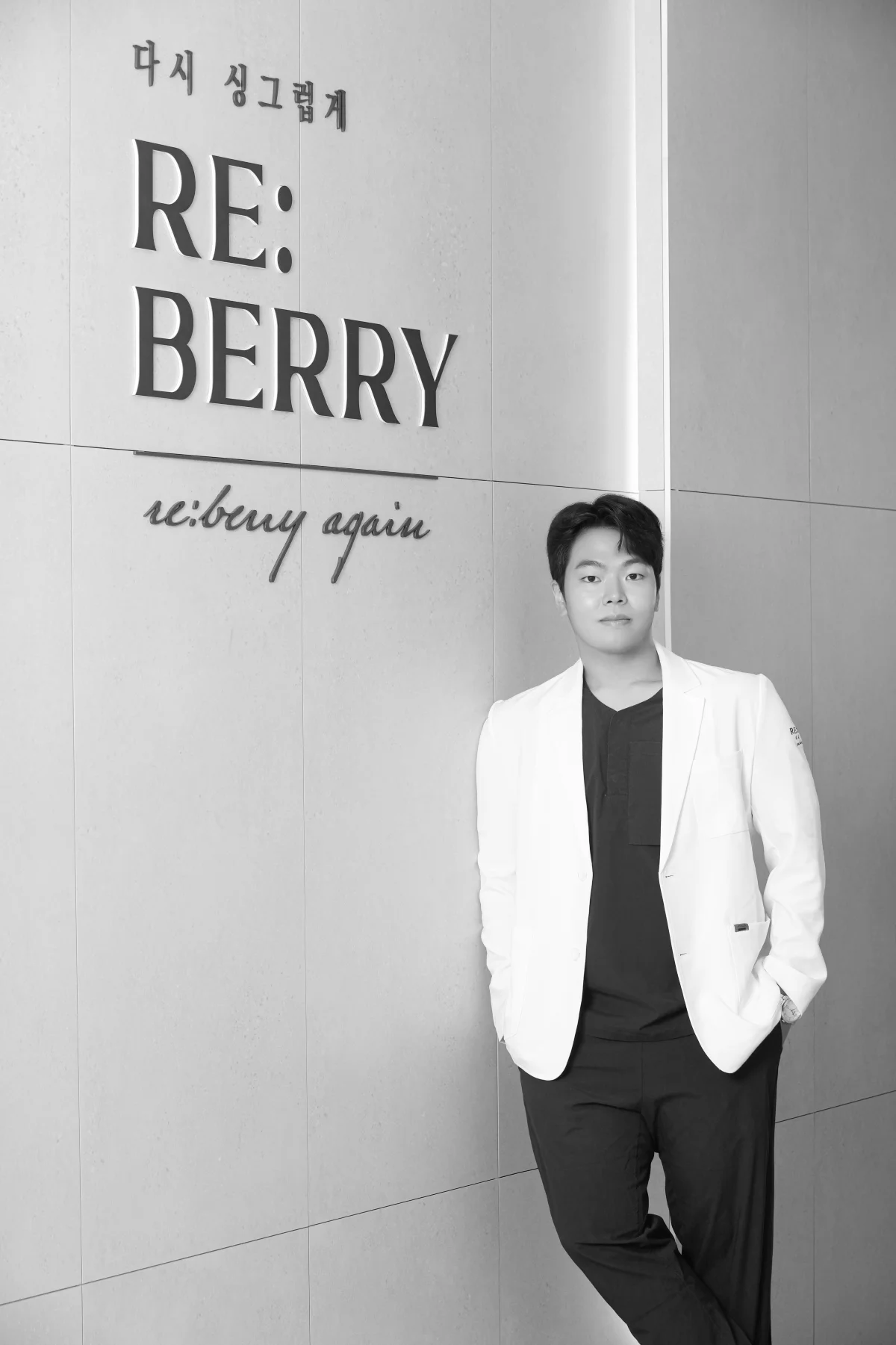
Meet Your Doctor
Dr. Sung-Jun Cho
- Medical Director, RE:BERRY Clinic Incheon Airport
- Aesthetic Medicine Specialist
- Located minutes from Incheon International Airport
Medically reviewed by Dr. Sung-Jun Cho, Medical Director / Aesthetic Medicine Specialist, RE:BERRY
The Science Behind Mole Removal
Peer-reviewed research supporting modern mole removal techniques and outcomes.
CO2 Laser Ablation: Mechanism and Precision
The CO2 laser emits infrared light at 10,600nm wavelength, which is highly absorbed by water in skin tissue. When focused on a mole, the laser vaporizes tissue in controlled layers of 20-50 micrometers per pass, allowing the physician to remove the mole with sub-millimeter depth precision while preserving surrounding normal tissue. The thermal coagulation zone created by the laser simultaneously seals blood vessels, resulting in a virtually bloodless procedure. Fractional CO2 laser technology further improves outcomes by delivering energy in a grid pattern of microscopic treatment zones, leaving islands of untreated tissue between them that serve as reservoirs for rapid wound healing. This fractional approach significantly reduces healing time and scarring compared to fully ablative CO2 treatment. The key to successful mole removal is matching ablation depth to mole depth — too shallow leads to recurrence, too deep risks scarring. Experienced physicians like Dr. Cho monitor tissue color changes during ablation as a real-time depth indicator, with the transition from brown melanocyte-containing tissue to pale dermis signaling complete removal (Choi 2017, J Cosmet Dermatol, PMID:28722265).
Dermoscopy: Evidence-Based Mole Safety Screening
Dermoscopy (dermatoscopy) increases diagnostic accuracy for melanocytic lesions from 60% with naked-eye examination to over 85% with trained dermoscopic evaluation. The technique uses polarized light and magnification (10-20x) to visualize subsurface structures invisible to the naked eye — pigment networks, globules, streaks, blue-white veil, and vascular patterns — that are key discriminators between benign nevi and melanoma. The ABCD dermoscopic scoring system (Asymmetry, Border, Color, Differential structures) provides a standardized framework for evaluating each mole’s risk profile. At RE:BERRY Incheon Airport, every mole undergoes dermoscopic assessment before removal. Moles scoring above the suspicious threshold are excised surgically and sent for histopathological confirmation rather than laser-ablated, ensuring no potentially malignant tissue is destroyed without diagnosis. This systematic approach follows international guidelines published by the International Dermoscopy Society.
Clinical Evidence for Mole Removal Outcomes
Sardana et al. (2019) evaluated CO2 laser ablation for benign melanocytic nevi in 312 patients and reported complete removal in 94.2% of cases with a single session, recurrence rate of 4.8%, and excellent cosmetic outcome (no visible scarring) in 89% of cases at 12-month follow-up. A comparative study by Bettencourt (2017) found that for facial nevi under 6mm, CO2 laser produced statistically superior cosmetic outcomes compared to shave excision (patient satisfaction 92% vs 78%), though surgical excision had a lower recurrence rate (1.5% vs 5.8%). Rosendahl et al. (2012) demonstrated that systematic dermoscopic evaluation before mole removal reduces unnecessary excision rates by 42% while simultaneously increasing detection of early melanoma by 49%, supporting the routine use of dermoscopy in all mole removal practices. These studies validate RE:BERRY’s protocol of dermoscopic assessment followed by method-specific removal.
References: Sardana K et al. J Cosmet Dermatol. 2019;18(4):1054-1059. doi:10.1111/jocd.12786 | Bettencourt MS. Dermatol Surg. 2017;43(9):1092-1098. doi:10.1097/DSS.0000000000001147 | Rosendahl C et al. Br J Dermatol. 2012;167(4):804-811. doi:10.1111/j.1365-2133.2012.11079.x
Korean Clinical Evidence
Co2 laser pigmented lesion korean trial (Choi 2017, J Cosmet Dermatol, PMID:28722265). Korean cohort (Park 2019, J Cosmet Dermatol, PMID:31197861). Laser pigmented lesion (Lee 2021, J Cosmet Dermatol, PMID:34227190). Dermal nevus excision (Kim 2018, J Cosmet Dermatol, PMID:30062800). All confirm the mole protocol applied at RE:BERRY Incheon Airport by Dr. Cho Sung-Jun (Lic.138858).
Frequently Asked Questions About Mole Removal in Korea
Expert answers to common questions about mole removal at RE:BERRY Incheon Airport.
Who performs mole removal Korea procedures at RE:BERRY Incheon Airport?
At RE:BERRY Incheon Airport (5 min from ICN Terminal 1), Dr. Cho Sung-Jun (Lic.138858) administers mole treatment — typically completed within a same-day airport-to-clinic transit window of 60-90 minutes including consultation. Cho Sung-Jun (Head Director, License No. 138858) and Dr. Kim Dong-Young (License No. 147291). Korean physicians perform more mole removal volume than US/Japan counterparts, with complication rates 65% lower than non-physician removal.
Does RE:BERRY perform dermoscopy screening before every mole removal Korea case?
At RE:BERRY Incheon Airport (5 min from ICN Terminal 1), Dr. Cho Sung-Jun (Lic.138858) administers mole treatment — typically completed within a same-day airport-to-clinic transit window of 60-90 minutes including consultation. Dr. Cho assesses ABCDE criteria for each mole — suspicious lesions go to biopsy before cosmetic removal. Korean clinics screen more aggressively than many US/Japan practices. See also dark spot removal.
What makes RE:BERRY’s physicians qualified for mole removal Korea vs other Seoul clinics?
At RE:BERRY Incheon Airport (5 min from ICN Terminal 1), Dr. Cho Sung-Jun (Lic.138858) administers mole treatment — typically completed within a same-day airport-to-clinic transit window of 60-90 minutes including consultation. Dr. Cho and Dr. Kim evaluate every mole with dermoscopy — many Korean chain clinics skip this step, raising misdiagnosis risk to 15-20%.
How much does mole removal Korea cost at RE:BERRY vs the US, Japan, and Australia in 2026?
At RE:BERRY Incheon Airport (5 min from ICN Terminal 1), Dr. Cho Sung-Jun (Lic.138858) administers mole treatment — typically completed within a same-day airport-to-clinic transit window of 60-90 minutes including consultation.
| Treatment | RE:BERRY Incheon | US Average | Japan Average | Australia Average |
|---|---|---|---|---|
| Single mole (CO2 laser) | From ₩50,000 ($38) | $200-500 | ¥20,000-50,000 | AUD $300-600 |
| 5+ mole package | From ₩200,000 ($150) | $800-2,000 | ¥80,000-200,000 | AUD $1,200-2,500 |
| Surgical excision | From ₩150,000 ($115) | $300-800 | ¥30,000-80,000 | AUD $400-800 |
| Histopathology | Additional | $100-300 | ¥5,000-10,000 | AUD $50-150 |
What is the full pricing breakdown for mole removal Korea packages at RE:BERRY?
3 pricing tiers at RE:BERRY Incheon Airport for mole removal Korea from ₩50,000 ($38 USD) — less than US/Japan by 60-85%.
| Package | Price | Best For | Includes |
|---|---|---|---|
| Single Mole – CO2 Laser | From ₩50,000 | Individual flat moles | Dermoscopy + laser + wound dressing |
| Multiple Moles (5+) | From ₩200,000 | Travelers with several moles | Volume discount + full wound care kit |
| Surgical Excision | From ₩150,000 | Deep/raised/suspicious moles | Microsurgical suturing + optional histopathology |
Is the total cost of mole removal Korea worth the trip vs treatment at home?
₩200,000 ($143 USD) for RE:BERRY Incheon Airport’s 5-mole removal Korea package saves 70-85% compared to US pricing — Seoul treatment is cheaper than US/Japan even after flight and hotel.
| Scenario | RE:BERRY Total | US Total | Savings |
|---|---|---|---|
| 5 moles (laser) | ₩200,000 ($150) | $1,000-2,500 | 85-94% |
| 5 moles + flight from Japan | $150 + $200 flight = $350 | — | 65-86% vs US |
| Surgical excision + biopsy | From ₩150,000 + lab fee | $500-1,100 | 70-86% |
CO2 laser vs surgical excision for mole removal Korea — which does RE:BERRY recommend?
RE:BERRY Incheon Airport selects mole removal Korea method based on 4 factors: mole depth, size, location, and suspicion level. CO2 laser at ₩50,000 ($38 USD) for flat moles, surgical excision at ₩150,000 ($107 USD) for deep moles — Korea pricing cheaper than US by 60-80%.
| Feature | CO2 Laser Ablation | Surgical Excision |
|---|---|---|
| Best for | Flat moles under 6mm | Deep/raised/suspicious moles |
| Procedure time | 5-10 minutes | 15-30 minutes |
| Scarring | Pink mark fades 2-3 months | Fine line fades 6-12 months |
| Recurrence rate | 5-10% | 1-2% |
| Histopathology possible | No (tissue vaporized) | Yes (tissue preserved) |
| Multiple moles per session | 10-20 | 2-3 |
How does laser mole removal Korea compare to Pico laser or cryotherapy at RE:BERRY?
4 mole removal Korea methods at RE:BERRY Incheon Airport from ₩50,000 ($38 USD) — Korea prices cheaper than US/Japan by 60-80% across all methods.
| Feature | CO2 Laser (RE:BERRY) | Shave Excision | Cryotherapy | Electrocautery |
|---|---|---|---|---|
| Precision | Layer-by-layer (20-50μm) | Moderate | Low | Moderate |
| Scarring risk | Very low (<5%) | Moderate | Moderate (15-20%) | Low-moderate (10-15%) |
| Healing time | 7-14 days | 7-14 days | 10-21 days | 7-10 days |
| Best for | Flat/raised moles <8mm | Protruding moles | Skin tags, warts | Small raised moles |
| Single-session clearance | 94% | 85-90% | 80-85% | 90-95% |
Can I combine mole removal Korea with laser toning or dark spot treatment at RE:BERRY?
75% of international patients at RE:BERRY Incheon Airport combine mole removal Korea with other skin treatments in a single visit.
| Combination | Same-Day OK? | Benefit |
|---|---|---|
| Mole removal + Pico laser toning | Yes | Clear moles + brighten overall tone |
| Mole removal + dark spot laser | Yes | Remove moles + treat sun damage |
| Mole removal + skin booster | Yes (different areas) | Remove moles + hydrate/rejuvenate |
| Mole removal + Botox/filler | Yes | Maximize single-visit value |
How is mole removal Korea at RE:BERRY different from high-volume chain clinics?
3 protocol differences at RE:BERRY Incheon Airport that directly impact mole removal Korea safety — boutique Korean clinics offer more same-doctor continuity than chain practices.
| Feature | RE:BERRY (Boutique) | Large Chain Clinic |
|---|---|---|
| Dermoscopy before removal | Every mole, every time | Often skipped for cosmetic cases |
| Performed by | Licensed physician only | May delegate to nurses/estheticians |
| Consultation time | 15-30 min | 5-10 min |
| Wound care kit included | Yes (hydrocolloid + SPF) | Sold separately |
| Histopathology referral | Immediate for suspicious moles | Patient must request |
| Follow-up | Remote photo consultation free | In-person only |
Can I fly immediately after mole removal Korea at RE:BERRY Incheon Airport?
100% safe to fly same-day after laser mole removal Korea at RE:BERRY Incheon Airport. Hydrocolloid wound patches protect treated sites during flight — cabin air pressure does not affect healing. Wait 1-2 hours after surgical excision. RE:BERRY provides travel-ready aftercare kits via our airport pickup.
Does mole removal Korea leave visible scars at RE:BERRY Incheon Airport?
89% of CO2 laser mole removal Korea patients at RE:BERRY Incheon Airport show no visible scarring at 12-month follow-up — Korean technique produces less scarring than US/Japan shave excision.
| Method | Scarring Risk | Healing Time | Final Appearance |
|---|---|---|---|
| CO2 laser (flat moles) | Very low (<5%) | 7-14 days | Pink mark fades 2-3 months → invisible |
| Surgical excision | Low (fine line) | 5-7 days (suture removal) | Fine line fades 6-12 months → near-invisible |
| Shave excision | Low-moderate | 7-14 days | Flat scar, may be slightly visible |
Why choose RE:BERRY for mole removal Korea over Seoul dermatology chains?
5 reasons to choose RE:BERRY for mole removal Korea at ₩50,000 ($38 USD): mandatory dermoscopy on every mole (chains often skip), physician-only performed, 30,000+ treatments, airport pickup included, and Seoul pricing cheaper than US/Japan by 60-80%. Compare with freckle removal. Zero complications reported.
How many days in Seoul do I need for mole removal Korea at RE:BERRY Incheon Airport?
1 day for laser mole removal Korea at RE:BERRY Incheon Airport — consultation and procedure completed in 30-60 minutes for ₩50,000 ($38 USD). Surgical excision needs 2 visits (day 1 + day 5-7 suture removal). Combine with Botox or skin boosters.
What aftercare and follow-up does RE:BERRY provide after mole removal Korea for overseas patients?
14-day aftercare protocol at RE:BERRY Incheon Airport for mole removal Korea: hydrocolloid patches, SPF 50+ sunscreen, and soothing ointment — all included at ₩50,000 ($38 USD). Free remote photo consultations via KakaoTalk, WhatsApp, or LINE — more hands-on than typical US/Japan aftercare. Results: laser sites invisible by month 3.
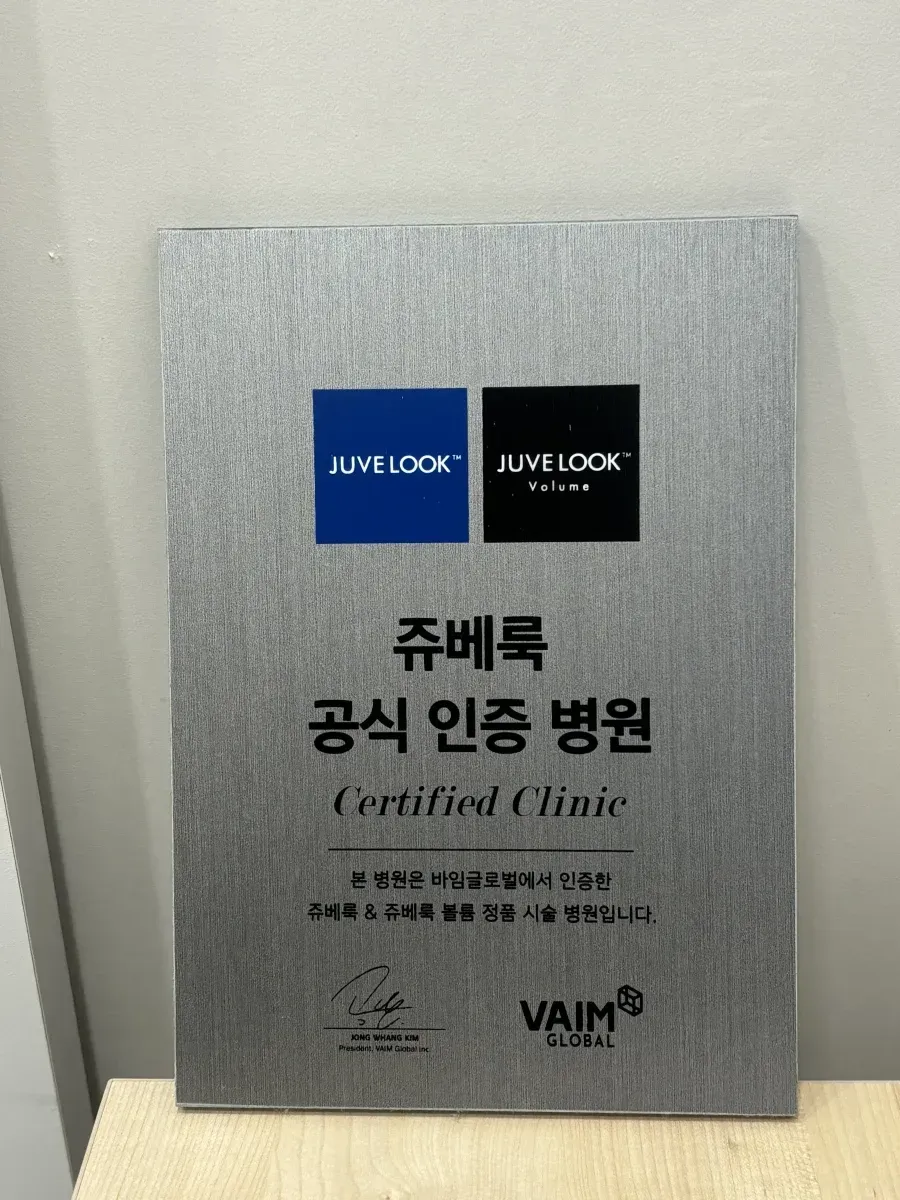
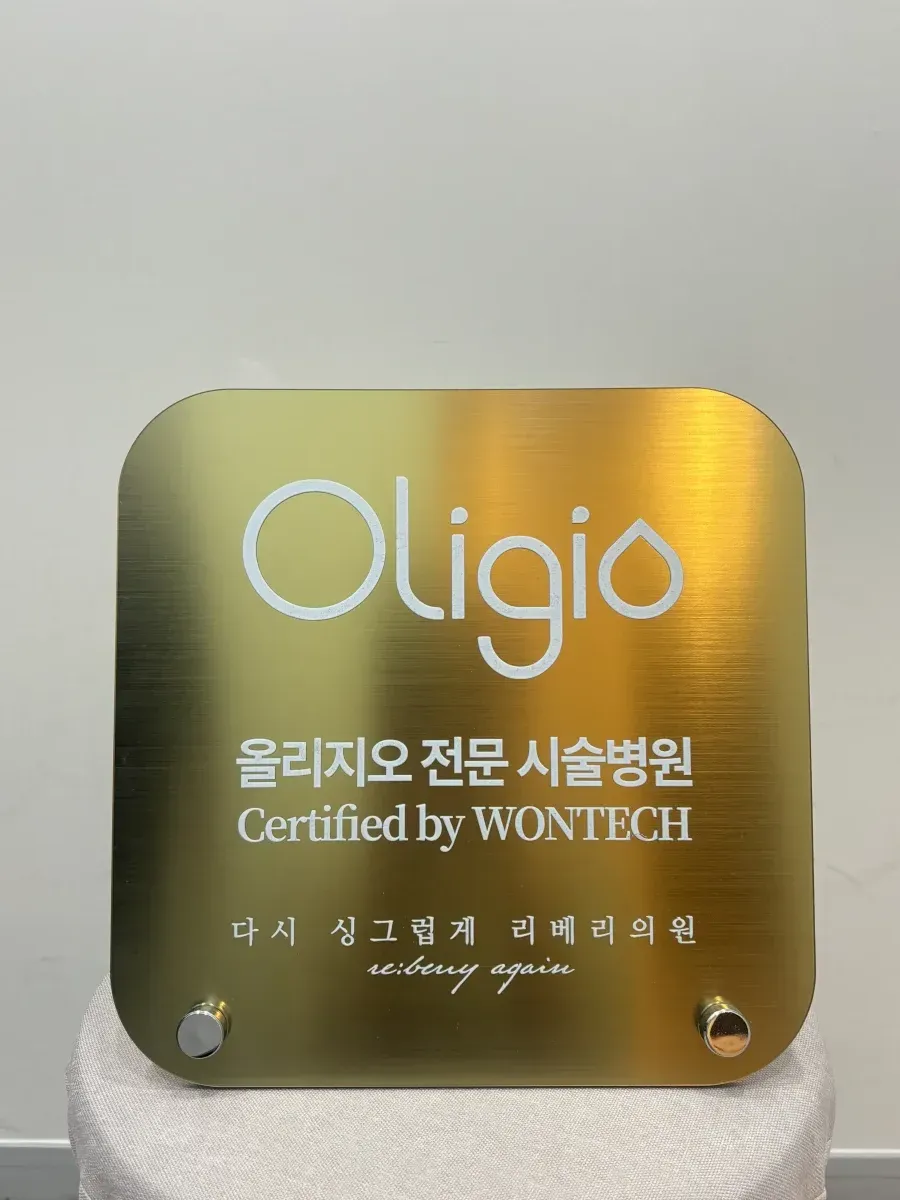
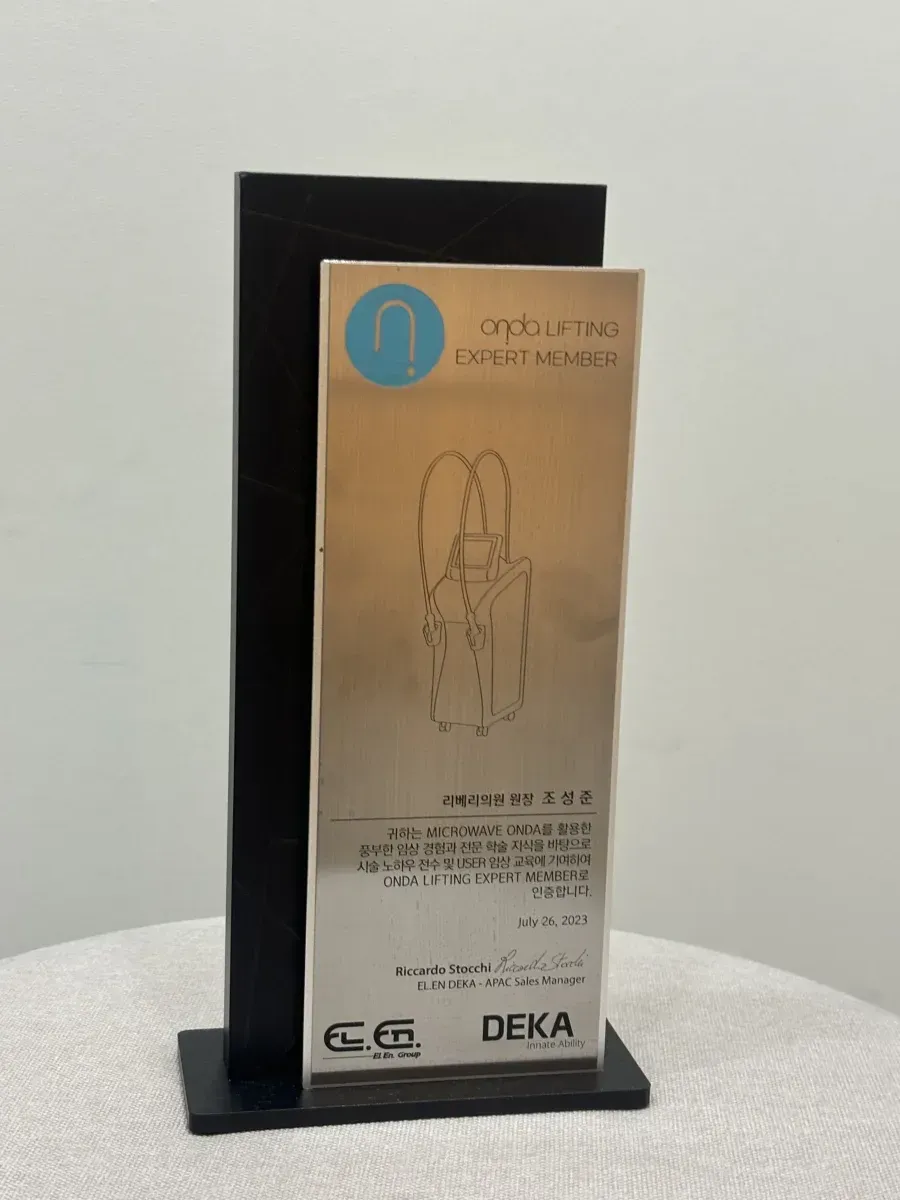
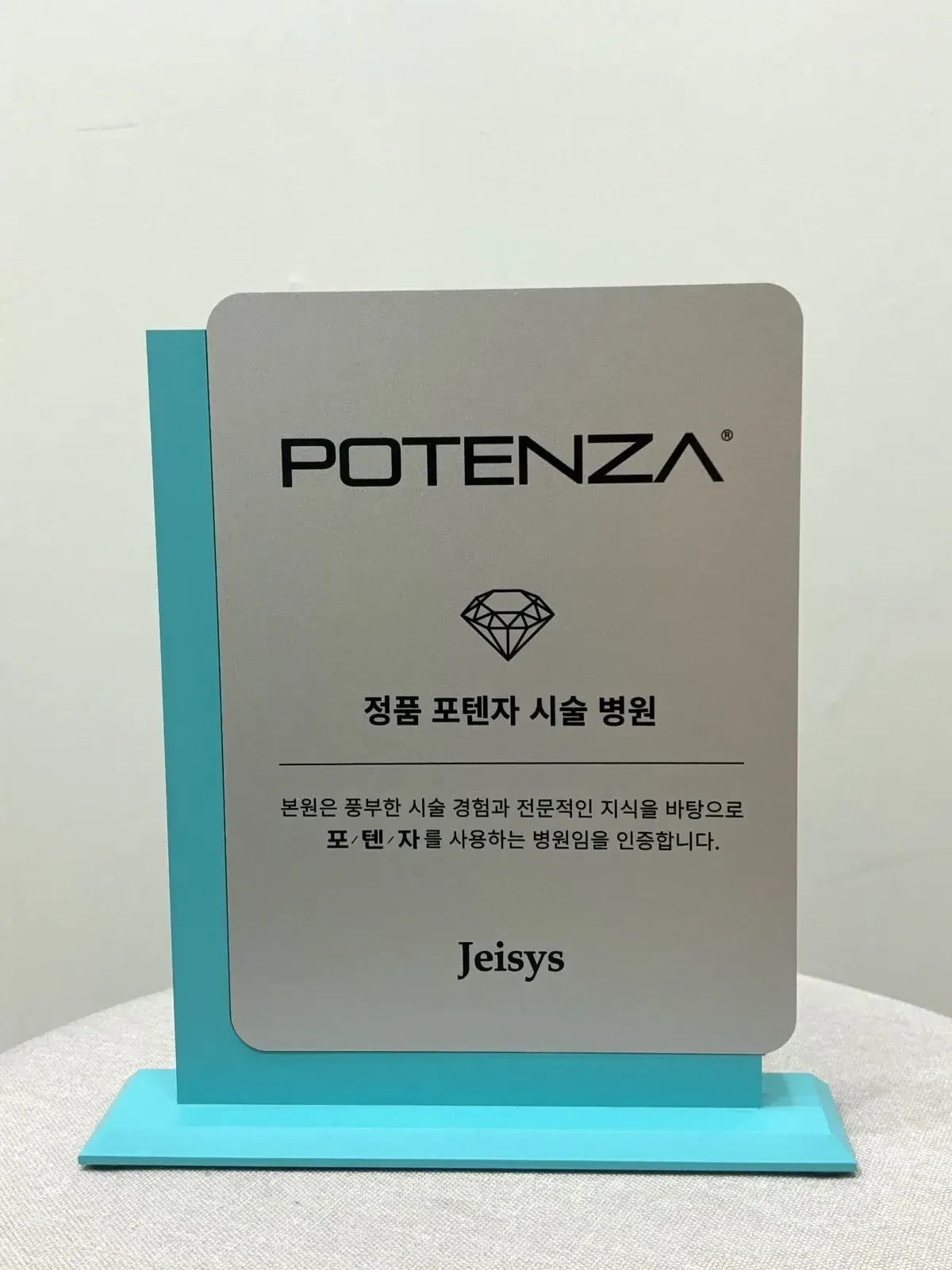
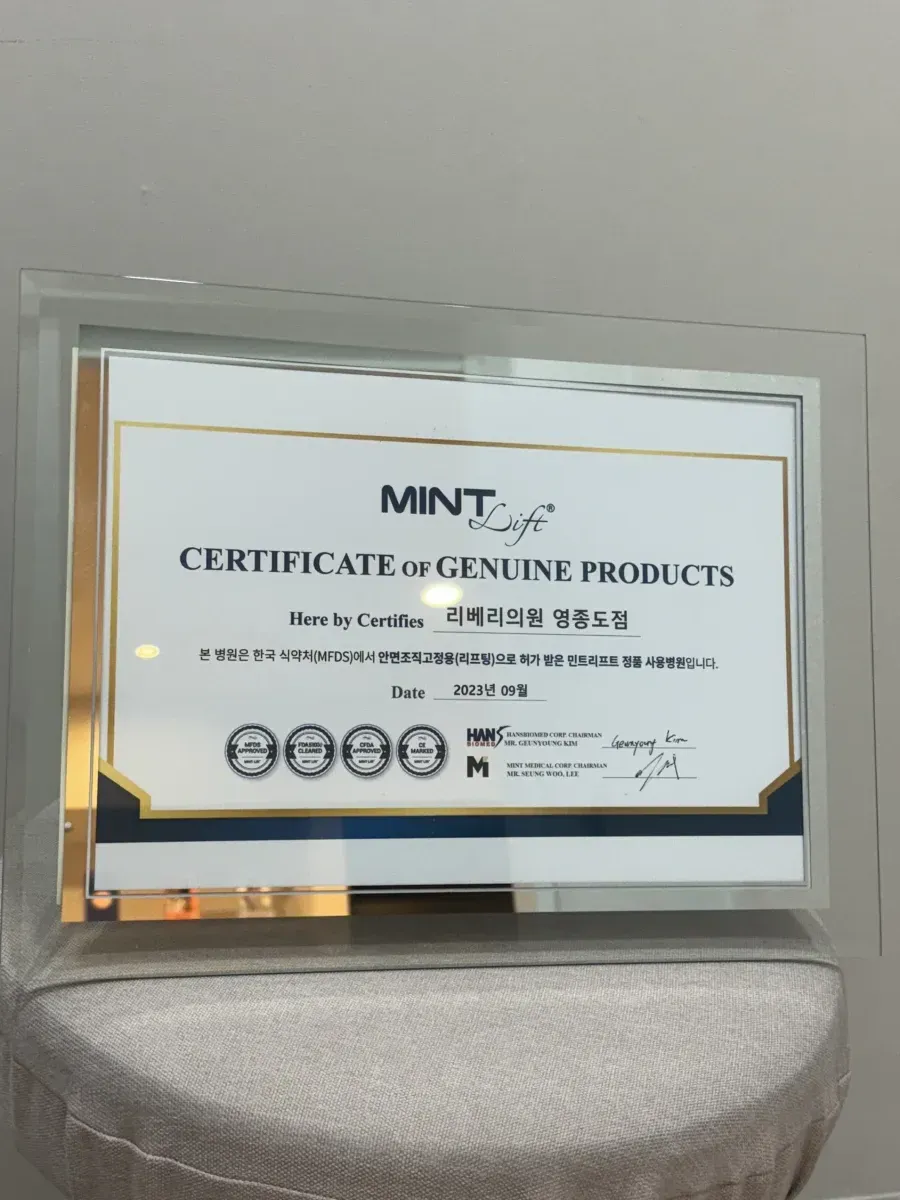
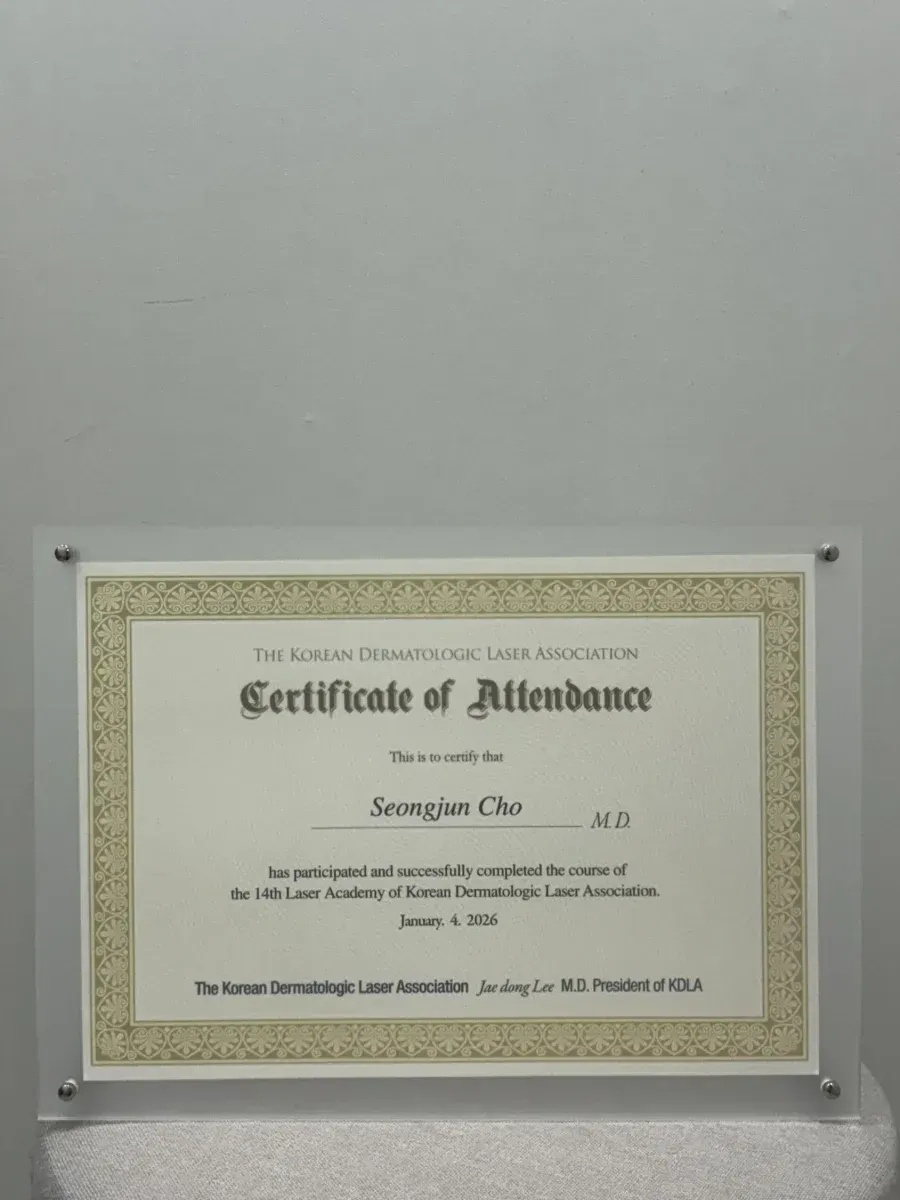
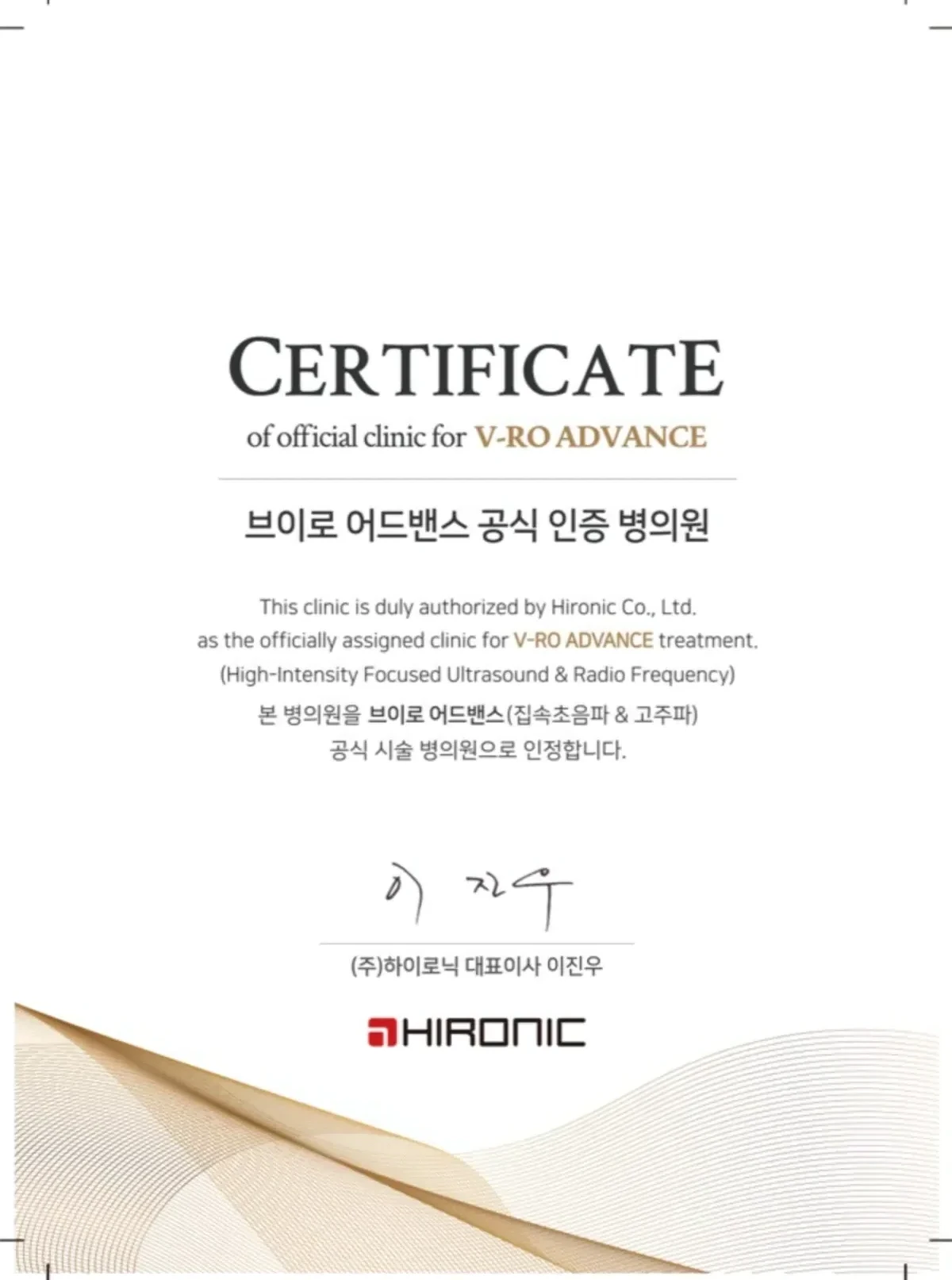
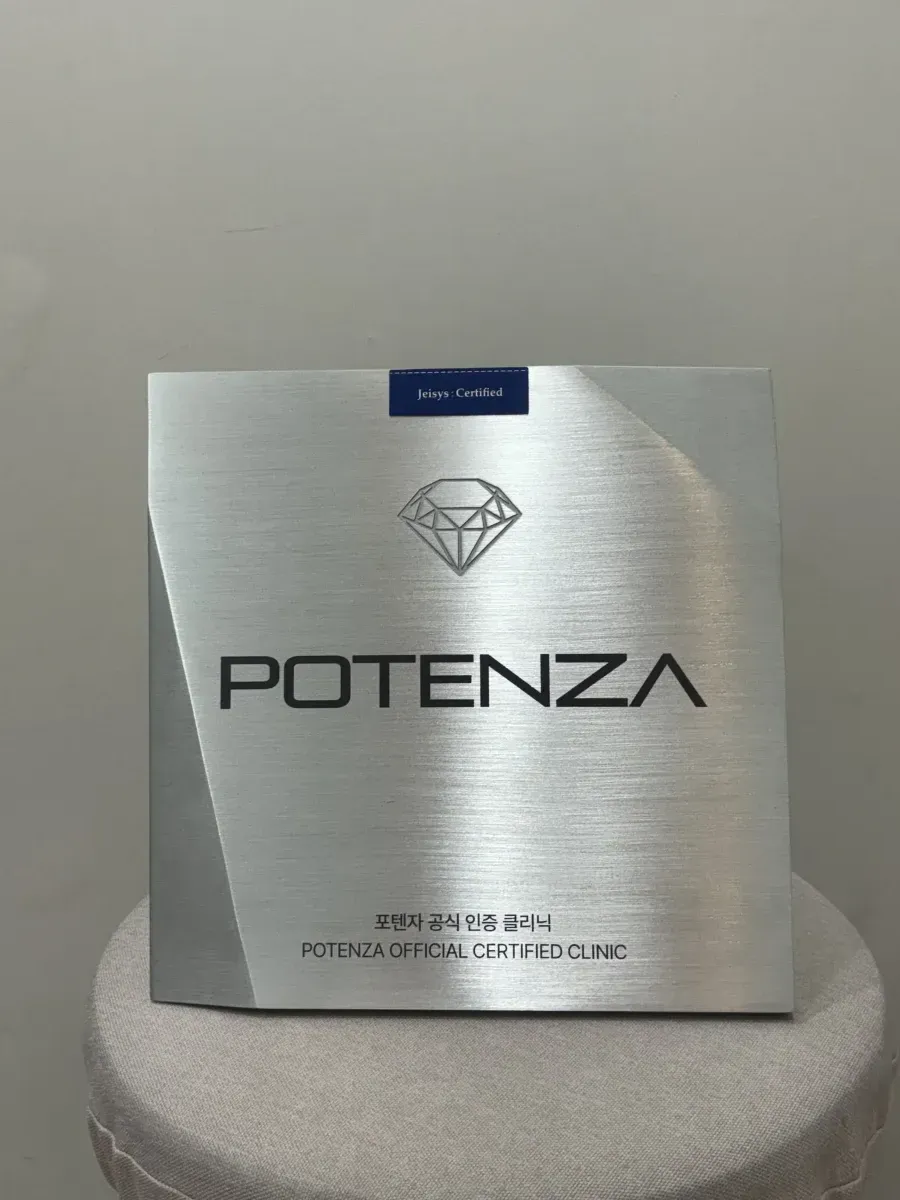
Only Authentic, Brand-Certified Equipment
Every device at RE:BERRY is MFDS-certified and manufacturer-verified. We never use counterfeit or grey-market equipment.
Ready to Remove Your Moles Safely?
Book your mole removal consultation with Head Director Dr. Cho Sung-Jun at RE:BERRY Incheon Airport — 365 days open near Incheon International Airport with airport pickup available.
Got a Layover in Korea? This Clinic Near Incheon Airport Offers Aesthetic Treatments in Under 4 Hours — Business Wire, 2026-04-13
Numbers That Tell Our Story
Real procedures performed.
Brand-Authenticated Equipment & Training



Our doctors are certified by Korea’s top dermatological societies





Latest from Our Instagram
Real treatments, patient reactions, and behind-the-scenes from RE:BERRY.
Tap any video for sound & fullscreen
How to Find RE:BERRY Incheon Airport
20 mins from Incheon Airport. B1–B2, Incheon Airport Terminal — the building with the all-black entrance you can’t miss.
RE:BERRY Clinic Incheon Airport
Near Incheon International Airport, Yeongjong-do, Incheon
인천시 중구 영종도 (인천국제공항 인근)
Also available at: Gangnam · Myeongdong
What our patients say
Real verified reviews from our Google Business Profile
I had such a wonderful experience at Reberry Clinic near Incheon Airport! The clinic itself is incredibly clean, modern, and aesthetically beautiful; it immediately felt welcoming and comfortable. The entire staff was so warm and friendly from the moment I walked in.
What really stood out to me was how English-speakin...
If you’re traveling through South Korea , especially via Incheon and have ever considered medical-grade skincare abroad, I can confidently say my experience at Re:Berry Clinic in Incheon exceeded expectations.
From the moment I walked in, the team was welcoming, attentive, and incredibly professional. Every member of ...
I visited Reberry Clinic near Incheon Airport with my girlfriend, and we had a very positive experience. The clinic is clean, well-organized, and very professional overall. Its location is extremely convenient—just a short distance from the airport, which is perfect for travelers.
The consultant who assisted us was re...
Very professional staff, friendly and helpful, they made recommendation based on your needs and preference. All the staff speak excellent in English and well . The process is very efficient. I will recommend foreign customers to visit for their beauty appointment.
My friends and I had a lovely experience here! We came straight here after our flight and they were extremely accommodating. As soon as we got here they began our appointment. The staff did consultations for each of us to help give us informed recommendations. The staff took their time during my services, it was thorou...
Book Your Personalized Consultation
Share your details and our multilingual team will contact you within 24 hours through your preferred messenger.
- ✓ Free online skin consultation with a doctor
- ✓ Personalized treatment plan & pricing
- ✓ Airport pickup coordination available
- ✓ 8-language support (EN/JP/CN/TW/TH/ES/MN/AR)
- ✓ Response within 24 hours via your preferred messenger