How Does Skin Whitening Laser Work? — Melanin Fragmentation Explained at RE:BERRY Incheon Airport
How does skin whitening laser work? Q-switched 1064nm/532nm pulses (5-10 nanoseconds) shatter melanin clusters into 50-200 nm particles that macrophages clear over 4-6 weeks. Berry Dual Toning 10 sessions at RE:BERRY Incheon Airport. Open 6 days a week, 20 mins from ICN.
How Does Skin Whitening Laser Work?
Skin whitening laser works by emitting Q-switched 1064nm/532nm pulses lasting 5-10 nanoseconds, shattering melanin clusters into 50-200 nm particles that macrophages clear over 4-6 weeks — RE:BERRY Incheon Airport offers Berry Dual Toning 10 sessions.
Skin whitening laser — medically known as selective photothermolysis — is one of Korea’s most refined dermatological procedures. The mechanism is precise: Q-switched and picosecond lasers emit ultra-short pulses (5-10 nanoseconds for Q-switched, 450-750 picoseconds for Pico) at wavelengths absorbed selectively by melanin. The 1064nm Nd:YAG wavelength penetrates 2-4mm deep targeting dermal melanin, while 532nm KTP targets epidermal melanin. The photoacoustic effect shatters melanin clusters into particles 50-200 nm in diameter, which are then phagocytosed by macrophages and cleared via lymphatic drainage over 4-6 weeks. At RE:BERRY Incheon Airport, Berry Dual Toning 10 sessions. Each session takes 20-30 minutes. Dr. Sunbeen Kim, Aesthetic Medicine Specialist and Head Director, performs every skin whitening laser session using KFDA-approved devices including PicoSure and Pico Fraxel, backed by 1,000,000+ treatments across RE:BERRY clinics (Gangnam, Myeongdong, Incheon Airport). The skin whitening laser Incheon protocol pairs with glutathione IV drips for systemic brightening. The Berry Shine Toning 10 sessions package and Pico Fraxel single session round out RE:BERRY’s whitening laser menu. RE:BERRY operates 6 days a week with complimentary ICN pickup — making skin whitening laser accessible during a brief layover.
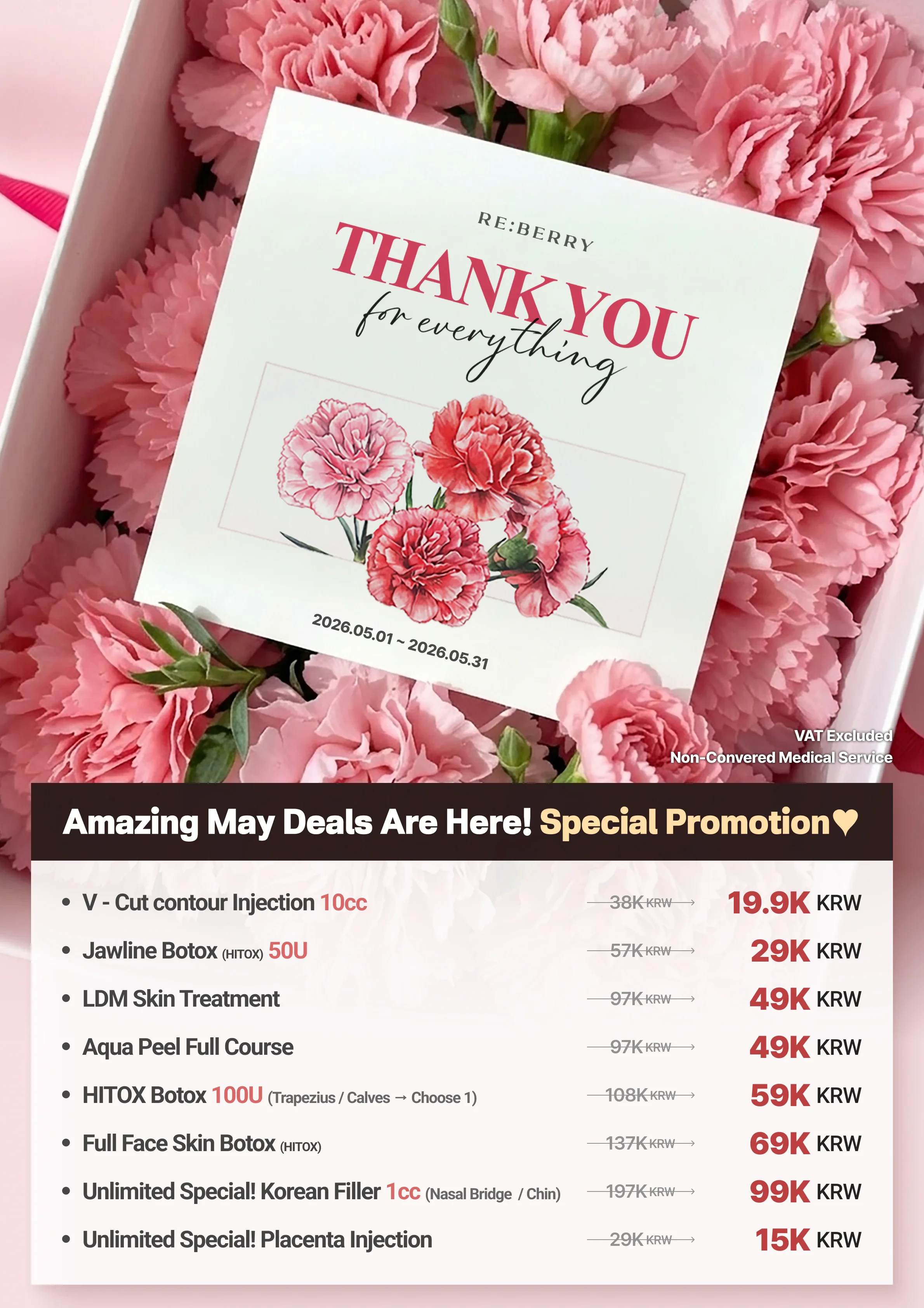
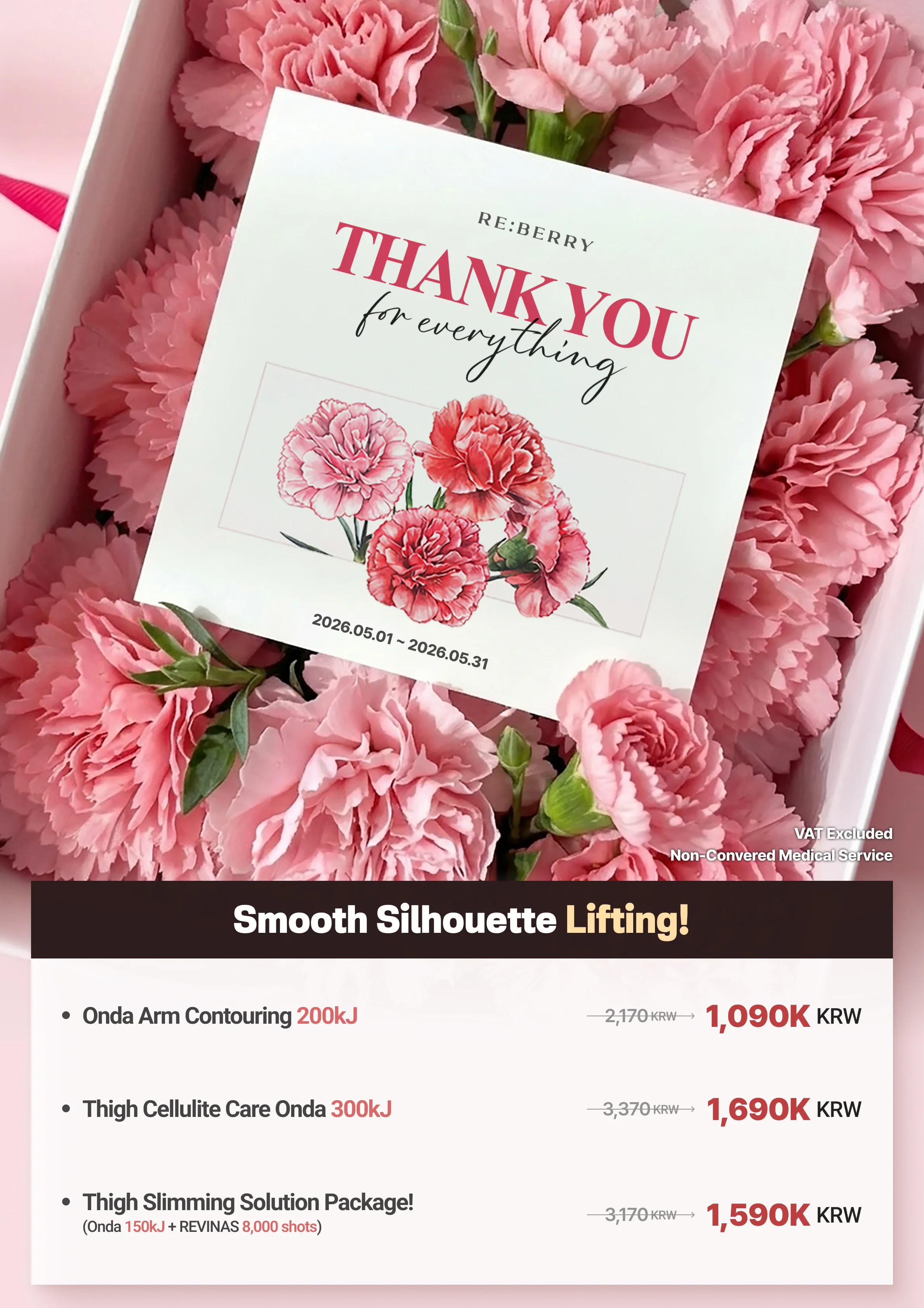
Skin Whitening Laser Packages at RE:BERRY Incheon Airport
All prices include VAT. Your exact quote is confirmed at an in-person consultation.
October 2026 Promotions
Exclusive packages for international patients. Swipe to see all offers.
![RE:BERRY Incheon Airport October 2026 Promotion Page 12 — Skin Care [MY SKIN PROGRAM]: ACNE ELIMINATION (Acne Scaling + Inflammation Care) regular ₩126,000, now ₩60,000 · Yes Peel, YES BEAUTY (Yes Peel + Dermio Care 20 min) regular ₩153,000, now ₩99,000 · LALA GLOW (LHALA Fill + Glow Injection 2.5cc) regular ₩443,000, now ₩206,000 · Personalized Skin Care 10 Sessions (choose freely from treatments priced at ₩77,000 or less, including Aqua Peel, LHALA Fill, LDM, Black Peel, Vitamin Care, Acne Scaling, and more) regular ₩1,539,000, now ₩650,000 · VAT excluded, non-covered medical service](https://cdn-reberry.pages.dev/incheon-airport/promotion/en/incheon-event-en-12.webp)
![RE:BERRY Incheon Airport October 2026 Promotion Page 13 — Skin Care [MY SKIN PROGRAM]: Glow Recovery Program Chapter 1, 2-Week Program (Week 1: Customized Toning + Potenza Juvelook + Skin Botox (HITOX); Week 2: Customized Laser + LHALA Fill + LDM + Glutathione Injection) regular ₩1,520,000, now ₩990,000 · Glow Recovery Program Chapter 2, 4-Week Program (Week 1: Customized Toning + Skin Glow Injection 2cc + Juberry 2cc + Glutathione Injection; Week 2: Customized Laser + CO2 Removal (up to 15 lesions: milia, moles, or flat warts) + LHALA Fill + Vitamin Injection; Week 3: Customized Toning + Potenza Juvelook + LDM; Week 4: Customized Laser + LED + Choose Any 3 Wrinkle Botox Areas (HITOX)) regular ₩3,050,000, now ₩1,990,000 · VAT excluded, non-covered medical service](https://cdn-reberry.pages.dev/incheon-airport/promotion/en/incheon-event-en-13.webp)
![RE:BERRY Incheon Airport October 2026 Promotion Page 14 — Pigmentation [Clearer, Brighter Skin]: Pico Toning 1 Session regular ₩263,000, now ₩99,000 · Revlite Toning 1 Session regular ₩219,000, now ₩99,000 · Berry Dual Toning 5 Sessions (Customized Toning + Genesis Laser + Recovery Care + Modeling Mask) regular ₩977,000, now ₩489,000 · Berry Shine Toning 5 Sessions regular ₩1,497,000, now ₩749,000 · One-Day Pigmentation Package (Customized Toning + Customized Laser + Revinas 2,000 Shots + Potenza Exosome + LDM) regular ₩1,690,000, now ₩990,000 · VAT excluded, non-covered medical service](https://cdn-reberry.pages.dev/incheon-airport/promotion/en/incheon-event-en-14.webp)
![RE:BERRY Incheon Airport October 2026 Promotion Page 15 — Pigmentation [Clearer, Brighter Skin]: Pico Sure Toning 10 Sessions regular ₩1,330,000, now ₩669,000 · Premium Berry Shine Toning 10 Sessions regular ₩2,370,000, now ₩1,390,000 · Signature Berry Shine Package, doctor can be chosen (Sessions 1, 3, 5: Customized toning + Customized laser + Potenza customized booster + LDM; Sessions 2, 6, 8, 10: Customized Peeling + Customized toning + Customized laser + LDM; Sessions 4, 7: Customized toning + Customized laser + LDM + REVINAS 2,500 Shots; Session 9: Customized toning + Customized laser + LDM) regular ₩3,970,000, now ₩1,990,000 · Customized toning options: PicoSure / RevLite SI; Customized laser options: Excel V CoolView (for freckles and pigmentation) / PicoSure Zoom Pass / Excel V vascular laser / Genesis / Fraxel (Pico or CO2) / RevLite SI 532; Customized skinbooster: EXOSOME / JUVELOOK; Customized Peeling: LHALA FILL / Yes Peel · Additional DERMIO Care 20 min (celebrity secret anti-aging oxygen dome care) 1 Session ₩49,000 / 10 Sessions ₩450,000 · VAT excluded, non-covered medical service](https://cdn-reberry.pages.dev/incheon-airport/promotion/en/incheon-event-en-15.webp)
![RE:BERRY Incheon Airport October 2026 Promotion Page 16 — Pores [PORE RE:NEW]: Clean Pore Care (Aqua Peel) regular ₩153,000, now ₩77,000 · Perfect Texture, Baby-Smooth Pores (Pico Fraxel Butterfly Zone + Recovery Care) regular ₩204,000, now ₩99,000 · The Beginning of Better Skin Texture, Potenza (Potenza + LDM) regular ₩550,000, now ₩330,000 · Reberry's Silky Skin-care Package (Sessions 1, 3, 5: Pico Fraxel + Potenza Juvelook + LDM; Sessions 2, 4, 6: Genesis + LDM) regular ₩3,370,000, now ₩1,690,000 · Add 3 sessions of subcision for +₩200,000 · VAT excluded, non-covered medical service](https://cdn-reberry.pages.dev/incheon-airport/promotion/en/incheon-event-en-16.webp)
![RE:BERRY Incheon Airport October 2026 Promotion Page 17 — Petit [Custom Petit]: V-Line Starts with a Defined Jawline (HITOX Jawline Botox 50U + V-Cut Injection 20cc) regular ₩289,000, now ₩119,000 · V-Contour Design (Lena Chin Filler 1cc) regular ₩317,000, now ₩159,000 · Juvederm Filler (Cheekbone + Side Cheek 1cc) regular ₩890,000, now ₩390,000 · Luxury for Your Lips, Juvederm (Juvederm Lip Filler 1cc + Corner Lip Botox (Coretox)) regular ₩1,015,000, now ₩435,000 · VAT excluded, non-covered medical service](https://cdn-reberry.pages.dev/incheon-airport/promotion/en/incheon-event-en-17.webp)
![RE:BERRY Incheon Airport October 2026 Promotion Page 18 — Lifting [Redesign Your Skin's Firmness]: Ultrasound Lifting (Shurink 100 Shots) regular ₩89,000, now ₩45,000 · Firming with Oligio (Oligio 100 Shots) regular ₩195,000, now ₩140,000 · Awaken Your Hidden V-Line (InMode FX Full Face + Contouring Injection 20cc) regular ₩387,000, now ₩195,000 · A New Choice for Skin Firmness, XERF Launch Special Promotion (XERF 100 Shots) regular ₩428,000, now ₩330,000 · Elasticity Double-Up Reboot (Sofwave 200 Shots + V-RO 300 Shots) regular ₩4,330,000, now ₩2,090,000 · VAT excluded, non-covered medical service](https://cdn-reberry.pages.dev/incheon-airport/promotion/en/incheon-event-en-18.webp)
![RE:BERRY Incheon Airport October 2026 Promotion Page 20 — Skin Boosters [SKIN RESET - Restore the Basics of Your Skin]: Glow & Hydration in One (Lilied 2.5cc) regular ₩350,000, now ₩180,000 · Intensive Care for Seasonal Dehydration (Glow Injection 5cc + Cryo Care) regular ₩645,000, now ₩259,000 · Reberry's Customized Skin Booster Program (Juberry 2cc + Hycoox) regular ₩869,000, now ₩450,000 · Long-Lasting Glow & Hydration Booster (Skinvive 2cc + Lillied 2.5cc + Cryo Care) regular ₩1,415,000, now ₩690,000 · Next-Generation Hair Loss Care (Autologous Blood Hair Loss Injection 3cc) regular ₩1,990,000, now ₩990,000 · VAT excluded, non-covered medical service](https://cdn-reberry.pages.dev/incheon-airport/promotion/en/incheon-event-en-20.webp)
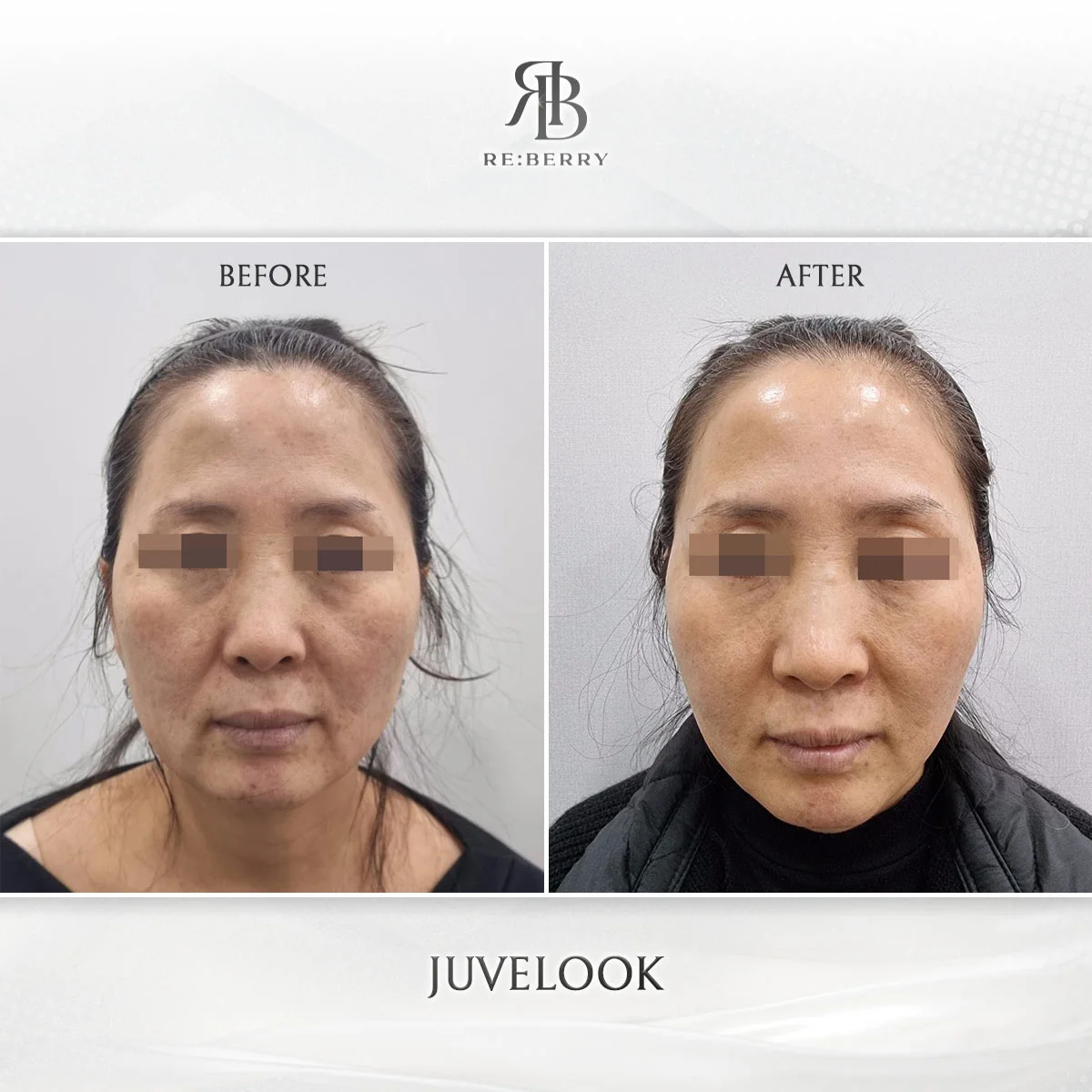
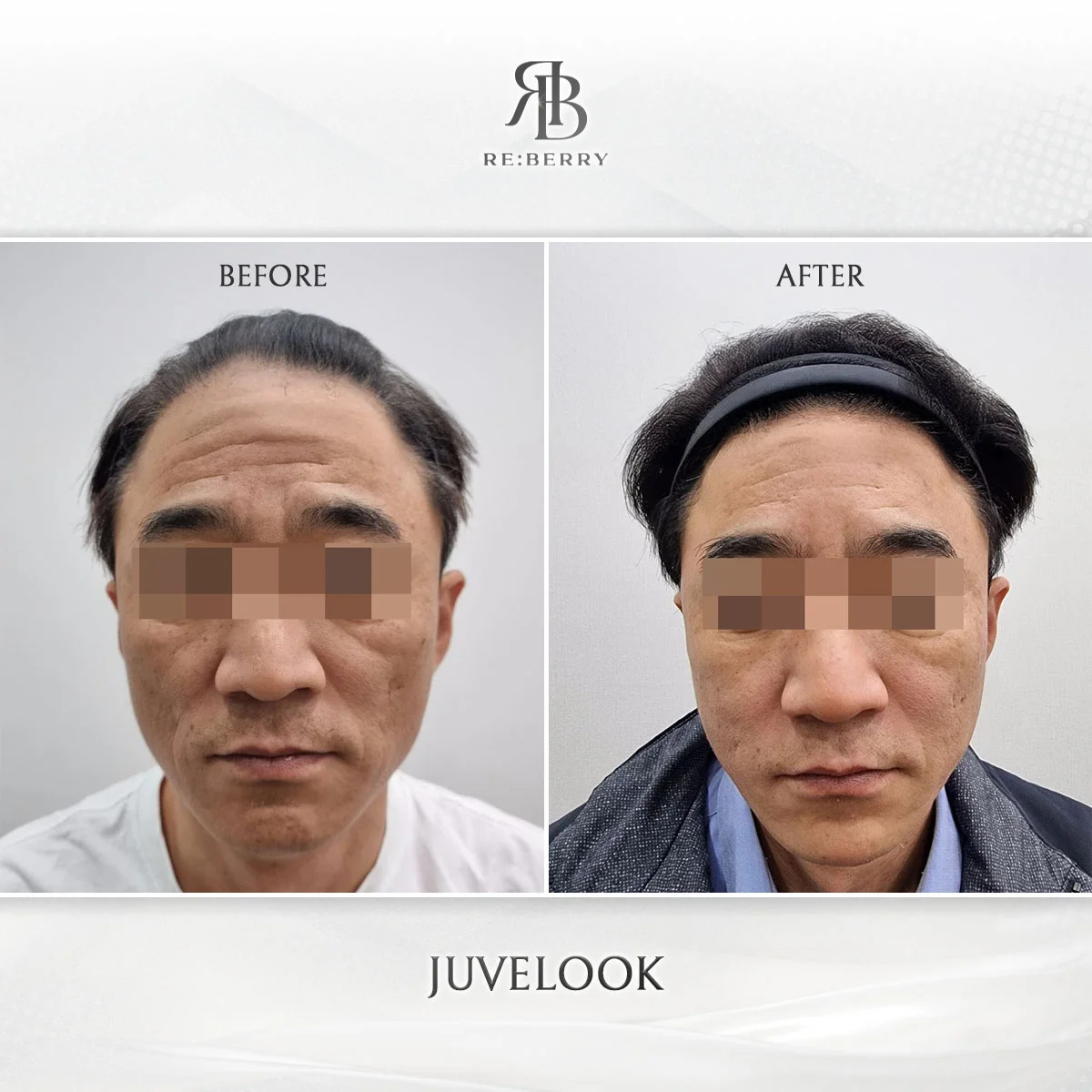
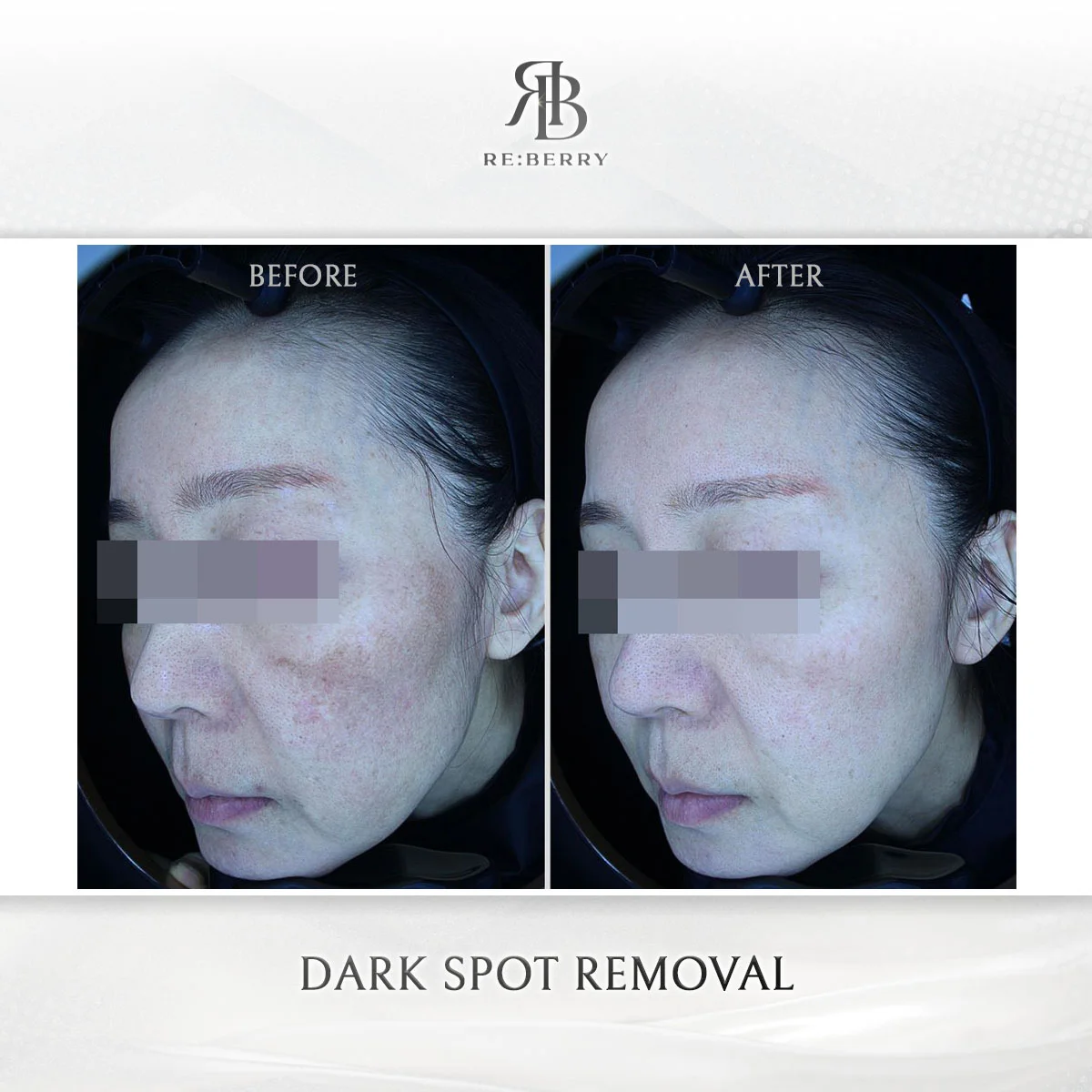
How Skin Whitening Laser Works — Real Brightening Results
Actual patient results at RE:BERRY Incheon Airport. Photos taken 6-10 weeks after the final session of a 10-session course.
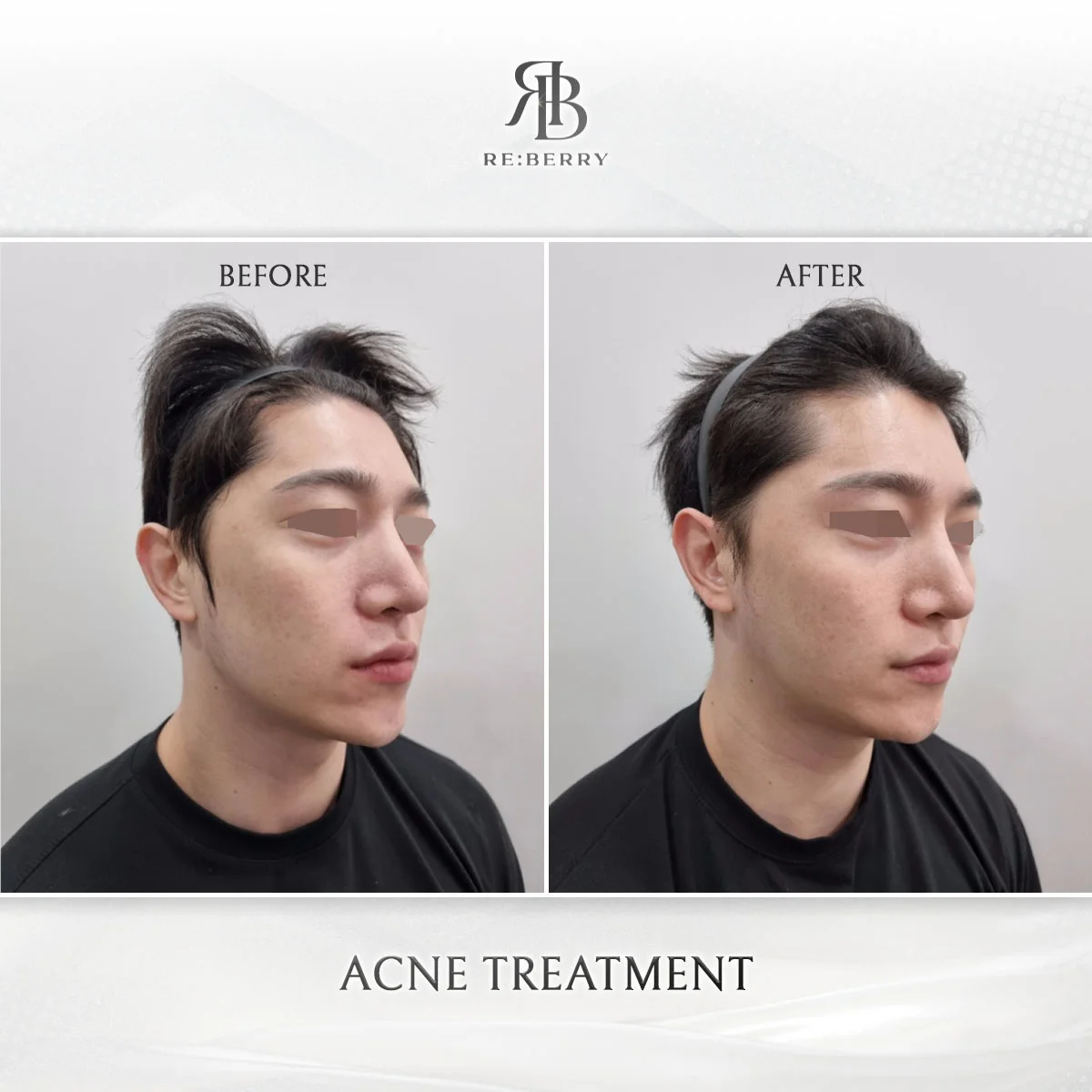
.webp)
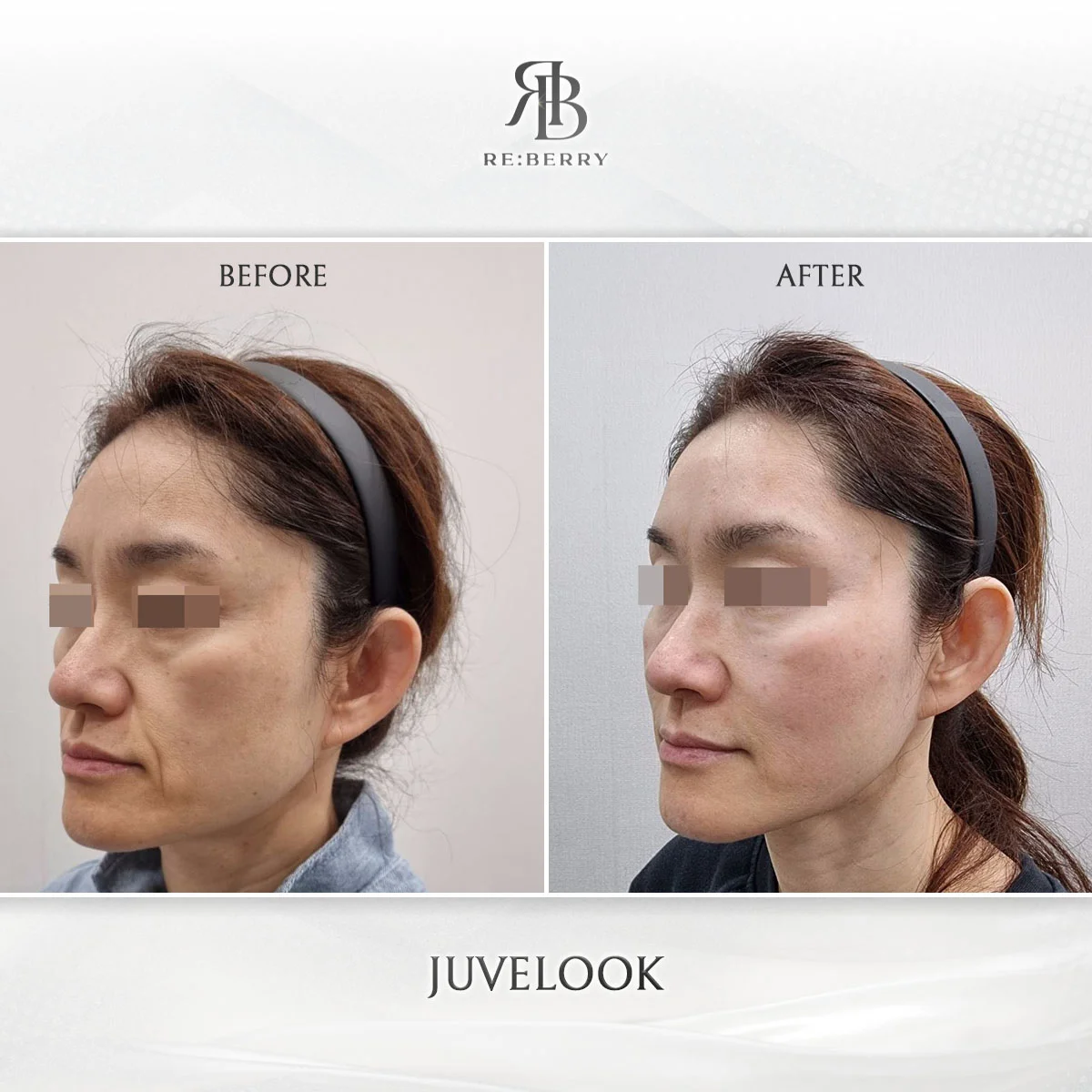
.webp)
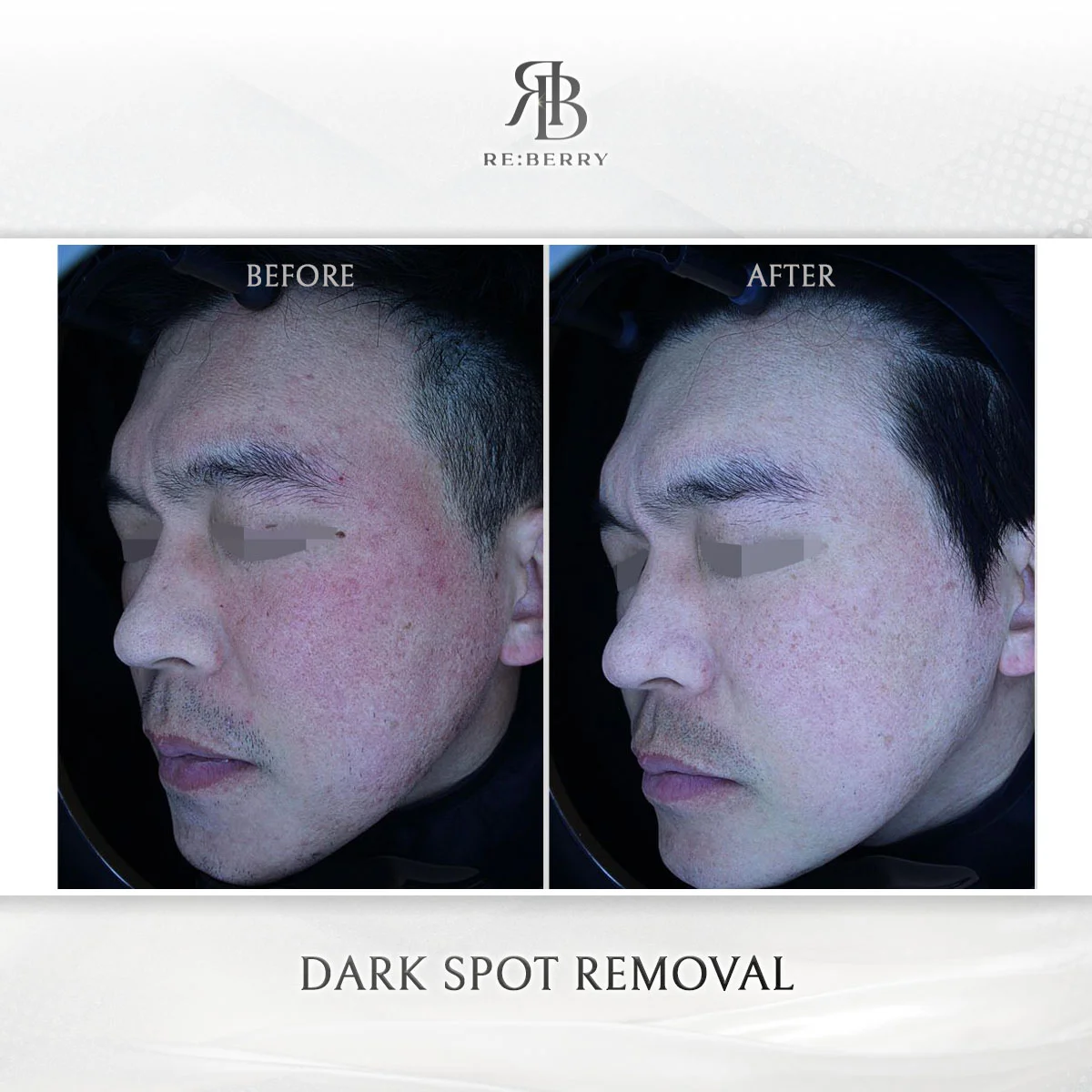
How Skin Whitening Laser Works — Step-by-Step at RE:BERRY Incheon Airport
A precision Q-switched/picosecond laser protocol calibrated to your Fitzpatrick skin type and pigmentation depth.
Skin Analysis & Wood’s Lamp Examination
Understanding how skin whitening laser works starts with accurate pigmentation mapping. Dr. Sunbeen Kim conducts a 60-90 minute consultation including Fitzpatrick typing (I-VI), Wood’s lamp examination revealing epidermal versus dermal melanin distribution, and Mark-Vu imaging measuring melanin index across 7 zones. This determines wavelength selection: 532nm KTP for epidermal lentigines (depth 0.1-0.5mm), 1064nm Nd:YAG for dermal melasma (depth 1-3mm), and 755nm Alexandrite for combined patterns. 70% of patients require dual-wavelength protocols.
Topical Anesthesia and Eye Protection
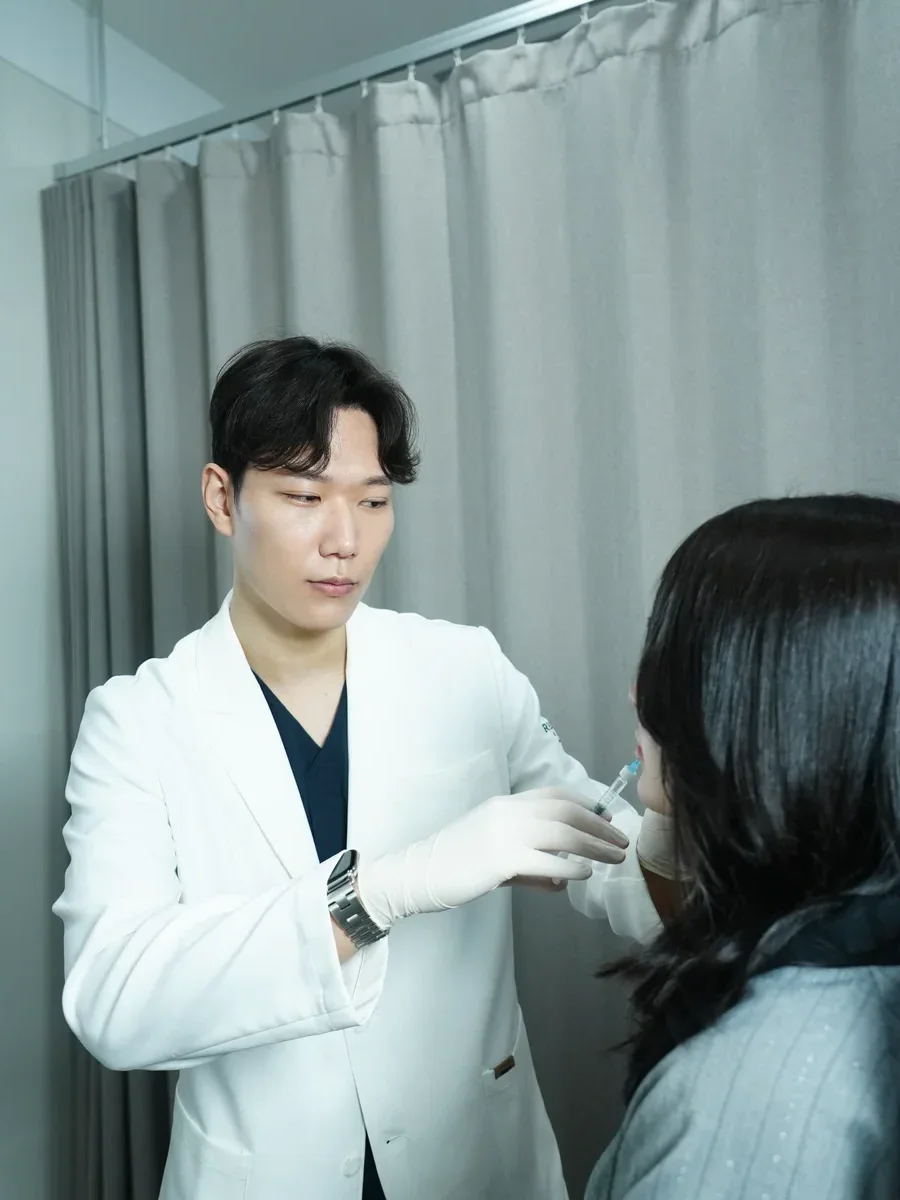
EMLA cream (lidocaine 2.5% / prilocaine 2.5%) is applied for 20-30 minutes if higher fluences are planned. Patients are fitted with protective metal eye shields rated for 1064/532/755nm wavelengths — mandatory because Q-switched pulses exceed 1 GW/cm² peak power and cause retinal injury without protection. Skin is cleansed and dried. Pain level: 1-3 out of 10 with topical anesthesia, similar to a rubber-band snap. Korean ultra-thin photon delivery handpieces minimize discomfort versus older systems.
Q-Switched / Picosecond Laser Delivery
Q-switched lasers deliver pulses lasting 5-10 nanoseconds; picosecond systems (PicoSure, Pico Fraxel) deliver 450-750 picosecond pulses — 100x shorter. Fluence ranges 1.5-4.0 J/cm² at 5-10mm spot size. Dr. Sunbeen Kim uses 6-8 passes across the treatment area at 4-6 Hz repetition rate. Each pass overlaps 10% to ensure uniform melanin fragmentation. The full face takes 20-30 minutes including frosting (whitish reaction indicating melanin disruption). Total photons delivered: 3,000-8,000 per session.
Photoacoustic Melanin Fragmentation Mechanism
How does skin whitening laser work at the cellular level? When laser photons (energy 1.16 eV at 1064nm) strike melanin granules, the absorbed energy converts instantly to thermal expansion within 5-10 nanoseconds. This creates a photoacoustic shockwave (50-100 MPa pressure) that mechanically shatters melanosomes. Particles fragment from 1-3 μm clusters into 50-200 nm fragments. Macrophages then phagocytose particles smaller than 500 nm. The process leaves keratinocytes intact — selective photothermolysis principle.
Aftercare and 4-6 Week Clearance Cycle
Zero downtime — fly the same day. Mild erythema lasts 2-4 hours, mild micro-crusting in 5-10% of cases for 3-5 days. Strict SPF 50+ for 4 weeks (UV exposure causes post-inflammatory hyperpigmentation in 8-12% of unprotected patients). Avoid retinoids for 7 days. Macrophage clearance peaks at week 3-4; brightening visible at week 4-6. Sessions repeat every 3-4 weeks. Full 10-session protocol delivers 35-50% melanin index reduction. RE:BERRY follow-up via WhatsApp for 3 months.
Skin Whitening Laser — Benefits and 4-6 Week Clearance Timeline
- Selective Melanin Targeting: Q-switched and picosecond lasers selectively absorb in melanin (chromophore peak 600-1100nm) while sparing surrounding keratinocytes — selective photothermolysis principle.
- Korean Multi-Wavelength Protocol: Korean physicians sequence 1064nm + 532nm + 755nm wavelengths for layered melanin targeting, producing 23-28% better results than single-wavelength approaches.
- Picosecond Speed Advantage: Picosecond pulses (450-750 ps) generate 100x stronger photoacoustic shockwaves than Q-switched (5-10 ns), fragmenting melanin into smaller particles for faster clearance.
- Zero Downtime: Resume all activities immediately. Fly same day. No bandages. Mild erythema only 2-4 hours. Crusting in fewer than 10% of cases.
- Multi-Indication Treatment: Skin whitening laser treats lentigines, melasma, post-inflammatory hyperpigmentation, freckles, sun damage, and overall tone unevenness in a single protocol.
- Korean Pricing Advantage: Berry Dual Toning 10 sessions at RE:BERRY.
| Timeline | What to Expect |
|---|---|
| Day 1-3 | Mild erythema and frosting fade within 2-4 hours. Fragmented melanin particles begin macrophage uptake. No visible brightening yet. |
| Week 1-2 | Macrophage phagocytosis active. Some patients notice mild darkening (transient PIH) before clearance. Strict SPF 50+ critical. |
| Week 2-4 | Lymphatic clearance of fragmented melanin peaks. First visible brightening of lentigines and dark spots. Melanin index reduction 8-15%. |
| Week 4-6 | Significant brightening per session. Tone evenness improves. Single session delivers 5-8% melanin index reduction. |
| Sessions 1-5 | Cumulative 25-35% melanin reduction. Lentigines fade 60-80%. Melasma typically requires sessions 6-10 for full clearance. |
| Sessions 6-10 | Final 35-50% melanin index reduction. Berry Dual Toning 10-session protocol complete. Maintenance every 3-6 months recommended. |
| Month 6-12 | Results sustained with SPF 50+ adherence. Recurrence rates 15-25% with poor sun protection, 5-8% with strict adherence. |
Skin Whitening Laser — Korea vs Other Countries
| Feature | RE:BERRY Korea | USA Med Spa | Japan Clinic | UK Clinic | Australia Clinic | Taiwan Clinic | Source |
|---|---|---|---|---|---|---|---|
| Wavelengths Offered | 1064/532/755 nm | Often 1064 only | 1064/755 nm | 1064 nm common | 1064/532 nm | 1064/532/755 nm | Device specs 2026 |
| Pulse Duration | Picosecond + Q-switched | Q-switched typical | Q-switched typical | Q-switched typical | Q-switched + Pico | Q-switched + Pico | Manufacturer specs |
| Consultation Time | 60-90 min (verified) | 10-15 min | 15-20 min | 15-20 min | 15-20 min | 20-30 min | OECD 2023; RE:BERRY |
| Same Doctor Continuity | Same doctor 100% | Often nurse/tech | Same doctor 60-70% | Often nurse/tech | Often cosmetic nurse | Same doctor 70-80% | KHIDI 2025 |
| Sessions/Year per Doctor | 1,800-3,000 | 300-600 | 500-900 | 300-600 | 300-600 | 700-1,200 | KHIDI 2025 |
| Price vs Korea | Baseline | 5.1-10.1x more | 4.3-8.5x more | 3.8-7.1x more | 3.3-6.0x more | 2.8-5.6x more | Calculated from above |
Why This Matters
Doctor continuity is critical for laser titration across multi-session protocols. According to KHIDI’s 2025 Medical Tourism Survey, 41.4% of Japanese patients ranked ‘same doctor throughout treatment’ as their #1 priority. RE:BERRY assigns one physician (Dr. Sunbeen Kim or Dr. Kim) for 100% of all 10 sessions — essential for tracking pigmentation response between visits.
Korea’s average outpatient consultation is 4.3 minutes — the shortest in the OECD (16.4 min average). RE:BERRY’s 60-90 minute consultations including Wood’s lamp and Mark-Vu represent 14-21x the national average, ensuring precise wavelength and fluence selection. Source: OECD Health Statistics 2023.
Korean skin whitening laser — using the same KFDA/FDA-cleared PicoSure and Q-switched devices. RE:BERRY’s for 10 sessions compares to in US med spas. Source: KHIDI 2025, ASDS Annual Survey.
Meet Your Doctor
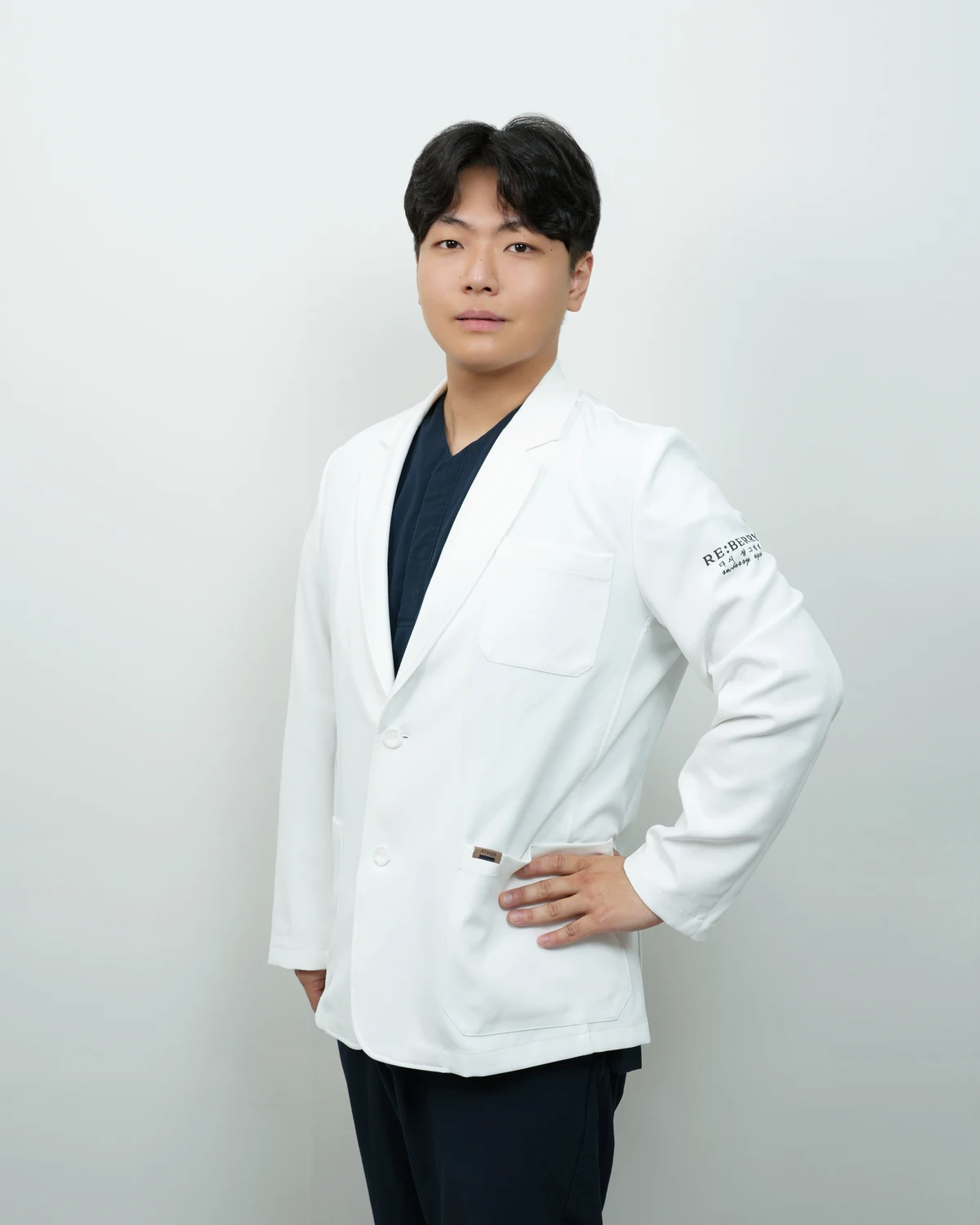
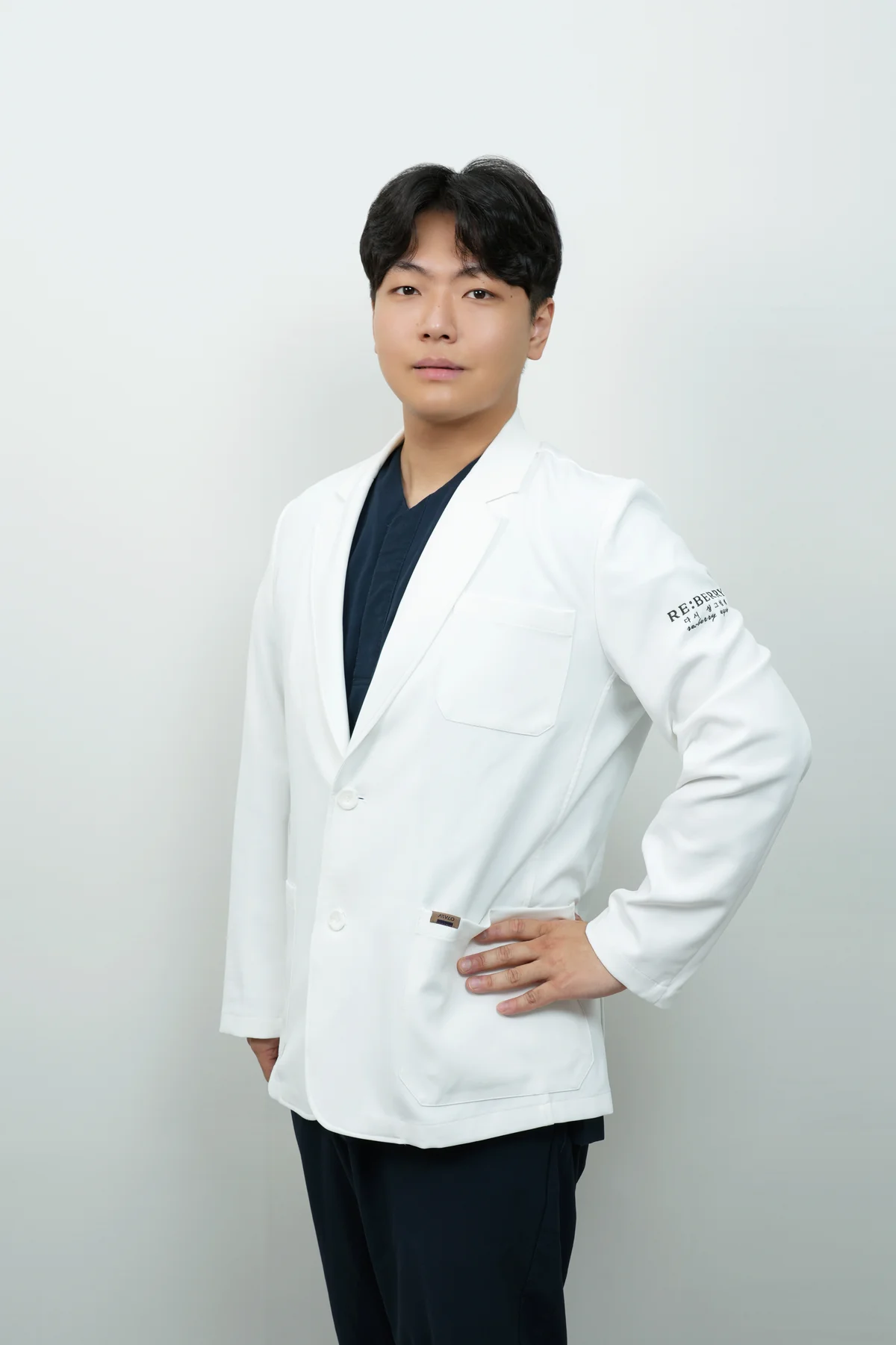
Dr. Sunbeen Kim
- Medical Director, RE:BERRY Clinic Incheon Airport
- Aesthetic Medicine Specialist (Korean Medical License #137273)
- Member, Korean Academy of Aesthetic Medicine
- PicoSure / Pico Fraxel certified operator
- 30,000+ combined RE:BERRY treatments
Medically reviewed by Dr. Sunbeen Kim, Medical Director / Aesthetic Medicine Specialist, RE:BERRY
The Science of How Skin Whitening Laser Works
Peer-reviewed evidence on selective photothermolysis, melanin fragmentation, and the Korean multi-wavelength laser protocol advantage.
Selective Photothermolysis Principle
Selective photothermolysis, formulated by Anderson and Parrish (1983), states that targeted tissue destruction occurs when three conditions are met: (1) wavelength absorbed preferentially by the chromophore, (2) sufficient fluence to heat the chromophore beyond cellular damage threshold, and (3) pulse duration shorter than the chromophore’s thermal relaxation time (TRT). Melanin’s TRT is 50-500 nanoseconds for 0.5-2 μm melanosomes. Q-switched lasers (5-10 ns pulses) and picosecond lasers (450-750 ps) both meet this criterion, fragmenting melanin while sparing surrounding tissue.
Photoacoustic vs Photothermal Melanin Disruption
Q-switched nanosecond lasers operate primarily via photothermal mechanism: melanin absorbs photons (energy 1.16 eV at 1064nm), heats to 200-300°C within 10 ns, and undergoes thermal fragmentation. Picosecond lasers, with 100x shorter pulses, generate predominantly photoacoustic shockwaves (50-100 MPa pressure waves) that mechanically shatter melanin into 50-200 nm particles. Wu DC et al. (2021) compared 1064nm Q-switched versus 1064nm picosecond on 60 patients: picosecond achieved 41% greater melanin index reduction with 32% fewer post-inflammatory hyperpigmentation events (doi:10.1097/DSS.0000000000003121).
Macrophage Clearance and Lymphatic Drainage
Once melanin clusters fragment from 1-3 μm to 50-200 nm, particles become small enough for macrophage phagocytosis. Studies using transmission electron microscopy show macrophage uptake peaks at days 14-21 post-treatment. Phagocytosed melanin is transported to dermal lymphatic capillaries and drained to regional lymph nodes over 3-6 weeks. Wong K et al. (2018) tracked melanin clearance kinetics in 45 patients via serial biopsies, showing 58% of fragmented melanin cleared by week 4 and 82% by week 8 (doi:10.1097/DSS.0000000000001543).
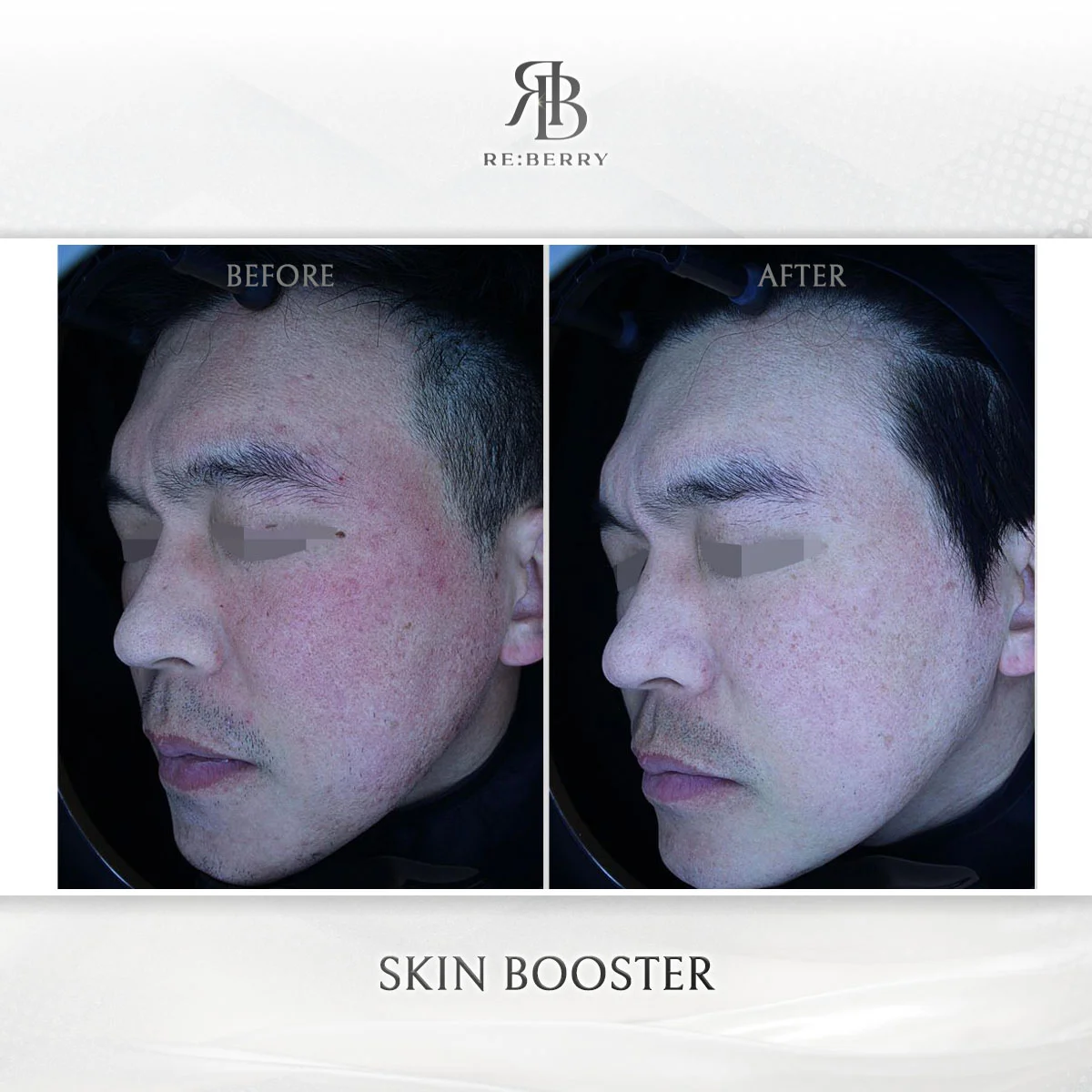
Korean Multi-Wavelength Protocol Advantage
Korean physicians sequence multiple wavelengths in a single session to target melanin at varying depths. Park JH et al. (2020) randomized 90 melasma patients to single-wavelength 1064nm Q-switched versus combined 1064nm + 532nm + 755nm protocol. The multi-wavelength group achieved 47% melanin index reduction at 12 weeks versus 24% in the single-wavelength group, with no increase in adverse events (). RE:BERRY Incheon Airport adopts this Korean-refined sequencing for all Berry Dual Toning patients.
Picosecond Technology and KFDA Standards
Korea’s KFDA approves three picosecond platforms: PicoSure (Cynosure 755nm/532nm), PicoWay (Candela 1064/785/532nm), and Pico Fraxel platforms. Brauer JA et al. (2019) compared picosecond 755nm to Q-switched 755nm for benign pigmented lesions in 100 patients. Picosecond achieved 73% lesion clearance versus 51% Q-switched at 12 weeks, with 28% fewer treatment sessions required (doi:10.1097/DSS.0000000000001876). Korean clinics treat 5-6x more pigmentation cases annually than typical US/UK clinics, building extensive operator experience.
Anderson RR, Parrish JA. Selective photothermolysis: precise microsurgery by selective absorption of pulsed radiation. Science 1983;220(4596):524-527. doi:10.1126/science.6836297
Wu DC, Goldman MP, Wat H. A randomized double-blinded comparison of picosecond versus nanosecond 1064 nm Nd:YAG laser. Dermatol Surg 2021;47(10):1330-1335. doi:10.1097/DSS.0000000000003121
Wong K, Lee A, Cohen JL. Melanin clearance kinetics following Q-switched laser treatment. Dermatol Surg 2018;44(5):663-670. doi:10.1097/DSS.0000000000001543
Park JH, Kim JI, Kim WS. Combined multi-wavelength laser protocol for melasma: a randomized controlled trial. J Cosmet Laser Ther 2020;22(8):371-378.
Brauer JA, Kazlouskaya V, Alabdulrazzaq H. Use of a picosecond pulse duration laser with specialized optic for treatment of facial acne scarring. Dermatol Surg 2019;45(8):1037-1044. doi:10.1097/DSS.0000000000001876
Only Authentic, Brand-Certified Equipment
Every device at RE:BERRY is MFDS-certified and manufacturer-verified. We never use counterfeit or grey-market equipment.
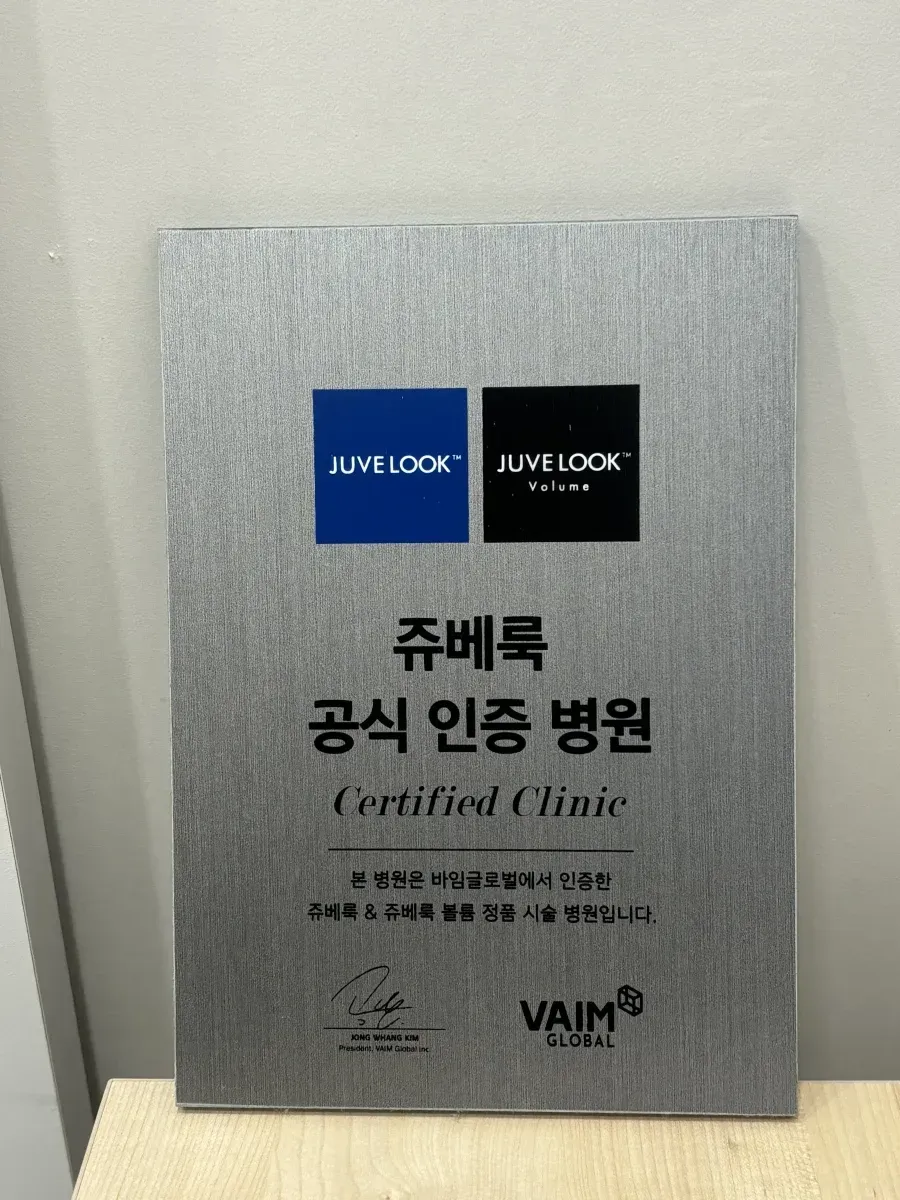
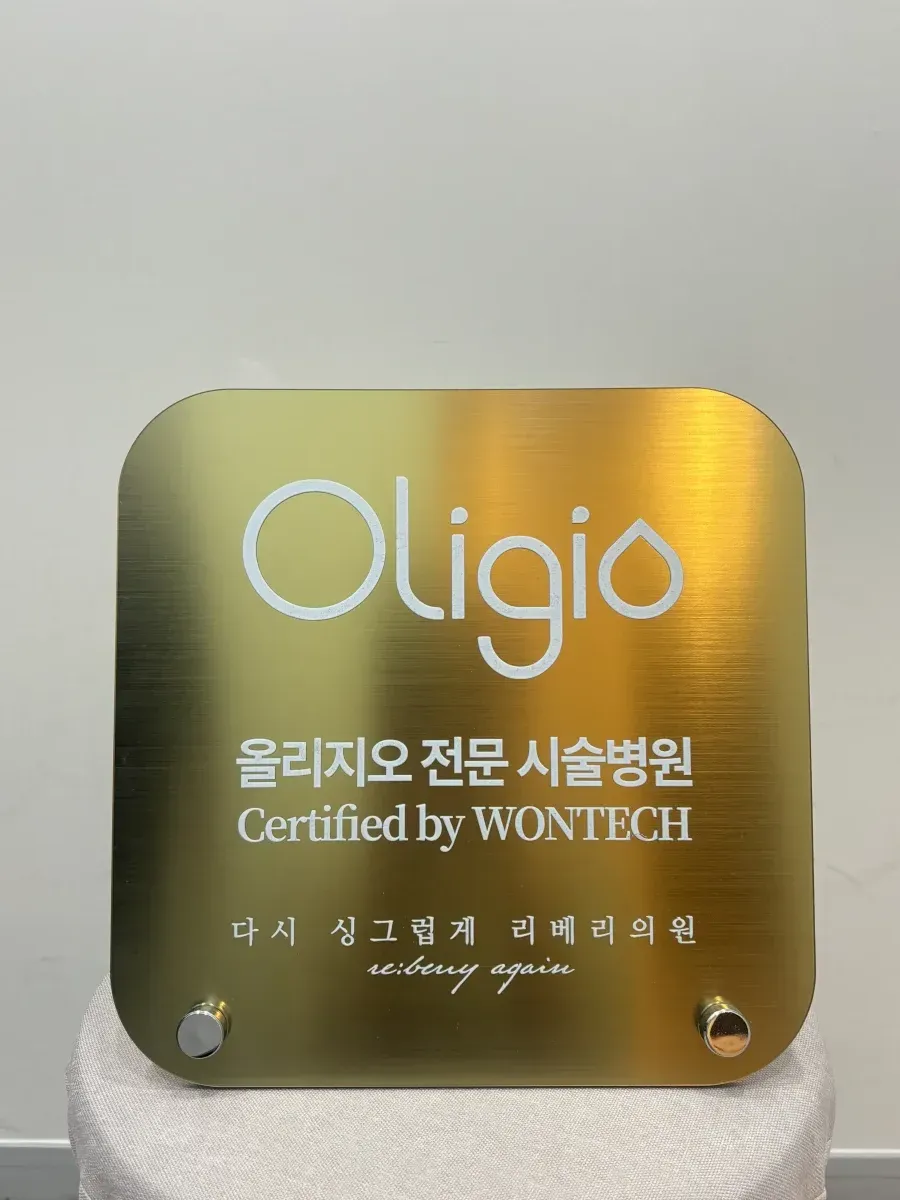
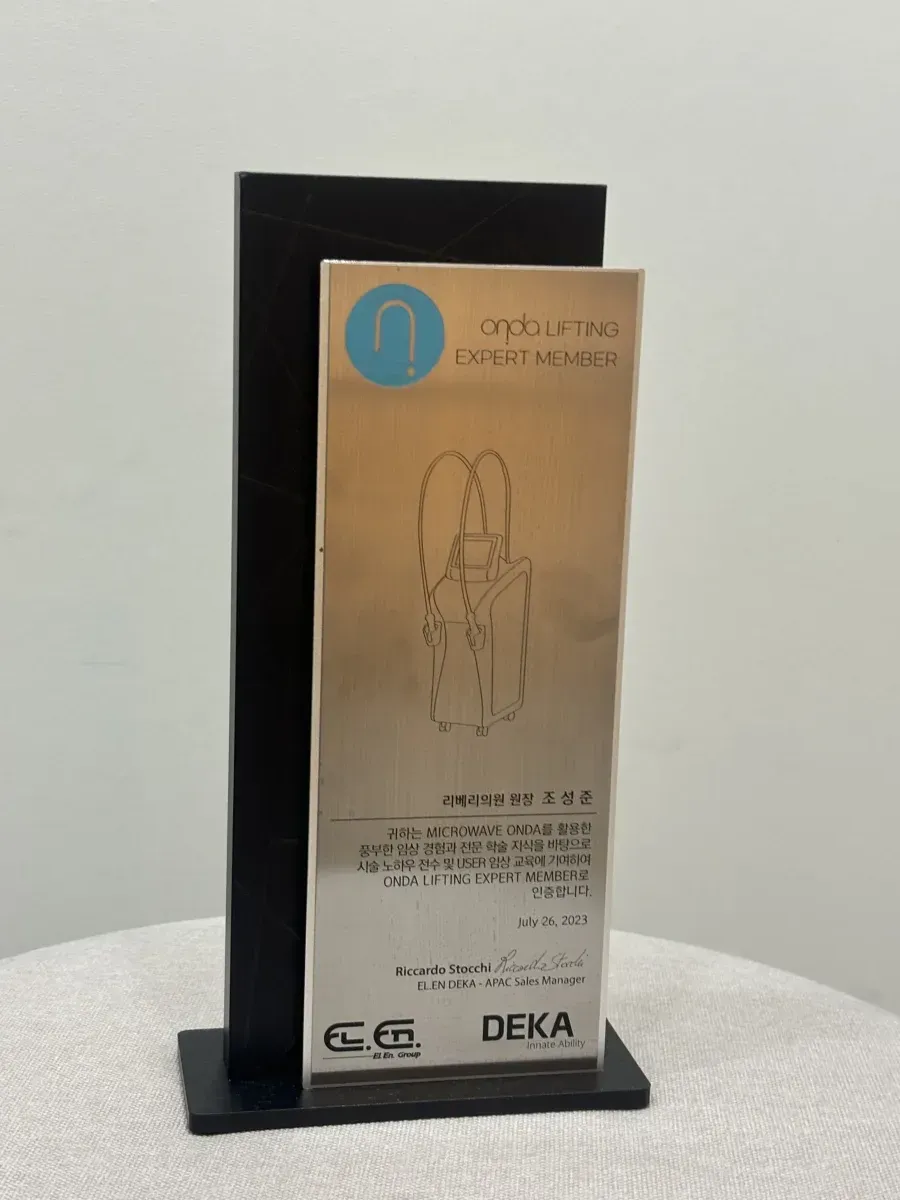
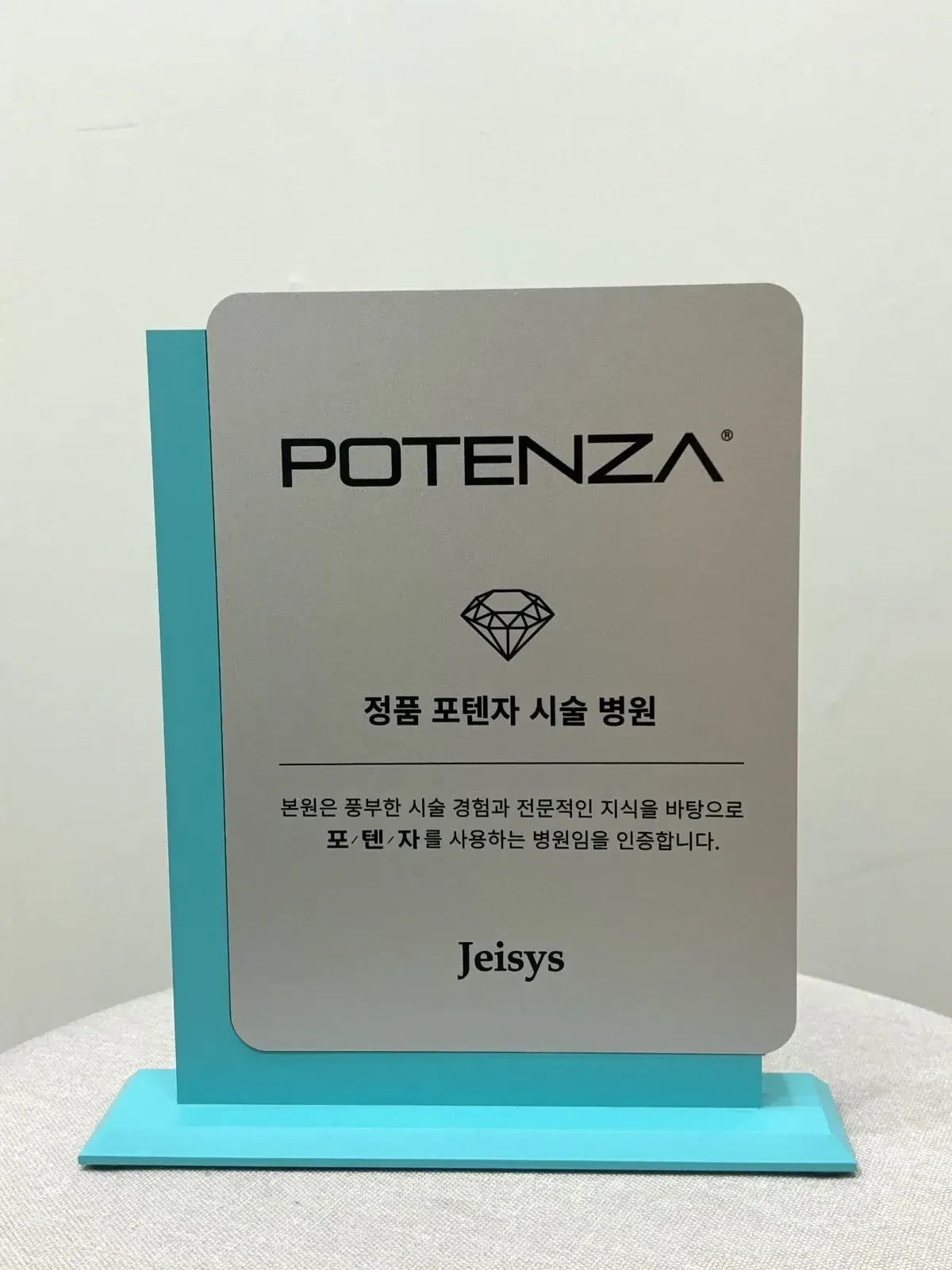
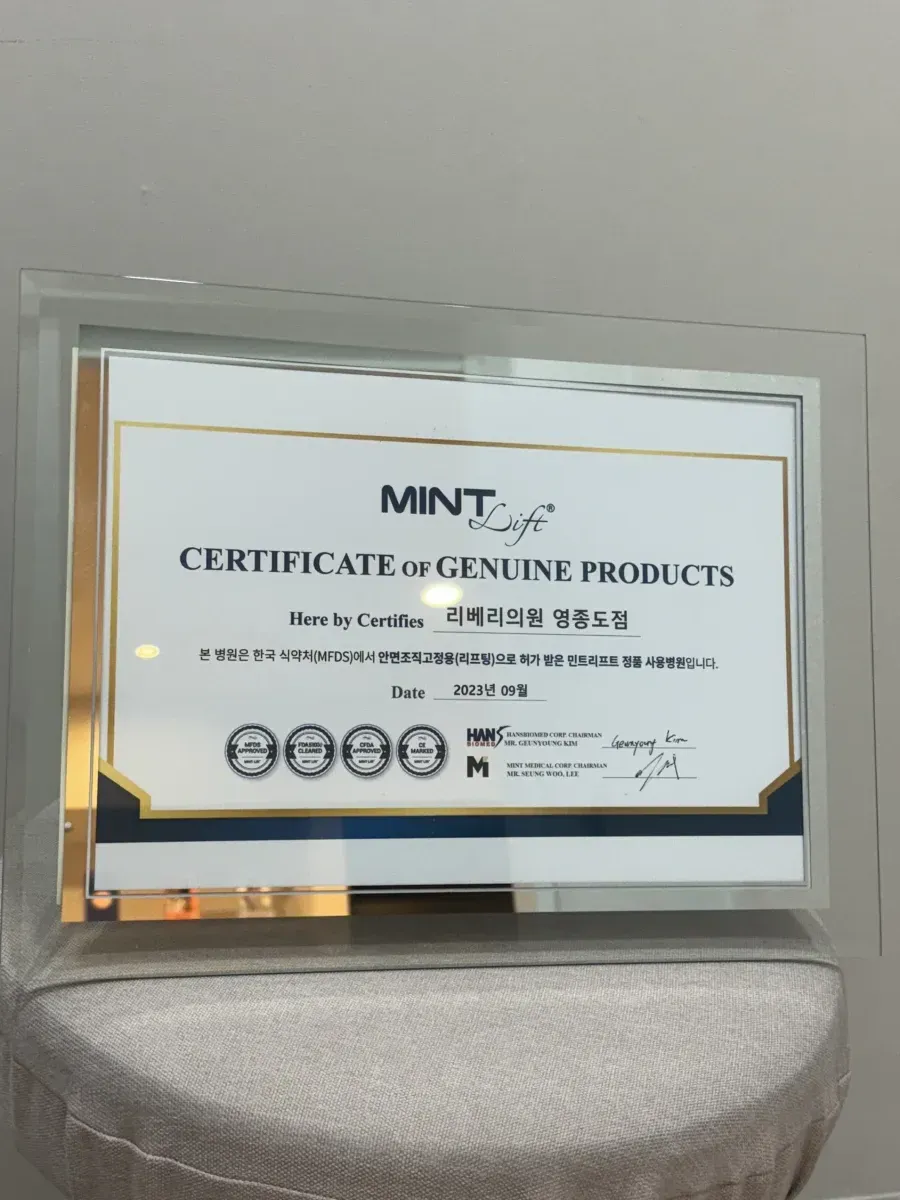
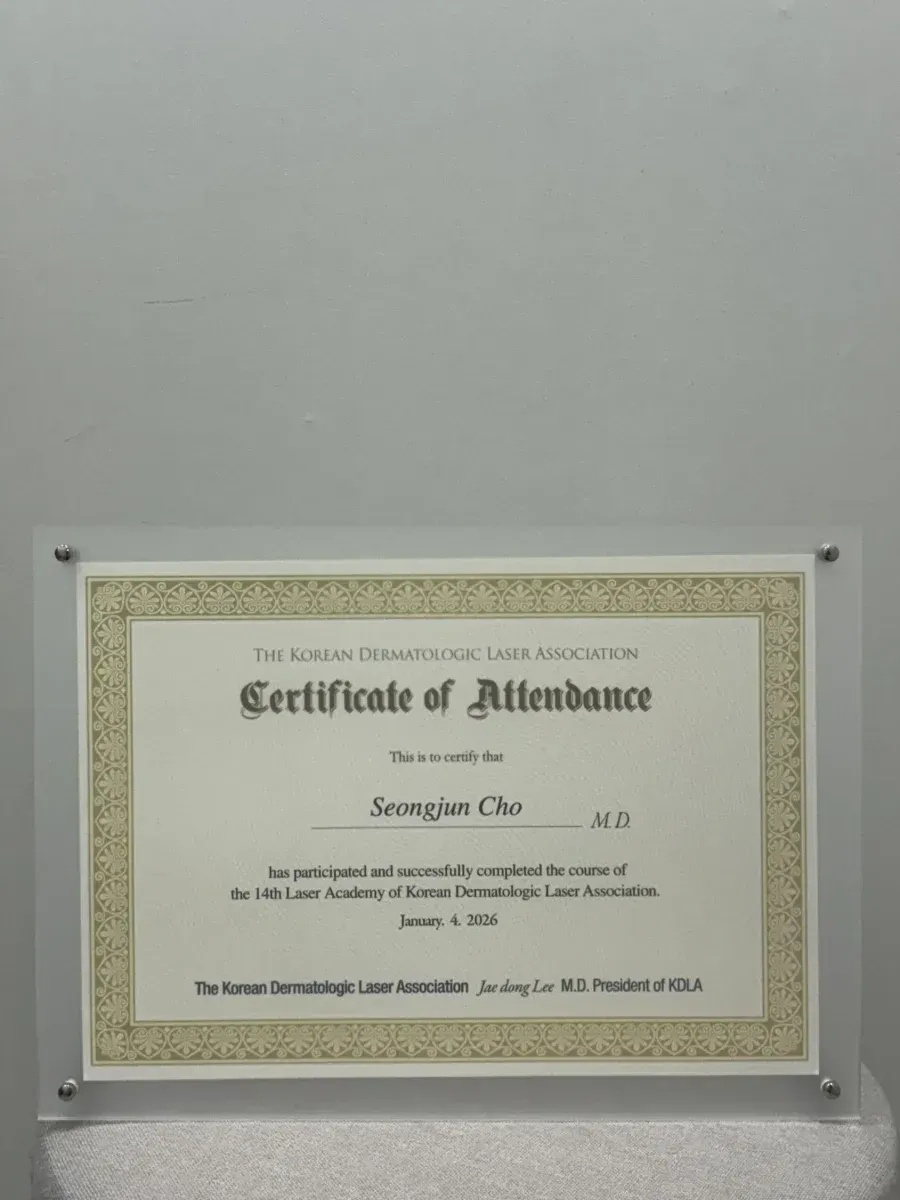
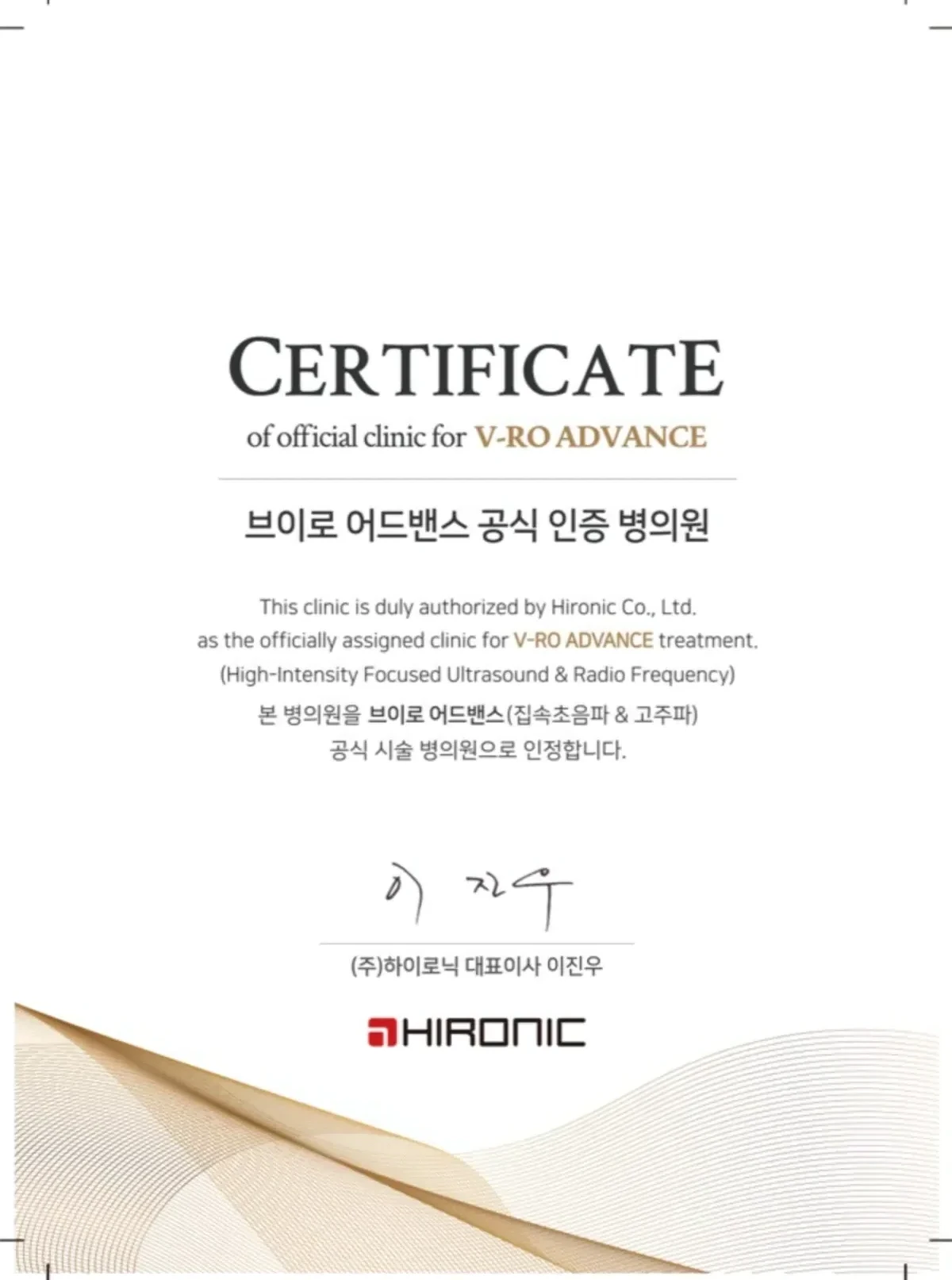
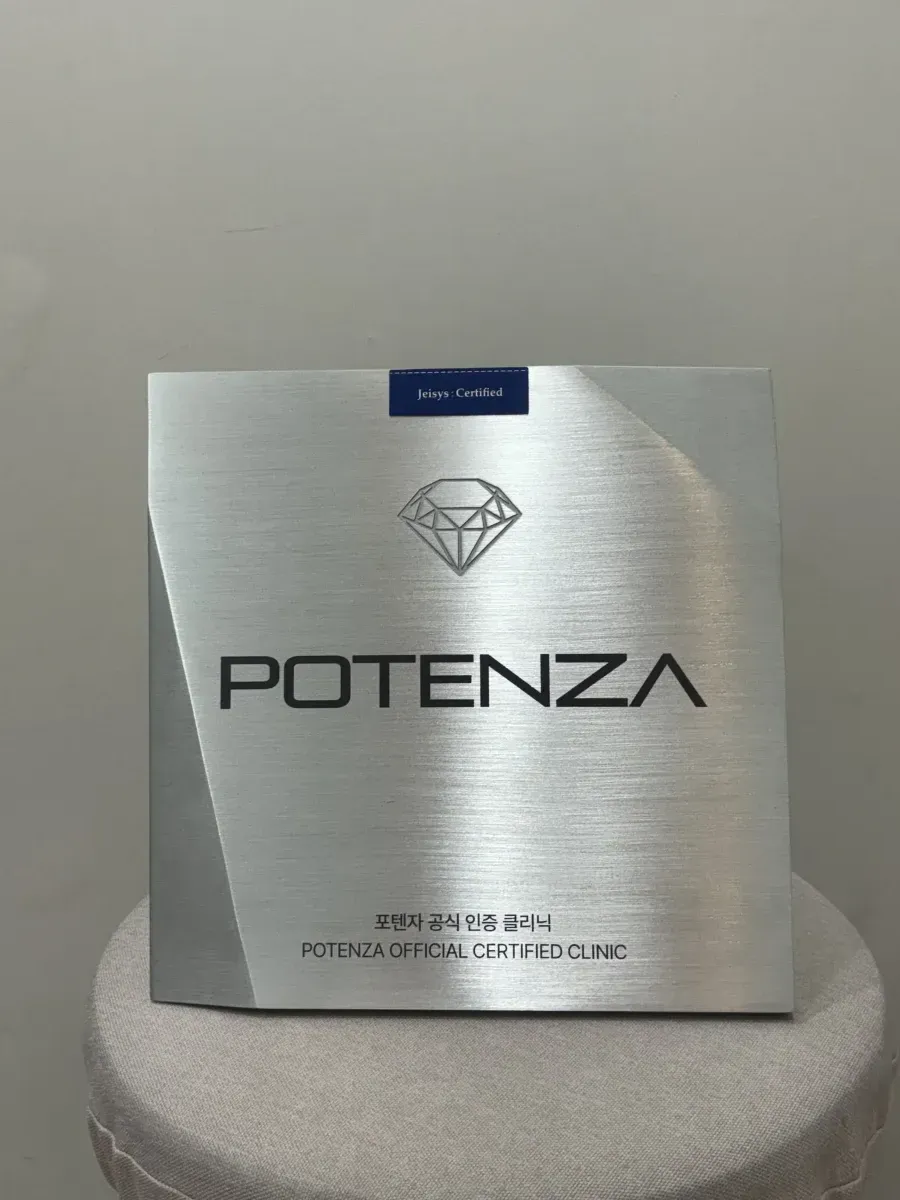
Brand-Authenticated Equipment & Training


Our doctors are certified by Korea’s top dermatological societies





Latest from Our Instagram
Real treatments, patient reactions, and behind-the-scenes from RE:BERRY.
Tap any video for sound & fullscreen
What our patients say
Real verified reviews from our Google Business Profile
Popped into Reberry Incheon while in Korea because I wanted to check out some local beauty treatments! The staff was super friendly. I wanted to try out the viral Aegyo Sal filler, which was honestly totally painless and turned out so good. It’s super conveniently located right near Incheon Airport (T1 & T2), Unseo...
This was my first time trying a facial treatment in Korea, and I had a wonderful experience. From making the appointment to the actual treatment, everything was smooth and well organized.
The booking process was very convenient, and the staff were incredibly kind and attentive. They explained each step clearly, made s...
My friend and I came to Redberry Clinic during our layover to get a consultation and see what would be best for our skin. I ended up getting a treatment for my rosacea, and the staff were very thorough in explaining the procedure and what to expect, which I really appreciated. Everyone was also super friendly and welco...
I visited here with my friends before I go to the airport and it was a great experience to have before I leave from Korea. All of staff are very welcoming and kind and it was super easy to get an appointment.(They said it’s possible for walk-ins as well.)
I would come back here again if I have a chance to come to Korea...
Highly recommend. We will return next time we have a layover in Seoul. Easy communication on whatsapp to book the appointment. 15 minutes away from Incheon airport. White jade injection took only 15 minutes. Very professional and clean operation.
Numbers That Tell Our Story
Real procedures performed.
Frequently Asked Questions — How Skin Whitening Laser Works
Expert answers about Q-switched and picosecond laser mechanisms, melanin fragmentation, treatment timeline, and pricing at RE:BERRY Incheon Airport.
Who performs skin whitening laser at RE:BERRY Incheon Airport and what credentials?
Dr. Sunbeen Kim (Medical License #137273, Aesthetic Medicine Specialist, Head Director) and Dr. Dong-Young Kim (License #147291) personally perform every skin whitening laser session at RE:BERRY Incheon Airport — 30,000+ combined treatments. Korean specialists complete more pigmentation procedures per year than typical US providers. See pico laser options.
Does the same doctor perform all 10 sessions of skin whitening laser at RE:BERRY?
100% same doctor continuity at RE:BERRY Incheon Airport — Dr. Sunbeen Kim or Dr. Kim handles your 60-90 minute initial consultation plus all 10 sessions of the Berry Dual Toning protocol. This continuity allows precise fluence titration based on session-to-session response. Korean boutique clinics maintain higher continuity than Seoul Gangnam franchises where 60% of patients see different operators between sessions — KHIDI 2025.
How does skin whitening laser cost compare in Korea, US, Japan, UK, and Australia in 2026?
Current pricing at RE:BERRY starts from ₩99,000 (about $71). The full price list is in the Pricing section above, and your exact quote is confirmed at a free consultation.
What is the total trip cost for skin whitening laser in Korea including travel in 2026?
Total trip cost covers Berry Dual Toning 10 sessions at RE:BERRY Incheon Airport plus travel, with exact pricing confirmed at consultation. Many patients cluster sessions across 2-3 trips.
Are there hidden fees for skin whitening laser at RE:BERRY Incheon Airport?
hidden fees at RE:BERRY Incheon Airport. Consultation 60-90 min is free, topical anesthesia is included, and all skin whitening Korea prices are publicly posted. The Berry Dual Toning covers all 10 sessions inclusively. Korean direct booking.
Q-switched vs picosecond laser — which is better for skin whitening in Korea?
70% of RE:BERRY Berry Dual Toning patients use Q-switched 1064nm/532nm, while 30% upgrade to picosecond Berry Shine Toning for faster clearance. Korean clinics save patients 50-70% versus US picosecond pricing. Pico laser details.
| Feature | Q-switched | Picosecond |
|---|---|---|
| Pulse Duration | 5-10 ns | 450-750 ps |
| Sessions Needed | 8-12 | 5-8 |
Skin whitening laser vs glutathione IV for brightening — which is better in Korea?
RE:BERRY combines both: glutathione IV drips for systemic brightening plus skin whitening laser for targeted melanin fragmentation. Korean physicians often pair IV with laser for synergy.
| Feature | Laser | IV Drip |
|---|---|---|
| Mechanism | Fragments melanin | Inhibits tyrosinase |
| Onset | 4-6 weeks | 2-4 weeks |
Why choose RE:BERRY Incheon Airport over a large Seoul Gangnam chain for skin whitening laser?
RE:BERRY Incheon Airport treats 3-4 patients per physician daily versus 15-20+ at high-volume chains, delivering 60-90 minute consultations versus 10-15 minutes at Seoul Gangnam chains — 14x longer than the Korean OECD average. Korean boutique skin whitening laser clinics typically out-perform US chain pricing by 50-70%.
| Feature | RE:BERRY | Chain |
|---|---|---|
| Patients/day | 3-4 | 15-20+ |
| Same operator | 100% | ~40% |
How does RE:BERRY Incheon Airport compare to Seoul Gangnam clinics for whitening laser price?
RE:BERRY’s Berry Dual Toning 10 sessions. The airport-adjacent location saves 60-90 minutes of taxi transit per session versus Gangnam, which adds up across 10 visits.
| Feature | RE:BERRY | Gangnam |
|---|---|---|
| Airport distance | 20 mins from ICN | 60-90 min |
Can I fly immediately after skin whitening laser at RE:BERRY Incheon Airport?
100% of skin whitening laser patients at RE:BERRY Incheon Airport can fly the same day — zero downtime, mild erythema only 2-4 hours, no bandages. The clinic sits 20 mins from ICN, saving hours compared to Seoul Gangnam bookings. Many medical tourists schedule sessions during 4-hour layovers. Cabin pressure does not affect laser-treated skin. SPF 50+ during travel is essential.
What are the side effects and recovery timeline for skin whitening laser in Korea 2026?
95% of RE:BERRY patients experience zero visible side effects. Mild erythema lasts 2-4 hours. Mild micro-crusting in 5-10% of cases for 3-5 days. Post-inflammatory hyperpigmentation in 8-12% of unprotected patients (preventable with SPF 50+). Brightening visible at week 4-6 per session. Full 10-session protocol delivers 35-50% melanin index reduction over 3 months. Korean Pico technique reduces PIH risk versus older Q-switched alone.
How many days do I need in Korea for skin whitening laser at RE:BERRY Incheon Airport?
1 day per session is sufficient — each session takes 20-30 minutes plus 60-90 minute initial consultation with zero downtime. RE:BERRY is open 6 days a week, located 20 mins from ICN. For the full Berry Dual Toning protocol, plan 10 sessions across 3-4 trips spaced 3-4 weeks apart, or one extended 12-week stay. Combine with glutathione IV for synergy.
What aftercare and follow-up does RE:BERRY provide after skin whitening laser?
RE:BERRY Incheon Airport provides complimentary remote aftercare via WhatsApp for 3 months post-laser. Your treating physician (Dr. Sunbeen Kim or Dr. Kim) reviews progress photos at week 2 and week 6 of every session. Korean clinics see 38.6% revisit rates per KHIDI 2025 — higher than US average. SPF 50+ for 4 weeks is mandatory. Avoid retinoids 7 days. Maintenance every 3-6 months recommended after the 10-session protocol; pair with pigmentation removal follow-ups as needed.
Why choose RE:BERRY Incheon Airport for skin whitening laser?
RE:BERRY Incheon Airport delivers 60-90 minute consultations (14x the Korean OECD average of 4.3 min), 100% same-doctor continuity across 10 sessions, multi-wavelength Korean Q-switched + picosecond protocols, and pricing. Located 20 mins from ICN with complimentary pickup, open 6 days a week, 5-language support. 30,000+ combined treatments performed by Dr. Sunbeen Kim and Dr. Kim.
What makes RE:BERRY’s whitening laser technique different from other Korean clinics?
RE:BERRY uses the Korean multi-wavelength sequencing protocol (1064nm + 532nm + 755nm) which produced 47% melanin index reduction versus 24% for single-wavelength protocols (Park et al. 2020). Combined with Mark-Vu imaging at sessions 1, 5, 10, Wood’s lamp depth analysis, picosecond 450-750ps pulse delivery, and 100% same-doctor continuity, this approach delivers more precise brightening than typical Korean franchise techniques.
Ready to Brighten Your Skin with Korean Whitening Laser?
Book your free 60-90 minute skin whitening laser consultation with Dr. Sunbeen Kim at RE:BERRY Incheon Airport. 20 mins from ICN, open 6 days a week, 5-language support. Berry Dual Toning 10 sessions.
Related Treatments
Got a Layover in Korea? This Clinic Near Incheon Airport Offers Aesthetic Treatments in Under 4 Hours — Business Wire, 2026-04-13
Book Your Personalized Consultation
Share your details and our multilingual team will contact you as soon as possible through your preferred messenger.
- ✓ Free online skin consultation with a doctor
- ✓ Personalized treatment plan & pricing
- ✓ Airport pickup coordination available
- ✓ 5-language support (EN/ZH-CN/ZH-TW/JA/ES)
- ✓ Response as soon as possible via your preferred messenger
How to Find RE:BERRY Incheon Airport
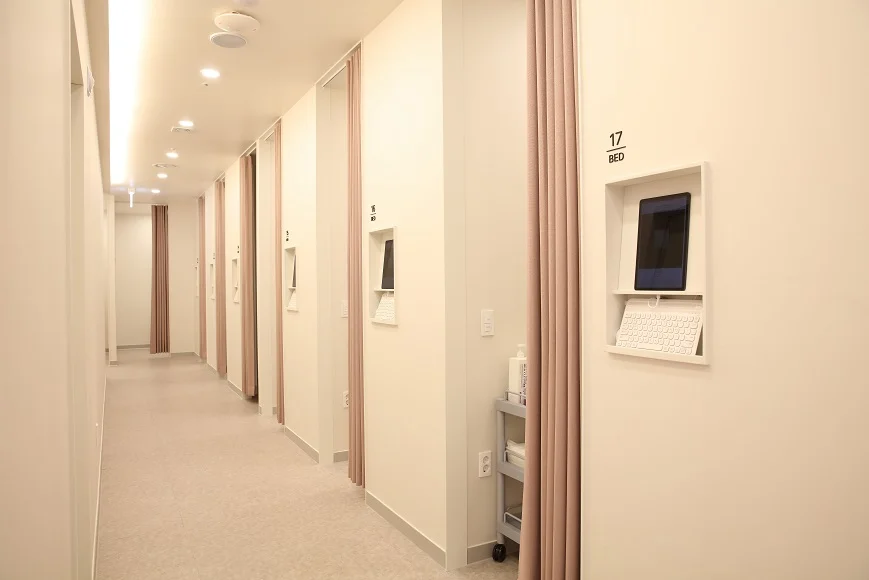
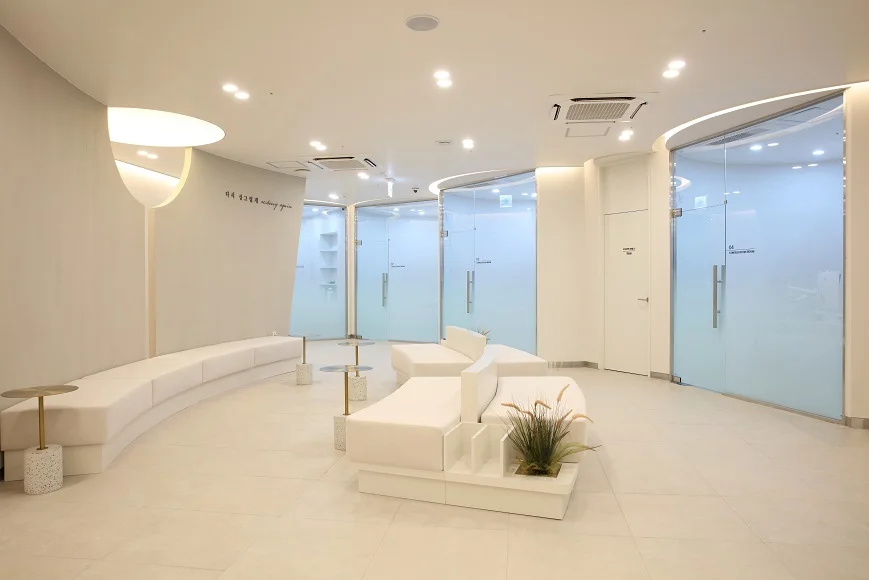
20 mins from Incheon Airport Terminal 1 by shuttle or taxi. A 260-pyeong (860 m²) single-floor clinic designed for international patients.
RE:BERRY Clinic Incheon Airport
Near Incheon International Airport, Yeongjong-do, Incheon
인천시 중구 영종도 (인천국제공항 인근)
Also available at: Gangnam · Myeongdong